Thermal Insulation Panel Machine
Publication Date: Oct 7, 2026
Thermal insulation panel machines are automated integrated production systems designed to manufacture high-performance composite insulation panels. They integrate multiple processing procedures to deliver consistent, durable building insulation materials for diverse construction and industrial thermal preservation scenarios.
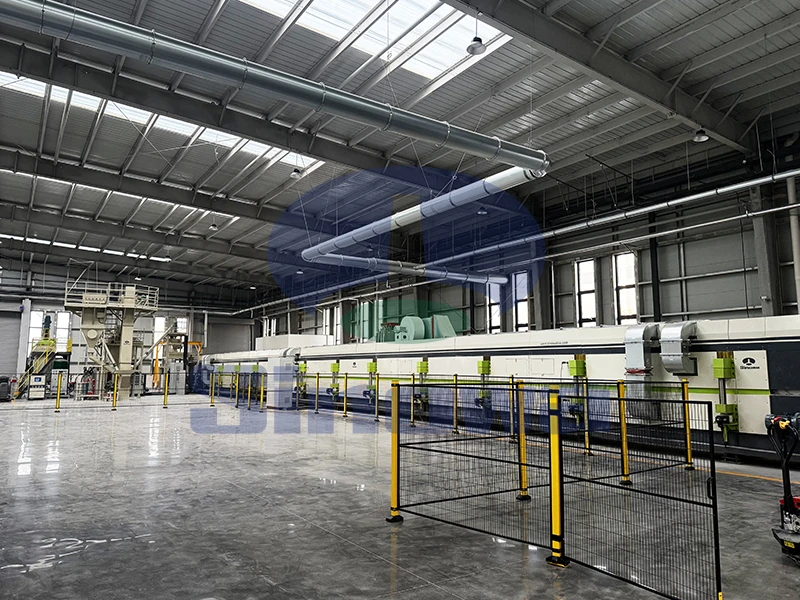
Thermal insulation panel machines represent a sophisticated automated production solution tailored for the manufacturing of composite thermal insulation panels that are widely applied in modern construction, industrial enclosure, and energy-saving engineering fields. Unlike traditional discrete processing equipment, this type of machine realizes continuous one-stop production, merging raw material processing, core material foaming, surface layer compounding, fixed forming and finished product trimming into a seamless production flow. The core design concept of the equipment focuses on balancing production efficiency and product performance stability, effectively solving the problems of uneven product quality, low production capacity and high manual error rate existing in traditional insulation panel manufacturing methods. Through integrated mechanical transmission, intelligent parameter control and chemical reaction regulation technologies, the machine can adapt to the production requirements of different types of insulation core materials, enabling the produced panels to possess excellent thermal insulation, structural stability and weather resistance. Its highly automated operation mode greatly reduces manual participation in the production process, lowers labor dependence, and lays a solid foundation for large-scale and standardized production of thermal insulation panels in the modern building materials industry.
Raw material pretreatment and precise proportioning is the primary and pivotal link in the operation of thermal insulation panel machines, which directly determines the basic performance of finished insulation panels. The equipment is equipped with a fully automatic feeding and metering system that can quantitatively convey various raw materials including core insulation materials and surface layer auxiliary materials according to set operational parameters. In the production process of mainstream foam insulation panels, liquid polymer raw materials are accurately measured and transported to the mixing station, while solid surface substrates are continuously and stably fed through the automatic unwinding and leveling device. The built-in precision sensing modules of the machine monitor the feeding speed and material dosage in real time, and automatically fine-tune parameters to avoid proportion deviation caused by mechanical operation errors. This precise proportioning mechanism ensures that the chemical reaction of the core material is fully and evenly carried out in the subsequent process, preventing quality defects such as inconsistent density, insufficient foaming degree and local hollowing of the insulation core. Meanwhile, the pretreatment system can remove impurities and adjust the humidity and flatness of surface materials, ensuring the tight bonding foundation between the surface layer and the insulation core, and improving the overall structural firmness of the panel.
High-pressure mixing and controllable foaming technology constitutes the core functional module of thermal insulation panel machines, which is the key to forming high-quality insulation core layers. After precise proportioning, the multi-component raw materials are transported to the high-pressure mixing station inside the equipment, where they are fully blended under stable pressure and temperature control conditions. The machine adopts a closed mixing structure to avoid external air interference, ensuring uniform fusion of different raw material components and providing optimal reaction conditions for subsequent foaming. The foaming process is carried out in a relatively closed cavity of the equipment, with the system intelligently adjusting foaming speed, expansion ratio and curing temperature according to the set panel performance requirements. This controllable foaming mode enables the foam core material to expand evenly and fill the gap between the upper and lower surface layers completely, forming a dense and uniform porous insulation structure. The independent temperature and pressure regulation system of the equipment can adapt to different environmental conditions and production speeds, effectively avoiding common problems such as excessive foaming shrinkage, uneven pore distribution and insufficient core compactness, thus endowing the finished panel with stable and efficient thermal insulation performance.
Double-belt lamination and constant-temperature curing is an essential process for the integral forming of thermal insulation panels, and the professional structural design of thermal insulation panel machines ensures the accuracy and stability of this link. After the mixed foaming liquid is poured between the upper and lower surface materials, the composite body is sent to the double-belt lamination system of the equipment. The upper and lower conveyor belts maintain a fixed and adjustable spacing, which accurately controls the thickness of the finished panel and ensures consistent dimensional accuracy of each product. The gear-driven transmission structure of the lamination system guarantees stable and synchronous operation of the double belts, avoiding offset and wrinkling of the surface materials during the compounding process. Equipped with an integrated circulating heating system, the equipment provides constant-temperature curing conditions for the foaming core material, promoting complete chemical cross-linking reactions of the core material and realizing firm bonding between the core layer and surface layers. The continuous lamination and curing process enables the panel to complete structural forming and performance stabilization in one step, eliminating the need for secondary processing, and greatly improving the overall forming efficiency and structural integrity of the insulation panel.
Fixed-length cutting and precise trimming functions enable thermal insulation panel machines to deliver standardized finished products that meet diverse application specifications. After the cured composite panel is output from the lamination system, it enters the automatic cutting unit of the equipment in a continuous state. The machine’s intelligent positioning system can accurately identify the panel operating position and complete fixed-length cutting according to preset size parameters, realizing zero-error segmentation of continuous panels. The cutting tool adopts high-precision wear-resistant structural design, which can complete smooth cutting of composite materials with different surface and core structures without burrs, cracks or edge warping. In addition to fixed-length cutting, the equipment is also equipped with an edge trimming mechanism to fine-tune the edges of the panel, remove residual materials and irregular parts generated in the production process, and ensure the flatness and regularity of the panel edges. The whole cutting and trimming process is automatically controlled by the system, which can flexibly switch production specifications according to different customer needs, realizing flexible production of multiple sizes of insulation panels on one device while maintaining high product consistency.
Automatic conveying and finished product sorting systems optimize the overall production rhythm and operational efficiency of thermal insulation panel machines, forming a complete closed-loop production process. After cutting and trimming, the qualified finished panels are automatically conveyed to the sorting area through the matched transmission device of the equipment. The intelligent sensing system in the sorting area can preliminarily judge the appearance and dimensional qualification of the panels, classify and convey qualified and unqualified products respectively, and automatically collect unqualified products for reprocessing, which effectively reduces the outflow of defective products. The conveying speed of the whole system is synchronized with the front-end production process, realizing seamless connection between each production link, avoiding production stagnation caused by mismatched rhythm, and ensuring continuous and stable operation of the production line. The integrated conveying and sorting design reduces manual handling links, avoids panel damage and pollution caused by manual operation, and further improves the overall yield and production efficiency of the equipment.
The structural optimization and intelligent control design of thermal insulation panel machines endow the equipment with excellent operational stability and low maintenance characteristics. The main body of the equipment adopts high-strength integrated welding structure, which has strong structural rigidity and anti-deformation ability, and can maintain long-term stable operation under continuous high-load production conditions. The core operating components are equipped with dust-proof and anti-corrosion protection structures, which adapt to the complex production environment of building materials processing and reduce component wear and failure probability. The equipment adopts a centralized intelligent control system, which integrates all production parameter adjustment, operation monitoring and fault diagnosis functions on the operation interface. Operators can intuitively view the real-time operating status of each link, adjust production parameters in real time according to production needs, and quickly locate and solve common equipment faults through the system’s automatic early warning function. This intelligent control mode simplifies the operation process, reduces the technical threshold of equipment operation, and greatly reduces daily maintenance and after-sales operation costs.
Thermal insulation panel machines have outstanding application flexibility and product adaptability, capable of producing diversified insulation panels for multiple scenarios. By adjusting production parameters such as raw material proportioning, foaming density, panel thickness and compounding pressure, the equipment can manufacture insulation panels with different thermal insulation strengths, structural hardness and weather resistance. The panels produced by the machine can meet the thermal insulation and heat preservation needs of building exterior walls, roofs, indoor partitions, industrial equipment enclosures and special low-temperature storage spaces. Whether it is lightweight panels for civil building energy-saving renovation or high-strength thick panels for industrial thermal insulation engineering, the equipment can complete efficient and standardized production. Its flexible parameter adjustment function enables the production line to quickly respond to the differentiated market demand for insulation panels, avoiding the limitation of single product type of traditional equipment, and greatly expanding the application scope and market adaptability of the production system.
The energy-saving and environmentally friendly performance of thermal insulation panel machines conforms to the development trend of the modern green building materials industry. The equipment adopts closed-loop raw material utilization design in the production process, which can recycle and reuse the residual raw materials and trimming waste generated during processing, effectively reducing material waste and improving the comprehensive utilization rate of raw materials. The optimized foaming and heating system reduces invalid energy consumption in the production process, realizing low-energy and high-efficiency production operation. In terms of environmental protection, the production process of the equipment does not produce harmful gas emissions and excessive industrial waste water, and the produced insulation panels are non-toxic and harmless, with no volatile harmful substances, meeting the green and environmental protection requirements of modern construction engineering. While improving production efficiency, the equipment reduces the environmental impact of insulation panel manufacturing, providing reliable technical and equipment support for the sustainable development of the building energy-saving industry.
With the continuous upgrading of building energy-saving technology, thermal insulation panel machines are constantly evolving towards higher automation, higher precision and stronger intelligence. The future development direction of the equipment focuses on intelligent parameter self-optimization, unmanned continuous production and multi-functional integrated processing. Through the combination of data analysis and automatic control technology, the equipment can independently adjust production parameters according to real-time production data and product performance feedback, further improving product precision and production stability. The continuous technological iteration of thermal insulation panel machines will further promote the standardized, intelligent and green development of the thermal insulation panel manufacturing industry, and provide more efficient and high-quality material solutions for global building energy conservation and industrial thermal insulation engineering.
Gallery of Thermal Insulation Panel Machine
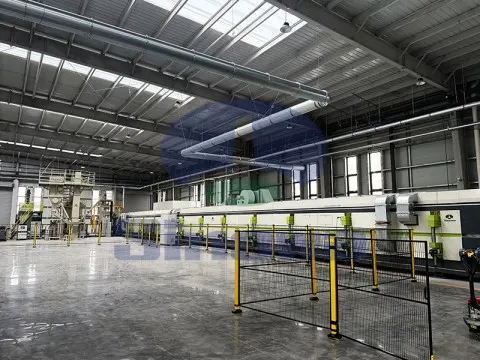
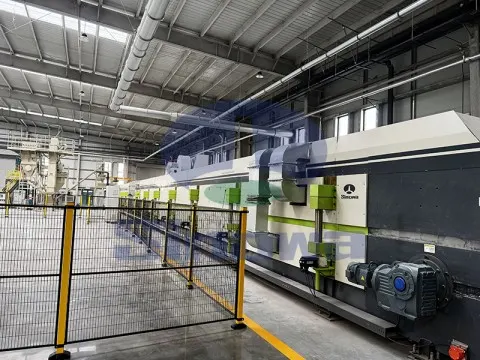
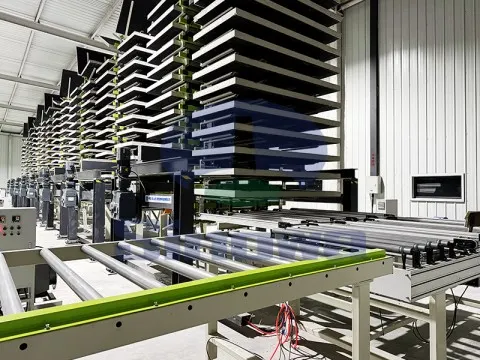
Tags: thermal insulation panel machine, thermal insulation panel machine manufacturer, thermal insulation panel machine supplier, china thermal insulation panel machine, thermal insulation panel machine for sale
https://www.sandwichpanelmachinery.com/tags/thermal-insulation-panel-machine.html
-
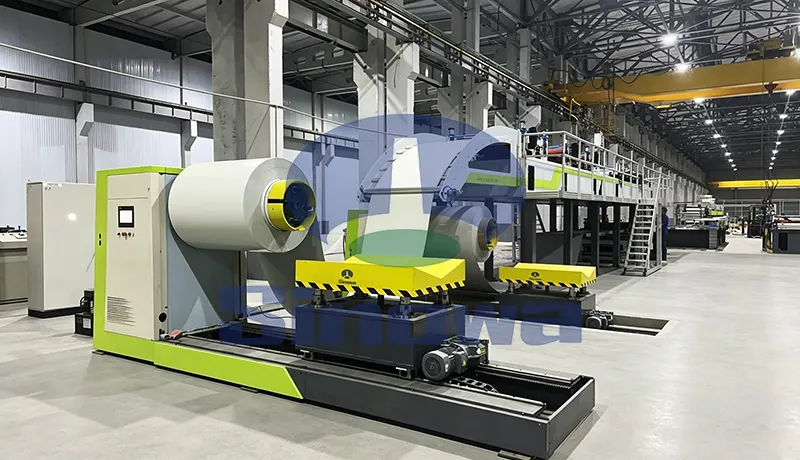
The PU sandwich panel line is a core production setup for making high-performance building insulation panels. This professional PU sandwich panel production line features automated operation to streamline the whole manufacturing process efficiently. Every component of the polyurethane sandwich panel line is precisely calibrated to ensure consistent panel thickness and structural stability. A well-maintained polyurethane sandwich panel production line can greatly boost production efficiency while reducing manual operation errors. The continuous PU sandwich panel line adapts to diverse production demands for different panel sizes and surface styles. With advanced molding technology, the PIR sandwich panel line produces panels with excellent heat preservation and sound insulation properties. Stable running of the PIR sandwich panel production line guarantees reliable product quality for various construction and industrial application scenarios.
-
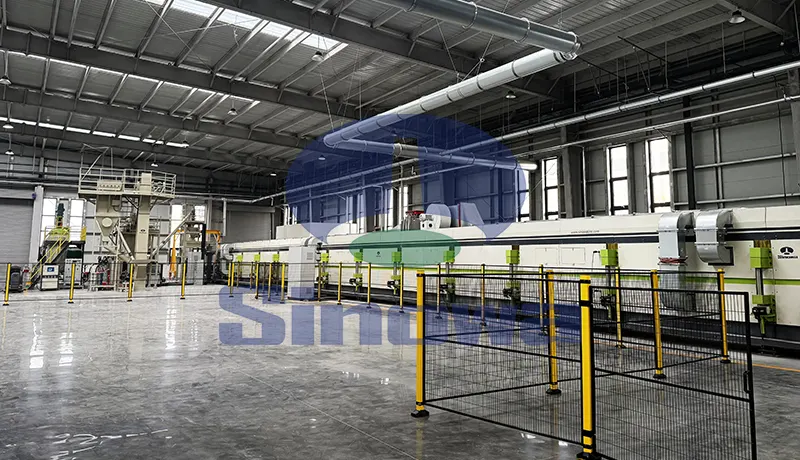
A phenolic insulation board production line serves as the core equipment for manufacturing high-performance thermal insulation building materials. This phenolic insulation panel production line integrates material mixing, foaming, molding and cutting processes to ensure continuous and stable production efficiency. Every operational link of the insulation board production line is precisely calibrated to produce uniform and durable insulation boards. The automated design of the insulation panel production line effectively reduces manual intervention and improves product consistency. Proper maintenance of the phenolic board production line can greatly extend its service life and maintain steady production output. With optimized structural design, the phenolic panel production line adapts to various production demands and delivers high-quality finished products for thermal insulation engineering applications.
-
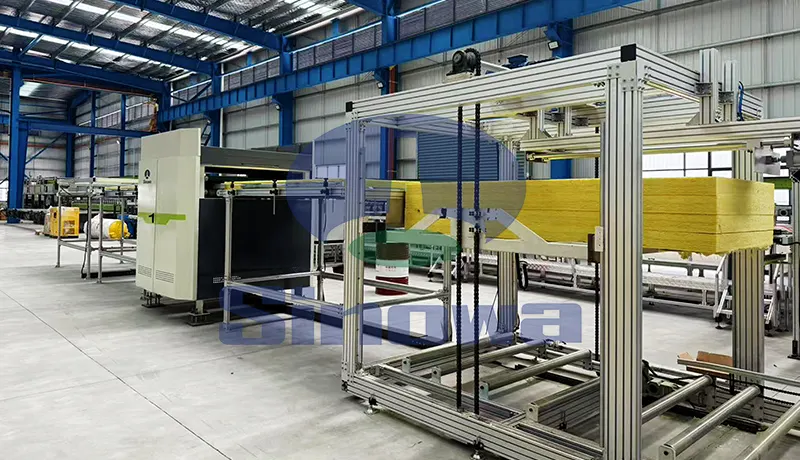
A professional rockwool sandwich panel line serves as the core equipment for producing high-performance building panels. This rockwool sandwich panel production line integrates feeding, laminating and forming processes to ensure stable and efficient production. The well-structured rock wool sandwich panel line can process raw rockwool materials into panels with excellent thermal and sound insulation properties. Operators can adjust the running parameters of the rock wool sandwich panel production line to manufacture panels of different thicknesses and specifications. The automated design of the mineral wool sandwich panel production line greatly reduces manual operation errors and improves product consistency. Regular maintenance of the mineral wool sandwich panel line is essential to sustain long-term operational efficiency and guarantee qualified finished panels for diverse construction applications.