How To Adjust Mixing Ratio Of PU Sandwich Panel Production Line To Improve Bonding Strength?
Publication Date: Sep 30, 2026
Optimizing the mixing ratio of a PU sandwich panel production line is critical to enhancing panel bonding strength.
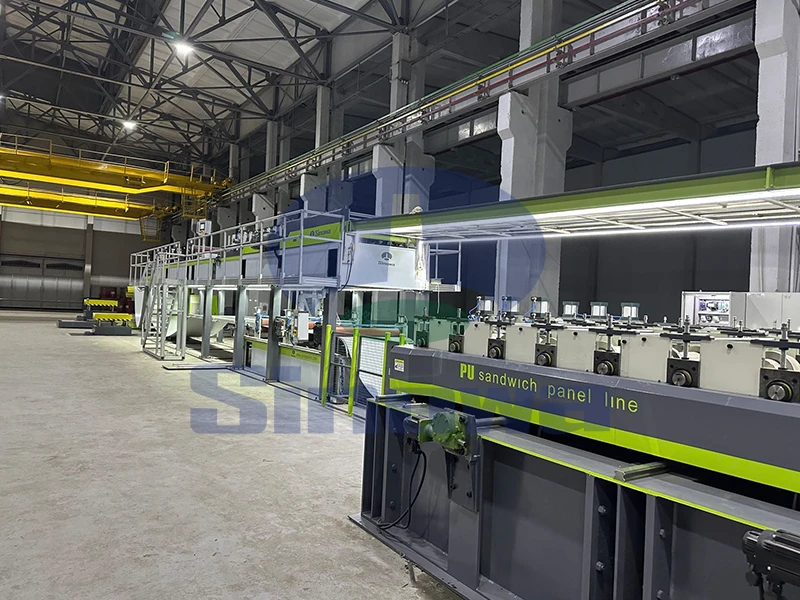
The bonding performance of PU sandwich panels fundamentally depends on the precise mixing ratio of polyol and isocyanate components in the foaming system, making ratio calibration the core adjustment task of the PU sandwich panel production line. In continuous production operations, slight deviations in the proportion of the two core raw materials will directly disrupt the cross-linking reaction of polyurethane molecules, resulting in insufficient interfacial adhesion between the PU foam core and the metal or non-metal surface layers. Many common production defects, including partial delamination, surface layer warping and low peel strength, stem from unoptimized mixing ratios rather than equipment failure or raw material quality problems. A balanced mixing ratio ensures complete chemical reaction of PU materials, forms a dense and uniform foam structure, and enables the foam to fully infiltrate the micro gaps on the panel surface. For the PU sandwich panel production line, static ratio settings cannot adapt to dynamic production changes, so targeted ratio adjustment according to production environment and process conditions is essential to stabilize and upgrade bonding strength, laying a solid foundation for durable and high-quality finished panels.
To accurately adjust the mixing ratio, production operators must first clarify the chemical mechanism linking component proportion and bonding strength. Polyurethane foam formation relies on the cross-linking reaction between hydroxyl groups in polyol and isocyanate groups in curing agents, and the proportion of the two components determines the cross-linking density and curing degree of the final material. When the isocyanate proportion is excessively low, the reaction cannot be fully completed, leaving residual active groups in the foam core, which leads to slow curing, soft foam texture and weak adhesion with the panel surface. In contrast, excessive isocyanate content will cause excessive local cross-linking, making the foam brittle and prone to cracking under external force, which destroys the integrity of the bonding interface. The PU sandwich panel production line is equipped with precise feeding and mixing systems, and its adjustable ratio range is designed to balance reaction activity and structural stability. Operators need to abandon fixed ratio modes and take actual reaction effects as the standard to fine-tune proportions, ensuring that the PU foam maintains moderate cross-linking density, excellent fluidity and stable adhesion performance after molding.
Raw material viscosity and temperature changes are key external factors that require real-time mixing ratio adjustment on the PU sandwich panel line. The viscosity of polyol and isocyanate raw materials fluctuates significantly with ambient temperature, which affects the feeding accuracy of the production line’s metering pump. In low-temperature production environments, raw material viscosity increases, leading to slow feeding and uneven mixing; if the original ratio is maintained, the material mixing uniformity will decrease, resulting in localized insufficient reaction and weak bonding. At this time, it is necessary to appropriately adjust the feeding proportion parameters to compensate for the deviation caused by viscosity changes and ensure the effective proportion of reactive groups remains within the optimal range. In high-temperature environments, raw materials have low viscosity and fast reaction speed, so a slight reduction in the proportion of active components can avoid premature gelation of PU materials before laminating. Regular temperature detection of raw material storage tanks and feeding pipelines, and synchronous ratio adjustment, can effectively eliminate bonding strength fluctuations caused by environmental changes in daily production of the PU sandwich panel production line.
Production line running speed directly affects the mixing ratio matching scheme and final bonding effect, which is a crucial adjustment factor easily ignored in industrial production. The operating speed of the PU sandwich panel production machine determines the residence time of PU materials from mixing, foaming to laminating and curing. When the production line runs at a high speed, the material reaction and infiltration time is shortened, and insufficient interfacial wetting often occurs if the conventional mixing ratio is adopted. To solve this problem, operators can appropriately optimize the mixing ratio to improve the fluidity and initial reaction speed of PU materials, enabling the foam to quickly spread and fully fit the panel surface in a short time. When the production line speed is reduced, the material reaction time is prolonged, and excessive foaming and over-curing may occur. At this time, fine-tuning the ratio to reduce reaction activity can prevent foam structure aging and bonding interface damage. Matching a scientific mixing ratio with production line operating speed ensures stable bonding quality under different production efficiency requirements.
Impurity content and raw material activity attenuation require regular mixing ratio calibration for the PU sandwich panel machine. In long-term continuous production, raw materials may absorb trace moisture and impurities during storage and feeding, which will consume part of the active groups in the PU system and change the actual reaction proportion of components. In addition, repeated heating and circulating feeding of raw materials will lead to slight attenuation of activity, resulting in inconsistent reaction effects even with fixed mixing ratios. These subtle changes will gradually reduce the bonding strength of panels and cause batch quality differences. Therefore, production personnel need to conduct regular sampling tests on mixed materials, detect the curing speed, foam density and interfacial adhesion of finished products, and adjust the mixing ratio in a targeted manner. Timely calibration of the ratio can offset the impact of raw material activity changes, maintain the stability of the chemical reaction system, and ensure that each batch of panels maintains consistent and excellent bonding performance in the operation of the PU sandwich panel production line.
Foam density uniformity is closely linked to mixing ratio adjustment, and optimizing the ratio is an effective way to eliminate uneven bonding defects. Unreasonable mixing ratios often lead to inconsistent foaming degrees of PU materials, resulting in uneven internal density of the foam core. Areas with low foam density have loose structures and poor adhesion, while areas with excessive density have rigid structures and weak toughness, both of which reduce the overall bonding strength and durability of the panel. Scientific ratio adjustment can balance the foaming expansion rate and cross-linking speed of PU materials, form a uniform and compact cellular structure, and maximize the contact area and adhesion force between the foam core and the surface layer. In the adjustment process of the PU sandwich panel production line, excessive deviation of the two-component proportion should be avoided. Excessive polyol will cause excessive foaming and low density, while excessive isocyanate will inhibit foaming and cause dense and hard foam. Maintaining a reasonable ratio balance is the key to improving foam uniformity and interfacial bonding quality.
Laminating pressure and curing temperature need to coordinate with mixing ratio adjustment to jointly improve panel bonding strength. Mixing ratio determines the inherent reaction performance of PU materials, while laminating pressure and curing temperature affect the final molding and bonding effect of materials. When the mixing ratio is slightly biased towards low reaction activity, appropriately increasing curing temperature and laminating pressure can promote sufficient cross-linking reaction and make up for the slight deficiency of component proportion. When the ratio has high reaction activity, reducing the curing temperature appropriately can avoid rapid surface curing and internal incomplete reaction, preventing the formation of virtual bonding interfaces. In the daily operation of the PU sandwich panel production line, single ratio adjustment cannot achieve the best bonding effect. It is necessary to build a coordinated adjustment system of ratio, temperature and pressure, so that the optimized mixing ratio can give full play to its advantages, ensure that the PU foam fully fits and stably bonds with the surface layer during curing, and significantly improve the overall bonding strength of the panel.
Regular maintenance and parameter verification of metering and mixing systems are the premise to ensure accurate mixing ratio adjustment. The bonding strength improvement effect brought by ratio adjustment depends entirely on the accurate execution of the PU sandwich panel production machinery's feeding system. Long-term operation of metering pumps, mixing heads and conveying pipelines may cause wear, blockage and parameter drift, resulting in inconsistent actual feeding proportions with set parameters. Even if the theoretical ratio is optimized, inaccurate feeding will still lead to poor bonding quality. Therefore, enterprises need to formulate a regular maintenance plan, clean residual materials in the mixing system regularly, check the operating accuracy of metering equipment, and calibrate feeding parameters. Timely elimination of equipment errors ensures that each ratio adjustment scheme can be accurately implemented, avoids ineffective parameter adjustment caused by equipment failure, and provides reliable equipment guarantee for continuous improvement of panel bonding strength.
Reasonable ratio adjustment can effectively reduce common bonding defects and improve the yield of finished PU sandwich panels. Unreasonable mixing ratios are the main cause of panel quality problems such as edge delamination, surface bubbling and low peel resistance. Insufficient component reaction caused by ratio deviation will form tiny gaps at the bonding interface, which will gradually expand under the influence of external temperature changes and mechanical extrusion, eventually leading to panel delamination and failure. By finely adjusting the mixing ratio of the PU sandwich panel production line, the reaction compactness of PU materials can be improved, the bonding interface gap can be eliminated, and the interfacial toughness and peel resistance can be enhanced. In actual production, gradual small-range adjustment should be adopted instead of large-scale parameter changes, so as to avoid violent fluctuations in material reaction state and ensure stable transition of product quality. Continuous optimization of the ratio can effectively reduce defective products caused by bonding problems and improve production economic benefits.
Continuous iterative optimization of mixing ratio parameters helps to realize long-term stable improvement of PU sandwich panel bonding quality. The production conditions of the PU sandwich panel production line are dynamically changing, including seasonal temperature and humidity changes, raw material batch differences, and production load fluctuations, which require continuous fine-tuning of mixing ratios rather than one-time fixed adjustment. Production personnel should establish production parameter records, track the bonding strength data of finished panels under different ratio parameters, and summarize the optimal ratio ranges corresponding to different production conditions. Through data accumulation and iterative optimization, the ratio adjustment scheme can be more scientific and targeted, adapt to complex and changeable production environments, and steadily improve the bonding performance and service stability of PU sandwich panels. This refined process adjustment mode is the core of high-quality and high-efficiency production of sandwich panels.
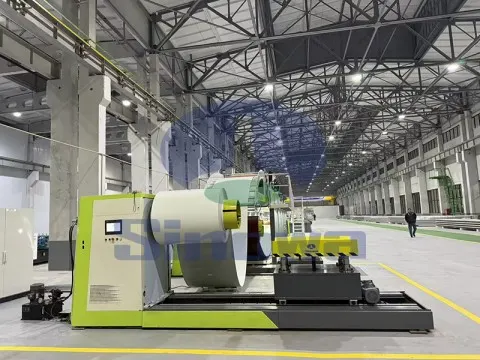
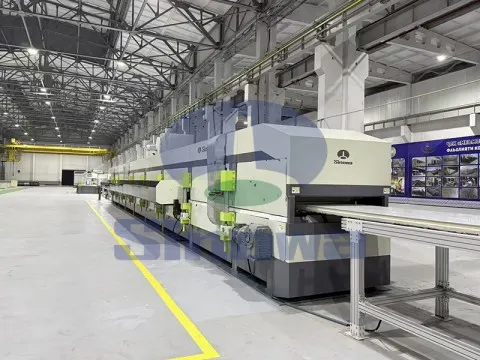
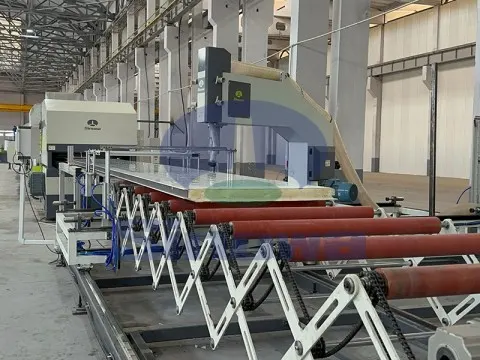
Gallery of PU Sandwich Panel Production Line
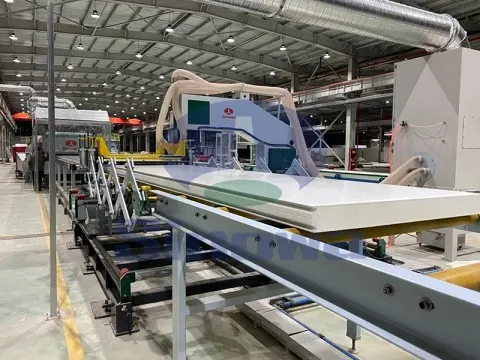
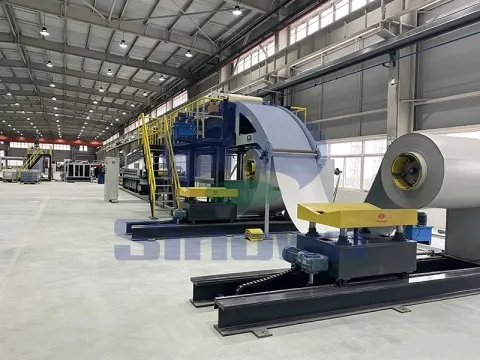
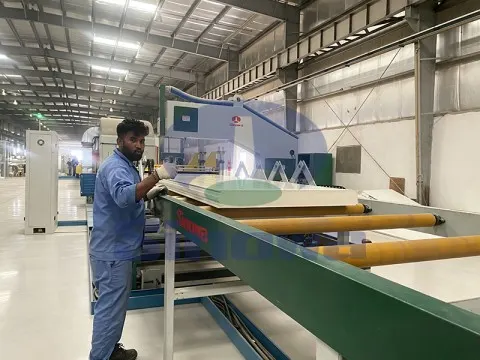
Tags: pu sandwich panel production line, pu sandwich panel production line manufacturer, pu sandwich panel production line supplier, china pu sandwich panel production line, pu sandwich panel production line for sale
-
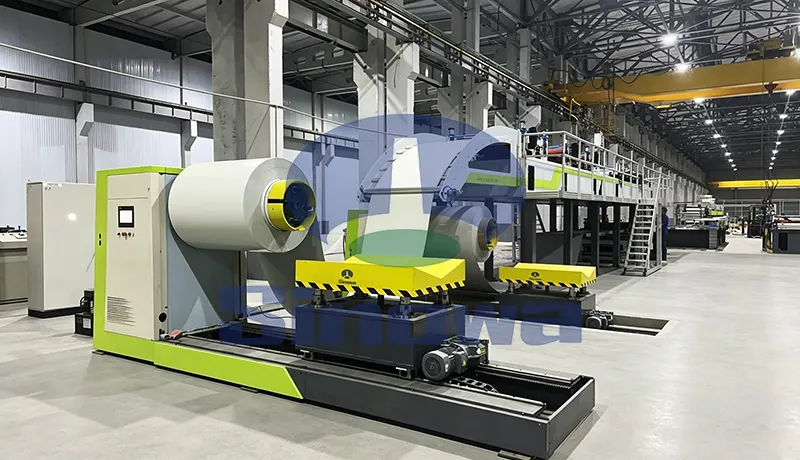
The PU sandwich panel line is a core production setup for making high-performance building insulation panels. This professional PU sandwich panel production line features automated operation to streamline the whole manufacturing process efficiently. Every component of the polyurethane sandwich panel line is precisely calibrated to ensure consistent panel thickness and structural stability. A well-maintained polyurethane sandwich panel production line can greatly boost production efficiency while reducing manual operation errors. The continuous PU sandwich panel line adapts to diverse production demands for different panel sizes and surface styles. With advanced molding technology, the PIR sandwich panel line produces panels with excellent heat preservation and sound insulation properties. Stable running of the PIR sandwich panel production line guarantees reliable product quality for various construction and industrial application scenarios.
-
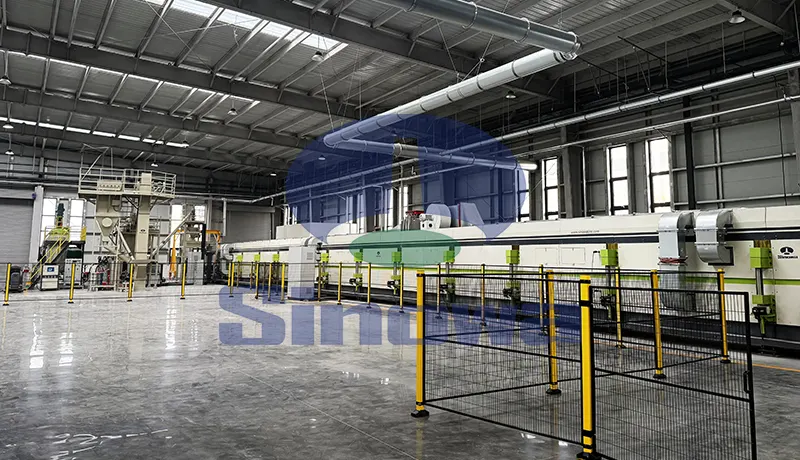
A phenolic insulation board production line serves as the core equipment for manufacturing high-performance thermal insulation building materials. This phenolic insulation panel production line integrates material mixing, foaming, molding and cutting processes to ensure continuous and stable production efficiency. Every operational link of the insulation board production line is precisely calibrated to produce uniform and durable insulation boards. The automated design of the insulation panel production line effectively reduces manual intervention and improves product consistency. Proper maintenance of the phenolic board production line can greatly extend its service life and maintain steady production output. With optimized structural design, the phenolic panel production line adapts to various production demands and delivers high-quality finished products for thermal insulation engineering applications.
-
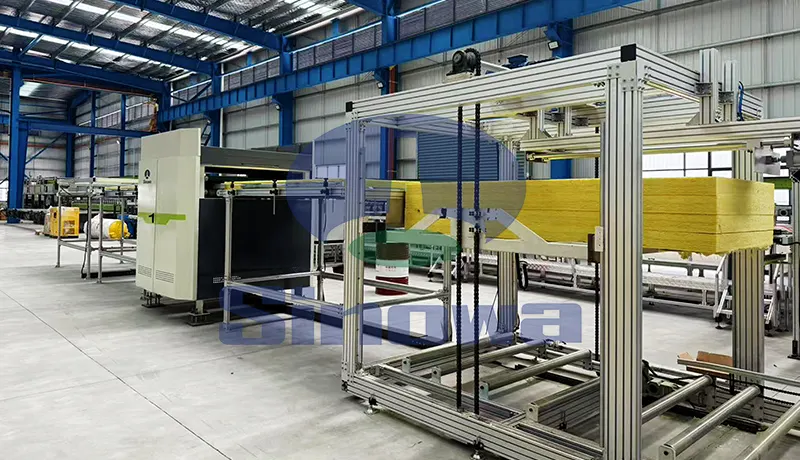
A professional rockwool sandwich panel line serves as the core equipment for producing high-performance building panels. This rockwool sandwich panel production line integrates feeding, laminating and forming processes to ensure stable and efficient production. The well-structured rock wool sandwich panel line can process raw rockwool materials into panels with excellent thermal and sound insulation properties. Operators can adjust the running parameters of the rock wool sandwich panel production line to manufacture panels of different thicknesses and specifications. The automated design of the mineral wool sandwich panel production line greatly reduces manual operation errors and improves product consistency. Regular maintenance of the mineral wool sandwich panel line is essential to sustain long-term operational efficiency and guarantee qualified finished panels for diverse construction applications.