What Causes Weak Adhesion On Polyurethane Sandwich Panel Production Line Finished Panels?
Publication Date: Oct 7, 2026
Weak adhesion on finished polyurethane sandwich panels is a common production defect leading to delamination and reduced durability. This issue stems from multiple interconnected factors covering surface conditions, chemical mixing, production parameters, equipment operation, and environmental changes in continuous production lines.
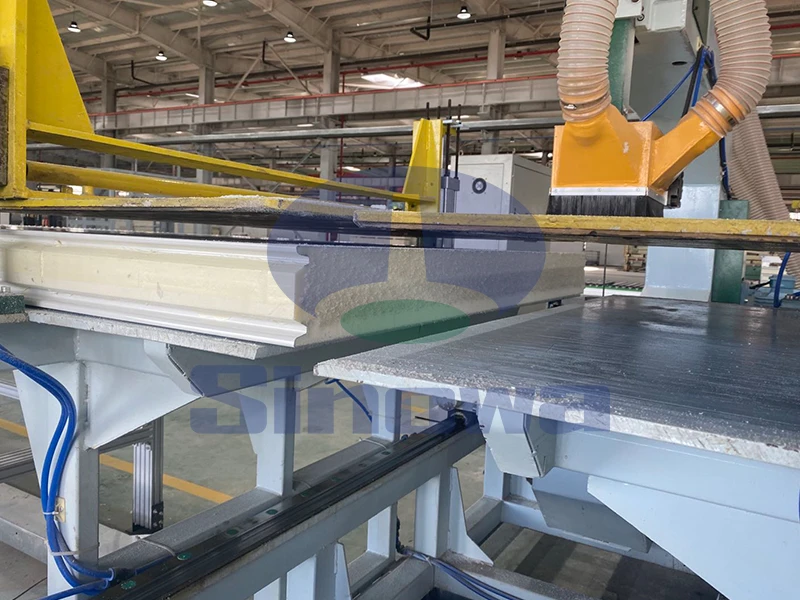
Surface contamination of panel facings is one of the most prevalent root causes of weak adhesion in polyurethane sandwich panel production. During the continuous rolling and feeding process of metal or composite facings, various invisible pollutants can accumulate on the bonding surface and severely hinder the combination between the facing and polyurethane foam. Residual oil stains from rolling and processing equipment often remain on the surface of raw facings, forming a dense isolation layer that prevents polyurethane materials from fully wetting the substrate surface. In addition, floating dust, metal powder, and oxide layers generated during raw material storage and transportation will attach to the bonding interface, destroying the uniformity of surface contact between the foam and facings. Even tiny water droplets condensed on the facing surface in a non-dry state will react with polyurethane components, forming loose brittle layers at the bonding interface. These contaminants do not only reduce the initial bonding force but also cause gradual peeling and delamination of finished panels during subsequent storage and use. Many sandwich panel production lines ignore fine surface cleaning in high-speed continuous operation, resulting in persistent low adhesion quality of finished products that is difficult to detect in real time.
Imbalanced chemical ratio and inadequate mixing of polyurethane raw materials directly undermine the intrinsic bonding performance of sandwich panels. Polyurethane foam systems rely on the precise stoichiometric reaction between isocyanate and polyol components to form a compact cross-linked structure with strong adhesion. Slight deviations in the dosing proportion of the two core raw materials will lead to incomplete chemical reactions and insufficient molecular cross-linking. Excessive polyol will result in excessive residual active hydroxyl groups in the foam layer, reducing the hardness and cohesive force of the bonding layer, while excessive isocyanate will cause excessive local reaction, forming brittle foam that is prone to interface separation. In continuous PU sandwich panel production line operation, uneven mixing caused by abnormal mixer speed, worn mixing components, or unreasonable material feeding rates will lead to inconsistent local material ratios. Some areas form fully reacted high-adhesion structures, while others form semi-reacted loose structures, resulting in uneven overall adhesion of finished panels and local weak bonding areas. Long-term operation without regular calibration of dosing and mixing equipment will continuously amplify this defect, affecting batch product quality stability.
Unreasonable production temperature parameters are critical factors inducing weak adhesion of finished polyurethane sandwich panels. The curing and bonding process of polyurethane foam is highly temperature-dependent, and both excessively high and low temperatures will destroy the optimal bonding state. When the production environment or raw material temperature is too low, the molecular activity of polyurethane raw materials decreases, slowing down the foaming and cross-linking reaction rate. The foam cannot fully wet and penetrate the micro-pores on the facing surface within the effective reaction time, resulting in only superficial contact rather than mechanical and chemical integration. Meanwhile, the evaporative cooling effect of blowing agents in low-temperature environments will further reduce the interface temperature, leading to incomplete curing of the bonding layer. On the contrary, excessively high temperatures will cause the polyurethane reaction to proceed too rapidly, forming a dense cured film on the foam surface in a short time. This surface film blocks the continuous reaction of internal materials and prevents effective bonding between the foam core and facings. Unstable temperature fluctuation in continuous polyurethane sandwich panel production lines will cause inconsistent curing degrees of panel interfaces, forming intermittent weak adhesion defects on finished panels.
Abnormal laminator pressure and uneven pressure distribution during pressing molding severely affect the bonding compactness of polyurethane sandwich panels. The pressing process provides external force to ensure tight contact between the uncured polyurethane foam and upper and lower facings, which is the key to eliminating interface gaps and achieving effective adhesion. Insufficient overall laminator pressure cannot completely discharge the residual air between the foam and facings, forming tiny voids at the bonding interface. These voids become weak points where peeling and delamination occur under external force or temperature changes. In addition, uneven pressure distribution caused by unbalanced equipment calibration, worn pressing rollers, or inconsistent panel thickness will lead to differential compression on different parts of the panel surface. Areas with insufficient pressure retain interface gaps, while over-pressed areas cause excessive foam extrusion and local structural damage. In high-speed continuous production, untimely pressure adjustment matching foaming speed and material fluidity will result in poor interface fitting consistency, forming widespread weak adhesion problems on finished panels.
Improper curing time arrangement in production processes leads to insufficient maturation of the bonding structure of finished sandwich panels. Polyurethane foam requires a specific curing cycle to complete molecular cross-linking and form stable bonding force between the core material and facings. Many PU sandwich panel production lines pursue high output efficiency and carry out subsequent trimming, stacking, and packaging operations before the panels reach complete curing. In the early uncured state, the internal molecular structure of the polyurethane foam is loose and the interface bonding force is not fully formed. External mechanical force from trimming and stacking will destroy the initially formed weak bonding structure, causing invisible interface separation. Even if no peeling is found in the short term, latent delamination defects will gradually appear during product storage and transportation. In addition, insufficient curing time will reduce the interface weather resistance of the panels, making the bonding layer prone to aging and strength attenuation under natural environmental changes, which significantly shortens the service life of finished panels and exposes weak adhesion problems in later use.
Excessive workshop humidity and uncontrolled moisture interference are easily overlooked causes of weak polyurethane panel adhesion. Isocyanate components in polyurethane raw materials are extremely sensitive to water molecules and will undergo side reactions with moisture in the air to generate gaseous by-products. In high-humidity production environments, a large number of tiny bubbles will form at the bonding interface between foam and facings due to moisture reaction. These bubbles destroy the tight combination of the interface and form isolated weak bonding areas. Meanwhile, moisture consumption of active isocyanate components disrupts the normal reaction ratio of the polyurethane system, reducing the cross-linking density of the bonding layer and weakening the interface binding force. In continuous production, open material feeding and panel molding processes make raw materials and uncured panels continuously contact humid air. Without effective dehumidification measures, moisture will accumulate on the material surface and inside the interface, leading to batch weak adhesion defects. Long-term humid production conditions will also cause subtle oxidation and moisture absorption on the facing surface, further deteriorating the bonding foundation.
Poor compatibility between facing coating materials and polyurethane foam systems induces inherent interface adhesion defects. Most panel facings are coated with protective and decorative coatings, and the chemical properties of these coatings directly determine the bonding effect with polyurethane materials. Some coating materials have low surface energy and poor wettability, making it difficult for fluid polyurethane foam to spread and adhere evenly on the coating surface. Over-cured or chalked coating layers will form a smooth and inert surface without effective mechanical bite points, resulting in only physical adhesion rather than stable chemical bonding between foam and facings. In addition, some coating components have poor chemical resistance and will undergo subtle chemical reactions with active polyurethane ingredients, destroying the interface bonding structure. Even if the initial bonding seems normal, the interface will gradually separate under the action of internal stress and environmental changes. The mismatch between coating performance and foam system characteristics forms irreversible weak adhesion defects, which are difficult to eliminate through conventional process adjustment.
Abnormal foaming performance of polyurethane core materials leads to incomplete interface bonding of finished panels. The foaming quality of the core material determines the contact state and structural stability of the bonding interface. Excessively high foam viscosity caused by unreasonable raw material formula or improper pre-treatment will reduce material fluidity, making it unable to fully fill the micro unevenness of the facing surface. This results in a large number of unfitted gaps at the interface and reduces the effective bonding area. Conversely, excessively low foam viscosity will cause excessive foaming and material overflow during pressing, leading to insufficient core material filling and local hollow bonding. Unstable foaming speed also causes problems: too fast foaming makes the material cure before full interface fitting, while too slow foaming leads to material sagging and uneven thickness distribution. In continuous polyurethane sandwich panel line production, inconsistent foaming uniformity of each batch of raw materials will lead to fluctuating adhesion quality of finished panels, with frequent weak adhesion and local delamination phenomena.
Long-term equipment aging and incomplete daily maintenance trigger persistent adhesion quality problems in production. Key equipment including mixing systems, pressing rollers, and temperature control devices will have performance attenuation after long-term continuous operation. Worn mixing blades and blocked material pipelines cause uneven raw material mixing and unstable dosing accuracy, fundamentally affecting foam bonding performance. Deformed pressing rollers and loose equipment calibration lead to continuous pressure deviation and uneven panel pressing. Aging temperature control sensors cannot accurately feedback and adjust production temperature, resulting in long-term temperature deviation in the reaction environment. In addition, accumulated material residues on equipment surfaces will contaminate new raw materials and panel surfaces during production. Most hidden equipment failures will not cause obvious production abnormalities but continuously reduce panel adhesion quality, forming recurring weak adhesion defects in finished products and affecting long-term production quality stability.
Unreasonable post-production storage and transportation conditions aggravate and expose weak adhesion defects of finished polyurethane sandwich panels. Even if panels have qualified initial bonding performance after production, improper subsequent processing will induce interface delamination and adhesion attenuation. Stacking panels too early with excessive stacking weight will generate continuous extrusion stress on uncured or incompletely stabilized bonding interfaces, causing internal interface separation. Long-term storage in environments with large temperature and humidity changes will make the panel core and facing produce inconsistent thermal expansion and contraction, generating cyclic shear stress at the bonding interface. This stress will gradually fatigue the weak bonding structure and expand tiny delamination gaps. In addition, violent vibration and extrusion during transportation will impact the panel interface, amplifying latent weak adhesion defects and turning invisible quality problems into obvious peeling and delamination failures. Standardized post-production management is therefore essential to maintain the final bonding quality of finished panels.
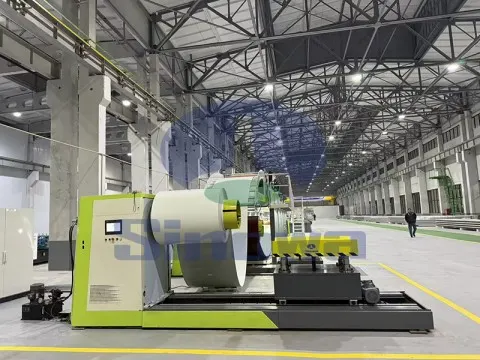
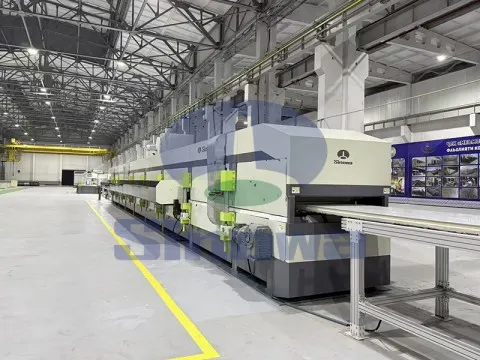
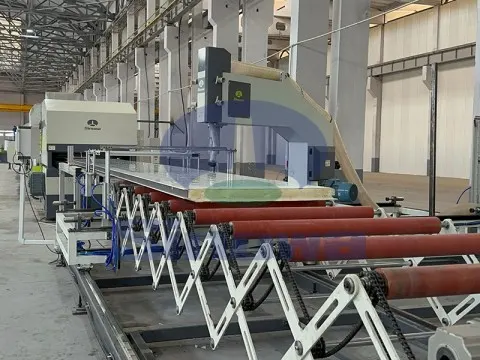
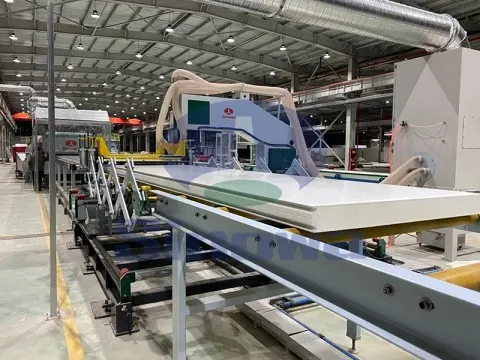
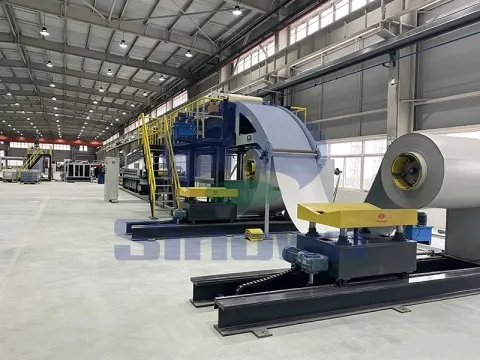
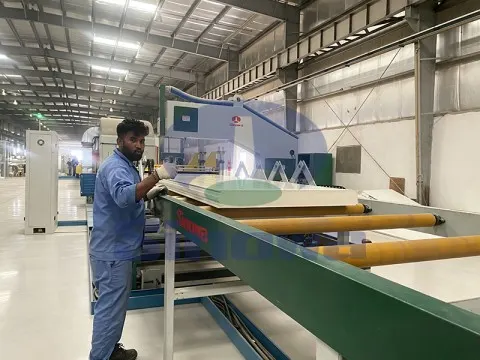
Gallery of Polyurethane Sandwich Panel Production Line
Tags: polyurethane sandwich panel production line, polyurethane sandwich panel production line manufacturer, polyurethane sandwich panel production line supplier, china polyurethane sandwich panel production line, polyurethane sandwich panel production line for sale
-
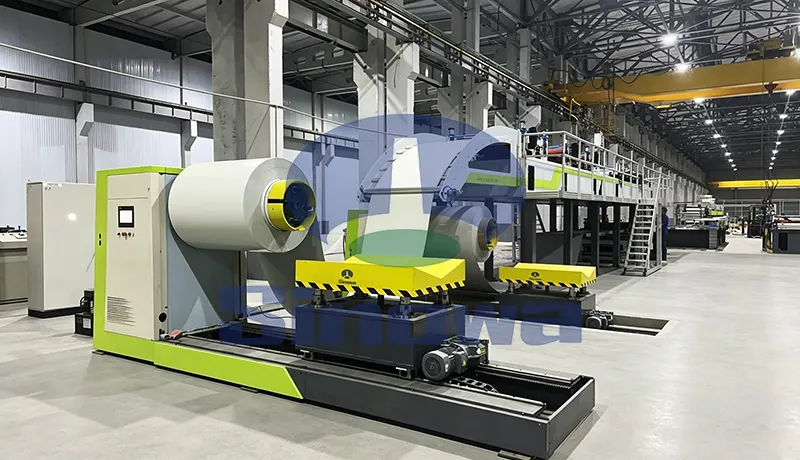
The PU sandwich panel line is a core production setup for making high-performance building insulation panels. This professional PU sandwich panel production line features automated operation to streamline the whole manufacturing process efficiently. Every component of the polyurethane sandwich panel line is precisely calibrated to ensure consistent panel thickness and structural stability. A well-maintained polyurethane sandwich panel production line can greatly boost production efficiency while reducing manual operation errors. The continuous PU sandwich panel line adapts to diverse production demands for different panel sizes and surface styles. With advanced molding technology, the PIR sandwich panel line produces panels with excellent heat preservation and sound insulation properties. Stable running of the PIR sandwich panel production line guarantees reliable product quality for various construction and industrial application scenarios.
-
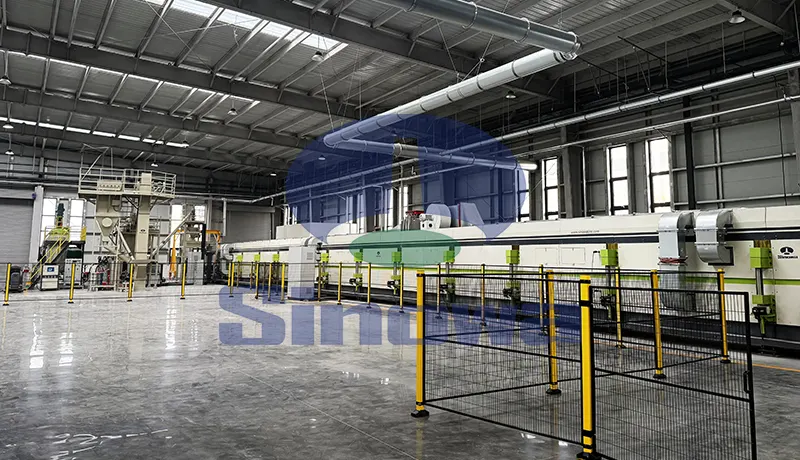
A phenolic insulation board production line serves as the core equipment for manufacturing high-performance thermal insulation building materials. This phenolic insulation panel production line integrates material mixing, foaming, molding and cutting processes to ensure continuous and stable production efficiency. Every operational link of the insulation board production line is precisely calibrated to produce uniform and durable insulation boards. The automated design of the insulation panel production line effectively reduces manual intervention and improves product consistency. Proper maintenance of the phenolic board production line can greatly extend its service life and maintain steady production output. With optimized structural design, the phenolic panel production line adapts to various production demands and delivers high-quality finished products for thermal insulation engineering applications.
-
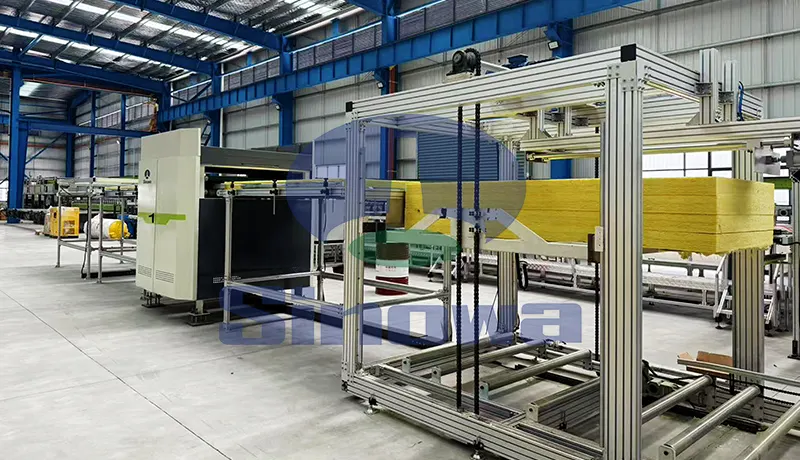
A professional rockwool sandwich panel line serves as the core equipment for producing high-performance building panels. This rockwool sandwich panel production line integrates feeding, laminating and forming processes to ensure stable and efficient production. The well-structured rock wool sandwich panel line can process raw rockwool materials into panels with excellent thermal and sound insulation properties. Operators can adjust the running parameters of the rock wool sandwich panel production line to manufacture panels of different thicknesses and specifications. The automated design of the mineral wool sandwich panel production line greatly reduces manual operation errors and improves product consistency. Regular maintenance of the mineral wool sandwich panel line is essential to sustain long-term operational efficiency and guarantee qualified finished panels for diverse construction applications.