Aluminum Foil Phenolic Panel Line
Publication Date: Oct 6, 2026
The aluminum foil phenolic panel line is a specialized continuous production system for manufacturing high-performance composite panels. It integrates material feeding, mixing, foaming, lamination, shaping and finishing processes to produce stable, durable phenolic panels with aluminum foil cladding for industrial and construction applications.
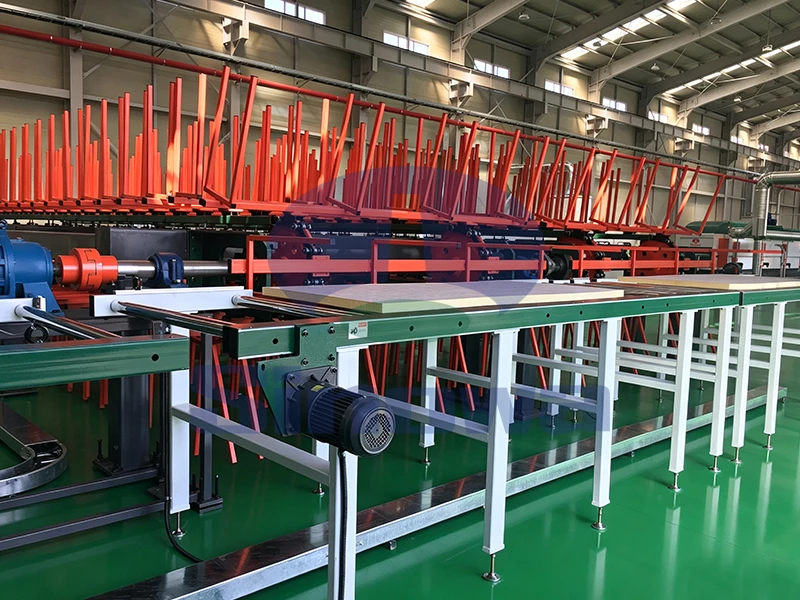
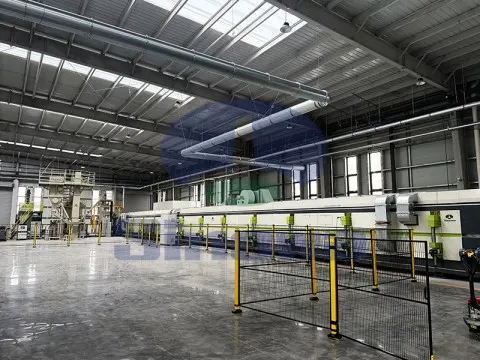
The overall structural design of the aluminum foil phenolic panel line focuses on continuous and automated operation, which lays a solid foundation for stable and efficient panel manufacturing. The entire production system is divided into multiple interconnected functional modules, each undertaking independent and collaborative processing tasks to avoid intermittent production errors and ensure consistent product quality. Different from traditional discrete production equipment, this integrated line realizes seamless docking of each working procedure, from raw material input to finished product output, reducing manual intervention links effectively. The mechanical structure is optimized for long-term continuous operation, with wear-resistant and stable transmission components installed in key operation positions. This structural optimization not only improves the overall operation efficiency of the production line but also reduces the failure rate during long-hour working, making the production process more smooth and reliable for mass composite panel production.
Raw material pretreatment is the initial and essential procedure in the aluminum foil phenolic panel production process, which directly affects the bonding quality and structural stability of finished panels. The main raw materials involved include aluminum foil substrates and phenolic resin raw materials, both of which need professional pretreatment before formal processing. For aluminum foil, the production line is equipped with professional surface treatment units to remove surface dust, oil stains and subtle oxide layers. This treatment can enhance the surface roughness of aluminum foil, greatly improving the bonding tightness between aluminum foil and phenolic foam core materials. For phenolic resin and auxiliary raw materials, the system adopts precise filtering and homogenization treatment to eliminate impurity particles and uneven components in raw materials. Uniform raw material components ensure stable chemical reactions in subsequent foaming and curing processes, avoiding local quality differences inside the panels and laying a reliable foundation for standardized product production.
Raw material feeding and precise metering systems are core auxiliary modules to ensure production accuracy of the entire line. The production line adopts automatic feeding devices for both aluminum foil and phenolic raw materials, realizing continuous and orderly material supply without manual frequent feeding. The aluminum foil feeding part is equipped with tension control structures, which can maintain constant tension during the unwinding process, preventing aluminum foil from wrinkling, stretching or deviating. For liquid phenolic raw materials and various auxiliary agents, the line adopts high-precision metering equipment to control the proportion of each component accurately. Reasonable material proportion is the key to forming uniform closed-cell foam structures of phenolic core materials. The intelligent metering system can automatically adjust feeding parameters according to different production specifications, ensuring that each batch of raw material mixing ratio remains consistent, thus stabilizing the basic physical properties of panels produced in different batches.
The mixing and foaming section is the core functional module that determines the internal structure and performance of phenolic panels. After precise metering, all liquid raw materials are transported to the high-speed mixing unit for full homogenization reaction. The mixing equipment adopts multi-dimensional stirring modes to ensure that phenolic resin, foaming agents and curing agents are completely fused without local segregation. After full mixing, the homogeneous liquid mixture is evenly poured on the surface of the lower-layer aluminum foil through a precision pouring system. At this stage, the foaming agent starts a stable chemical reaction, and the liquid mixture expands gradually to form a dense and uniform closed-cell foam structure. The production line can intelligently adjust mixing speed, pouring volume and foaming reaction speed according to preset parameters, effectively controlling the foam pore size and expansion thickness, so as to ensure the thermal insulation and fireproof performance of the phenolic core material reach the optimal state.
Continuous lamination and composite bonding processes realize the integral forming of aluminum foil and phenolic foam core material. After the initial foaming of the phenolic mixture, the upper-layer aluminum foil is accurately covered on the surface of the foaming core material through the conveying and positioning device of the production line. The composite semi-finished panels then enter the continuous lamination unit, where uniform and stable pressure is applied through precision pressure rollers. The lamination system maintains balanced pressure across the entire panel width to eliminate air pockets between aluminum foil and phenolic core material, achieving seamless composite bonding. During the lamination process, the system matches appropriate pressure and operation speed according to panel thickness specifications, ensuring that the bonding layer is firm without causing excessive compression and deformation of the internal foam structure. This continuous lamination technology effectively improves the overall structural integrity of the composite panel and enhances the interlayer peeling resistance of the product.
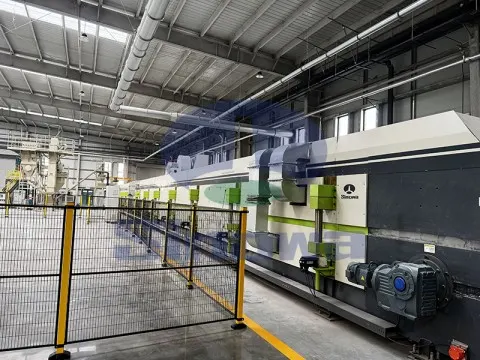
Hot pressing curing is a key procedure to stabilize the internal structure and comprehensive performance of composite panels. The semi-finished panels after lamination enter the independent hot pressing curing tunnel of the production line, where constant temperature and pressure environments are created to promote thorough curing reaction of phenolic foam materials. The hot pressing system adopts regional temperature control design, which can adjust the temperature of different sections according to the curing progress of the core material, avoiding insufficient curing caused by uneven temperature or material aging caused by overheating. Moderate and stable pressure is maintained during the hot pressing process to lock the composite structure of aluminum foil and phenolic core material. After hot pressing curing, the internal molecular structure of the phenolic foam tends to be stable, and the mechanical strength, dimensional stability and structural durability of the panel are significantly improved, meeting the long-term service requirements of composite panels in complex application scenarios.
Gradual cooling and shaping treatment ensures the flatness and dimensional stability of finished panels. Panels discharged from the hot pressing curing tunnel have high internal temperature and unstable internal stress, so rapid cooling is forbidden to prevent surface deformation, warping and internal cracking. The production line is equipped with a long-distance composite cooling section, which combines natural heat dissipation and uniform forced air cooling to realize slow and balanced cooling of panels. The tension control rollers installed in the cooling section can always maintain the flat state of panels during conveying, offsetting the internal stress generated in the hot pressing process. Through precise cooling speed control, the phenolic core material is fully solidified, and the bonding strength between aluminum foil and core material is completely stabilized. This procedure effectively guarantees the flatness tolerance of panels and avoids subsequent deformation problems in the later application and installation process.
Precision trimming and fixed-size cutting processes realize the standardized shaping of finished panels. After cooling and shaping, the continuous long-strip composite panels enter the finishing processing area of the production line. The edge trimming device first cuts off the irregular edge parts on both sides of the panels to ensure consistent width of the entire panel. The high-precision cutting system adopts intelligent length positioning technology, which can flexibly set cutting dimensions according to different user demands. The cutting equipment runs stably with neat incision and no burrs, avoiding structural damage to the panel edge. All trimming and cutting procedures are automatically completed by the production line, with high dimensional accuracy and good consistency of finished products. This standardized finishing process makes the panel size fully meet the requirements of subsequent construction installation and assembly use.
Quality inspection and online monitoring systems run through the entire production process to strictly control product quality. The production line is equipped with real-time online monitoring devices, which can track key parameters such as material mixing state, foaming thickness, lamination pressure and curing temperature in real time. Once abnormal parameter fluctuations are detected, the system will automatically trigger early warning and fine-tune operating parameters to ensure production stability. After the completion of panel finishing, the automatic detection unit will inspect the flatness, bonding firmness and surface integrity of finished panels. Unqualified products will be automatically identified and separated to prevent defective products from entering the finished product link. The whole-process monitoring and inspection mechanism realizes refined quality control, ensuring that each batch of panels has stable and reliable comprehensive performance.
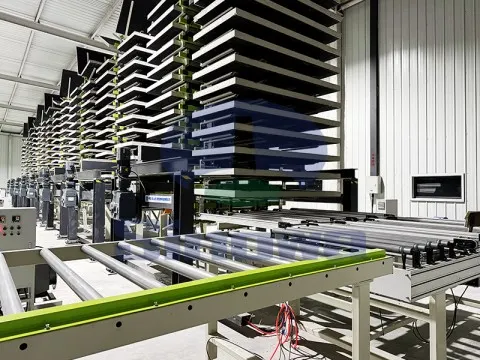
Finished product conveying and stacking procedures complete the final standardized output of products. Qualified finished panels are stably conveyed to the finished product area through the synchronous conveying system of the production line. The automatic stacking device adopts orderly stacking mode, which can adjust stacking quantity and arrangement mode according to product specifications. The whole process avoids manual handling damage to the panel surface and structural deformation caused by irregular stacking. The production line’s rear-end output system is highly matched with the front-end automatic processing links, realizing fully automated operation from raw material input to finished product stacking. This efficient and orderly finished product processing mode not only improves production efficiency but also ensures the neatness and integrity of finished products, facilitating subsequent packaging, transportation and storage of panels.
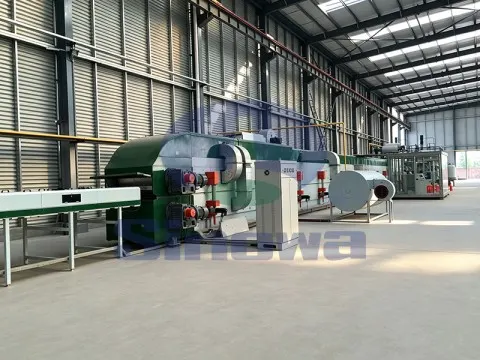
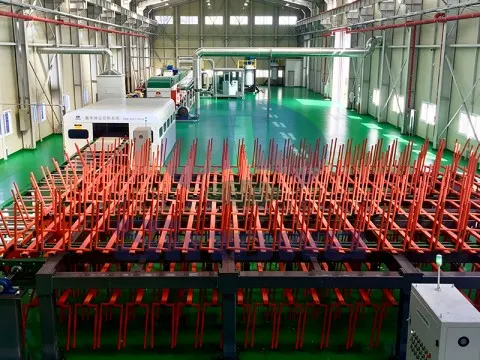
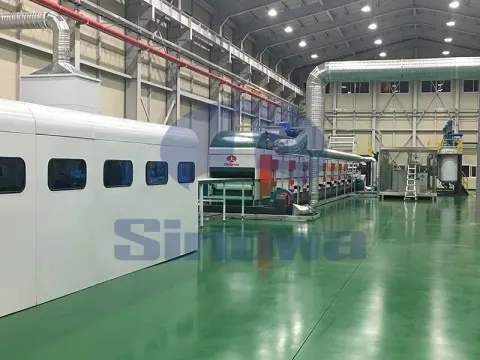
Gallery of Aluminum Foil Phenolic Panel Line
Tags: aluminum foil phenolic panel line, aluminum foil phenolic panel line manufacturer, aluminum foil phenolic panel line supplier, china aluminum foil phenolic panel line, aluminum foil phenolic panel line for sale
https://www.sandwichpanelmachinery.com/blog/aluminum-foil-phenolic-panel-line.html
-
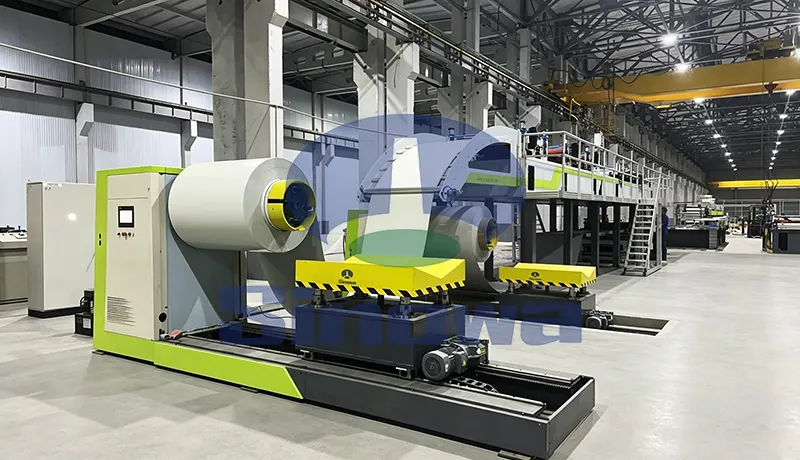
The PU sandwich panel line is a core production setup for making high-performance building insulation panels. This professional PU sandwich panel production line features automated operation to streamline the whole manufacturing process efficiently. Every component of the polyurethane sandwich panel line is precisely calibrated to ensure consistent panel thickness and structural stability. A well-maintained polyurethane sandwich panel production line can greatly boost production efficiency while reducing manual operation errors. The continuous PU sandwich panel line adapts to diverse production demands for different panel sizes and surface styles. With advanced molding technology, the PIR sandwich panel line produces panels with excellent heat preservation and sound insulation properties. Stable running of the PIR sandwich panel production line guarantees reliable product quality for various construction and industrial application scenarios.
-
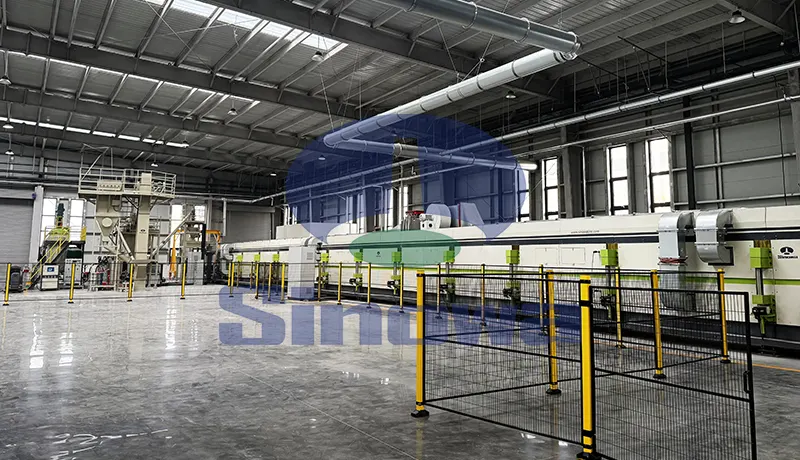
A phenolic insulation board production line serves as the core equipment for manufacturing high-performance thermal insulation building materials. This phenolic insulation panel production line integrates material mixing, foaming, molding and cutting processes to ensure continuous and stable production efficiency. Every operational link of the insulation board production line is precisely calibrated to produce uniform and durable insulation boards. The automated design of the insulation panel production line effectively reduces manual intervention and improves product consistency. Proper maintenance of the phenolic board production line can greatly extend its service life and maintain steady production output. With optimized structural design, the phenolic panel production line adapts to various production demands and delivers high-quality finished products for thermal insulation engineering applications.
-
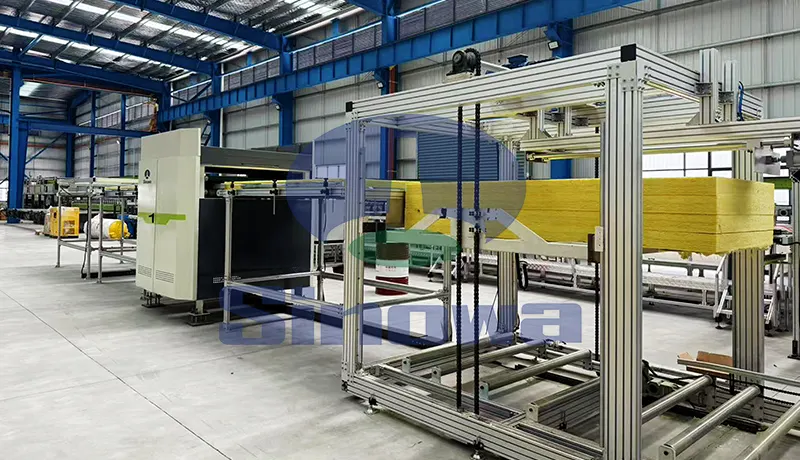
A professional rockwool sandwich panel line serves as the core equipment for producing high-performance building panels. This rockwool sandwich panel production line integrates feeding, laminating and forming processes to ensure stable and efficient production. The well-structured rock wool sandwich panel line can process raw rockwool materials into panels with excellent thermal and sound insulation properties. Operators can adjust the running parameters of the rock wool sandwich panel production line to manufacture panels of different thicknesses and specifications. The automated design of the mineral wool sandwich panel production line greatly reduces manual operation errors and improves product consistency. Regular maintenance of the mineral wool sandwich panel line is essential to sustain long-term operational efficiency and guarantee qualified finished panels for diverse construction applications.