What Is The Difference Between PU And PIR Sandwich Panel Machine?
Publication Date: Sep 23, 2026
PU and PIR sandwich panel machines are core equipment for composite panel production, sharing basic structural frameworks but differing greatly in core systems. Their distinctions mainly lie in chemical adaptation, parameter control, finished product performance adaptation and production process optimization for diverse industrial insulation needs.
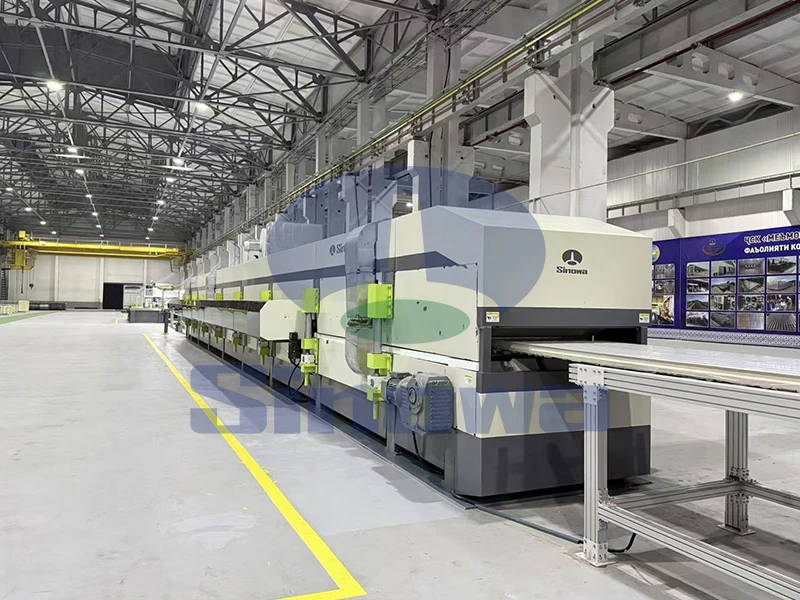
The most fundamental difference between PU and PIR sandwich panel machines stems from their adaptation to distinct chemical reaction characteristics of core foam materials. PU foam forms through a relatively mild chemical reaction between polyol and isocyanate with common catalysts, featuring stable reaction speed and low sensitivity to external environmental changes. Correspondingly, PU sandwich panel machines adopt standard dosing and mixing modules that meet the basic foaming requirements of polyurethane materials. In contrast, PIR foam relies on a specialized trimerization reaction of isocyanate, which demands specific high-efficiency catalysts and a higher proportion of isocyanate raw materials. This unique chemical mechanism makes PIR raw materials far more sensitive to temperature, pressure and mixing uniformity than PU materials. Therefore, PIR sandwich panel machines are equipped with upgraded reaction auxiliary modules to stabilize the special cross-linking reaction of PIR foam, a core design difference that runs through all production links of the two devices.
Raw material dosing systems of the two machines show obvious differentiation in precision and functional design. Standard PU sandwich panel machines are configured with conventional metering pumps and dosing control units, which can accurately match the fixed proportion of PU raw materials and meet the requirements of continuous mass production. The parameter adjustment range of its dosing system is relatively narrow, focusing on maintaining stable output and reducing daily production failure rates. PIR sandwich panel machines, however, adopt high-precision servo dosing systems with real-time monitoring functions. Since the slightest deviation in PIR raw material proportion will affect the formation of isocyanurate ring structure and further reduce fire resistance and structural stability of finished panels, the equipment supports micro-adjustment of raw material ratios in real time. It also adds independent storage and conveying modules for special catalysts to avoid raw material mixing failure, ensuring the chemical reaction of PIR foam proceeds in the most ideal state.
Temperature control systems constitute another key technical gap between PU and PIR sandwich panel machines. PU foaming and curing reactions have low temperature dependence, and conventional constant-temperature heating modules can meet the whole production process demands. The temperature fluctuation tolerance of PU equipment is relatively wide, and minor temperature changes in the production environment will not cause obvious defects in foam molding and bonding effect. On the contrary, PIR foam molding is extremely sensitive to temperature changes. PIR sandwich panel machines are fitted with full-section segmented constant-temperature control devices covering mixing, foaming, pressing and curing links. These devices can precisely control the reaction temperature within a narrow fixed range and dynamically compensate for ambient temperature changes. Strict temperature control ensures the dense closed-cell structure unique to PIR foam forms stably, which is the key reason why PIR panels have better thermal stability than PU panels.
Foam mixing and stirring structures of the two types of machines are optimized for different material fluidity and reaction rates. PU raw materials have moderate fluidity and slow reaction speed after mixing, so PU sandwich panel machines use conventional high-speed stirring mixing heads with simple internal structures. This design can realize uniform mixing of raw materials in a short time and is not prone to blockage or material residue during long-term continuous operation. PIR raw materials have fast reaction speed and poor fluidity after being proportioned, and premature local curing will occur if mixing is uneven. For this reason, PIR machines adopt upgraded multi-channel turbulent flow mixing structures, which can complete high-efficiency uniform mixing in an ultra-short time. Meanwhile, the mixing cavity is optimized with anti-curing and anti-residue designs to prevent raw material adhesion and curing inside the equipment, effectively avoiding product quality problems caused by incomplete mixing.
Production speed and operational flexibility of PU and PIR sandwich panel machines differ significantly to adapt to different production positioning. PU sandwich panel machines are designed for high-efficiency mass production of conventional insulation panels, with stable and fast continuous production speed. Their parameter setting is simple and operation threshold is low, and workers can quickly adjust basic production parameters according to panel thickness and width. The equipment has strong compatibility with conventional production scenarios and can maintain long-term stable operation. PIR sandwich panel machines prioritize product quality stability over production speed, so their conventional operating speed is slightly lower than that of PU equipment. Their parameter adjustment logic is more complex, requiring linkage setting of temperature, dosing ratio and mixing speed. Although the operation is more cumbersome, this multi-dimensional adjustable design enables the equipment to adapt to diversified high-standard production requirements of PIR panels.
Curing and pressing systems of the two machines are adjusted according to the structural characteristics of different foams. After PU foam is foamed, it cures quickly and has good ductility, so the double-belt pressing system of PU sandwich panel machines adopts conventional constant-pressure and constant-speed operation mode. The pressing gap and pressure parameters are fixed in a conventional range, which can ensure tight bonding between foam core and surface plates and uniform overall thickness of panels. PIR foam has high rigidity and fast curing speed after molding, and is prone to local deformation or insufficient bonding if the pressing parameters are not matched properly. PIR machines are equipped with intelligent pressure adjustment and segmented pressing modules, which can fine-tune pressing pressure and speed in real time according to foam curing state. This design ensures that PIR foam forms a compact and uniform internal structure while realizing firm composite bonding of panels.
Finished product quality control and defect monitoring functions of the two devices have obvious functional differences. PU sandwich panel machines are equipped with basic monitoring modules, which mainly detect panel thickness, flatness and bonding integrity. The monitoring indicators are relatively single, which can meet the quality inspection standards of ordinary insulation panels. PIR sandwich panel machines add multi-dimensional real-time monitoring functions targeting the core performance of PIR panels. In addition to basic appearance and size detection, the equipment can indirectly judge foam internal cell uniformity and reaction adequacy through real-time data of production parameters. It can timely early warn abnormal problems such as insufficient fire resistance and poor thermal stability caused by unqualified reaction, greatly improving the yield of high-performance PIR panels.
Equipment maintenance and daily operation management of PU and PIR sandwich panel machines have different requirements. The structural design of PU sandwich panel machines is simple, with few precision components, and the wearing parts are common and easy to replace. Daily maintenance only includes conventional cleaning, lubrication and parameter calibration, with low maintenance difficulty and cost, and long stable operation cycle. PIR sandwich panel machines integrate a large number of precision metering, temperature control and intelligent monitoring components, with complex internal structures. Daily maintenance needs to focus on checking the precision of dosing system, sensitivity of temperature control modules and cleanliness of mixing cavity. Regular professional calibration of precision components is required to ensure production accuracy, so the maintenance cycle is shorter and the operation management requirements are more stringent.
Application scenario orientation of the two machines determines their different market adaptation values. PU sandwich panel machines are mainly used to produce ordinary insulation panels for general industrial plants, temporary buildings and conventional warehouse insulation projects. The produced panels have balanced basic insulation performance and economic applicability, matching the equipment’s high-efficiency and low-cost production advantages. PIR sandwich panel machines are dedicated to manufacturing high-standard insulation panels with excellent fire resistance and high-temperature thermal stability, which are suitable for building envelopes and special storage facilities with high safety requirements. The equipment’s precise control and customized reaction optimization capabilities fully meet the strict performance requirements of high-end application scenarios for sandwich panels.
In summary, the differences between PU and PIR sandwich panel machines run through chemical adaptation, system configuration, production control, maintenance and application orientation. PU equipment focuses on efficient and economical mass production of conventional products, while PIR equipment takes high-precision control and high-quality product performance as the core. Choosing matching production equipment according to actual product performance demands is the key to improving production efficiency and product market competitiveness.
Gallery of PIR Sandwich Panel Machine
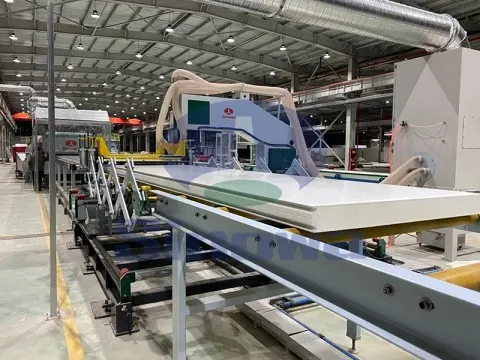
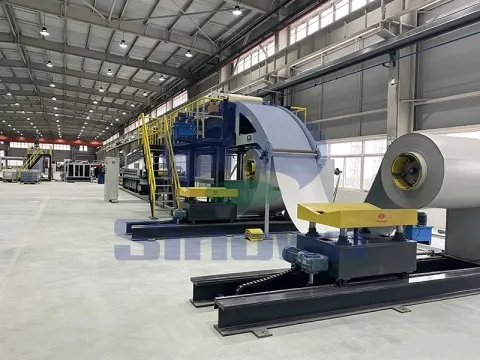
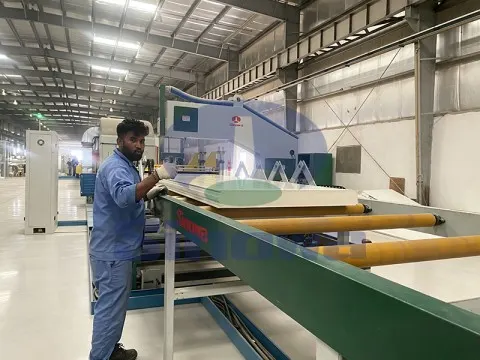
Tags: pir sandwich panel machine, pir sandwich panel machine manufacturer, pir sandwich panel machine supplier, china pir sandwich panel machine, pir sandwich panel machine for sale
-
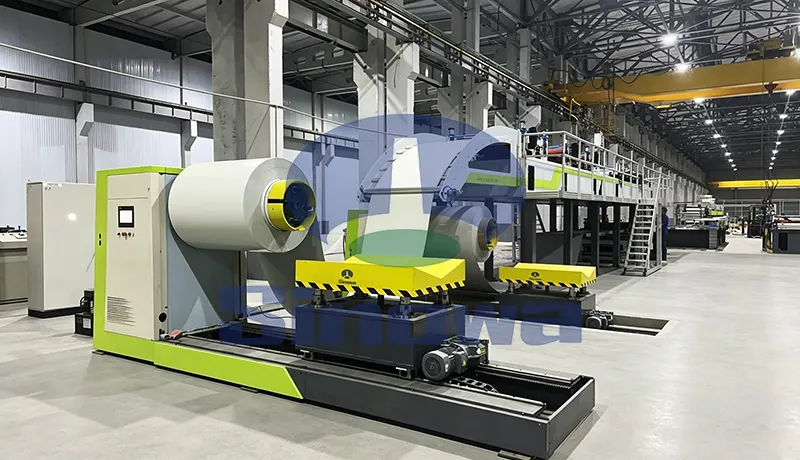
The PU sandwich panel line is a core production setup for making high-performance building insulation panels. This professional PU sandwich panel production line features automated operation to streamline the whole manufacturing process efficiently. Every component of the polyurethane sandwich panel line is precisely calibrated to ensure consistent panel thickness and structural stability. A well-maintained polyurethane sandwich panel production line can greatly boost production efficiency while reducing manual operation errors. The continuous PU sandwich panel line adapts to diverse production demands for different panel sizes and surface styles. With advanced molding technology, the PIR sandwich panel line produces panels with excellent heat preservation and sound insulation properties. Stable running of the PIR sandwich panel production line guarantees reliable product quality for various construction and industrial application scenarios.
-
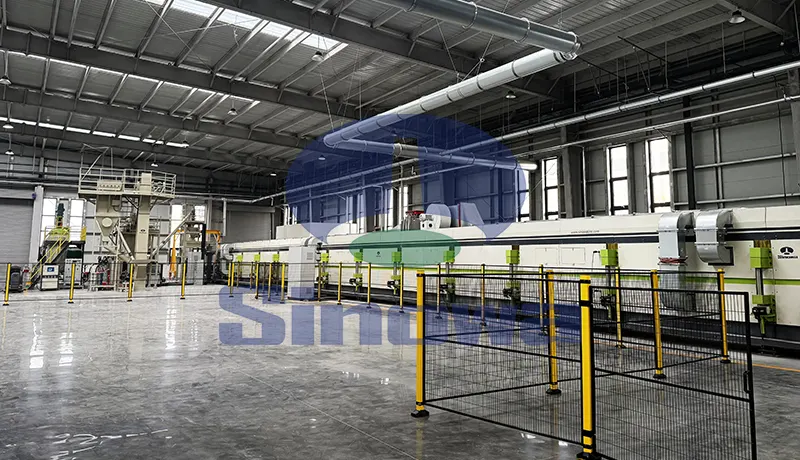
A phenolic insulation board production line serves as the core equipment for manufacturing high-performance thermal insulation building materials. This phenolic insulation panel production line integrates material mixing, foaming, molding and cutting processes to ensure continuous and stable production efficiency. Every operational link of the insulation board production line is precisely calibrated to produce uniform and durable insulation boards. The automated design of the insulation panel production line effectively reduces manual intervention and improves product consistency. Proper maintenance of the phenolic board production line can greatly extend its service life and maintain steady production output. With optimized structural design, the phenolic panel production line adapts to various production demands and delivers high-quality finished products for thermal insulation engineering applications.
-
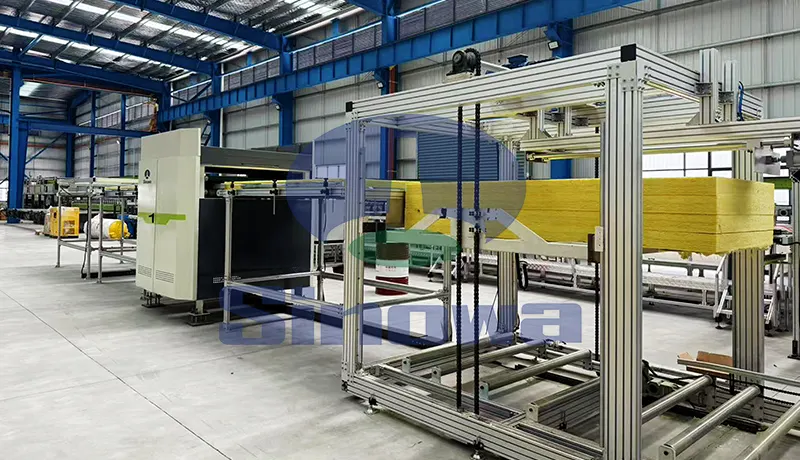
A professional rockwool sandwich panel line serves as the core equipment for producing high-performance building panels. This rockwool sandwich panel production line integrates feeding, laminating and forming processes to ensure stable and efficient production. The well-structured rock wool sandwich panel line can process raw rockwool materials into panels with excellent thermal and sound insulation properties. Operators can adjust the running parameters of the rock wool sandwich panel production line to manufacture panels of different thicknesses and specifications. The automated design of the mineral wool sandwich panel production line greatly reduces manual operation errors and improves product consistency. Regular maintenance of the mineral wool sandwich panel line is essential to sustain long-term operational efficiency and guarantee qualified finished panels for diverse construction applications.