What Is The Mixing System Of PU Sandwich Panel Machine?
Publication Date: Sep 23, 2026
The mixing system is the core functional unit of a PU sandwich panel machine, dedicated to proportioning and blending polyurethane raw materials. It ensures uniform material reaction and stable foaming quality, laying a solid foundation for consistent panel thermal insulation and structural performance in continuous production.
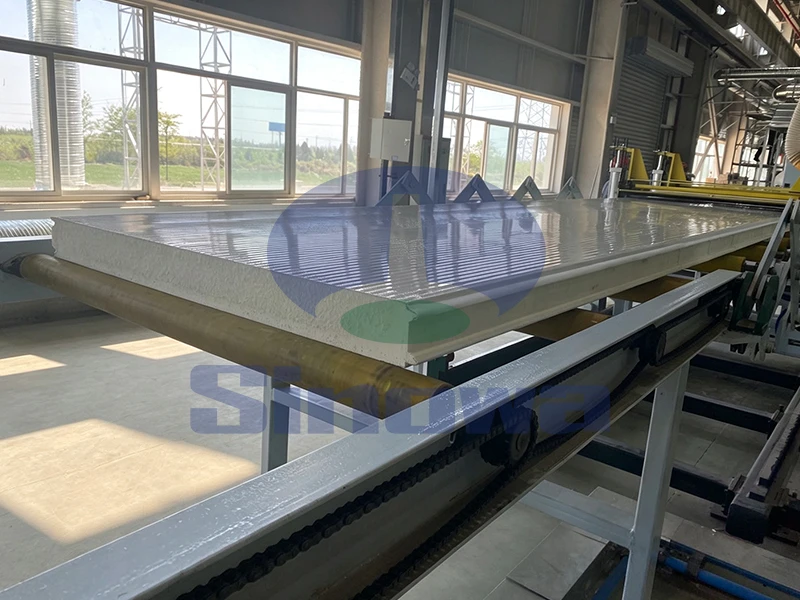
The mixing system of a PU sandwich panel machine is a specialized automated functional module designed for polyurethane two-component reaction molding, serving as the core component that determines the core layer quality of finished panels. Its basic operating logic focuses on precise proportioning and homogeneous mixing of two key raw materials: polyether polyol and isocyanate, along with auxiliary additives including catalysts, foaming agents and stabilizers. Unlike simple manual blending or traditional mechanical mixing devices, this professional system operates in a fully enclosed and automated manner throughout the process. It independently stores different raw materials in sealed tanks to avoid cross-contamination and external interference, and delivers materials according to preset process parameters. Every link from raw material output to final mixing is precisely controlled, which fundamentally avoids unstable mixing ratios and uneven blending effects that easily occur in traditional production modes.
Raw material storage and independent feeding are the basic preconditions for the stable operation of the PU sandwich panel machine’s mixing system. The system is equipped with multiple independent sealed storage tanks to separately accommodate different polyurethane raw materials and auxiliary materials. This separated storage structure effectively prevents premature chemical reactions between different raw materials before entering the mixing link, as polyether polyol and isocyanate will undergo rapid foaming and curing reactions once mixed. Each storage tank is matched with an independent feeding pipeline and a high-precision conveying power unit. During operation, the system extracts raw materials quantitatively according to preset proportions, and the independent pipeline design ensures that the flow rate and delivery state of each material remain stable without mutual interference, laying a reliable foundation for subsequent accurate mixing.
High-precision metering control is the key functional advantage of the entire mixing system and a decisive factor for qualified PU panel quality. The system adopts professional metering components to realize real-time monitoring and fine adjustment of raw material flow. It can accurately control the output of main raw materials and auxiliary materials, ensuring that the proportion of all components fully matches the chemical reaction requirements of polyurethane foaming. Slight deviations in raw material ratios will directly lead to product defects: excessive polyether polyol will cause insufficient curing of the core layer, while excessive isocyanate will result in brittle foam and poor thermal insulation performance. The metering module supports micro-adjustment of parameters according to different production demands, adapting to the manufacturing requirements of PU panels with different densities and structural characteristics.
The mixing head is the core execution component of the system’s blending process and the key area where raw materials complete instantaneous mixing and initial chemical reactions. Common structural types of mixing heads include straight-type and L-type structures, both of which rely on high-pressure collision and high-speed turbulence principles to achieve rapid homogenization of raw materials. After being precisely metered and conveyed, all raw materials are injected into the closed mixing chamber of the mixing head at a constant high pressure. The extreme turbulence formed in the confined space breaks up raw material molecular layering, eliminates local concentration differences, and enables full fusion of different components in an extremely short time. This instantaneous high-efficiency mixing mode avoids the material precipitation and uneven mixing problems caused by long-term stirring, ensuring the uniformity of the mixed liquid.
Closed-cycle mixing operation is an important design feature of the PU sandwich panel machine’s mixing system, which optimizes both production quality and operational safety. The entire blending process is completed in a fully closed pipeline and mixing chamber environment, completely isolating raw materials from the external air environment. This design effectively prevents moisture and dust in the air from mixing into the polyurethane raw materials, as moisture will destroy the foaming structure and cause hollow holes or uneven pores in the panel core layer. Meanwhile, the closed structure avoids volatilization of trace auxiliary materials, maintains the stability of raw material composition, and reduces material waste. In addition, it optimizes the on-site production environment and reduces the impact of chemical material volatilization on operational safety.
Automated linkage control runs through the entire working process of the mixing system, realizing intelligent and continuous production. The system is connected with the overall production control module of the sandwich panel machine, and all mixing parameters including raw material ratio, feeding speed, mixing pressure and mixing time are uniformly set and automatically adjusted through the central control terminal. During continuous production, the system can monitor the operating state of each component in real time. Once abnormal fluctuations in material flow or pressure deviation are detected, it will automatically fine-tune parameters to restore stable operation. This highly automated linkage mode eliminates errors caused by manual parameter adjustment, ensures the consistency of mixing effects in batch production, and greatly improves production efficiency and product yield.
Auxiliary material synchronous mixing control is a refined functional module of the system, which guarantees the comprehensive performance of PU sandwich panels. In addition to the two main reaction raw materials, the production of high-quality PU panels requires a variety of trace auxiliary materials to adjust foaming speed, foam density and material stability. The mixing system is designed with an independent auxiliary material metering and feeding channel, which can synchronously add catalysts, foaming agents and stabilizers in accurate proportions during the main material mixing process. The system realizes synchronous fusion of main materials and auxiliary materials through staged feeding and layered mixing, ensuring that auxiliary components are evenly distributed in the mixed liquid. This refined mixing mode optimizes the foaming reaction process and improves the compactness and uniformity of the panel core foam structure.
Real-time state monitoring and self-calibration functions endow the mixing system with high stability and anti-interference ability in long-term operation. During continuous production, the system’s built-in sensing components continuously collect data such as pipeline pressure, material flow and mixing chamber temperature. These real-time data are transmitted to the control terminal for intelligent analysis and comparison with preset standard parameters. When subtle deviations occur due to long-term equipment operation or slight changes in raw material characteristics, the system will automatically complete parameter self-calibration without stopping production. This real-time adjustment capability effectively avoids gradual deterioration of mixing quality caused by equipment aging or raw material fluctuations, ensuring long-term stable and consistent mixing effects.
The mixing system’s adaptive adjustment capability enables it to meet diversified production demands of PU sandwich panels. Different application scenarios require PU panels with different thermal insulation grades, core layer densities and mechanical strengths, which correspond to different raw material ratios and mixing process parameters. The system supports flexible adjustment of multiple core parameters, including raw material proportion, mixing pressure and feeding rate. It can switch between different production processes efficiently, realizing the production of diversified panel products on the same equipment. While adapting to production changes, the system always maintains uniform mixing quality, ensuring that the foaming reaction is fully completed and the core layer structure of each panel is compact and uniform.
Regular maintenance and cleaning matching mechanism is an indispensable supporting part of the mixing system to ensure long-term efficient operation. After long-term continuous mixing, residual polyurethane materials may adhere to the inner wall of the mixing head and pipelines, which will affect the accuracy of subsequent metering and the uniformity of mixing. The system is equipped with a matched automatic cleaning structure, which can clean the mixing chamber and conveying pipelines after production is completed. Regular cleaning removes residual cured materials and dirt, ensures the smoothness of material conveying channels and the precision of mixing components. Scientific maintenance and cleaning effectively extend the service life of the mixing system, reduce equipment failure rates, and maintain stable production quality for a long time.
Gallery of PU Sandwich Panel Machine
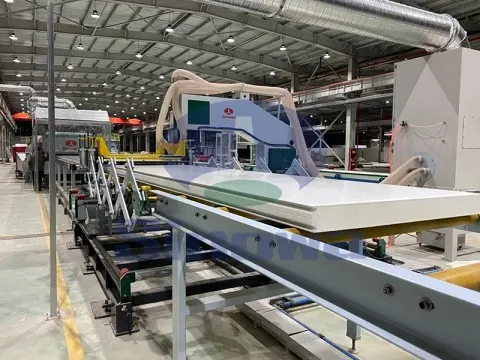
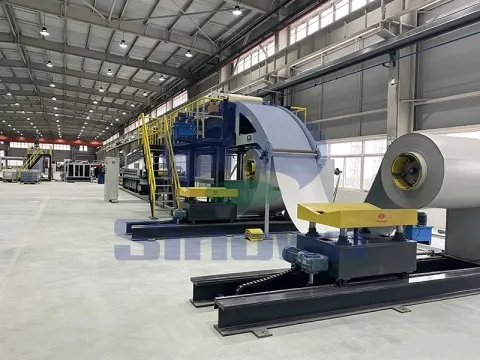
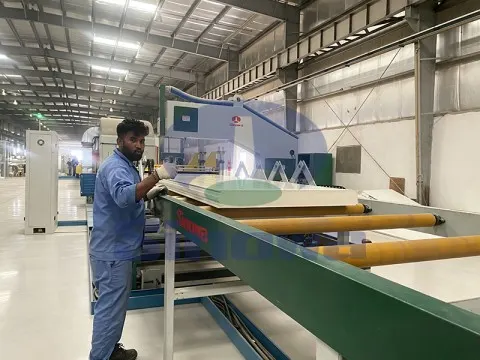
Tags: pu sandwich panel machine, pu sandwich panel machine manufacturer, pu sandwich panel machine supplier, china pu sandwich panel machine, pu sandwich panel machine for sale
-
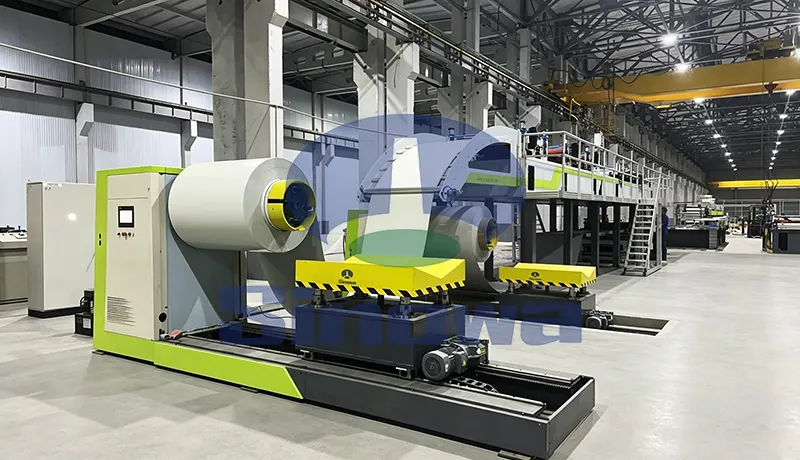
The PU sandwich panel line is a core production setup for making high-performance building insulation panels. This professional PU sandwich panel production line features automated operation to streamline the whole manufacturing process efficiently. Every component of the polyurethane sandwich panel line is precisely calibrated to ensure consistent panel thickness and structural stability. A well-maintained polyurethane sandwich panel production line can greatly boost production efficiency while reducing manual operation errors. The continuous PU sandwich panel line adapts to diverse production demands for different panel sizes and surface styles. With advanced molding technology, the PIR sandwich panel line produces panels with excellent heat preservation and sound insulation properties. Stable running of the PIR sandwich panel production line guarantees reliable product quality for various construction and industrial application scenarios.
-
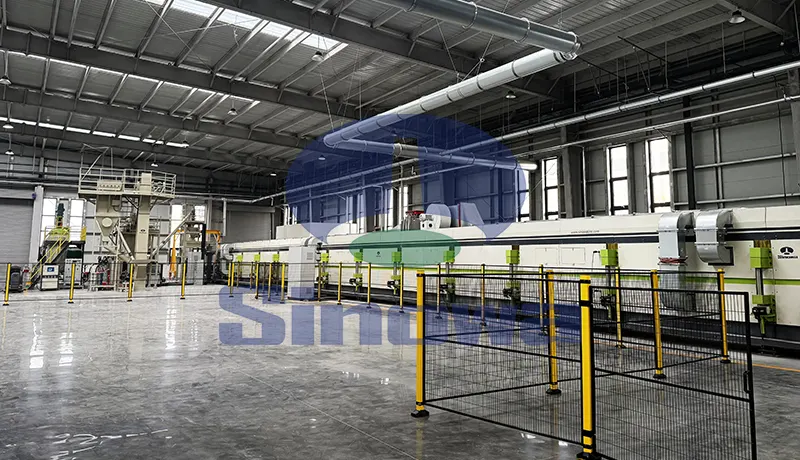
A phenolic insulation board production line serves as the core equipment for manufacturing high-performance thermal insulation building materials. This phenolic insulation panel production line integrates material mixing, foaming, molding and cutting processes to ensure continuous and stable production efficiency. Every operational link of the insulation board production line is precisely calibrated to produce uniform and durable insulation boards. The automated design of the insulation panel production line effectively reduces manual intervention and improves product consistency. Proper maintenance of the phenolic board production line can greatly extend its service life and maintain steady production output. With optimized structural design, the phenolic panel production line adapts to various production demands and delivers high-quality finished products for thermal insulation engineering applications.
-
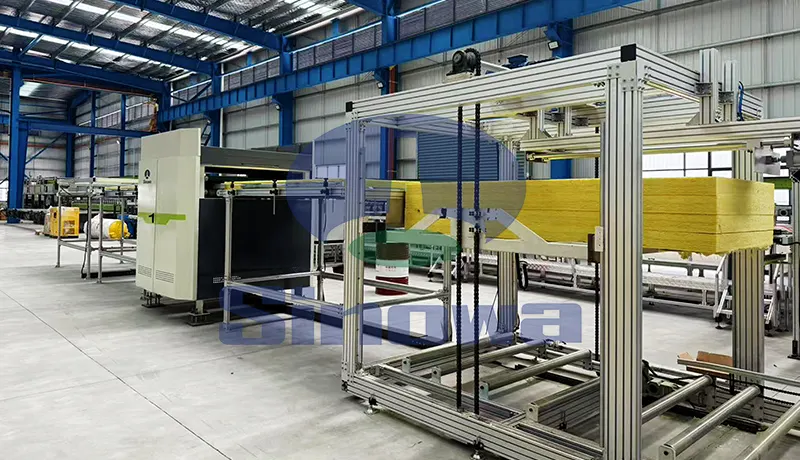
A professional rockwool sandwich panel line serves as the core equipment for producing high-performance building panels. This rockwool sandwich panel production line integrates feeding, laminating and forming processes to ensure stable and efficient production. The well-structured rock wool sandwich panel line can process raw rockwool materials into panels with excellent thermal and sound insulation properties. Operators can adjust the running parameters of the rock wool sandwich panel production line to manufacture panels of different thicknesses and specifications. The automated design of the mineral wool sandwich panel production line greatly reduces manual operation errors and improves product consistency. Regular maintenance of the mineral wool sandwich panel line is essential to sustain long-term operational efficiency and guarantee qualified finished panels for diverse construction applications.