What Thickness Of PU Sandwich Panels Can The Machine Make?
Publication Date: Sep 23, 2026
PU sandwich panel manufacturing machines support diverse panel thickness production to fit various construction and industrial needs. Their adjustable structural design enables flexible thickness tuning, covering common and customized specifications for different application scenarios.
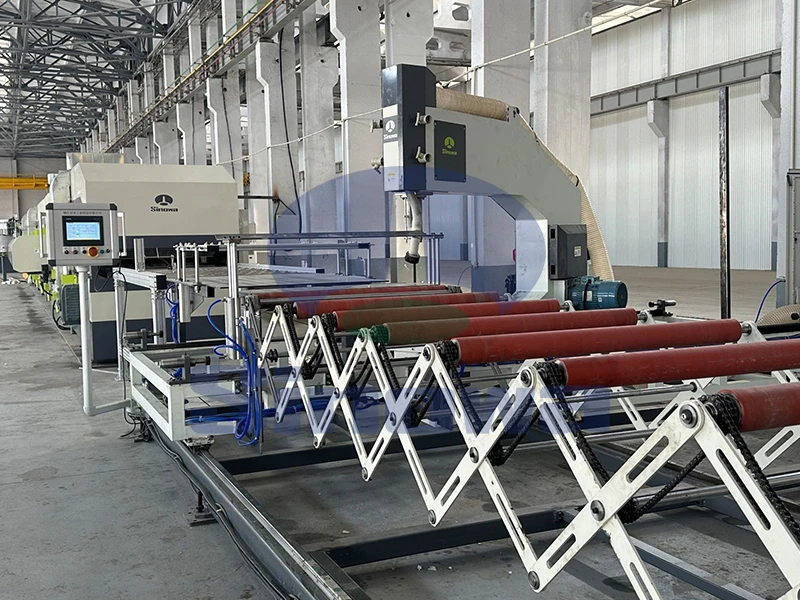
The core working principle that determines the thickness capacity of PU sandwich panel machines lies in their adjustable forming and pressing system. The equipment is equipped with precision spacing adjustment devices on upper and lower pressing rollers and forming molds, which can stably control the overall thickness of finished panels during the continuous production process. Unlike fixed-mold equipment with single production specifications, modern PU sandwich panel machines adopt modular adjustable structures, allowing operators to fine-tune the gap between molding components according to target thickness requirements. This mechanical adjustment mode ensures uniform thickness across the entire panel surface, avoiding uneven thickness, edge deviation or local bulging problems that often occur in inferior production equipment. Meanwhile, the automatic calibration system of the machine can real-time monitor thickness changes during operation, slightly correcting mechanical deviations to keep each batch of products consistent in thickness parameters.
The minimum thickness limit of PU sandwich panels processed by standard production machines is designed for lightweight and thin-type application scenarios. Most conventional automated production lines can stably manufacture PU sandwich panels with relatively thin overall thickness, which are mainly applied in interior partition decoration, simple enclosure structures and light-duty thermal insulation projects. Thin-specification PU panels produced by professional machines maintain complete structural integrity, with tight bonding between the PU foam core and metal or non-metal surface layers. Even with reduced overall thickness, the equipment can ensure uniform foaming density of the inner PU material, avoiding hollow cores or insufficient foaming that affect thermal insulation and structural performance. The thin panel production mode also features fast molding speed, high yield and low material waste, making it highly suitable for large-scale production of light thermal insulation building materials.
For medium-thickness PU sandwich panels, production machines achieve the most stable and efficient production state. Medium thickness specifications are the most widely used in the market, covering most industrial plant enclosures, warehouse thermal insulation walls, cold storage partitions and ordinary building roof thermal insulation systems. When producing medium-thickness panels, the machine’s foaming injection system and pressing forming system operate in the optimal parameter range. The equipment can accurately control the injection volume of PU foaming raw materials, matching the mold spacing to ensure the inner core material is fully foamed and compactly filled. The mechanical pressure balance system ensures that the surface layers on both sides of the panel are tightly combined with the core layer without delamination or warping. In this thickness range, the machine balances production efficiency, product quality and operational stability, realizing long-term continuous uninterrupted production with extremely low defective rate.
Professional PU sandwich panel machines also support the production of thick-specification panels for heavy-duty thermal insulation and special structural needs. Thick PU sandwich panels are mostly used in low-temperature cold storage with high thermal insulation requirements, special industrial anti-corrosion and thermal insulation structures, and outdoor enclosure facilities with high weather resistance standards. To adapt to thick panel production, the machine’s frame structure is reinforced to bear higher forming pressure, ensuring that thick core materials can be fully compressed and molded without loose internal structure. The foaming system will automatically adjust the raw material ratio and foaming time according to the increased thickness, ensuring that the inner PU foam forms a uniform and dense three-dimensional structure. In addition, the machine’s traction and cutting system is optimized for thick panels to guarantee flat and neat cutting sections and consistent overall dimensional accuracy.
Multiple mechanical components jointly restrict and adjust the thickness production range of PU sandwich panel machines. The mold spacing adjustment mechanism is the most direct factor, which determines the maximum and minimum forming space for panel molding. The precision of the roller gap directly affects the final thickness accuracy of finished products, and high-precision servo-adjustment structures can achieve millimeter-level fine tuning. Besides, the PU foaming injection volume control system coordinates with mechanical spacing. Excessively thin or thick specifications require corresponding adjustment of foaming material dosage and reaction time to match the molding space. The traction speed of the equipment also needs adaptive adjustment; too fast speed may lead to insufficient foaming of thick panels, while too slow speed may cause material accumulation and surface defects of thin panels.
Different surface layer materials will not change the machine’s adjustable thickness range but require parameter optimization during production. PU sandwich panels can be compounded with metal color steel plates, aluminum plates, glass magnesium plates and other surface materials. Although the total thickness production limit of the machine remains unchanged, surface layers with different thickness and hardness will affect the internal stress balance during molding. When producing panels with rigid thick surface layers, the machine needs to appropriately adjust pressing pressure to ensure tight composite bonding without damaging the surface material. For flexible thin surface layers, the traction tension needs fine tuning to avoid surface wrinkling while maintaining the overall thickness uniformity of the sandwich panel.
The automated control system of modern PU sandwich panel machines greatly improves the flexibility of thickness switching. The intelligent operating panel stores parameter formulas corresponding to different thickness specifications. Operators can complete thickness switching with one key, realizing rapid adjustment from thin to thick panel production without complicated manual debugging. The system can automatically synchronize multiple parameters including mold gap, foaming flow, pressing pressure and traction speed, effectively avoiding product quality problems caused by single parameter mismatch. This intelligent adjustment mode shortens the production line switching time, improves production flexibility, and enables the equipment to meet multi-specification and small-batch customized production demands.
The stability of machine operation directly affects the thickness consistency of mass-produced PU sandwich panels. High-quality production equipment is equipped with constant-pressure forming systems, which keep the pressing force stable during continuous operation, preventing thickness deviation caused by pressure fluctuation. The equipment’s vibration reduction structure avoids local thickness unevenness caused by mechanical vibration during high-speed operation. Regular maintenance and calibration of the machine’s adjustment components are also crucial. Wear of rollers, molds and adjusting screws will cause thickness errors, so daily maintenance can ensure the equipment maintains accurate thickness production capacity for a long time and guarantees stable product quality in long-term mass production.
The practical application environment puts forward differentiated thickness requirements, which drives the continuous optimization of machine thickness production capacity. Light indoor decoration projects pursue thin and lightweight panels to reduce building load, while extreme weather outdoor facilities and low-temperature storage projects need thick panels to enhance thermal insulation and structural stability. Professional PU sandwich panel machines can cover these diverse market demands through adjustable thickness functions. The equipment’s flexible thickness adaptability not only expands the application scope of PU sandwich panels but also improves the comprehensive utilization rate of production equipment, bringing higher production flexibility for building thermal insulation material manufacturers.
In summary, professional PU sandwich panel manufacturing machines feature flexible and wide thickness production ranges, covering thin, medium and thick panel specifications for diverse scenarios. Supported by adjustable mechanical structures and intelligent control systems, the equipment ensures high precision and stable quality of panels with different thicknesses, fully meeting the personalized and standardized production needs of various thermal insulation and enclosure engineering projects.
Gallery of PU Sandwich Panel Machine
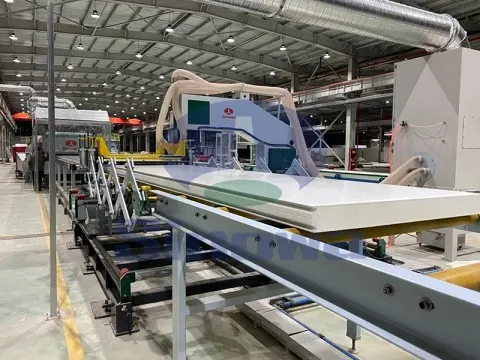
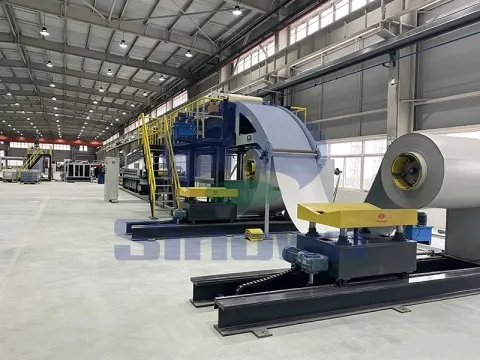
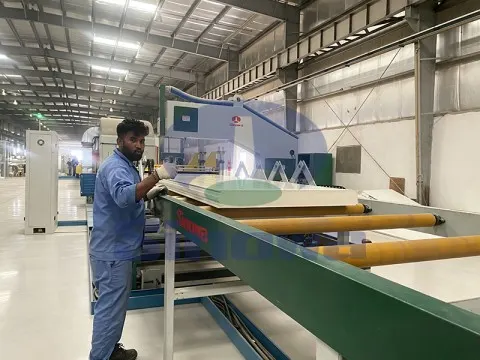
Tags: pu sandwich panel machine, pu sandwich panel machine manufacturer, pu sandwich panel machine supplier, china pu sandwich panel machine, pu sandwich panel machine for sale
-
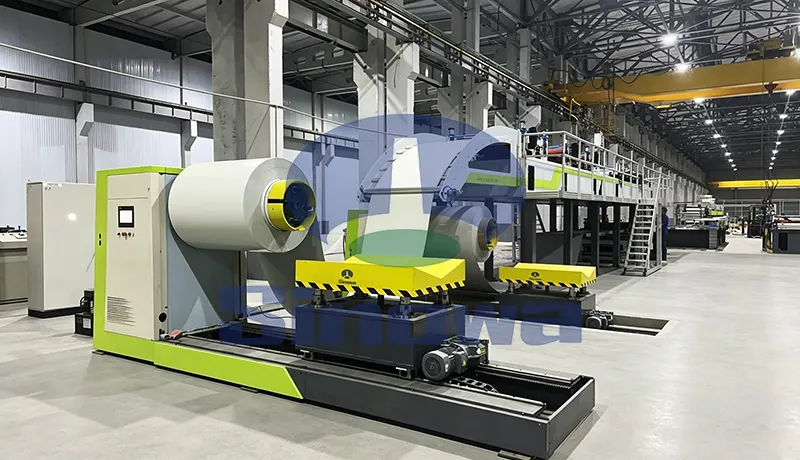
The PU sandwich panel line is a core production setup for making high-performance building insulation panels. This professional PU sandwich panel production line features automated operation to streamline the whole manufacturing process efficiently. Every component of the polyurethane sandwich panel line is precisely calibrated to ensure consistent panel thickness and structural stability. A well-maintained polyurethane sandwich panel production line can greatly boost production efficiency while reducing manual operation errors. The continuous PU sandwich panel line adapts to diverse production demands for different panel sizes and surface styles. With advanced molding technology, the PIR sandwich panel line produces panels with excellent heat preservation and sound insulation properties. Stable running of the PIR sandwich panel production line guarantees reliable product quality for various construction and industrial application scenarios.
-
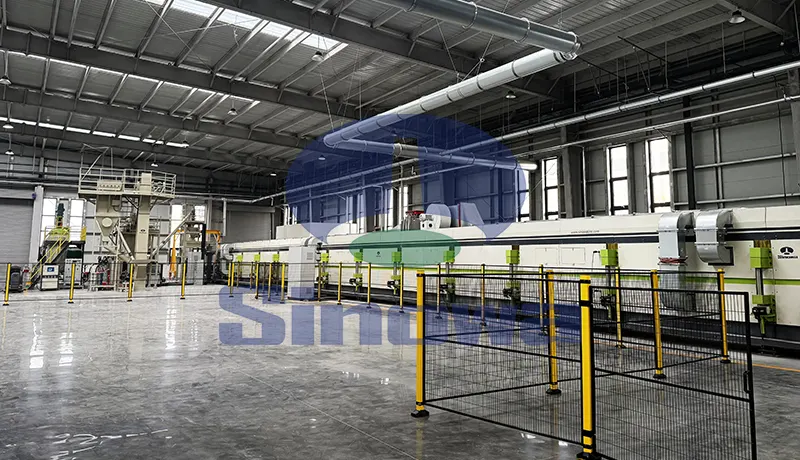
A phenolic insulation board production line serves as the core equipment for manufacturing high-performance thermal insulation building materials. This phenolic insulation panel production line integrates material mixing, foaming, molding and cutting processes to ensure continuous and stable production efficiency. Every operational link of the insulation board production line is precisely calibrated to produce uniform and durable insulation boards. The automated design of the insulation panel production line effectively reduces manual intervention and improves product consistency. Proper maintenance of the phenolic board production line can greatly extend its service life and maintain steady production output. With optimized structural design, the phenolic panel production line adapts to various production demands and delivers high-quality finished products for thermal insulation engineering applications.
-
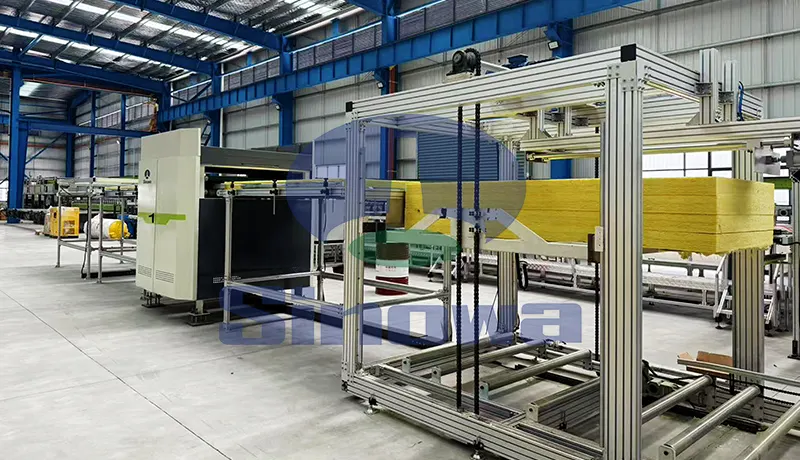
A professional rockwool sandwich panel line serves as the core equipment for producing high-performance building panels. This rockwool sandwich panel production line integrates feeding, laminating and forming processes to ensure stable and efficient production. The well-structured rock wool sandwich panel line can process raw rockwool materials into panels with excellent thermal and sound insulation properties. Operators can adjust the running parameters of the rock wool sandwich panel production line to manufacture panels of different thicknesses and specifications. The automated design of the mineral wool sandwich panel production line greatly reduces manual operation errors and improves product consistency. Regular maintenance of the mineral wool sandwich panel line is essential to sustain long-term operational efficiency and guarantee qualified finished panels for diverse construction applications.