Phenolic Panel Manufacturing Equipment
Publication Date: Sep 27, 2026
Phenolic panel manufacturing equipment refers to integrated mechanical systems for producing durable thermosetting phenolic panels. It covers full-process automated devices from raw material treatment to finished product shaping, ensuring stable panel structure and consistent performance for diverse industrial and construction uses.
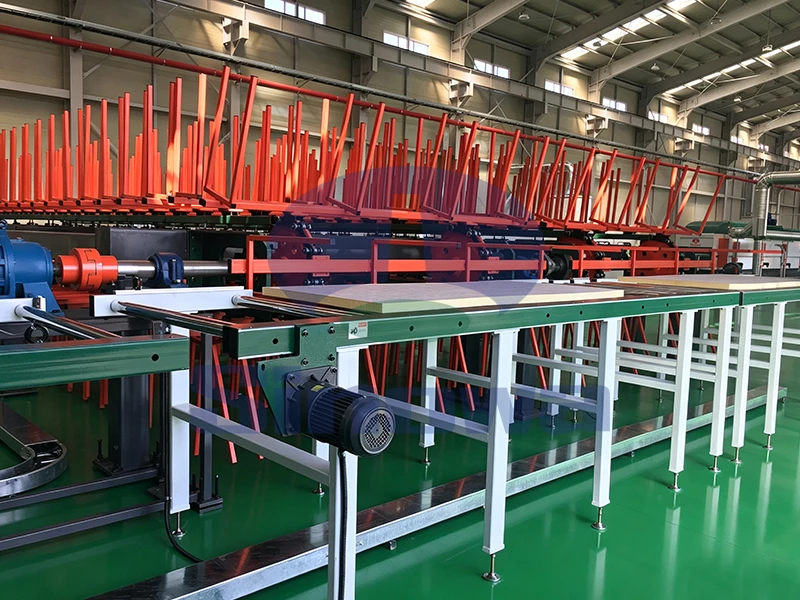
Raw material pretreatment equipment forms the foundational module of phenolic panel production lines, undertaking the core task of purifying and standardizing base materials for subsequent processing. This set of equipment mainly includes dedicated crushing units, screening machines and impurity removal devices, which work in tandem to process fiber substrates and phenolic resin raw materials. Bulk raw materials are first fed into crushing equipment to break down oversized agglomerates into uniform fine particles, eliminating uneven material textures that may affect later bonding effects. The screening device then filters out dust, granular impurities and unqualified coarse materials, ensuring all raw materials meet uniform particle size standards. Automated conveying accessories in the system realize continuous material feeding, avoiding manual intervention errors. Standardized pretreatment by this equipment effectively improves the uniformity of resin infiltration and lays a solid foundation for stable molding and long-term structural durability of finished phenolic panels.
Resin impregnation equipment is the core functional unit that endows phenolic panels with excellent structural and functional properties, determining the bonding strength and uniformity of composite materials. This professional insulation sandwich panel equipment is designed with sealed infiltration tanks and adjustable roller transmission structures, enabling continuous and uniform soaking of fiber base materials in liquid phenolic resin. The equipment features precise liquid level control systems to maintain stable resin concentration at all times, preventing insufficient or excessive resin adhesion on substrate surfaces. Variable-speed transmission devices adjust the walking speed of base materials according to production demands, controlling impregnation time accurately to ensure resin fully penetrates every fiber layer without residual bubbles. Equipped with circulating filtration functions, the equipment purifies resin liquid in real time to avoid impurity accumulation. Scientific impregnation treatment makes the fiber substrate and phenolic resin form a preliminary composite structure, which is a key prerequisite for the high hardness, corrosion resistance and insulation performance of finished phenolic panels.
Low-temperature pre-drying equipment serves as a transitional processing unit after resin impregnation, solving the problem of excess liquid residue on substrate surfaces before formal molding. Different from high-temperature curing devices, this PF insulation sandwich panel production machinery adopts gentle constant-temperature air-drying technology to volatilize free moisture and redundant resin solvent from impregnated substrates without triggering complete resin curing. The internal circulating air duct design ensures uniform heat distribution in the drying chamber, preventing local overheating, resin aging or substrate deformation. Intelligent temperature and humidity sensors monitor the internal environment in real time and automatically adjust operating parameters to maintain stable drying effects. The equipment is also fitted with waste gas collection structures to process volatile organic substances generated during drying, realizing environmentally friendly production. Pre-dried substrates retain appropriate resin activity while achieving a dry and tidy surface, which effectively avoids bulging, delamination and other defects in subsequent hot pressing molding processes.
Automatic stacking and layering equipment realizes standardized and orderly arrangement of pre-dried composite substrates, laying the groundwork for integral panel molding. This automated device replaces traditional manual stacking operations, greatly improving the precision and efficiency of material arrangement. According to the preset thickness specifications of finished panels, the equipment automatically adjusts the number of stacked substrate layers and the spacing between each layer, ensuring consistent thickness of each batch of products. The precision positioning system corrects material deviation in real time during stacking, avoiding layer dislocation and uneven stress distribution. Equipped with anti-static and anti-pollution structures, it keeps the substrate surface clean and free of foreign matter during the whole stacking process. The orderly stacked plate blanks have uniform overall structure and stable stress foundation, which enables the subsequent hot pressing process to form integrated composite panels with balanced internal structure and stable overall performance.
Multi-layer hot pressing equipment is the key molding equipment in the entire phenolic panel production process, completing the integral bonding and primary curing of stacked plate blanks. The equipment adopts a high-strength hydraulic pressing structure, which can provide stable and uniform pressure for plate blanks in the working area, squeezing out residual air between material layers and achieving tight fitting of all composite layers. The internal heating system conducts uniform and continuous heat conduction to the plates, promoting the cross-linking reaction of phenolic resin and realizing thermosetting molding of composite materials. The intelligent control system independently adjusts pressure, temperature and holding time according to different panel thickness and performance requirements. The high-rigidity equipment body effectively resists deformation under high pressure and high temperature, ensuring flat and smooth surface of molded panels. After hot pressing, the loose multi-layer substrates are solidified into an integrated phenolic panel with stable primary structure and basic mechanical properties.
Constant-temperature curing equipment undertakes the secondary deep curing treatment of hot-pressed panels, optimizing the internal structure and stability of finished products. Although phenolic resin completes preliminary cross-linking in the hot pressing stage, a small amount of uncured resin molecules and unstable molecular chains remain inside the panels, which may cause warping or deformation in later use. This professional curing equipment creates a constant and balanced temperature environment to promote thorough curing of residual resin and complete molecular cross-linking reaction. The slow and uniform heating mode eliminates internal stress generated by rapid temperature change during hot pressing, balancing the internal structural tension of panels. The fully enclosed curing chamber ensures consistent treatment effect for each batch of panels. Long-term constant-temperature curing significantly improves the dimensional stability, structural compactness and service durability of phenolic panels, reducing product failure rates in subsequent application scenarios.
Cooling and shaping equipment is responsible for gradual cooling and fixed shaping of fully cured phenolic panels, locking the optimal structural state of products. Rapid or uneven cooling may lead to inconsistent internal and external shrinkage of panels, resulting in cracks, warping and other quality problems. This equipment adopts graded circulating cooling technology, which slowly reduces the panel temperature through multi-stage temperature adjustment to ensure synchronous shrinkage of internal and external structures. The flat supporting conveyor structure keeps panels in a horizontal state during cooling, avoiding bending deformation caused by gravity. Real-time temperature monitoring modules feed back cooling data dynamically to adjust cooling speed intelligently, adapting to panels of different thicknesses. After standardized cooling and shaping, phenolic panels achieve stable dimensional accuracy, flat surface and regular overall shape, meeting the basic appearance and structural standards of finished products.
Fixed-length cutting and edge trimming equipment realizes precise sizing and edge finishing of shaped phenolic panels, completing primary finished product processing. The high-precision servo cutting system accurately cuts panels into required specifications according to preset size parameters, with tiny cutting errors to ensure consistent dimensional uniformity of batch products. The equipment is equipped with professional edge trimming tools to polish rough cutting edges, remove burrs and residual material scraps, making panel edges smooth and flat. The integrated dust removal system collects cutting and trimming debris in real time to keep the working environment clean and prevent impurity adhesion on panel surfaces. The automated operation process realizes continuous feeding, cutting, trimming and discharging, greatly improving production efficiency. This processing step standardizes the appearance and size of phenolic panels, eliminating potential safety hazards caused by rough edges in later use.
Surface finishing and laminating equipment optimizes the surface performance and decorative effect of phenolic panels according to application demands. This phenolic board production line can complete multiple surface treatments including cleaning, polishing, anti-corrosion coating and protective film lamination. The automatic cleaning module removes surface dust and stains thoroughly, while the fine polishing unit improves surface smoothness without damaging the panel base structure. The adjustable coating system sprays uniform protective coatings on panel surfaces to enhance weather resistance, scratch resistance and anti-corrosion performance. The laminating structure realizes tight fitting of protective films or decorative materials with panel surfaces through micro-pressure bonding, avoiding bubbles and wrinkles. All processing parameters are intelligently adjustable to adapt to different surface treatment requirements, enriching the functional and decorative attributes of finished phenolic panels and expanding their application scope.
Automatic stacking and packaging equipment serves as the final terminal of phenolic insulation panel production lines, realizing standardized collection and sealed packaging of finished products. After surface finishing, qualified panels are automatically transported to the stacking platform, where the equipment neatly stacks panels in fixed layers and spacing through precise mechanical positioning, avoiding surface friction and collision damage. The intelligent counting system accurately records product quantity to facilitate batch management and inventory statistics. The automatic packaging unit adopts tight sealing and winding technology to wrap stacked panels with protective packaging materials, effectively preventing dust adhesion, moisture erosion and surface scratches during transportation and storage. The fully automated operation reduces manual labor input, improves packaging efficiency and uniformity, and ensures that phenolic panels can maintain stable quality during subsequent transportation, storage and market circulation.
Gallery of Phenolic Panel Manufacturing Equipment
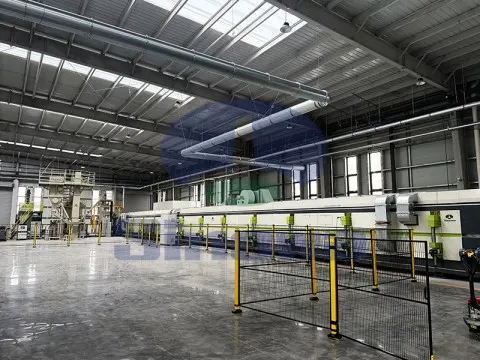
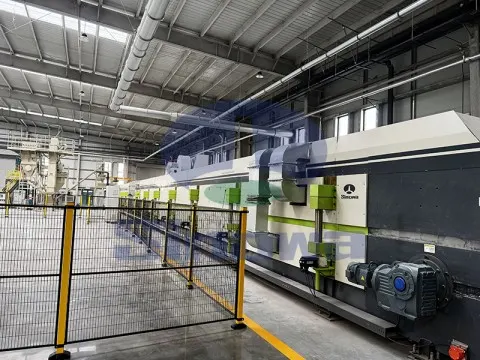
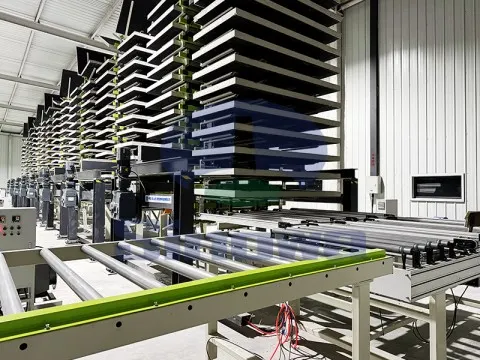
Tags: phenolic panel manufacturing equipment, phenolic panel manufacturing equipment manufacturer, phenolic panel manufacturing equipment supplier, china phenolic panel manufacturing equipment, phenolic panel manufacturing equipment for sale
https://www.sandwichpanelmachinery.com/tags/phenolic-panel-manufacturing-equipment.html
-
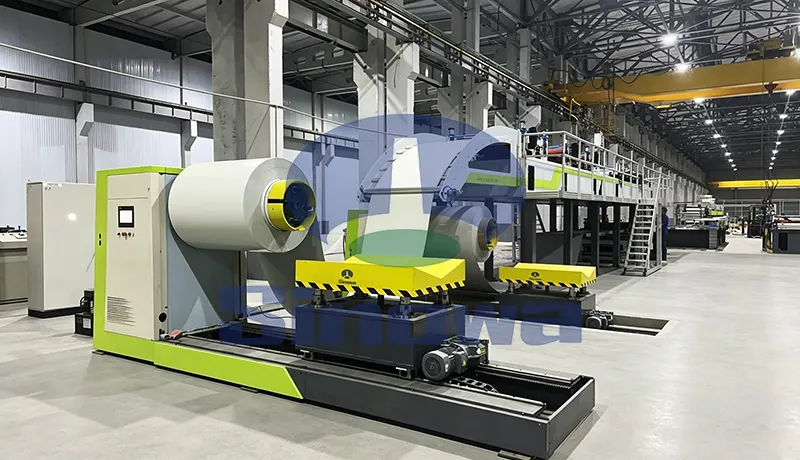
The PU sandwich panel line is a core production setup for making high-performance building insulation panels. This professional PU sandwich panel production line features automated operation to streamline the whole manufacturing process efficiently. Every component of the polyurethane sandwich panel line is precisely calibrated to ensure consistent panel thickness and structural stability. A well-maintained polyurethane sandwich panel production line can greatly boost production efficiency while reducing manual operation errors. The continuous PU sandwich panel line adapts to diverse production demands for different panel sizes and surface styles. With advanced molding technology, the PIR sandwich panel line produces panels with excellent heat preservation and sound insulation properties. Stable running of the PIR sandwich panel production line guarantees reliable product quality for various construction and industrial application scenarios.
-
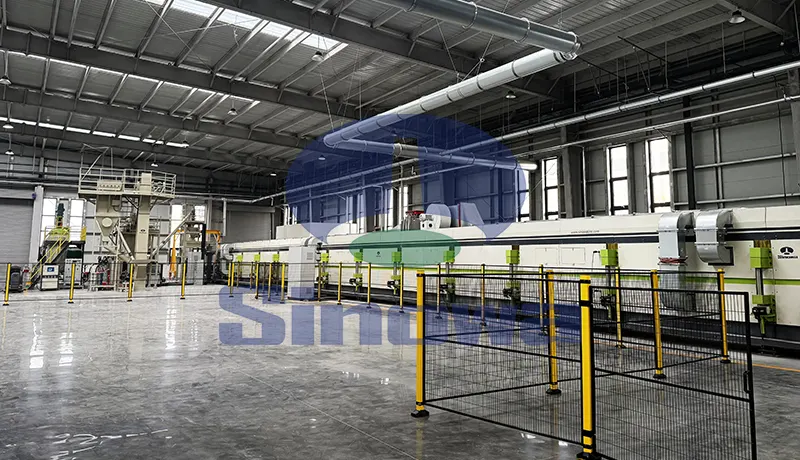
A phenolic insulation board production line serves as the core equipment for manufacturing high-performance thermal insulation building materials. This phenolic insulation panel production line integrates material mixing, foaming, molding and cutting processes to ensure continuous and stable production efficiency. Every operational link of the insulation board production line is precisely calibrated to produce uniform and durable insulation boards. The automated design of the insulation panel production line effectively reduces manual intervention and improves product consistency. Proper maintenance of the phenolic board production line can greatly extend its service life and maintain steady production output. With optimized structural design, the phenolic panel production line adapts to various production demands and delivers high-quality finished products for thermal insulation engineering applications.
-
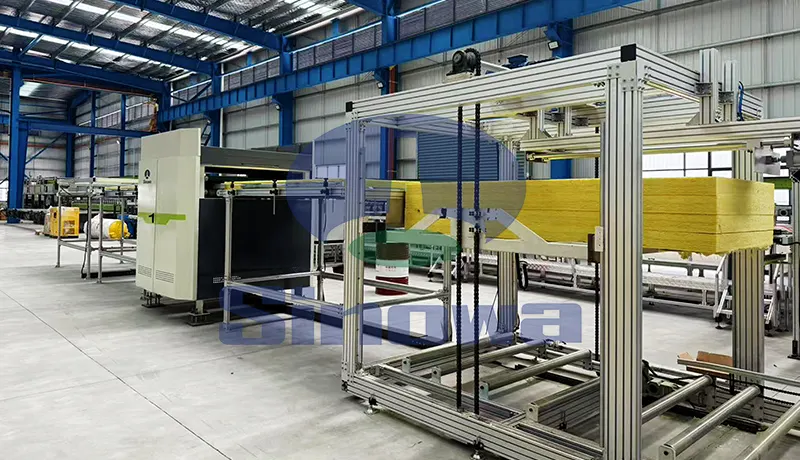
A professional rockwool sandwich panel line serves as the core equipment for producing high-performance building panels. This rockwool sandwich panel production line integrates feeding, laminating and forming processes to ensure stable and efficient production. The well-structured rock wool sandwich panel line can process raw rockwool materials into panels with excellent thermal and sound insulation properties. Operators can adjust the running parameters of the rock wool sandwich panel production line to manufacture panels of different thicknesses and specifications. The automated design of the mineral wool sandwich panel production line greatly reduces manual operation errors and improves product consistency. Regular maintenance of the mineral wool sandwich panel line is essential to sustain long-term operational efficiency and guarantee qualified finished panels for diverse construction applications.