Thermal Insulation Phenolic Board Line
Publication Date: Sep 27, 2026
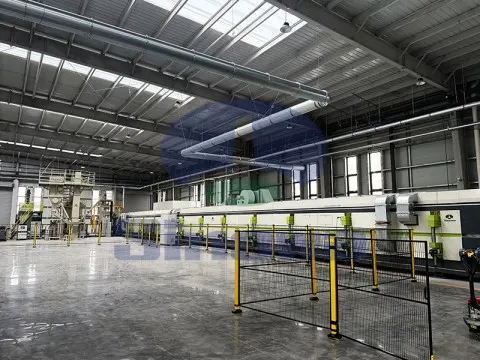
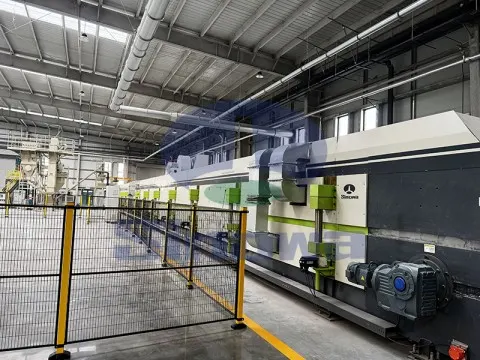
Thermal insulation phenolic board production lines are integrated automated systems designed to manufacture high-performance phenolic foam insulation panels. They integrate raw material processing, chemical reaction, molding, and finishing procedures, delivering consistent, durable insulation boards for diverse thermal management and building applications.
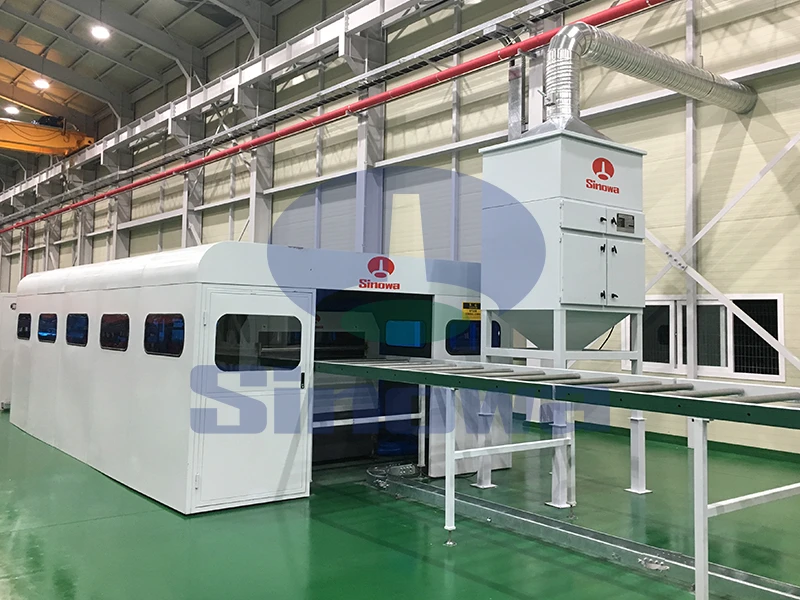
The thermal insulation phenolic board line serves as a comprehensive manufacturing system tailored for producing rigid phenolic foam boards with superior thermal retention properties. At its core, the line relies on the thermosetting reaction of phenolic resin, which acts as the foundational raw material for all finished products. Unlike discrete manufacturing equipment, this integrated line unifies multiple independent processing steps into a continuous workflow, eliminating manual intervention gaps and reducing production instability. The entire manufacturing logic centers on controlling the foaming and curing process of phenolic materials, which directly shapes the internal closed-cell structure of the boards. This refined structure is the key reason why phenolic boards outperform many traditional insulation materials in heat preservation, anti-aging, and flame-retardant performance, making the production line a core facility for modern thermal insulation material manufacturing.
Raw material proportioning and pre-mixing is the initial and pivotal stage of the entire phenolic board production line. The system is configured with precision metering and stirring units that handle core materials including phenolic resin, foaming agents, curing agents, and functional auxiliary additives. Each component is delivered in accurate proportions through automated feeding devices to ensure the uniformity of the mixed colloid. The stirring process adopts constant-temperature circulating mixing technology to avoid local material segregation or uneven component distribution. Stable mixing conditions prevent premature chemical reactions of raw materials before molding, which is essential for maintaining consistent product quality. Well-mixed colloidal materials lay a solid foundation for uniform foaming, complete curing, and stable physical properties of subsequent finished boards.
Continuous feeding and surface layer laminating processes follow the raw material mixing procedure in the production line. The line is equipped with automatic unwinding and laying equipment for various surface facers, which can adapt to different flexible and rigid surface materials according to product usage needs. The surface layer is smoothly laid on the continuous conveying platform at a constant speed, ensuring flatness and tension consistency without wrinkles or deviations. Meanwhile, the mixed phenolic colloid is quantitatively poured onto the pre-laid surface layer through precision injection pipelines. The synchronous operation of conveying and pouring ensures even distribution of the colloid on the substrate surface, avoiding thickness differences or material accumulation. This synchronous processing mode greatly improves production continuity and guarantees the basic dimensional uniformity of semi-finished board products.
Foaming and preliminary curing constitutes the core chemical reaction stage that determines the internal structure of phenolic insulation boards. After being injected onto the surface layer, the phenolic colloid enters the sealed temperature-controlled molding area of the production line. The system conducts gradual and stable heating to activate the foaming agent in the colloid, triggering gentle physical gasification and micro-expansion. This process forms a dense, uniform closed-cell structure inside the material, which is the fundamental structure supporting excellent thermal insulation performance. Simultaneously, the curing agent initiates cross-linking polymerization of phenolic resin, enabling the fluid colloid to gradually transform into a solid foam structure. The line precisely regulates temperature and reaction time throughout the stage to avoid excessive foaming, pore collapse, or incomplete curing, ensuring stable internal porosity and structural compactness of semi-finished products.
High-temperature thermal compression molding is a key process to finalize the structural stability and mechanical performance of phenolic boards. The production line adopts a closed circulating hot pressing system to provide stable high-temperature and micro-pressure environments for semi-finished boards. Before formal pressing, a preheating unit eliminates the temperature difference between the material and the pressing plate, preventing internal cracks or structural deformation caused by rapid temperature changes. During thermal compression, the residual volatile components in the foam are fully discharged, and the cross-linking reaction of phenolic resin is further completed. This process tightens the internal cell structure, enhances the overall compactness of the board, and significantly improves its compressive resistance, bending strength, and structural durability. The continuous hot pressing design ensures consistent stress and temperature on each board, realizing batch stable molding.
Constant-temperature aging and shaping treatment is an indispensable post-molding process in the insulation board production line. After thermal compression molding, the semi-finished phenolic boards are transported to the constant-temperature aging area for a period of steady-temperature maintenance. This process allows the residual chemical reactions inside the material to be fully completed and releases the internal stress generated during molding and pressing. Without aging treatment, finished boards are prone to later deformation, warping, or performance attenuation in actual use. The production line adopts segmented temperature control and timed conveying to standardize the aging process, ensuring each product obtains balanced internal stress and stable physical and chemical properties. This subtle processing step effectively extends the service life of phenolic insulation boards and improves their environmental adaptability.
Precision cutting and edge trimming processes endow finished phenolic boards with accurate dimensional specifications. The production line is equipped with automated numerical control cutting units that can adjust cutting dimensions according to different product requirements. After aging and shaping, the continuous board blanks are conveyed steadily to the cutting station, where the system completes fixed-length transverse cutting and edge trimming synchronously. The high-precision cutting equipment effectively avoids burrs, uneven edges, and dimensional errors, ensuring the flatness and regularity of each finished board. Edge trimming also removes residual excess materials and unqualified edge areas generated during molding, standardizing the appearance and size of products. The automated cutting mode improves processing efficiency while maintaining high dimensional consistency of batch products.
Surface finishing and quality inspection form the final guarantee of product qualification in the production line. After cutting and trimming, phenolic boards undergo fine surface treatment to remove surface dust, residual attachments, and tiny flaws generated during processing. For products requiring special surface effects, the line supports adaptive surface smoothing and anti-fouling treatment to enhance surface finish and corrosion resistance. Subsequently, the integrated online inspection system conducts comprehensive detection of board thickness, flatness, surface integrity, and structural uniformity. Unqualified products with dimensional deviations or surface defects are automatically screened out, while qualified products enter the final finishing process. This integrated inspection mechanism effectively controls product quality and reduces defective product rates.
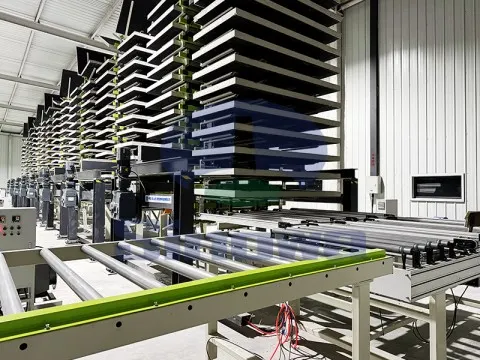
Automated stacking and packaging is the final link of the entire phenolic panel production line. Qualified finished boards are conveyed to the stacking station, where automated mechanical equipment completes orderly stacking according to standardized quantities and specifications. The stacking system maintains consistent spacing and flatness of stacked products to avoid extrusion damage or tilting deformation. After stacking, the automatic packaging unit conducts sealed wrapping and bundling to protect products from dust, moisture, and mechanical damage during transportation and storage. The whole process realizes unmanned continuous operation from finished product sorting to packaging, greatly improving production efficiency and standardizing product delivery specifications while ensuring product integrity.
The overall operational advantages and development value of thermal insulation phenolic board manufacturing lines are reflected in their high integration and stable performance. This continuous production system realizes seamless connection from raw material input to finished product output, greatly simplifying traditional fragmented processing procedures. The full-process automated regulation of temperature, pressure, proportion, and speed minimizes the impact of human operation errors on product quality. The boards produced by this line feature uniform thermal insulation performance, stable structural strength, and excellent comprehensive durability, which can meet the long-term thermal insulation needs of various complex scenarios. With the growing demand for energy-saving and thermal insulation materials, this professional production line has become a key equipment supporting the sustainable development of the insulation material industry.
Gallery of Thermal Insulation Phenolic Board Line
Tags: thermal insulation phenolic board line, thermal insulation phenolic board line manufacturer, thermal insulation phenolic board line supplier, china thermal insulation phenolic board line, thermal insulation phenolic board line for sale
https://www.sandwichpanelmachinery.com/tags/thermal-insulation-phenolic-board-line.html
-
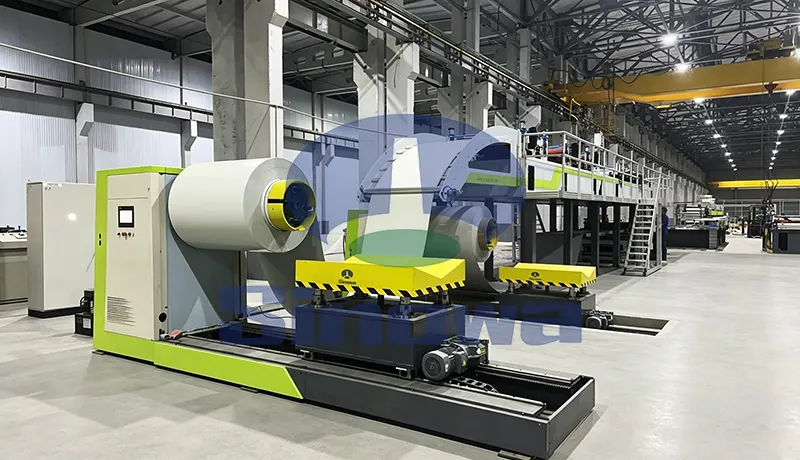
The PU sandwich panel line is a core production setup for making high-performance building insulation panels. This professional PU sandwich panel production line features automated operation to streamline the whole manufacturing process efficiently. Every component of the polyurethane sandwich panel line is precisely calibrated to ensure consistent panel thickness and structural stability. A well-maintained polyurethane sandwich panel production line can greatly boost production efficiency while reducing manual operation errors. The continuous PU sandwich panel line adapts to diverse production demands for different panel sizes and surface styles. With advanced molding technology, the PIR sandwich panel line produces panels with excellent heat preservation and sound insulation properties. Stable running of the PIR sandwich panel production line guarantees reliable product quality for various construction and industrial application scenarios.
-
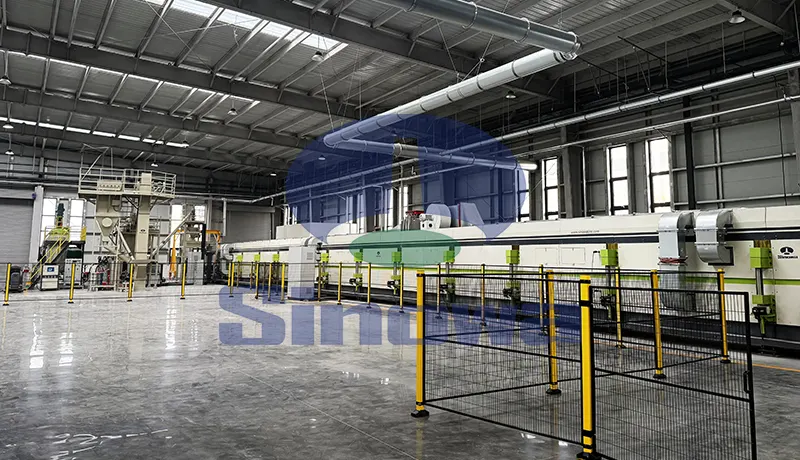
A phenolic insulation board production line serves as the core equipment for manufacturing high-performance thermal insulation building materials. This phenolic insulation panel production line integrates material mixing, foaming, molding and cutting processes to ensure continuous and stable production efficiency. Every operational link of the insulation board production line is precisely calibrated to produce uniform and durable insulation boards. The automated design of the insulation panel production line effectively reduces manual intervention and improves product consistency. Proper maintenance of the phenolic board production line can greatly extend its service life and maintain steady production output. With optimized structural design, the phenolic panel production line adapts to various production demands and delivers high-quality finished products for thermal insulation engineering applications.
-
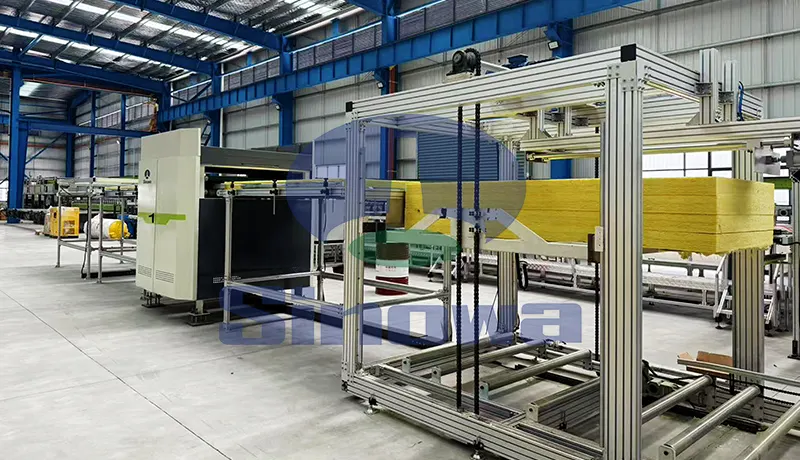
A professional rockwool sandwich panel line serves as the core equipment for producing high-performance building panels. This rockwool sandwich panel production line integrates feeding, laminating and forming processes to ensure stable and efficient production. The well-structured rock wool sandwich panel line can process raw rockwool materials into panels with excellent thermal and sound insulation properties. Operators can adjust the running parameters of the rock wool sandwich panel production line to manufacture panels of different thicknesses and specifications. The automated design of the mineral wool sandwich panel production line greatly reduces manual operation errors and improves product consistency. Regular maintenance of the mineral wool sandwich panel line is essential to sustain long-term operational efficiency and guarantee qualified finished panels for diverse construction applications.