How To Solve Inaccurate Cutting Length Of Rock Wool Sandwich Panel Production Line Panels?
Publication Date: Oct 7, 2026
Inaccurate cutting length is a common and disruptive issue in rock wool sandwich panel production, causing product defects and production delays.
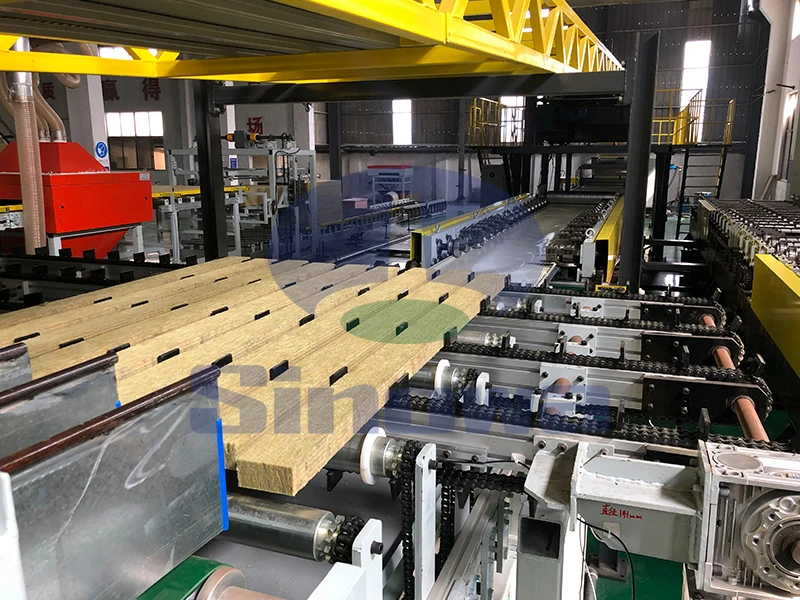
The inaccurate cutting length of rock wool sandwich panels primarily stems from unstable feeding system operation, which is one of the most prevalent underlying causes in continuous production lines. Rock wool sandwich panels feature a composite structure with metal outer layers and porous rock wool inner cores, making them more prone to feeding deviation than single-layer plates during high-speed conveying. In long-term operation, the conveying rollers of the production line often accumulate dust, rock wool debris, and residual oil stains on their surfaces, reducing surface friction and leading to intermittent slipping between rollers and panels. This subtle slipping does not cause obvious shutdown abnormalities but creates cumulative displacement errors in the feeding process, resulting in inconsistent actual cutting lengths of finished panels. Additionally, uneven pressure of the pinch rollers on both sides of the conveying track will make the panel tilt slightly during movement, causing unilateral feeding deviation and further aggravating length errors. Many production workshops ignore daily inspection of feeding components, only adjusting equipment when large-scale defective products appear, which leads to long-term hidden precision hazards. To resolve this problem fundamentally, enterprises need to establish regular feeding system maintenance mechanisms, clean roller surfaces thoroughly before each production batch, adjust the balance of pinch roller pressure on both sides, and replace severely worn rollers in a timely manner to ensure stable and consistent feeding speed and track.
Encoder detection failure and parameter calibration deviations are key electrical control factors leading to cutting length inaccuracy in rockwool sandwich panel production lines. The encoder serves as the core measuring component of the cutting system, converting the feeding displacement of panels into pulse signals and transmitting data to the PLC control system to determine cutting timing. When the encoder installation position loosens or the detection wheel fails to fit closely with the panel surface, signal feedback will be delayed or missing, causing the control system to miscalculate the feeding distance. In actual production, long-term vibration of the production line often loosens encoder fixing parts, while slight wear of the detection wheel also reduces contact stability, resulting in regular or random length errors of cut panels. Moreover, incorrect pulse coefficient parameters set in the PLC system will cause overall systematic deviation. If the preset pulse value does not match the actual feeding stroke, all finished panels will be uniformly longer or shorter than the standard size. Different from random mechanical errors, electrical parameter errors show consistent defect characteristics, which are easy to misjudge as material problems. The effective solution is to conduct regular calibration of the encoder and control system, manually measure the actual feeding distance corresponding to unit pulse signals, correct the PLC coefficient in real time, and fasten encoder fixing bolts and adjust detection wheel pre-tightening force to ensure real-time and accurate signal transmission.
Aging and abnormal operation of cutting saw components directly affect the dimensional accuracy of rock wool sandwich panel cutting. The cutting saw is the final execution component of panel shaping, and its operating stability determines the final length qualification rate of products. After long-term high-frequency cutting operation, the saw blade will gradually become blunt, and the blade gap will increase. Unlike rigid metal plates, rock wool core materials are soft and porous. A blunt saw blade cannot complete linear cutting smoothly, and it will squeeze and shift the panel locally during cutting, resulting in the actual cutting position deviating from the preset position. Meanwhile, excessive or insufficient tension of the saw blade will cause blade shaking and offset during high-speed operation, producing irregular length errors for different panels. In addition, the guide rail of the cutting saw will wear unevenly after long-term use, leading to unsmooth sliding of the saw frame and position deviation in each cutting stroke. Many production teams only replace saw blades when they are severely damaged, ignoring subtle wear and tension changes, which leads to persistent precision problems. To optimize cutting accuracy, it is necessary to formulate a saw blade replacement and maintenance cycle, regularly check blade sharpness and tension, polish or replace worn blades in a timely manner, and lubricate and calibrate the cutting saw guide rails to ensure stable and linear cutting stroke of each operation.
Unstable clamping and positioning during cutting is an easily overlooked factor causing length errors of rock wool sandwich panels. Before the cutting mechanism acts, the clamping device needs to fix the conveyed panel stably to prevent displacement during cutting. In actual production, the clamping pressure of the positioning device often fails to match the production speed and panel specifications. If the clamping pressure is too low, the panel will slightly shift or vibrate under the impact of the high-speed rotating saw blade, changing the preset cutting position and causing length deviation. If the clamping pressure is too high, it will compress the soft rock wool core, resulting in local deformation of the panel. After the clamping force is released, the deformed panel rebounds, leading to changes in overall dimensional length. In addition, asymmetric clamping force on both sides of the panel will cause torsional displacement of the plate body, resulting in inconsistent length errors on both sides of the same panel. Long-term operation will also cause wear of clamping gaskets and loose positioning baffles, further reducing positioning accuracy. The targeted improvement measure is to adjust the clamping pressure dynamically according to different panel thicknesses and production speeds, replace worn anti-slip gaskets regularly, calibrate the verticality and levelness of positioning baffles, and ensure that each panel is fixed in a stable and neutral state before cutting to avoid displacement and deformation errors.
Material performance differences and pre-production processing fluctuations will induce cutting length inaccuracy of rock wool sandwich panels. The rock wool core density and metal surface plate flatness of different batches of raw materials have subtle differences, which will affect the feeding and cutting state of panels. Rock wool cores with uneven internal density have inconsistent compression resistance. When passing through the conveying and pressing mechanism, local compression deformation occurs, changing the actual effective length of the panel before cutting. Warped or uneven metal surface plates will cause unbalanced stress during feeding, making the panel run off the track slightly and resulting in cutting dimension deviation. In addition, raw materials affected by temperature and humidity changes will have slight telescopic deformation. In high-temperature or humid production environments, rock wool materials absorb moisture and expand, while low-temperature environments cause slight shrinkage, all of which lead to inconsistent actual cutting sizes. Many production lines adopt fixed cutting parameters for all raw material batches, ignoring material differences and environmental influences. Therefore, production personnel need to conduct pre-production sampling measurement for each batch of raw materials, appropriately adjust feeding compensation parameters according to material deformation characteristics, and control the temperature and humidity of the production workshop to reduce material telescopic errors.
Improper matching of production line operating speed and cutting rhythm is an important dynamic factor causing cutting length errors. Rock wool sandwich panel production is a continuous assembly line operation, and the coordination between feeding speed and cutting action directly determines cutting accuracy. When the production line speed is increased blindly to improve output, the feeding system runs at an overload state, and the mechanical response of the cutting saw and clamping device cannot keep up with the feeding rhythm, resulting in delayed cutting action and longer actual panel length. Conversely, if the speed is adjusted down suddenly without resetting cutting parameters, the cutting mechanism will act in advance, making the panel length shorter than the standard. In addition, unstable speed fluctuation of the main conveying motor will cause intermittent fast and slow feeding. The encoder cannot capture instantaneous speed changes accurately, resulting in disordered cutting signal feedback and random length defects. Long-term mismatched speed and rhythm will also aggravate mechanical component wear, forming a vicious cycle of precision decline. The solution is to formulate a matched speed parameter scheme for conventional production batches, avoid frequent and blind speed adjustment, set stable speed threshold values for the conveying motor, and synchronously calibrate cutting action delay parameters every time the production speed is adjusted to ensure seamless coordination between feeding and cutting.
Lack of daily precision detection and standardized operation management will amplify cutting length errors in long-term production. Most production workshops only conduct finished product sampling inspection after production is completed, failing to detect minor cutting precision deviations in real time during the production process. Small cumulative errors that are not corrected in time will gradually expand with continuous production, eventually leading to large-scale unqualified products. In addition, the inconsistent operation habits of production personnel also cause precision fluctuations. Different operators have different debugging standards for equipment initialization, clamping adjustment and parameter resetting before starting production, resulting in inconsistent cutting accuracy in different production shifts. New employees often lack professional training on precision debugging, and they cannot judge and adjust subtle abnormal states of equipment in time. Moreover, the absence of complete equipment operation logs makes it impossible to track the parameter adjustment records and fault causes of each production, hindering targeted error troubleshooting. To solve this problem, enterprises need to establish real-time online detection mechanisms, arrange special personnel to measure panel cutting length at regular intervals, formulate unified standardized operation procedures for pre-production debugging and production monitoring, and strengthen professional skill training for front-line operators.
Mechanical vibration and equipment foundation instability will produce persistent cutting length errors for rock wool sandwich panels. The continuous operation of motors, fans and cutting saws in the production line will generate mechanical vibration. If the equipment foundation is not fixed firmly or the shock absorption device is aging and invalid, vibration will be transmitted to the conveying and cutting mechanism, causing micro-displacement of the saw frame, guide rail and positioning device during operation. This micro-vibration displacement is not visible to the naked eye, but it will change the cutting stroke and positioning position of each panel, resulting in fluctuating length errors of finished products. Long-term unbalanced vibration will also cause loose connection of various mechanical parts and gradual deformation of the equipment frame, further reducing the overall operation stability of the production line. In addition, uneven ground of the workshop will cause slight tilt of the equipment, making the panel feeding track deviate from the horizontal level and inducing cutting dimensional deviation. The improvement method is to regularly check the firmness of the equipment foundation, replace aging shock absorption accessories, level the equipment body, fix loose mechanical connecting parts, and eliminate vibration interference sources to ensure that the entire production and cutting process is carried out in a stable mechanical state.
Backlash and clearance errors of transmission parts are hidden mechanical causes of inaccurate cutting length of rock wool sandwich panels. The transmission gears, chains and bearings of the production line feeding and cutting mechanism will produce wear gaps after long-term operation, forming transmission backlash. When the equipment starts and stops or the speed changes, the gaps of transmission parts will cause delayed and incomplete power transmission, leading to inconsistent feeding displacement of the panel. For example, worn gear gaps will make the rotating stroke of the conveying roller not completely consistent with the control signal, resulting in cumulative length errors after multiple transmissions. Loose bearing fit will cause radial and axial runout of the rotating shaft, making the feeding track unstable. These hidden gap errors will not cause obvious equipment faults, but they will continuously affect cutting precision and are difficult to detect in daily simple inspections. Production teams need to conduct regular disassembly and inspection of transmission components, replace severely worn gears and bearings, adjust the clearance of transmission chains, and fill and lubricate matching parts to eliminate transmission backlash errors and ensure synchronous and accurate execution of mechanical actions and control signals.
Systematic maintenance and closed-loop management are the fundamental guarantees to completely solve the cutting length inaccuracy problem of rock wool sandwich panel production lines. Single partial adjustment can only solve temporary precision faults, and stable long-term product accuracy requires standardized full-process management. Enterprises need to establish a complete equipment precision maintenance system, formulate targeted inspection and maintenance cycles for feeding systems, electrical detection components, cutting execution mechanisms and transmission parts, and record each maintenance, calibration and parameter adjustment data in detail. In the production process, build a fault closed-loop processing mechanism, timely analyze the error types of unqualified panels, locate mechanical, electrical, material or operational causes, and formulate targeted improvement measures to avoid repeated faults. At the same time, optimize the production environment and raw material pretreatment process, match equipment parameters with production conditions and material characteristics in real time, and combine standardized operation, real-time detection and regular maintenance to eliminate all kinds of precision interference factors. Through full-process systematic management, the stable cutting accuracy of rock wool sandwich panels can be maintained for a long time, effectively reducing product defect rates and improving overall production efficiency and product quality stability.
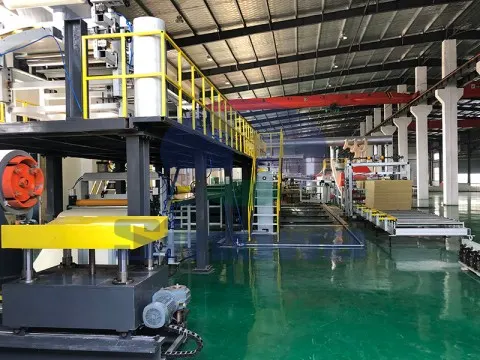
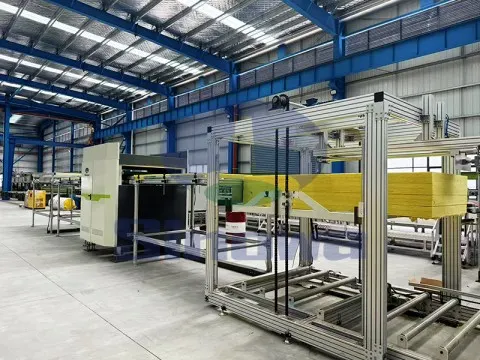
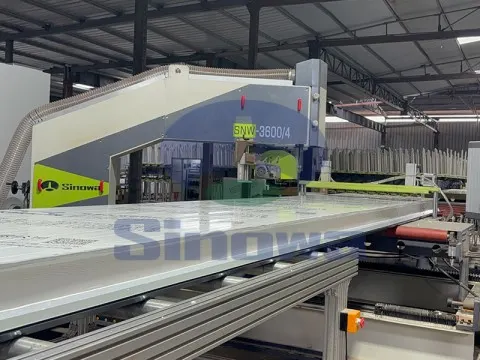
Gallery of Rock Wool Sandwich Panel Production Line
Tags: rock wool sandwich panel production line, rock wool sandwich panel production line manufacturer, rock wool sandwich panel production line supplier, china rock wool sandwich panel production line, rock wool sandwich panel production line for sale
-
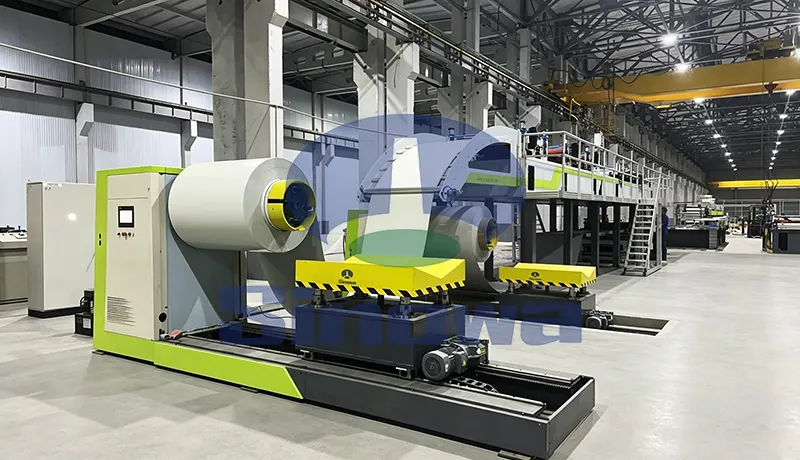
The PU sandwich panel line is a core production setup for making high-performance building insulation panels. This professional PU sandwich panel production line features automated operation to streamline the whole manufacturing process efficiently. Every component of the polyurethane sandwich panel line is precisely calibrated to ensure consistent panel thickness and structural stability. A well-maintained polyurethane sandwich panel production line can greatly boost production efficiency while reducing manual operation errors. The continuous PU sandwich panel line adapts to diverse production demands for different panel sizes and surface styles. With advanced molding technology, the PIR sandwich panel line produces panels with excellent heat preservation and sound insulation properties. Stable running of the PIR sandwich panel production line guarantees reliable product quality for various construction and industrial application scenarios.
-
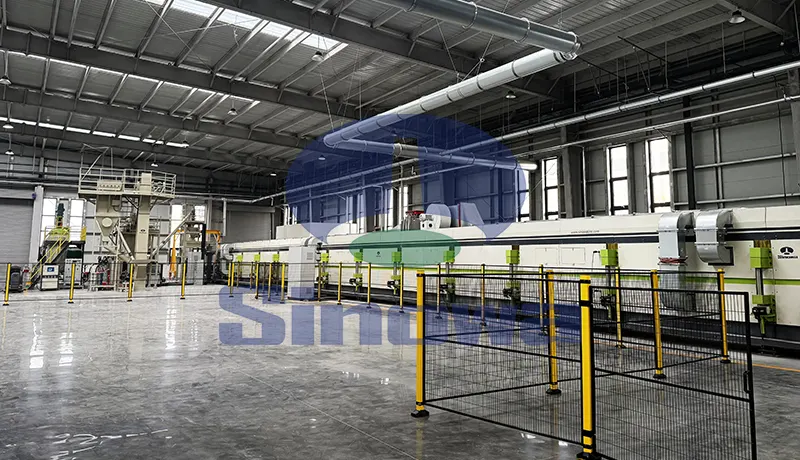
A phenolic insulation board production line serves as the core equipment for manufacturing high-performance thermal insulation building materials. This phenolic insulation panel production line integrates material mixing, foaming, molding and cutting processes to ensure continuous and stable production efficiency. Every operational link of the insulation board production line is precisely calibrated to produce uniform and durable insulation boards. The automated design of the insulation panel production line effectively reduces manual intervention and improves product consistency. Proper maintenance of the phenolic board production line can greatly extend its service life and maintain steady production output. With optimized structural design, the phenolic panel production line adapts to various production demands and delivers high-quality finished products for thermal insulation engineering applications.
-
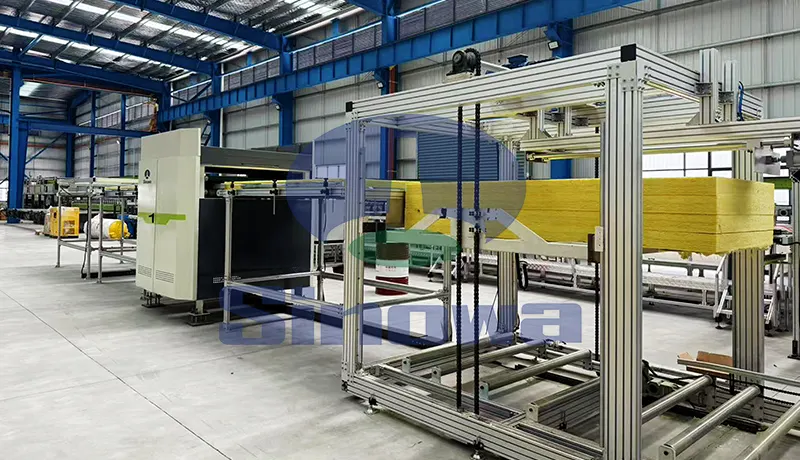
A professional rockwool sandwich panel line serves as the core equipment for producing high-performance building panels. This rockwool sandwich panel production line integrates feeding, laminating and forming processes to ensure stable and efficient production. The well-structured rock wool sandwich panel line can process raw rockwool materials into panels with excellent thermal and sound insulation properties. Operators can adjust the running parameters of the rock wool sandwich panel production line to manufacture panels of different thicknesses and specifications. The automated design of the mineral wool sandwich panel production line greatly reduces manual operation errors and improves product consistency. Regular maintenance of the mineral wool sandwich panel line is essential to sustain long-term operational efficiency and guarantee qualified finished panels for diverse construction applications.