Insulation Panel Manufacturing Line
Publication Date: Oct 6, 2026
The insulation panel manufacturing line is an integrated automated production system for producing thermal insulation building panels. It covers full processes from raw material treatment, composite molding, and curing to cutting and packaging, ensuring stable panel performance and efficient continuous production for construction and industrial applications.
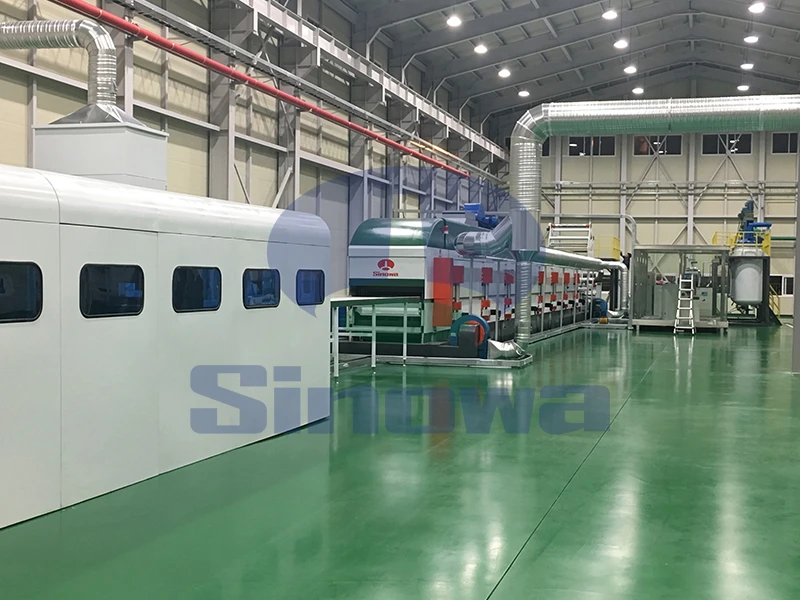
The core operational logic of a modern insulation panel manufacturing line lies in synchronized automated collaboration across multiple functional modules, which eliminates manual intervention errors and achieves consistent product quality in mass production. This integrated production mode is tailored to process diverse insulation core materials and surface sheet materials, adapting to different panel structure requirements for various usage scenarios. At the initial production stage, the entire line remains in a standby linkage state, with all mechanical and control systems pre-calibrated to ensure coordinated operation once production initiates. Unlike traditional intermittent production equipment, the continuous manufacturing line maintains stable material transmission and processing rhythm throughout the operation cycle, effectively improving production continuity and reducing idle time between working procedures. Each functional unit is closely connected through intelligent conveying equipment, forming a closed-loop production chain that avoids material stagnation or processing delays. The overall line layout follows ergonomic and production efficiency principles, reserving reasonable operation and maintenance space while maximizing production space utilization, which lays a solid foundation for long-term stable industrial production.
Raw material pretreatment and precise batching serve as the foundational procedure determining the final performance of insulation panels, and this module undertakes the sorting, processing and quantitative distribution of all production materials. The main raw materials involved include metal surface sheets, organic and inorganic insulation core materials, as well as auxiliary materials such as adhesives and foaming additives. Before formal production, surface sheet materials undergo surface cleaning and flattening treatment to remove dust, oil stains and surface wrinkles, ensuring tight bonding between the sheet and core material. For insulation core materials, different pretreatment methods are adopted according to material characteristics, including impurity removal, loose sorting and uniform drying to eliminate internal moisture and particle agglomeration that may affect thermal insulation performance. The automated batching system precisely controls the proportion of various auxiliary materials through intelligent sensing components, realizing dynamic quantitative feeding. The system can automatically adjust feeding parameters according to real-time production speed and material state, maintaining stable material ratio throughout production. Accurate batching and standardized pretreatment effectively avoid performance differences caused by raw material fluctuations, ensuring the uniformity of thermal insulation, structural strength and durability of finished panels.
Sheet uncoiling and roll forming is a key procedure for shaping the outer protective structure of insulation panels, realizing the conversion of coiled sheet raw materials into flat or profiled base sheets suitable for composite processing. The uncoiling unit adopts automatic tension control technology to ensure smooth and uniform discharging of coiled materials, effectively preventing sheet deviation, stretching or wrinkling during unwinding. Equipped with automatic deviation correction devices, the unit can real-time monitor the material conveying track and fine-tune the position to keep the sheet in a stable conveying state. After uncoiling, the sheet enters the roll forming unit composed of multiple groups of precision roller sets. Through gradual rolling and extrusion by rollers, the flat sheet is processed into customized structural shapes, including flat panels, corrugated panels and other special profiles. Each roller group operates at a synchronized speed to ensure consistent sheet forming accuracy and uniform surface flatness. The forming process adopts cold pressing molding technology, which will not damage the structural performance of the sheet material while ensuring stable forming size. After forming, the sheet undergoes preliminary shaping and leveling to eliminate internal stress generated during rolling, laying a good structural foundation for subsequent composite bonding processing.
Core material processing and laying is the core link that determines the thermal insulation and energy-saving performance of finished panels, focusing on the uniform arrangement and structural shaping of insulation core materials. For foamed insulation core materials, the automated foaming and shaping system completes uniform foaming and pore structure adjustment under set temperature and pressure conditions, forming fine and closed internal pores that enhance thermal insulation and sound insulation effects. For fibrous and block insulation core materials, the system realizes automatic spreading, paving and compaction to ensure uniform core material thickness and no hollow gaps inside the panel. The intelligent laying device can adjust the laying thickness and density of core materials according to different panel specification requirements, realizing flexible switching of multiple product types. During the laying process, real-time thickness detection equipment monitors the core material paving state at all times, automatically correcting local uneven thickness to ensure consistent overall core structure. In addition, the system optimizes the combination state of core materials and auxiliary functional materials to improve the overall fire resistance, moisture resistance and structural stability of insulation panels. Scientific and standardized core material processing effectively exerts the thermal insulation advantages of raw materials and avoids local performance attenuation caused by uneven internal structure.
Automatic gluing and composite lamination is the key procedure to integrate surface sheets and insulation core materials into an integral panel structure, directly affecting the overall structural firmness and service life of finished products. The automated gluing system adopts precision spraying and roller coating dual modes to uniformly apply high-performance adhesive on the inner surface of upper and lower metal sheets. The system accurately controls the glue coating amount and coating uniformity according to sheet area and material characteristics, avoiding excessive glue overflow or local glue shortage. Constant-temperature glue supply equipment ensures stable adhesive viscosity and activity, maintaining consistent bonding effect in different production environments. After gluing, the surface sheets and core materials are accurately aligned and sent into the composite lamination unit. The lamination unit adopts multi-stage constant-pressure pressing technology, applying uniform and stable pressure to the composite structure to realize tight fitting between layers. The synchronous pressing speed matches the overall production rhythm, ensuring sufficient bonding time without affecting continuous production. The integrated composite structure formed by lamination has strong interlayer bonding force, no delamination or cracking in long-term use, and maintains stable overall structural integrity under different environmental conditions.
Constant-temperature curing and structural shaping is an essential process to stabilize the composite structure and solidify bonding performance of insulation panels, realizing the final molding of semi-finished panels. The curing unit adopts closed constant-temperature circulation design, creating a stable internal temperature environment to promote full curing and cross-linking of the adhesive. The intelligent temperature control system dynamically adjusts internal temperature and heat circulation speed according to panel thickness, core material type and production speed, ensuring thorough curing of internal bonding layers without causing thermal damage to insulation core materials. During the curing process, the panel keeps continuous linear conveying, and the multi-section temperature gradient setting realizes staged curing, which first stabilizes the surface bonding structure and then solidifies the internal overall structure, effectively improving curing uniformity. Meanwhile, the shaping limiting device fixes the overall size and flatness of the panel during curing, eliminating structural deformation such as bending and warping caused by uneven stress. After curing, the internal bonding strength of the panel reaches the design standard, the overall structure becomes stable, and the panel has basic mechanical properties and environmental adaptability for subsequent processing and use.
Precision cutting and edge trimming processing realizes the sizing and finishing of semi-finished panels, making the product meet standardized size and appearance requirements. The continuous cured panel is stably conveyed to the cutting unit, which adopts high-precision servo cutting equipment to complete fixed-length transverse cutting and longitudinal slitting according to preset product specifications. The cutting system supports flexible setting of different panel lengths and widths, realizing rapid switching of product sizes without stopping production. The high-speed cutting tool adopts wear-resistant and high-precision design, ensuring smooth and flat cutting sections without burrs, collapses or irregular cuts. After cutting, the automatic edge trimming device finely polishes and trims the four edges of the panel to remove residual raw materials and tiny burrs generated during cutting, optimizing the overall appearance quality of the panel. In addition, the edge trimming process can adjust the edge flatness and verticality to ensure seamless assembly and docking of panels in subsequent construction applications. The whole cutting and trimming process is automatically monitored by the system, which can alarm and correct abnormal size errors in real time to ensure the dimensional accuracy of each finished panel.
Surface finishing and defect inspection is a crucial quality control link to screen qualified products and optimize panel surface performance, effectively eliminating defective products in the production process. After cutting and trimming, the panel enters the surface treatment station for fine cleaning and surface protection treatment, removing surface dust, residual adhesive and tiny impurities. For panels requiring special surface performance, the system can complete uniform surface coating and film covering treatment to enhance weather resistance, scratch resistance and corrosion resistance of the outer surface. Subsequently, the intelligent inspection system conducts comprehensive non-destructive detection on each panel, covering surface flatness, dimensional accuracy, interlayer bonding integrity, and internal structural uniformity. The high-precision sensing equipment can accurately identify tiny defects such as local delamination, uneven thickness and surface scratches that are difficult to distinguish manually. The system automatically classifies products according to inspection results, separating qualified products and marking unqualified products for subsequent reprocessing or scrapping. Real-time quality inspection effectively controls product quality from the source, ensuring that all delivered finished panels have stable and reliable comprehensive performance.
Automated stacking and sealed packaging is the final production link, realizing standardized storage, transportation protection and finished product output of insulation panels. Qualified panels after quality inspection are automatically conveyed to the stacking unit, and the intelligent mechanical stacking equipment neatly stacks panels layer by layer according to fixed specifications. The system can adjust stacking quantity, layer spacing and arrangement mode according to panel size and transportation requirements, effectively avoiding extrusion, collision and friction damage between panels during stacking. The stacked panel groups are automatically sent to the packaging station for integral sealing and winding protection with professional packaging materials. The sealed packaging can isolate external dust, moisture and mechanical damage, maintaining the surface integrity and internal structural stability of panels during long-distance transportation and long-term storage. Meanwhile, the automated packaging system can complete uniform binding and shaping of finished products, making the overall appearance neat and standardized, which is convenient for subsequent warehouse storage and construction docking. The whole stacking and packaging process realizes full automation without manual operation, greatly improving finished product delivery efficiency and standardization level.
The intelligent control and synchronous operation system runs through the entire insulation panel manufacturing line, serving as the core brain to coordinate all functional modules and ensure stable and efficient line operation. The centralized intelligent control platform uniformly manages all equipment units, realizing one-key start-stop, parameter setting and real-time operation monitoring of the whole line. The system adopts synchronous linkage control technology to match the operating speed and processing rhythm of each procedure, avoiding production stagnation or material accumulation caused by inconsistent equipment operation. Real-time data collection and analysis functions monitor key production parameters such as material feeding volume, processing temperature, pressing pressure and cutting size at all times, and automatically optimize and adjust parameters according to production state changes. In case of equipment abnormality or production failure, the system will automatically trigger alarm prompts and partial shutdown protection to prevent batch defective products and equipment damage. In addition, the system supports production data statistics and operation record query, providing reliable data support for production management, process optimization and quality traceability, realizing intelligent, standardized and efficient whole-process production management.
Gallery of Insulation Panel Manufacturing Line
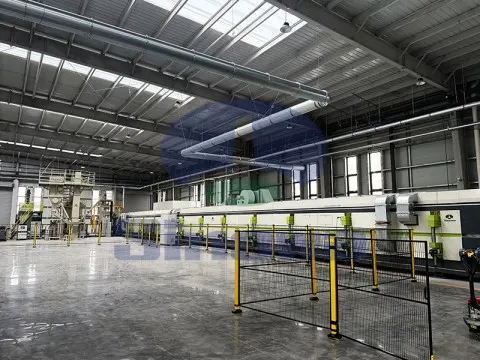
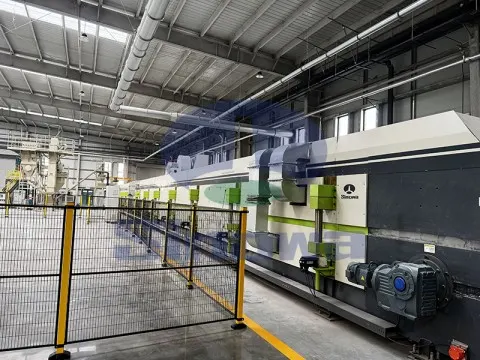
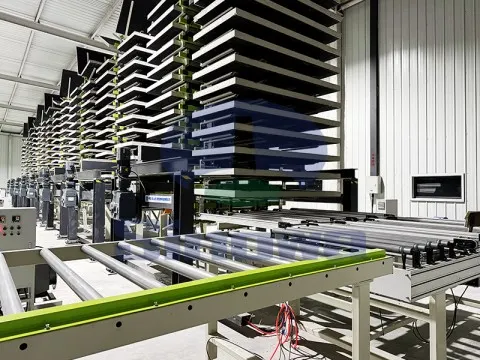
Tags: insulation panel manufacturing line, insulation panel manufacturing line manufacturer, insulation panel manufacturing line supplier, china insulation panel manufacturing line, insulation panel manufacturing line for sale
https://www.sandwichpanelmachinery.com/tags/insulation-panel-manufacturing-line.html
-
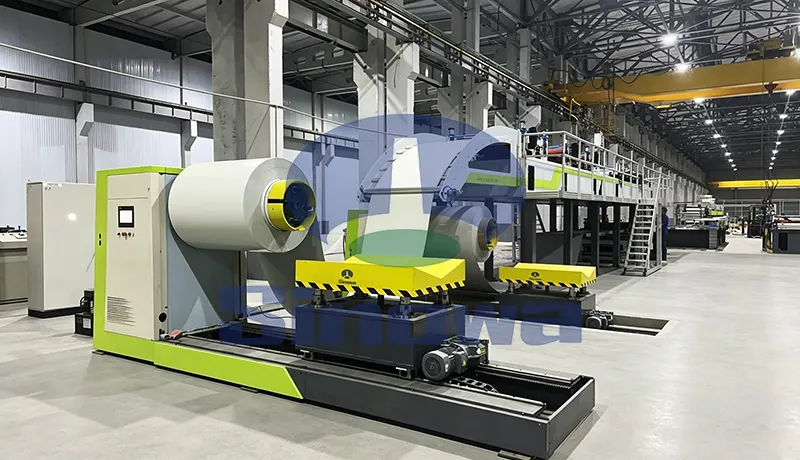
The PU sandwich panel line is a core production setup for making high-performance building insulation panels. This professional PU sandwich panel production line features automated operation to streamline the whole manufacturing process efficiently. Every component of the polyurethane sandwich panel line is precisely calibrated to ensure consistent panel thickness and structural stability. A well-maintained polyurethane sandwich panel production line can greatly boost production efficiency while reducing manual operation errors. The continuous PU sandwich panel line adapts to diverse production demands for different panel sizes and surface styles. With advanced molding technology, the PIR sandwich panel line produces panels with excellent heat preservation and sound insulation properties. Stable running of the PIR sandwich panel production line guarantees reliable product quality for various construction and industrial application scenarios.
-
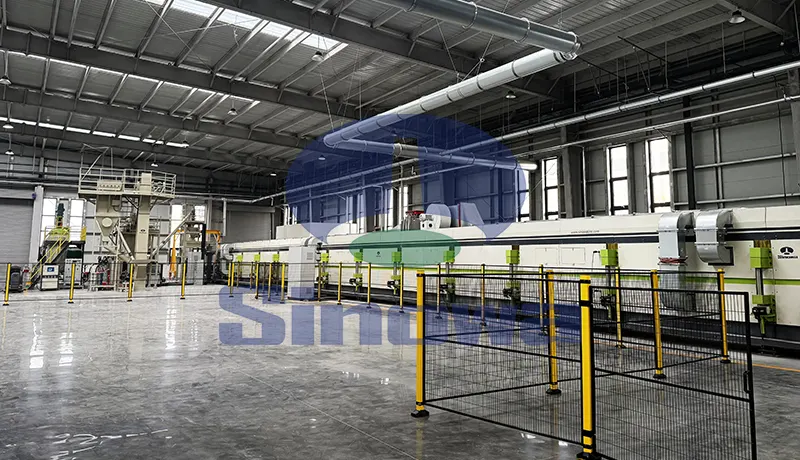
A phenolic insulation board production line serves as the core equipment for manufacturing high-performance thermal insulation building materials. This phenolic insulation panel production line integrates material mixing, foaming, molding and cutting processes to ensure continuous and stable production efficiency. Every operational link of the insulation board production line is precisely calibrated to produce uniform and durable insulation boards. The automated design of the insulation panel production line effectively reduces manual intervention and improves product consistency. Proper maintenance of the phenolic board production line can greatly extend its service life and maintain steady production output. With optimized structural design, the phenolic panel production line adapts to various production demands and delivers high-quality finished products for thermal insulation engineering applications.
-
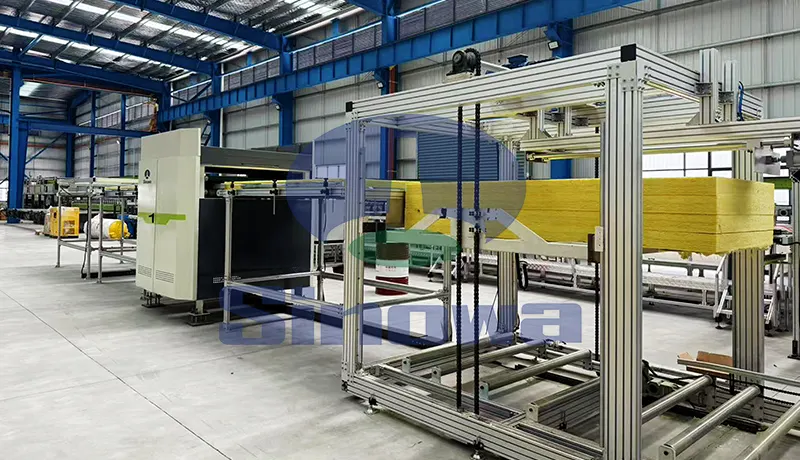
A professional rockwool sandwich panel line serves as the core equipment for producing high-performance building panels. This rockwool sandwich panel production line integrates feeding, laminating and forming processes to ensure stable and efficient production. The well-structured rock wool sandwich panel line can process raw rockwool materials into panels with excellent thermal and sound insulation properties. Operators can adjust the running parameters of the rock wool sandwich panel production line to manufacture panels of different thicknesses and specifications. The automated design of the mineral wool sandwich panel production line greatly reduces manual operation errors and improves product consistency. Regular maintenance of the mineral wool sandwich panel line is essential to sustain long-term operational efficiency and guarantee qualified finished panels for diverse construction applications.