PU Sandwich Panel Roll Forming Line
Publication Date: Oct 6, 2026
PU sandwich panel roll forming line is an integrated automated production system for insulated building panels. It integrates metal forming, PU foaming, laminating and cutting processes, enabling continuous, high-efficiency manufacturing of lightweight, thermal-insulated panels for construction applications.
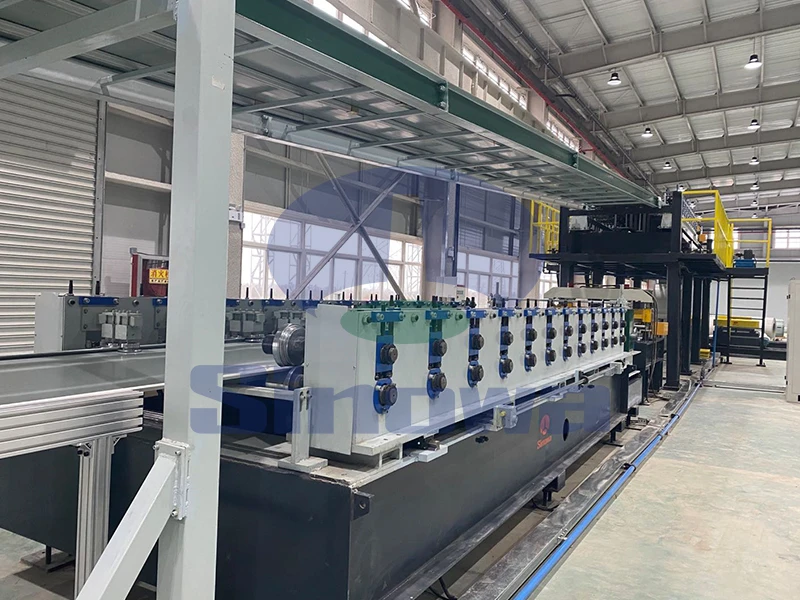
The PU sandwich panel roll forming line stands as a comprehensive and automated manufacturing solution dedicated to producing high-performance polyurethane insulated sandwich panels, which are widely utilized in modern architectural enclosure, thermal insulation and industrial building projects. Different from traditional discrete processing equipment, this production line realizes fully continuous streamlined operation, merging multiple independent processing procedures into one seamless production workflow. The core advantage of the equipment lies in its perfect combination of precision metal roll forming technology and stable polyurethane foaming and compounding technology, which can stably produce integrated panels with smooth metal surfaces and uniform foam insulation layers. The entire production process avoids manual intervention in key links, effectively reducing processing errors and improving the consistency of finished products. It can adapt to the production requirements of panels with different thicknesses and profile specifications, fully meeting the diversified application needs of the construction industry for insulated wall and roof panels. Meanwhile, the integrated structural design optimizes the production layout, saves production space, and improves the overall operational efficiency of the production workshop.
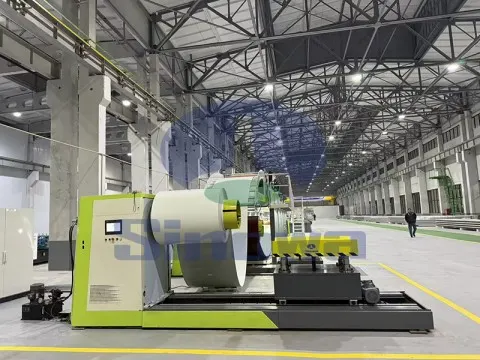
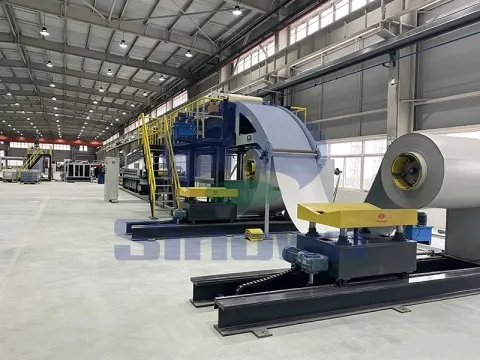
The unwinding and feeding system serves as the initial functional module of the entire PU sandwich panel roll forming line, undertaking the task of stably supplying raw metal coils for subsequent processing. This system is mainly configured with hydraulic unwinding equipment, which can stably fix and release metal coil raw materials of different specifications. Equipped with automatic tension control components, it effectively avoids material deviation, over-unwinding and sudden material breakage during the feeding process, ensuring the flatness and stability of metal sheet input. In order to support long-term continuous production, the system is designed with a coil switching auxiliary structure, which can realize rapid docking of new and old coils without stopping the production line, greatly improving the continuous production capacity of the equipment. Before the metal sheet enters the forming link, the system also completes preliminary leveling and surface cleaning treatment, removing surface attachments and eliminating sheet bending deformation caused by long-term coiling. This preprocessing operation lays a solid foundation for subsequent precise roll forming and firm bonding of PU foam, ensuring the surface flatness and processing accuracy of the final sandwich panel.
Roll forming is the core molding process that determines the dimensional accuracy and structural profile of PU sandwich panels, and this link is completed by the precision multi-roll forming unit of the production line. The forming unit consists of multiple groups of finely arranged roller sets, which adopt progressive segmented rolling molding technology instead of one-time stamping deformation. The flat metal sheet is gradually bent, folded and shaped through the orderly pressure extrusion of each group of rollers, which effectively avoids local stress concentration and surface damage caused by rapid deformation. Each roller group is equipped with independent gap and pressure adjustment functions, which can be flexibly calibrated according to different panel profile requirements to produce wall panels, roof panels and other different structural types. The high-precision roller positioning design ensures that the error of panel outline size is controlled within a tiny range, and the formed metal shell has uniform texture and regular edges. Moreover, the forming process is highly automated, with real-time parameter monitoring to ensure the consistency of each batch of molded sheets, providing qualified structural accessories for subsequent foam compounding.
The surface pretreatment and protection process after roll forming is an indispensable auxiliary link to improve the service performance of PU sandwich panels. After the metal sheet completes profile forming, the production line will conduct systematic surface treatment on the inner and outer surfaces of the sheet. The inner surface is specially treated to enhance the bonding adhesion between the metal layer and the polyurethane foam layer, solving the common problem of delamination and peeling of panels in long-term use. The outer surface is cleaned and smoothed to remove rolling burrs and surface impurities, optimizing the flatness and appearance texture of the panel surface. In addition, the equipment can be matched with automatic film pasting components according to production demands, attaching protective films on the outer surface of the formed sheet to prevent scratches, abrasions and pollution during subsequent lamination, cutting and transportation processes. This series of pretreatment operations not only improves the appearance quality of finished panels, but also significantly enhances the structural stability and durability of the composite panels, extending the service life of products in complex application environments.
The PU raw material metering and high-pressure mixing system is the key functional unit that determines the thermal insulation performance and structural uniformity of sandwich panels. This system is responsible for precise proportioning and uniform mixing of liquid polyurethane raw materials, adopting high-precision metering devices to control the feeding ratio of different raw material components. The raw materials are conveyed to the high-pressure mixing head through independent pipelines, and fully mixed under set pressure and temperature conditions to trigger stable foaming chemical reactions. The whole mixing process is carried out in a closed environment, which avoids raw material waste and environmental pollution caused by material leakage. The mixed PU liquid is evenly poured between the upper and lower formed metal sheets through a movable pouring device, realizing full coverage of the panel width. The system can automatically adjust the pouring amount and foaming density according to the set panel thickness, ensuring that the foam layer has uniform density, no hollow holes and no local agglomeration, so that the finished panels have consistent and excellent thermal insulation and shock resistance.
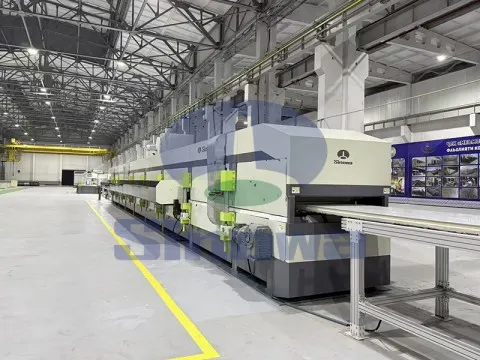
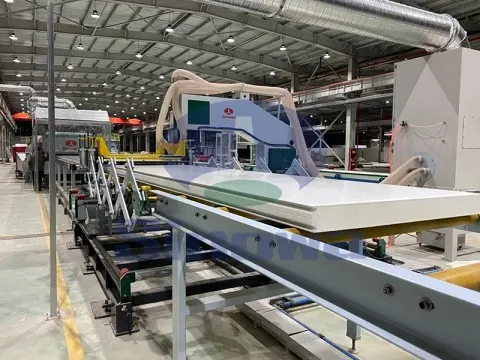
The double-belt laminating and continuous foaming curing system is the core link to realize the composite molding of PU sandwich panels. After the PU liquid is poured, the upper and lower metal sheets with profiles enter the closed double-belt conveyor device together with the foam raw materials. The upper and lower conveyor belts maintain a fixed and adjustable spacing, which accurately limits the thickness of the finished panel and ensures the overall flatness of the panel. In the closed laminating chamber, the polyurethane liquid completes gradual foaming, expansion and solidification reactions under constant temperature and pressure conditions. The slow and uniform foaming process enables the foam material to fully fill the gap between the metal layers and form a tight integrated bonding structure with the metal surface. The long-distance conveyor design provides sufficient curing time for the foam, avoiding incomplete foaming and unstable bonding. This continuous laminating and curing mode realizes one-time composite molding of the sandwich panel, effectively improving the structural integrity of the product and avoiding the quality problems such as uneven thickness and loose bonding caused by secondary processing.
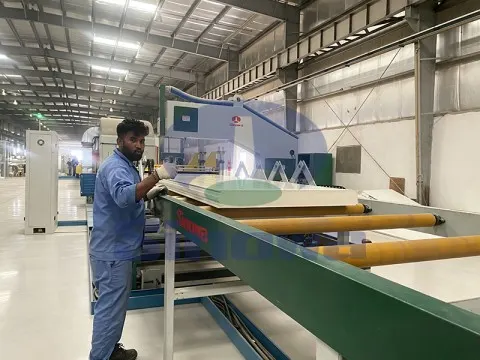
The fixed-length cutting and edge trimming system undertakes the final shaping processing of continuous composite panels, realizing the conversion of continuous long-strip panels into standard finished products. After the cured integrated sandwich panel is output from the laminating system, it is stably conveyed to the cutting station through the automatic conveying device. The high-precision tracking cutting mechanism can automatically identify the set panel length and complete synchronous cutting in the running state of the panel, ensuring high cutting efficiency while maintaining accurate length size. The equipment is also equipped with an edge trimming device, which can trim the irregular edges on both sides of the panel to make the panel edges neat and smooth. The cutting and trimming process adopts non-destructive processing technology, which will not cause extrusion deformation or edge cracking of the panel section. All cutting parameters are intelligently adjustable, which can adapt to the cutting requirements of panels with different thicknesses and widths, ensuring that the dimensional accuracy and appearance quality of each finished panel meet the use standards.
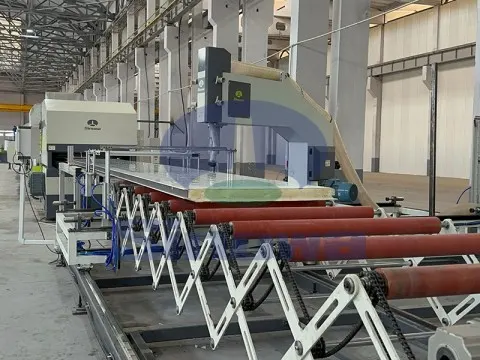
The cooling and shaping process after cutting plays a vital role in stabilizing the structural performance of finished PU sandwich panels. The newly cut panels still retain residual temperature after foaming and curing, and the internal foam structure is not completely stable. The production line is equipped with an automatic cooling conveying system, which transports the cut panels to the cooling area for natural and auxiliary air cooling treatment. The layered conveying structure ensures that each panel is fully exposed to the cooling environment, realizing uniform heat dissipation inside and outside the panel. This process can effectively eliminate the internal stress generated during foaming and lamination, prevent panel bending, warping and deformation during storage and use, and stabilize the bonding strength between the foam layer and the metal layer. After sufficient cooling and shaping, the internal structure of the panel tends to be stable, and the physical properties such as thermal insulation, compression resistance and bending resistance reach the optimal state, laying a foundation for subsequent stacking and packaging.
The automatic stacking and discharging system realizes the intelligent finishing and output of finished panels, completing the last link of the entire production process. After cooling and shaping, the qualified panels are automatically sorted and conveyed to the stacking station by the conveying system. The intelligent stacking device can stably stack the panels in order according to the set number and specification, with accurate stacking position and neat arrangement, effectively avoiding panel sliding and collision damage during stacking. The system has automatic counting and fault alarm functions, which can record the production quantity in real time and timely feed back abnormal conditions such as panel jamming and stacking deviation. The stacked finished panels can be directly connected to the subsequent packaging and handling links, realizing seamless docking of the entire production process. The highly automated stacking design reduces manual handling links, improves production efficiency, and ensures the neatness and integrity of finished product storage.
The overall intelligent control and operational advantages of the PU sandwich panel roll forming line make it a mainstream production device in the insulated panel manufacturing industry. The entire production line adopts an integrated intelligent control system, which centrally manages and adjusts all links from unwinding, forming, foaming and laminating to cutting and stacking. Operators can complete parameter setting, equipment operation monitoring and fault diagnosis through a simple operating interface, realizing unattended automatic operation of the production line. The modular structural design of the equipment facilitates daily maintenance and later function upgrading, and each functional module can be independently debugged and maintained without affecting the overall operation of the equipment. In actual production, the equipment features stable operation, low energy consumption and high product yield, and the produced PU sandwich panels have the advantages of light weight, high strength, good thermal insulation and convenient installation, which can fully meet the efficient and high-quality construction needs of modern industrial plants, cold storage buildings and public building enclosure structures.
Gallery of PU Sandwich Panel Roll Forming Line
Tags: pu sandwich panel roll forming line, pu sandwich panel roll forming line manufacturer, pu sandwich panel roll forming line supplier, china pu sandwich panel roll forming line, pu sandwich panel roll forming line for sale
https://www.sandwichpanelmachinery.com/tags/pu-sandwich-panel-roll-forming-line.html
-
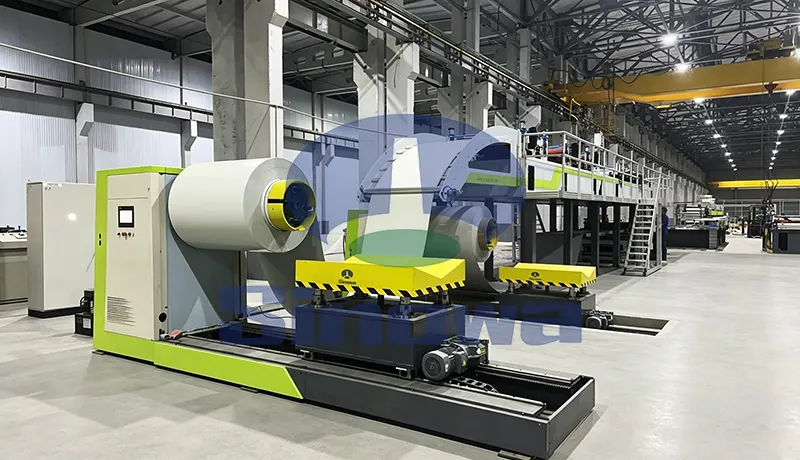
The PU sandwich panel line is a core production setup for making high-performance building insulation panels. This professional PU sandwich panel production line features automated operation to streamline the whole manufacturing process efficiently. Every component of the polyurethane sandwich panel line is precisely calibrated to ensure consistent panel thickness and structural stability. A well-maintained polyurethane sandwich panel production line can greatly boost production efficiency while reducing manual operation errors. The continuous PU sandwich panel line adapts to diverse production demands for different panel sizes and surface styles. With advanced molding technology, the PIR sandwich panel line produces panels with excellent heat preservation and sound insulation properties. Stable running of the PIR sandwich panel production line guarantees reliable product quality for various construction and industrial application scenarios.
-
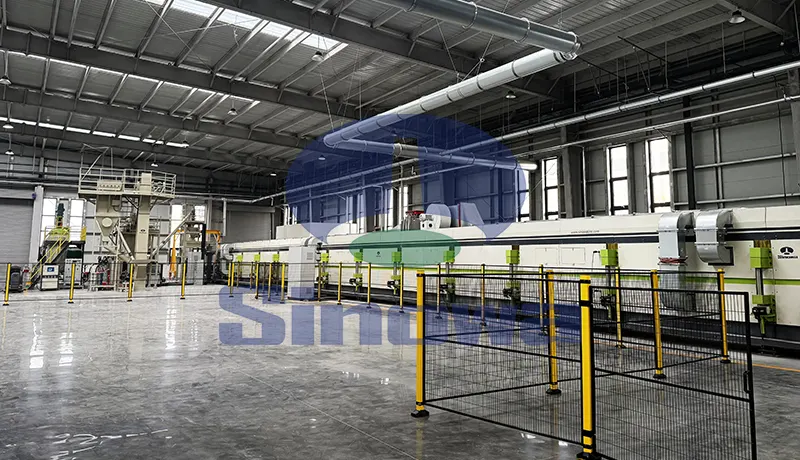
A phenolic insulation board production line serves as the core equipment for manufacturing high-performance thermal insulation building materials. This phenolic insulation panel production line integrates material mixing, foaming, molding and cutting processes to ensure continuous and stable production efficiency. Every operational link of the insulation board production line is precisely calibrated to produce uniform and durable insulation boards. The automated design of the insulation panel production line effectively reduces manual intervention and improves product consistency. Proper maintenance of the phenolic board production line can greatly extend its service life and maintain steady production output. With optimized structural design, the phenolic panel production line adapts to various production demands and delivers high-quality finished products for thermal insulation engineering applications.
-
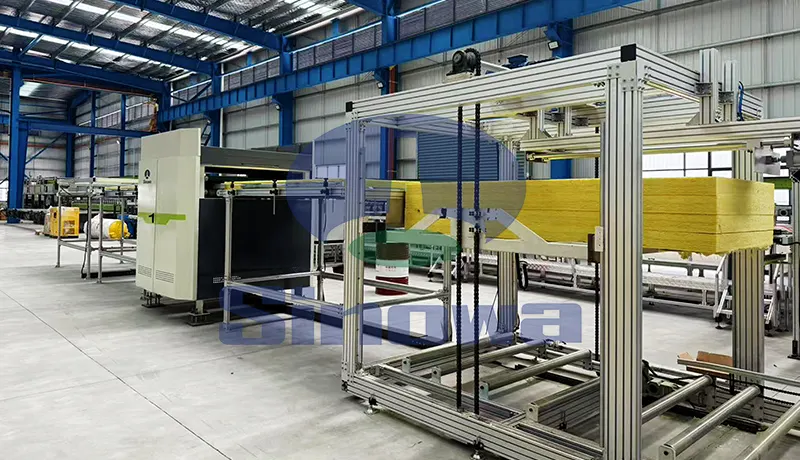
A professional rockwool sandwich panel line serves as the core equipment for producing high-performance building panels. This rockwool sandwich panel production line integrates feeding, laminating and forming processes to ensure stable and efficient production. The well-structured rock wool sandwich panel line can process raw rockwool materials into panels with excellent thermal and sound insulation properties. Operators can adjust the running parameters of the rock wool sandwich panel production line to manufacture panels of different thicknesses and specifications. The automated design of the mineral wool sandwich panel production line greatly reduces manual operation errors and improves product consistency. Regular maintenance of the mineral wool sandwich panel line is essential to sustain long-term operational efficiency and guarantee qualified finished panels for diverse construction applications.