How To Adjust The Temperature Parameters Of PIR Sandwich Panel Production Line?
Publication Date: Oct 8, 2026
This guide explains practical temperature parameter adjustment steps for PIR sandwich panel production lines, covering raw material, foaming, lamination and curing stages to stabilize panel quality.
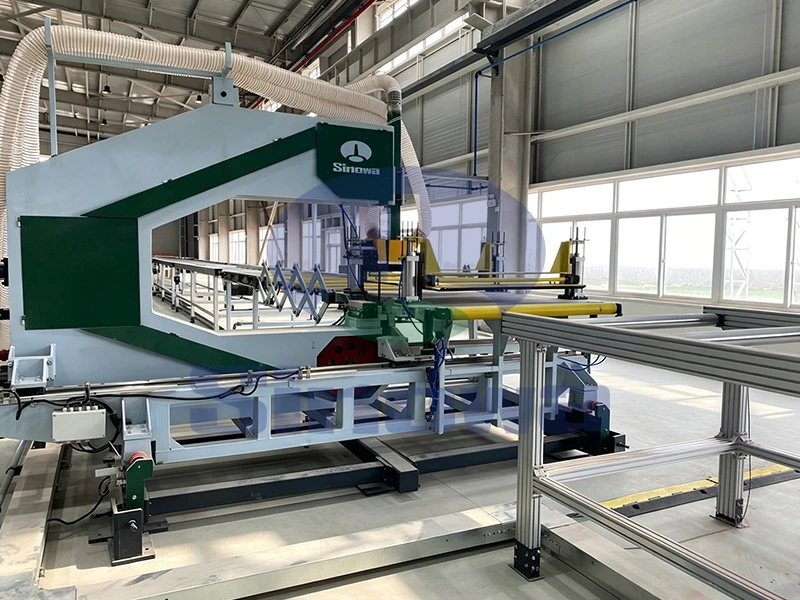
Precise temperature adjustment serves as the core foundation of stable PIR sandwich panel production, as every thermal parameter fluctuation directly impacts the chemical reaction of PIR foam, interlayer bonding strength and final panel flatness. Unlike ordinary PU materials, PIR raw materials rely on strict thermal control to complete trimerization reactions, which determine the core foam density, pore structure uniformity and long-term thermal insulation performance. Before starting any parameter adjustment, operators need to fully understand the linkage between temperature and each production stage, avoiding blind modifications that cause defective products. The entire temperature adjustment work runs through raw material preheating, online foaming, laminating molding and post-curing processes, requiring targeted fine-tuning according to real-time production states rather than fixed single parameters. Reasonable thermal setting can effectively solve common production problems such as uneven foaming, delamination, surface warping and insufficient core hardness, ensuring consistent product performance in mass continuous production.
The first key adjustment link focuses on the temperature control of PIR raw materials, including polyol and isocyanate components, which directly determines the initial reaction activity of foaming materials. In actual production, raw material temperature deviation is one of the most overlooked causes of unstable panel quality. If the raw material temperature is too low, the molecular activity of chemical components decreases, leading to slow reaction speed, incomplete foam expansion and easy generation of sparse pore structures inside the core layer. Conversely, excessively high raw material temperature will accelerate the trimerization reaction out of control, resulting in premature gelation, open-cell foam defects and reduced compressive strength of the panel. Operators need to adjust the supporting heating and cooling equipment to maintain a stable thermal state of raw materials before feeding, and fine-tune the temperature in real time according to workshop ambient temperature changes. Seasonal temperature differences will greatly affect raw material storage temperature, so regular calibration of temperature sensing equipment is required to eliminate data deviation and ensure the reaction rate of mixed materials remains in the optimal stable range.
Workshop ambient temperature adjustment is an auxiliary but indispensable part of PIR sandwich panel production line thermal parameter optimization, providing a stable external environment for internal material reaction and molding. The foaming and composite molding of PIR sandwich panels are highly sensitive to ambient thermal changes. Dramatic temperature fluctuations in the workshop will interfere with the heat balance of the foaming area, leading to inconsistent reaction degrees of materials at different production time periods. In low ambient temperature environments, the surface temperature of metal base plates drops rapidly after feeding, forming a temperature difference with the newly mixed high-activity PIR materials, which weakens the bonding effect between the core layer and the base plate. In high-temperature and humid environments, the material reaction speed accelerates abnormally, causing local over-foaming and panel surface bulging. Operators need to adjust workshop ventilation and constant-temperature equipment to maintain a mild and stable production environment, and appropriately raise or lower the local environmental temperature of the production line according to real-time humidity and temperature changes to match the optimal reaction conditions of PIR materials.
Online foaming zone temperature adjustment is the core step to control PIR core layer molding quality, requiring precise zoning thermal control to ensure uniform material foaming. The continuous sandwich panel production line is equipped with independent temperature control modules in the foaming injection area, which need targeted adjustment according to production speed and panel thickness. When producing thick-specification PIR panels, operators need to appropriately increase the foaming zone temperature to ensure that the thick core material can complete full foaming and uniform pore formation before gelation, avoiding hollow gaps and loose structures inside the core layer. For thin-specification panels, excessive temperature will lead to excessive foaming, causing the core layer to be too fluffy and unable to meet structural strength requirements. In addition, it is necessary to keep the temperature of the entire foaming area consistent, eliminate local overheating or insufficient heating dead zones, and ensure that each section of the continuously produced panels has the same foaming effect. Long-term production will cause slight aging of heating components, so regular temperature debugging and calibration are needed to maintain the stability of the foaming zone thermal environment.
Metal surface preheating temperature adjustment directly affects the interlayer bonding firmness of PIR sandwich panels, solving the common delamination defect in production. The metal base plate is at room temperature before molding, and there is an obvious temperature difference with the high-temperature reactive PIR foaming materials. Direct composite molding without preheating will cause the heat of the contact surface materials to dissipate rapidly, resulting in incomplete reaction at the bonding interface and reduced adhesion between the core layer and the metal plate. Operators need to adjust the preheating equipment parameters to raise the surface temperature of the upper and lower metal plates to the matching range before the foaming material is injected. The preheating temperature should not be too high or too low; excessive preheating temperature will cause the surface of the metal plate to oxidize and affect the appearance quality, while insufficient preheating cannot eliminate the interface temperature difference. It is necessary to dynamically adjust the preheating temperature according to different metal plate thicknesses and production line speeds to ensure that the bonding interface maintains the optimal thermal condition for material fusion and reaction.
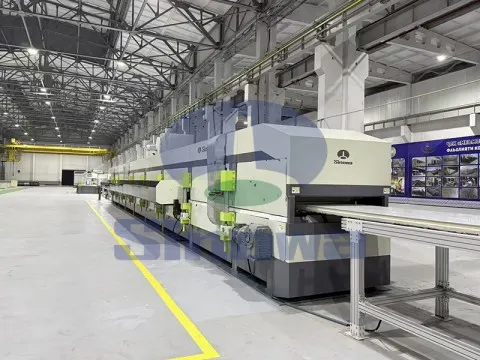
Laminator zoning temperature adjustment is crucial for integral panel molding and flatness control, requiring differentiated thermal setting for different areas of the laminating equipment. The laminator of the continuous PIR sandwich panel production line is divided into multiple independent temperature control zones, and the temperature parameters of each zone need to be adjusted in coordination with the production process flow. The front section of the laminator focuses on maintaining a stable medium temperature to ensure that the initially compounded panel completes preliminary shaping and bonding, preventing material displacement and layer separation during lamination. The middle section appropriately increases the temperature to promote the continuous reaction and curing of the PIR core layer, accelerate the formation of stable foam structure, and improve the overall compactness of the core material. The rear section adopts a gradual cooling temperature adjustment mode to avoid rapid temperature drop causing panel surface shrinkage and warping. Operators need to check the temperature difference of each zoning regularly, adjust the independent temperature control parameters of single zones with abnormal temperature, and ensure the synchronous heating and cooling efficiency of the entire laminator to produce flat and well-molded panels.
Curing oven temperature parameter adjustment determines the final structural stability and mechanical properties of PIR sandwich panels, being the key post-molding thermal control link. After leaving the laminator, the panel core layer has not completed full curing, and continuous constant-temperature curing is required to finish the residual trimerization reaction of PIR materials. The curing temperature needs to be set moderately; excessively high temperature will cause accelerated aging of the PIR core material, reduce the long-term thermal insulation stability of the panel, and even lead to surface paint discoloration of the metal plate. Too low curing temperature will result in incomplete material curing, insufficient core layer hardness, poor compression resistance and easy deformation of the finished panel. Meanwhile, the curing temperature needs to match the running speed of the production line. When the line speed increases, the panel’s residence time in the oven is shortened, so the curing temperature needs to be appropriately increased to ensure sufficient curing reaction time. Operators need to form a matching adjustment mechanism between line speed and curing temperature to adapt to different production efficiency requirements.
Temperature linkage adjustment with sandwich panel line operating speed is essential to maintain consistent product quality in variable-speed production. Most modern PIR sandwich panel production lines support adjustable-speed operation, and speed changes will directly affect the material reaction and heat conduction time, requiring synchronous temperature parameter modification. When the production line runs at a low speed, the material stays in the heating and curing area for a long time, so the overall temperature parameters should be appropriately reduced to prevent overheating curing and core material performance attenuation. When the production speed is increased to improve output, the thermal setting of each key temperature zone needs to be moderately increased to make up for the shortened heat action time and ensure that each production process can complete the required chemical reaction and molding effect. Blindly pursuing production speed without adjusting temperature parameters will lead to a sharp increase in defective rates. Operators need to summarize the optimal temperature-speed matching rules through trial production and fine-tune parameters in real time according to dynamic speed changes.
Regular temperature system calibration and dynamic parameter optimization ensure the long-term stable operation of thermal control links in the production line. In the long-term continuous production process, temperature sensors, heating pipes and control modules will have slight performance attenuation, resulting in inconsistent displayed temperature and actual temperature, which affects production accuracy. Operators need to formulate a regular calibration plan to detect and correct the temperature deviation of each production zone regularly. At the same time, different PIR formula ratios will have different optimal reaction temperature ranges, so when switching production formulas, targeted temperature parameter resetting and debugging are required. In addition, after long-term operation of the equipment, local heating unevenness may occur, and partial temperature fine-tuning should be carried out according to the actual molding effect of the panel to eliminate batch quality differences. Continuous parameter optimization can effectively improve production qualification rate and reduce material waste.
Scientific temperature fault diagnosis and emergency adjustment can quickly solve abnormal quality problems caused by thermal parameter deviation. In daily production, many common panel defects are closely related to inappropriate temperature settings. If the panel core layer has uneven pores and poor compactness, it is usually caused by insufficient raw material temperature or low foaming zone temperature leading to incomplete reaction. If interlayer delamination occurs, the preheating temperature of the metal plate or the bonding interface temperature of the laminator can be appropriately increased. If the panel is warped and deformed, the temperature difference between the upper and lower heating zones of the laminator can be adjusted and the cooling gradient of the curing oven can be optimized. When abnormal temperature fluctuations are detected in the system, operators should first stabilize the basic temperature parameters, suspend blind high-speed production, and conduct segmented debugging according to defect characteristics until the product quality returns to normal, forming a complete set of emergency temperature adjustment schemes.
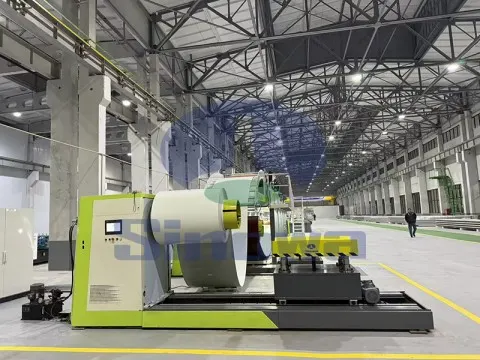
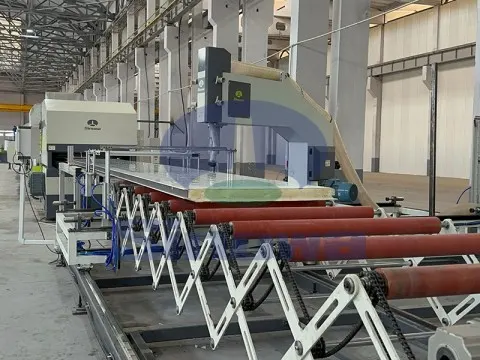
Gallery of PIR Sandwich Panel Production Line
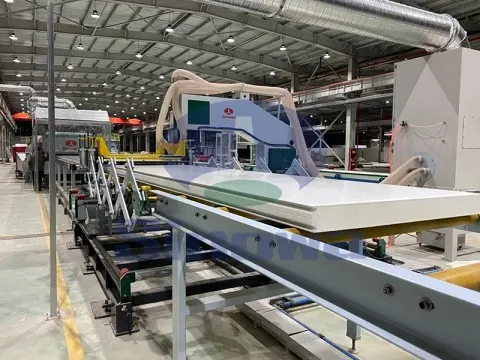
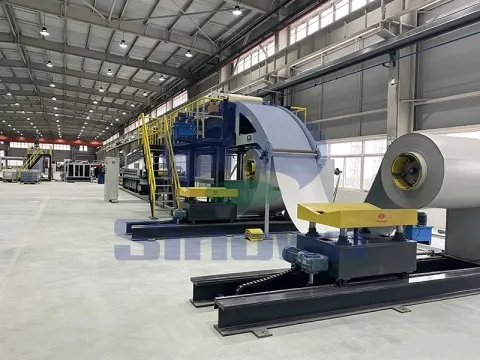
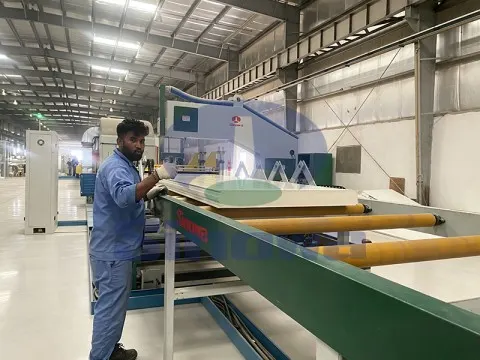
Tags: pir sandwich panel production line, pir sandwich panel production line manufacturer, pir sandwich panel production line supplier, china pir sandwich panel production line, pir sandwich panel production line for sale
-
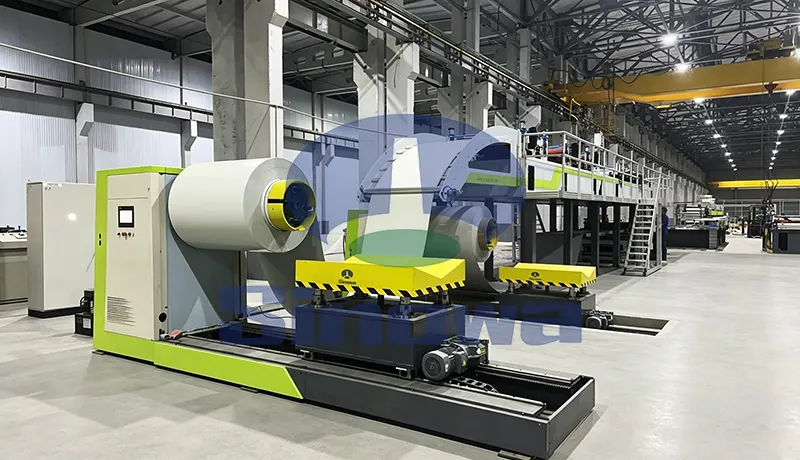
The PU sandwich panel line is a core production setup for making high-performance building insulation panels. This professional PU sandwich panel production line features automated operation to streamline the whole manufacturing process efficiently. Every component of the polyurethane sandwich panel line is precisely calibrated to ensure consistent panel thickness and structural stability. A well-maintained polyurethane sandwich panel production line can greatly boost production efficiency while reducing manual operation errors. The continuous PU sandwich panel line adapts to diverse production demands for different panel sizes and surface styles. With advanced molding technology, the PIR sandwich panel line produces panels with excellent heat preservation and sound insulation properties. Stable running of the PIR sandwich panel production line guarantees reliable product quality for various construction and industrial application scenarios.
-
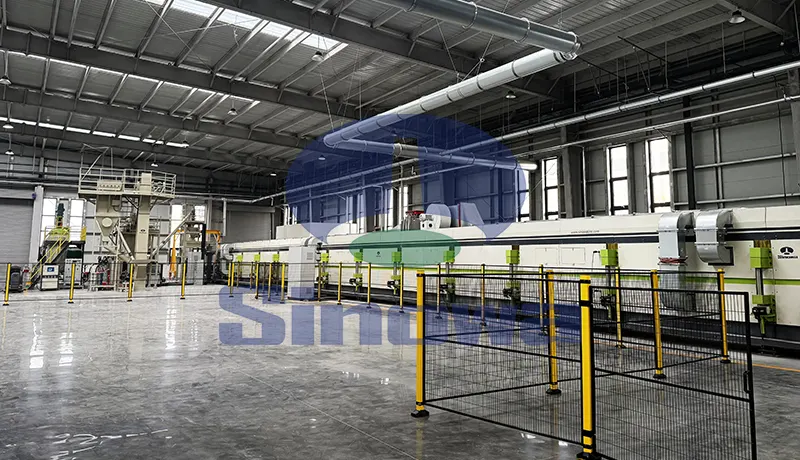
A phenolic insulation board production line serves as the core equipment for manufacturing high-performance thermal insulation building materials. This phenolic insulation panel production line integrates material mixing, foaming, molding and cutting processes to ensure continuous and stable production efficiency. Every operational link of the insulation board production line is precisely calibrated to produce uniform and durable insulation boards. The automated design of the insulation panel production line effectively reduces manual intervention and improves product consistency. Proper maintenance of the phenolic board production line can greatly extend its service life and maintain steady production output. With optimized structural design, the phenolic panel production line adapts to various production demands and delivers high-quality finished products for thermal insulation engineering applications.
-
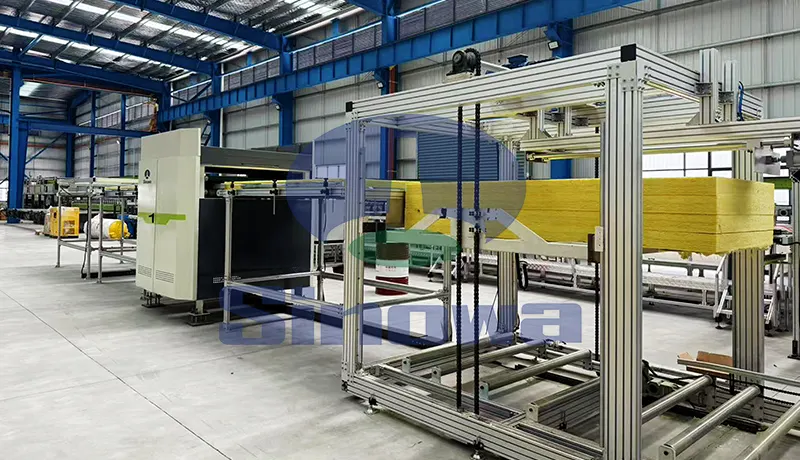
A professional rockwool sandwich panel line serves as the core equipment for producing high-performance building panels. This rockwool sandwich panel production line integrates feeding, laminating and forming processes to ensure stable and efficient production. The well-structured rock wool sandwich panel line can process raw rockwool materials into panels with excellent thermal and sound insulation properties. Operators can adjust the running parameters of the rock wool sandwich panel production line to manufacture panels of different thicknesses and specifications. The automated design of the mineral wool sandwich panel production line greatly reduces manual operation errors and improves product consistency. Regular maintenance of the mineral wool sandwich panel line is essential to sustain long-term operational efficiency and guarantee qualified finished panels for diverse construction applications.