Building Insulation Phenolic Board Line
Publication Date: Oct 6, 2026
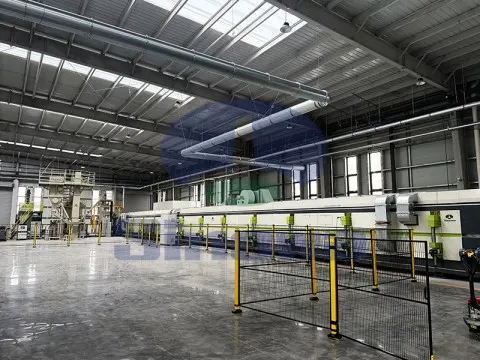
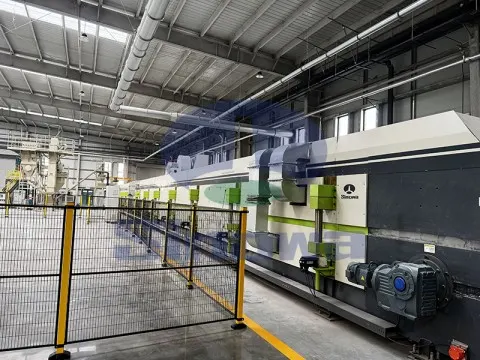
The building insulation phenolic board line is an integrated automated manufacturing system for producing high-performance phenolic foam insulation boards. It covers full production procedures from raw material processing to finished product shaping, delivering energy-saving, fireproof building insulation materials for modern construction projects.
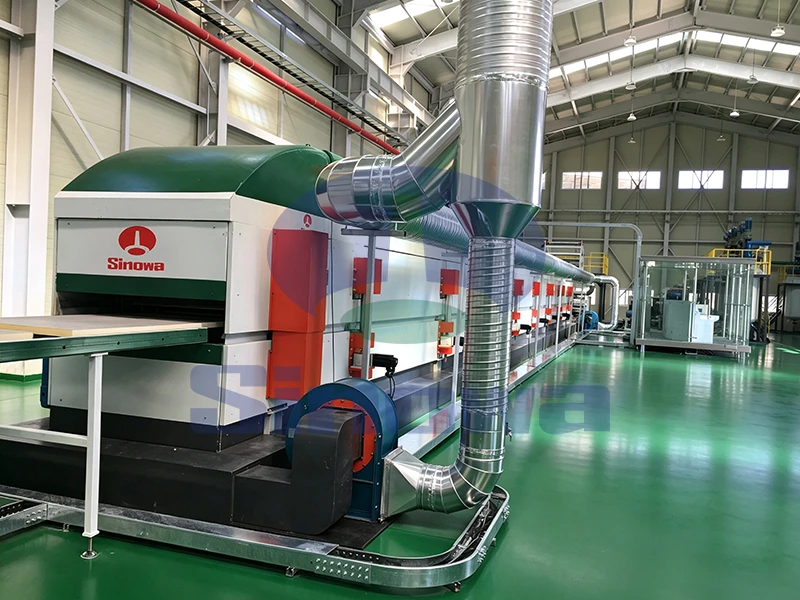
The building insulation phenolic board production line stands as a sophisticated, fully integrated manufacturing system dedicated to the continuous and stable production of phenolic foam insulation boards, which have emerged as a pivotal functional material in contemporary building energy conservation and thermal insulation engineering. Unlike traditional intermittent insulation material production equipment, this specialized production line adopts a streamlined modular design, perfectly connecting each production link to realize automated, large-scale and standardized manufacturing. Its core design concept focuses on balancing product performance stability, production efficiency and operational controllability, enabling the mass output of insulation boards with uniform structural density, excellent thermal insulation performance and reliable safety. Adaptable to diverse building insulation scenarios, the line can adjust production parameters flexibly to manufacture phenolic boards with different thicknesses and structural characteristics, meeting the differentiated construction demands of building exterior walls, roofs, interior partitions and HVAC auxiliary insulation structures. With the global construction industry’s increasing emphasis on energy efficiency and building safety, this professional production line has become a core supporting facility for the popularization and application of high-quality phenolic insulation materials.
Raw material pretreatment and precise proportioning constitute the foundational starting point of the entire phenolic board production process, directly determining the basic performance and quality consistency of finished products. The core raw materials applied in the production line include phenolic resin base materials, high-efficiency foaming agents, special curing agents, flame retardant additives and functional auxiliary modifiers, each undertaking unique functional responsibilities in the foaming and curing reaction. The production line is equipped with intelligent batching modules that realize accurate measurement and quantitative feeding of all raw materials, effectively avoiding performance fluctuations caused by manual proportioning errors. Before formal mixing, raw materials will undergo strict pretreatment procedures, including impurity removal, constant temperature standing and viscosity adjustment, to ensure that each component maintains the optimal reaction state. The scientific proportioning mechanism enables the raw material system to form a stable reaction foundation, which lays a solid guarantee for the formation of uniform closed-cell structures in subsequent foaming links. This standardized batching and pretreatment process eliminates unstable factors in raw material application, ensuring that each batch of phenolic insulation boards maintains consistent thermal insulation, fire resistance and dimensional stability.
Homogeneous mixing and dynamic emulsification is a key intermediate link that connects raw material proportioning and foaming molding, playing a decisive role in optimizing the internal structure of phenolic boards. After precise batching, all raw materials are transported to the high-speed integrated mixing device of the production line, where multi-dimensional stirring and dynamic emulsification are carried out under set temperature and pressure conditions. The mixing system adopts a layered stirring structure, which can fully fuse viscous resin base materials with low-dose additives and foaming agents, avoiding local component accumulation or uneven dispersion. In the emulsification stage, the system finely adjusts the fluidity and activity of the mixed materials to form a uniform and stable emulsion system, ensuring that gas generated by subsequent foaming can be evenly distributed in the resin matrix. The whole mixing and emulsification process operates in a fully closed environment, which not only prevents external impurity pollution but also avoids the loss of volatile functional components. High-quality mixed materials provide excellent prerequisites for subsequent low-temperature foaming, enabling the final phenolic board to form a fine and dense cell structure and achieve superior thermal insulation effects.
Controllable low-temperature foaming is the core molding process of phenolic insulation board production, which directly shapes the porous thermal insulation structure of the product. Different from the high-speed foaming mode of other foam insulation materials, the phenolic board production line adopts a gradient low-temperature foaming technology to ensure slow and sufficient foaming reaction of the mixed materials. After entering the foaming cavity, the emulsified materials undergo gradual gas expansion and preliminary curing under precisely controlled temperature and pressure environments. The intelligent control system of the line can dynamically adjust foaming speed, temperature gradient and cavity pressure according to preset production parameters, effectively preventing cell rupture, cavity collapse or uneven pore size distribution. In this process, the foaming agent steadily releases gas to form a large number of tiny closed cells inside the resin matrix, while the preliminary curing reaction fixes the initial foam structure. The low-temperature slow foaming mode avoids internal stress concentration caused by rapid reaction, enabling the phenolic board to form a uniform and stable porous structure, which is the key to its low thermal conductivity and long-term stable thermal insulation performance.
Multi-stage constant temperature curing is a unique and critical process that distinguishes phenolic board production from other insulation board manufacturing processes, and it is the core link to finalize product performance. After preliminary foaming and molding, the semi-finished phenolic board enters the segmented curing channel of the production line to complete layered polymerization and deep curing reaction. The curing area is divided into multiple temperature gradient zones, realizing gradual temperature rise and constant temperature maintenance, which enables the internal molecular structure of the phenolic foam to fully polymerize and cross-link. This multi-stage curing mode effectively solves the problems of incomplete internal reaction, unstable structure and easy deformation caused by one-time high-temperature curing. With the progress of the curing process, the foam structure is further compacted and stabilized, the molecular cross-linking degree is continuously improved, and the product’s hardness, compression resistance and dimensional stability are significantly enhanced. Sufficient curing reaction also optimizes the product’s fire resistance and anti-aging performance, making the phenolic board able to adapt to long-term complex building service environments and maintain stable comprehensive performance.
Continuous surface lamination and composite reinforcement processes further optimize the structural strength and application adaptability of phenolic insulation boards. After completing curing and shaping, the base phenolic foam board enters the automatic lamination module of the insulation panel production line, where different types of surface protective materials are compounded on its upper and lower surfaces according to application requirements. Common composite surface materials include fire-resistant fiber cloth, aluminum foil and reinforced inorganic protective layers, which can effectively make up for the slight brittleness of pure phenolic foam materials. The production line adopts integrated hot-press lamination technology, which realizes tight bonding between the surface material and the foam base plate through constant temperature and constant pressure treatment, without gaps or delamination. The composite structure formed by lamination significantly improves the board’s surface wear resistance, impact resistance and weather resistance, while enhancing its overall structural integrity. In practical building applications, the laminated phenolic board is easier to construct and install, and can effectively avoid structural damage during transportation and construction, expanding its application scope in various building insulation systems.
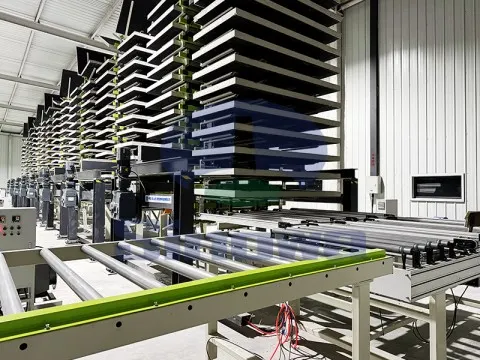
Precision cutting and edge finishing are the final molding procedures of the phenolic insulation board production line, realizing the standardized sizing and high-quality appearance of finished phenolic boards. The fully automatic cutting system of the production line adopts numerical control precision positioning technology, which can accurately cut continuous long-size phenolic board blanks into customized specifications of different lengths and widths. The cutting equipment runs stably with high cutting precision, ensuring flat and smooth board sections without burrs, cracks or uneven cuts. Meanwhile, the edge finishing module conducts fine polishing and rounding treatment on the board edges to eliminate sharp edges and corners, which not only improves the product’s appearance quality but also avoids safety hazards and installation gaps during construction. In addition, the system can automatically remove defective products with uneven sizes or surface flaws generated in the production process, ensuring that all offline finished products meet consistent quality standards. This refined post-processing process enables phenolic boards to achieve precise docking and assembly in building construction, improving the overall construction efficiency and insulation system tightness.
Intelligent detection and quality control systems run through the phenolic panel production line, providing comprehensive quality assurance for finished phenolic insulation boards. The production line is equipped with real-time online detection devices, which continuously monitor key indicators such as board thickness, density, flatness and internal cell uniformity during the production process. Once abnormal parameter fluctuations are detected, the system will automatically trigger early warnings and fine-tune production parameters in real time to avoid batch quality problems. After the completion of finished product molding, offline sampling detection is carried out for thermal conductivity, compression resistance, fire resistance and dimensional stability to verify the comprehensive performance of the products. The whole quality control process forms a closed-loop management system from raw material input to finished product output, effectively controlling all potential quality risks. Through precise intelligent detection and standardized quality screening, the production line stably outputs high-quality phenolic insulation boards with reliable performance, ensuring that the products can meet the strict usage requirements of modern building energy-saving and safety systems.
Automated operation and energy-saving design are prominent functional advantages of modern phenolic board production lines, realizing efficient and green manufacturing. The entire production line adopts centralized intelligent control, and all links from raw material feeding, mixing and foaming to curing and cutting can be automatically operated through the control system, reducing manual intervention and improving production consistency and efficiency. The optimized mechanical structure and power system reduce mechanical energy consumption and equipment wear during operation, while the closed production design avoids the volatilization and waste of raw materials. In addition, the production line is equipped with waste gas and residue recovery and treatment devices, which can effectively recycle and reuse excess raw materials and reaction by-products generated in the production process, reducing production waste and environmental pollution. The combination of high automation and energy-saving environmental protection design not only improves the economic benefits of production but also conforms to the green development trend of the modern construction industry, realizing the coordinated development of production efficiency, product quality and environmental protection performance.
The application value and development potential of building insulation phenolic board production lines are continuously highlighted with the upgrading of building energy-saving technologies. The phenolic boards produced by this line integrate excellent thermal insulation, fire safety, weather resistance and lightweight characteristics, and can be widely used in building exterior wall thermal insulation, roof insulation, interior fire insulation and building envelope energy-saving transformation. Compared with traditional insulation material production equipment, this professional production line has stronger product performance customization capability and production stability, and can continuously output high-performance insulation materials suitable for high-standard green buildings. With the continuous improvement of building energy-saving requirements and the increasing demand for safe and environmentally friendly building materials in the construction industry, the phenolic board production line will further realize technological upgrading in intelligent manufacturing, precise performance control and green production, providing more high-quality and efficient material support for the development of modern energy-saving and safe buildings.
Gallery of Insulation Phenolic Board Line
Tags: insulation phenolic board line, insulation phenolic board line manufacturer, insulation phenolic board line supplier, china insulation phenolic board line, insulation phenolic board line for sale
https://www.sandwichpanelmachinery.com/blog/building-insulation-phenolic-board-line.html
-
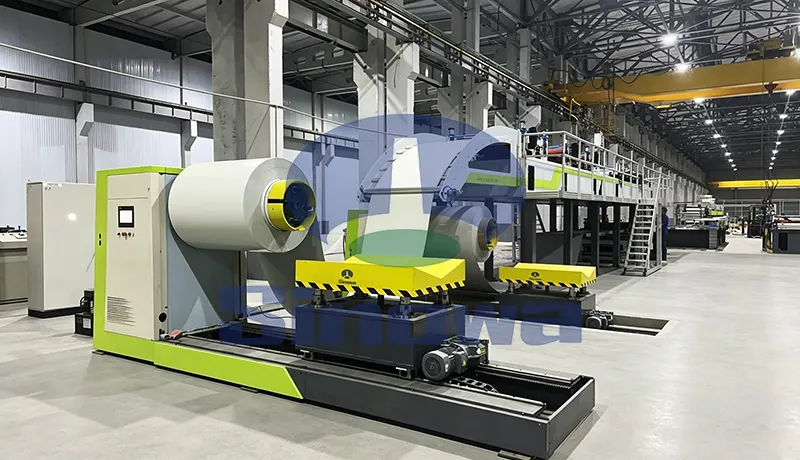
The PU sandwich panel line is a core production setup for making high-performance building insulation panels. This professional PU sandwich panel production line features automated operation to streamline the whole manufacturing process efficiently. Every component of the polyurethane sandwich panel line is precisely calibrated to ensure consistent panel thickness and structural stability. A well-maintained polyurethane sandwich panel production line can greatly boost production efficiency while reducing manual operation errors. The continuous PU sandwich panel line adapts to diverse production demands for different panel sizes and surface styles. With advanced molding technology, the PIR sandwich panel line produces panels with excellent heat preservation and sound insulation properties. Stable running of the PIR sandwich panel production line guarantees reliable product quality for various construction and industrial application scenarios.
-
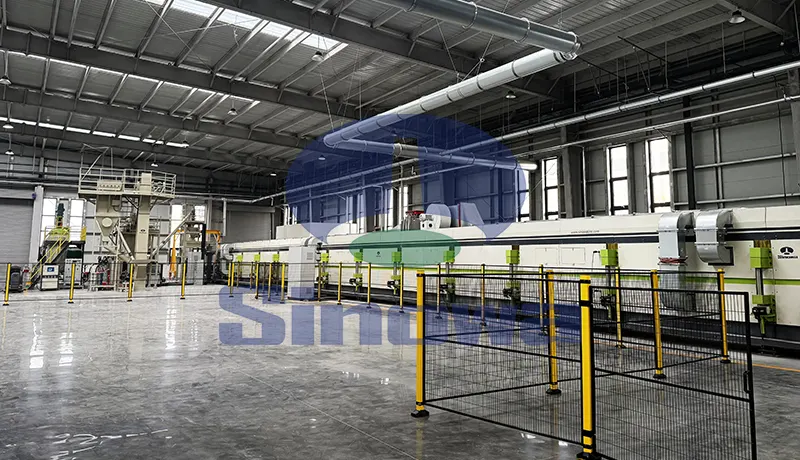
A phenolic insulation board production line serves as the core equipment for manufacturing high-performance thermal insulation building materials. This phenolic insulation panel production line integrates material mixing, foaming, molding and cutting processes to ensure continuous and stable production efficiency. Every operational link of the insulation board production line is precisely calibrated to produce uniform and durable insulation boards. The automated design of the insulation panel production line effectively reduces manual intervention and improves product consistency. Proper maintenance of the phenolic board production line can greatly extend its service life and maintain steady production output. With optimized structural design, the phenolic panel production line adapts to various production demands and delivers high-quality finished products for thermal insulation engineering applications.
-
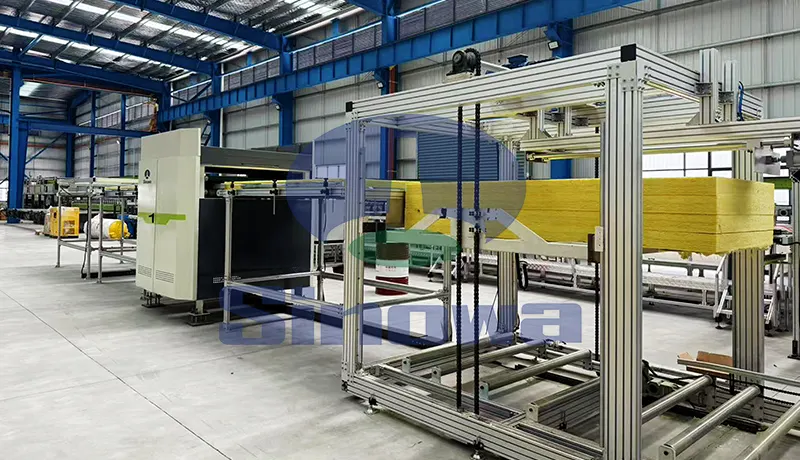
A professional rockwool sandwich panel line serves as the core equipment for producing high-performance building panels. This rockwool sandwich panel production line integrates feeding, laminating and forming processes to ensure stable and efficient production. The well-structured rock wool sandwich panel line can process raw rockwool materials into panels with excellent thermal and sound insulation properties. Operators can adjust the running parameters of the rock wool sandwich panel production line to manufacture panels of different thicknesses and specifications. The automated design of the mineral wool sandwich panel production line greatly reduces manual operation errors and improves product consistency. Regular maintenance of the mineral wool sandwich panel line is essential to sustain long-term operational efficiency and guarantee qualified finished panels for diverse construction applications.