Insulated Sandwich Panel Machine
Publication Date: Oct 7, 2026
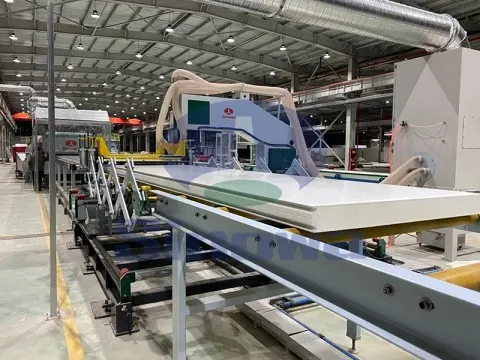
Insulated sandwich panel machines are automated integrated production systems for manufacturing composite thermal insulation panels. They streamline full-process production from raw material processing to finished panel cutting, delivering high-efficiency, stable, and customized insulated panels for diverse construction and industrial applications.
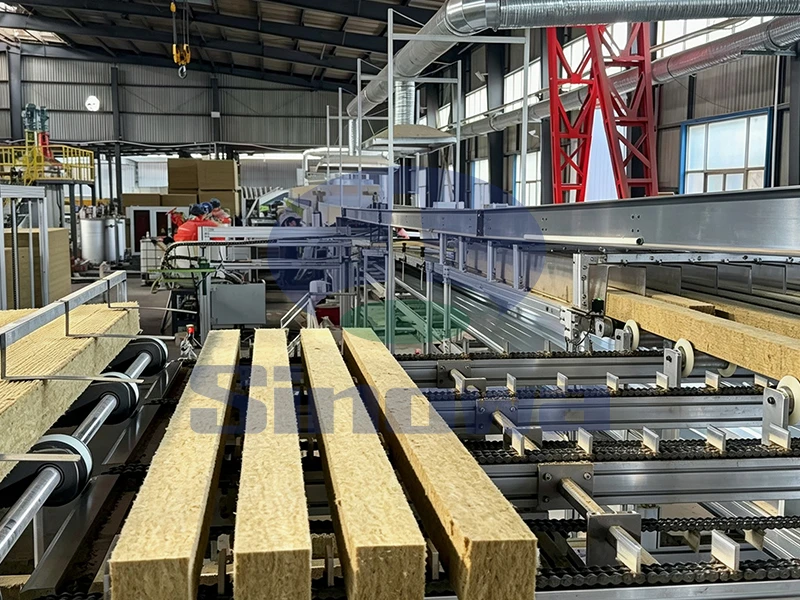
Insulated sandwich panel machines serve as the core manufacturing equipment for producing multi-functional composite building panels, which consist of double-sided metal facing sheets and intermediate thermal insulation core materials. Unlike traditional fragmented manufacturing equipment, this integrated machine set integrates multiple independent processing procedures into one synchronized production line, realizing continuous and automated panel fabrication. The fundamental design purpose of the machine is to unify structural shaping, thermal insulation compounding, and performance curing in a single workflow, effectively solving the problems of low efficiency, inconsistent product quality, and high manual labor costs in traditional manual and semi-automatic production modes. It adapts to various mainstream insulation core materials and metal surface materials, enabling flexible production of panels with different thicknesses, specifications, and structural types to meet the differentiated needs of modern building energy conservation, industrial enclosure, and cold chain facility construction. The entire production process operates in a closed and orderly mechanical cycle, minimizing human intervention and greatly improving the standardization degree of finished insulated panels.
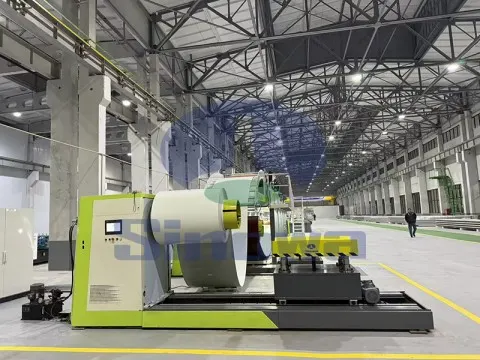
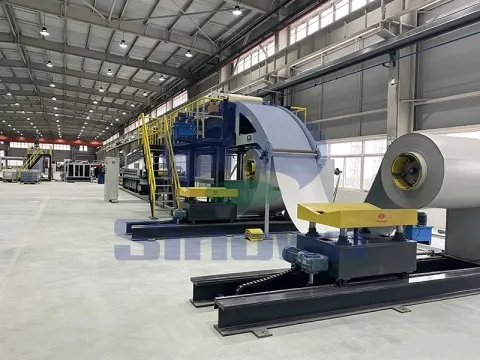
The overall structural composition of an insulated sandwich panel machine is modular and systematic, with each functional module cooperating closely to complete the complete panel manufacturing process. The basic configuration includes raw material unwinding units, surface material pretreatment systems, precision roll forming mechanisms, core material feeding and processing devices, adhesive coating systems, composite pressing and curing units, fixed-length cutting mechanisms, and finished product conveying and stacking modules. Each module is independently adjustable in parameters but linked in operation, ensuring seamless connection between front and rear processes. The raw material unwinding unit is responsible for stably releasing coiled metal sheets, with automatic tension control functions to avoid sheet deformation and deviation during feeding. The pretreatment system cleans residual dust, oil stains, and impurities on the metal surface, and completes uniform preheating treatment, laying a solid foundation for subsequent adhesive bonding and composite molding. The modular structural design not only simplifies daily equipment maintenance and later functional upgrading but also allows users to adjust module combinations according to production demands, realizing flexible switching of different panel production specifications.
Raw material pretreatment is a crucial preliminary process completed by the insulated sandwich panel machine, which directly determines the bonding firmness and service life of finished panels. Before formal composite molding, the machine conducts multi-dimensional treatment on both metal facing sheets and insulation core materials. For metal sheets, the equipment adopts physical cleaning and constant-temperature preheating dual processes to remove surface attachments that may affect adhesion, while improving the surface activity of metal materials to enhance the combination effect with adhesives. For insulation core materials, the machine realizes precise cutting, shaping, and uniform feeding, ensuring the core materials have consistent thickness and flatness, and eliminating structural defects such as hollow gaps and uneven filling in subsequent composite panels. In addition, the automatic adhesive coating system of the machine can evenly apply high-performance composite adhesives on the bonding surface of metal sheets and core materials, with adjustable coating thickness and density according to different material characteristics, avoiding excessive adhesive waste or insufficient bonding caused by uneven manual coating. This standardized pretreatment process greatly improves the overall structural stability of insulated panels.
Roll forming technology is a key functional link of the insulated sandwich panel machine, responsible for shaping flat metal coiled materials into standardized panel profiles. The machine is equipped with a multi-group precision roll forming set, which adopts segmented gradual molding design to avoid one-time forced bending that causes metal surface damage and structural stress concentration. Each roll group has fine-tuning functions for position and pressure, which can accurately adjust the bending angle, edge height, and overall flatness of metal sheets according to different panel design requirements. During the forming process, the machine’s automatic detection system monitors the sheet’s molding accuracy in real time, automatically correcting minor deviations in size and shape to ensure the consistency of each batch of metal profiles. This precise roll forming process enables the metal facing sheets to have neat edges, smooth surfaces, and stable structural dimensions after molding, which not only improves the appearance quality of finished panels but also ensures the assembly accuracy of subsequent panel installation and splicing. Moreover, the flexible roll forming system can quickly switch molding parameters to adapt to the production of wall panels, roof panels, and other different profile types.
Core material laying and composite foaming are the core functional stages that reflect the performance advantages of the insulated sandwich panel machine, especially for polyurethane and polyisocyanurate core panels. The machine’s automatic core material feeding system can stably and quantitatively convey insulation core materials into the middle of upper and lower metal profiles, realizing full and uniform filling without offset or accumulation. For liquid foaming raw materials, the high-precision mixing and pouring device of the machine blends raw materials in precise proportions under constant temperature and pressure control, triggering uniform foaming reactions. The closed foaming chamber ensures that the foaming material expands evenly in the fixed space between the two layers of metal sheets, forming a dense and pore-free insulation core structure. The machine can accurately control the foaming density and thickness by adjusting the gap of the conveyor belt and raw material feeding amount, ensuring that the core material has stable thermal insulation performance and structural strength. This integrated foaming and laying process effectively avoids the common problems of manual foaming such as uneven density, local hollowing, and inconsistent thickness, greatly improving the thermal insulation and mechanical properties of finished panels.
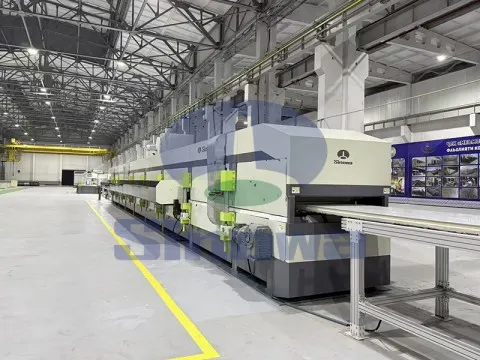
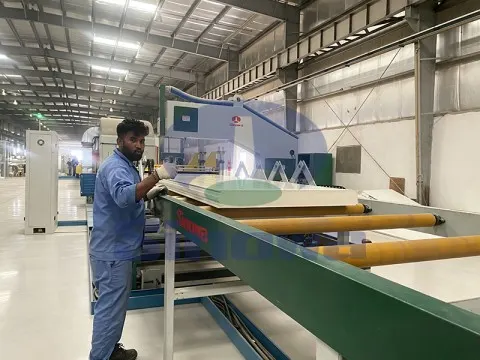
Constant-temperature pressing and curing molding is a key process for the insulated sandwich panel machine to realize integral composite forming of panels. After the completion of material laying and foaming, the semi-finished panels are stably transported to the double-belt pressing and curing unit through the synchronous conveyor system. The pressing unit adopts segmented pressure regulation and constant-temperature heating design, which can apply uniform and stable pressure to the entire panel surface, while matching with gradient temperature curing to promote rapid solidification of adhesives and stable molding of foamed core materials. The machine’s intelligent temperature and pressure control system can dynamically adjust parameters according to different core material types and panel thicknesses, ensuring that each part of the panel receives consistent pressing force and curing temperature. This process enables the metal facing sheets and insulation core materials to form an integrated firm structure, effectively improving the overall compression resistance, bending resistance, and structural stability of the panel. After curing and pressing, the panel has flat surface, stable overall dimensions, and no internal structural gaps, laying a foundation for subsequent fine processing and long-term service.
Fixed-length cutting and edge finishing are the fine processing links of the insulated sandwich panel machine, which realize the standardized shaping of finished panels. After the cured integral panel is output from the pressing unit, the high-precision tracking and cutting system of the machine conducts fixed-length cutting according to preset size parameters. The cutting mechanism adopts high-speed and stable cutting tools, which can complete neat cutting of metal surface and internal core material at one time, avoiding burrs, edge warping, and core material fragmentation. At the same time, the supporting edge finishing device automatically trims the edges of the cut panels to smooth the uneven parts of the panel edges, ensuring the flatness and regularity of the panel’s four sides. The entire cutting and finishing process is automatically controlled by the system, with high dimensional accuracy and zero manual secondary processing required. The machine supports flexible setting of cutting lengths, which can meet the production requirements of panels with various custom lengths, and effectively improves the yield and appearance quality of finished products.
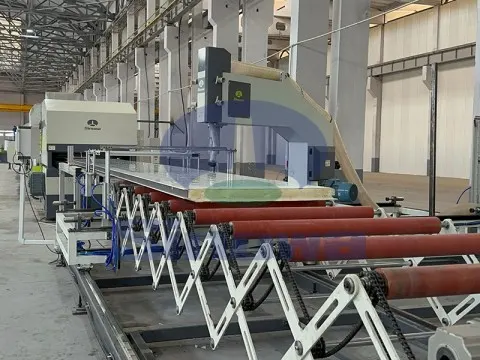
Automatic conveying and stacking systems are important auxiliary functional modules of the insulated sandwich panel machine, realizing efficient collection and arrangement of finished panels. After cutting and finishing, the qualified finished panels are smoothly transported to the stacking area through the multi-stage buffer conveyor system, which can avoid panel surface friction and collision damage during transportation. The automatic stacking device precisely grabs and stacks panels according to the set number and arrangement mode, realizing neat stacking of finished products. The system is equipped with intelligent counting and sorting functions, which can automatically distinguish qualified products and defective products, and classify and stack them separately. This automatic post-processing link completely replaces manual carrying and stacking, greatly improving production efficiency, reducing the risk of panel surface scratches and deformation caused by manual operation, and facilitating subsequent centralized packaging, transportation, and storage of finished panels. The synchronous operation of conveying and stacking also ensures the continuous operation of the front-end production line, avoiding production pause caused by product accumulation.
The intelligent control and operation system is the brain core of the entire insulated sandwich panel machine, realizing unified scheduling and precise control of all functional modules. The equipment is equipped with an integrated human-machine operation interface, which intuitively displays the operating status, production parameters, and real-time data of each module. Operators can complete parameter setting, production mode switching, and equipment operation monitoring through simple operations. The system has automatic parameter memory function, which can save the parameter settings of different specification panels, realizing one-click startup of subsequent repeated production. In addition, the intelligent system has real-time fault detection and early warning functions, which can automatically identify abnormal conditions such as material blockage, parameter deviation, and equipment operation failure, and send early warning prompts while implementing automatic protection to avoid equipment damage and defective product batch output. The highly intelligent control mode simplifies the operation threshold of the equipment, reduces the dependence on professional operators, and ensures the stability and continuity of long-term production.
The application advantages and market value of insulated sandwich panel machines are reflected in high efficiency, high quality, and high flexibility, making them widely used in multiple industrial and construction fields. Compared with traditional production equipment, this integrated machine set greatly improves production efficiency through full-process automation synchronization, realizing continuous batch production of panels. The standardized mechanical production process ensures consistent product quality, stable thermal insulation performance, and excellent structural durability of each panel. The equipment’s flexible production capacity can adapt to the production needs of different insulation materials, panel specifications, and structural types, meeting the personalized construction needs of prefabricated buildings, cold storage warehouses, industrial workshops, and outdoor enclosure facilities. In addition, the centralized and orderly production mode of the machine reduces material waste and energy consumption in the production process, realizing energy-saving and environmentally friendly production. With the continuous development of energy-saving building technology, the insulated sandwich panel machine, as key supporting equipment for new energy-saving building materials, will continue to expand its application scope and play an important role in promoting the standardized and intelligent development of the building insulation material industry.
Gallery of Insulated Sandwich Panel Machine
Tags: insulated sandwich panel machine, insulated sandwich panel machine manufacturer, insulated sandwich panel machine supplier, china insulated sandwich panel machine, insulated sandwich panel machine for sale
https://www.sandwichpanelmachinery.com/tags/insulated-sandwich-panel-machine.html
-
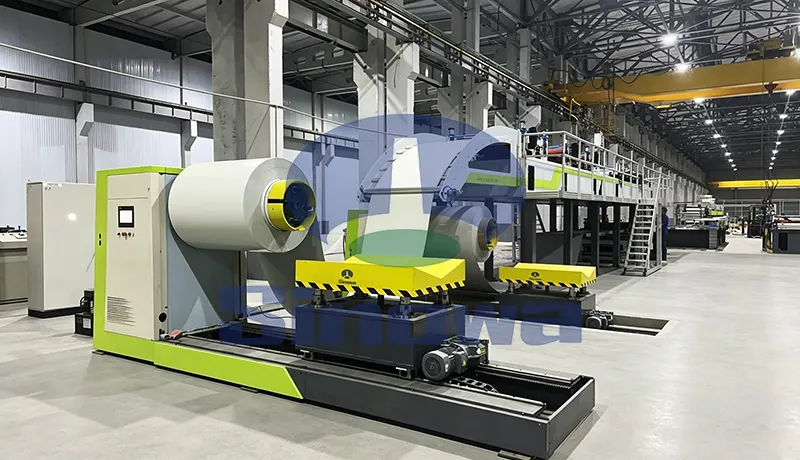
The PU sandwich panel line is a core production setup for making high-performance building insulation panels. This professional PU sandwich panel production line features automated operation to streamline the whole manufacturing process efficiently. Every component of the polyurethane sandwich panel line is precisely calibrated to ensure consistent panel thickness and structural stability. A well-maintained polyurethane sandwich panel production line can greatly boost production efficiency while reducing manual operation errors. The continuous PU sandwich panel line adapts to diverse production demands for different panel sizes and surface styles. With advanced molding technology, the PIR sandwich panel line produces panels with excellent heat preservation and sound insulation properties. Stable running of the PIR sandwich panel production line guarantees reliable product quality for various construction and industrial application scenarios.
-
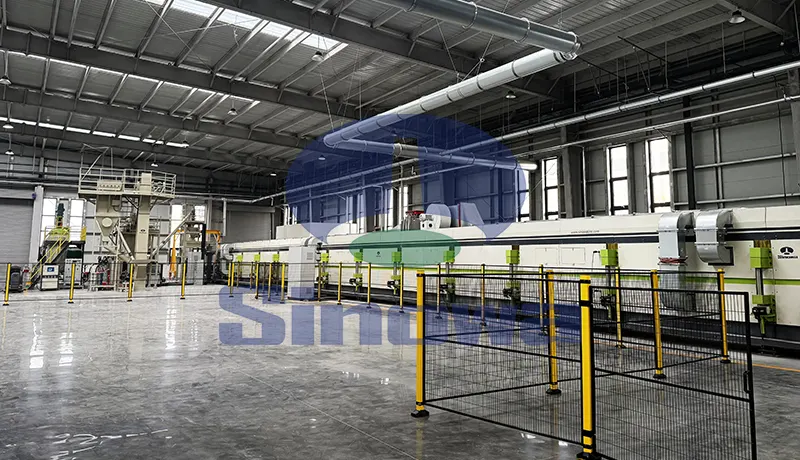
A phenolic insulation board production line serves as the core equipment for manufacturing high-performance thermal insulation building materials. This phenolic insulation panel production line integrates material mixing, foaming, molding and cutting processes to ensure continuous and stable production efficiency. Every operational link of the insulation board production line is precisely calibrated to produce uniform and durable insulation boards. The automated design of the insulation panel production line effectively reduces manual intervention and improves product consistency. Proper maintenance of the phenolic board production line can greatly extend its service life and maintain steady production output. With optimized structural design, the phenolic panel production line adapts to various production demands and delivers high-quality finished products for thermal insulation engineering applications.
-
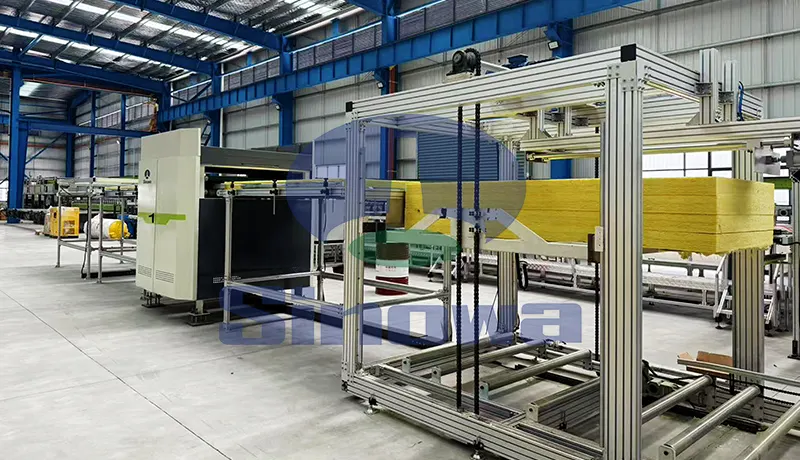
A professional rockwool sandwich panel line serves as the core equipment for producing high-performance building panels. This rockwool sandwich panel production line integrates feeding, laminating and forming processes to ensure stable and efficient production. The well-structured rock wool sandwich panel line can process raw rockwool materials into panels with excellent thermal and sound insulation properties. Operators can adjust the running parameters of the rock wool sandwich panel production line to manufacture panels of different thicknesses and specifications. The automated design of the mineral wool sandwich panel production line greatly reduces manual operation errors and improves product consistency. Regular maintenance of the mineral wool sandwich panel line is essential to sustain long-term operational efficiency and guarantee qualified finished panels for diverse construction applications.