Phenolic Board Foaming Production Line
Publication Date: Sep 28, 2026
The phenolic board foaming production line is a specialized continuous manufacturing system designed for producing high-performance phenolic foam insulation boards. It integrates raw material processing, precise foaming, curing and shaping procedures to deliver stable, uniform, and high-quality phenolic board products for diverse industrial and construction applications.
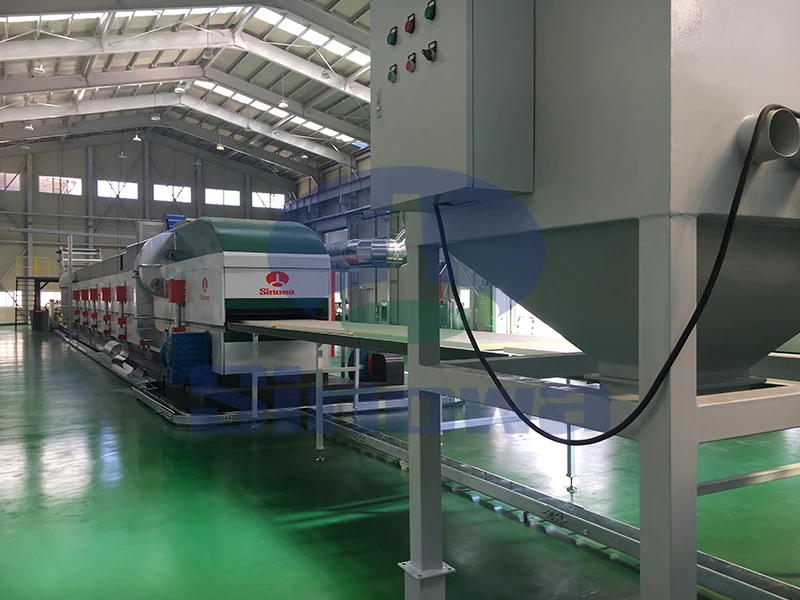
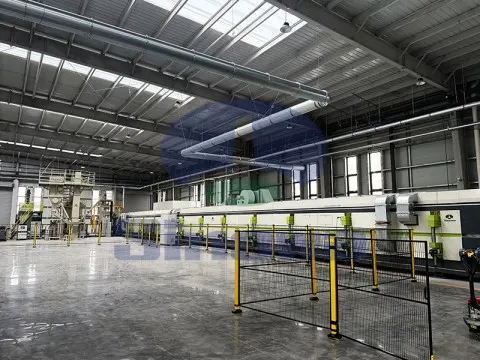
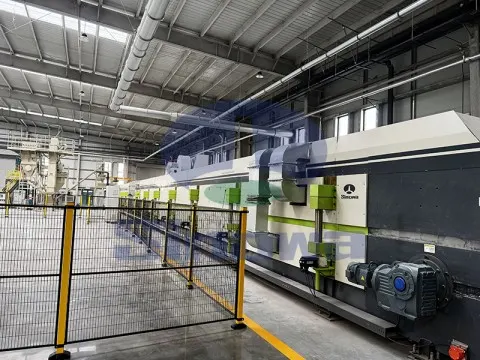
The overall operation of the phenolic board foaming production line centers on systematic and coordinated material processing and chemical reaction control, covering the full workflow from raw material feeding to finished board shaping. This automated production system is engineered to handle the unique foaming and curing characteristics of phenolic resin, distinguishing itself from ordinary foam board manufacturing equipment. It mainly consists of raw material metering and mixing units, continuous feeding mechanisms, closed foaming cavities, constant-temperature curing tunnels, and post-processing trimming modules. Every functional unit works in synchronous operation to eliminate manual intervention errors and ensure consistent production rhythms. The core design concept focuses on stabilizing the foaming reaction environment, as phenolic foam formation requires mild, controllable temperature and pressure conditions to avoid structural defects. Through integrated mechanical and automatic control design, the line realizes continuous, large-scale production while maintaining the basic structural uniformity of phenolic boards.
Raw material proportioning and high-precision mixing serve as the foundational stage that determines the fundamental performance of finished phenolic boards. The core production raw materials include phenolic resin base liquid, foaming agents, surfactant stabilizers, and curing additives, each playing an irreplaceable role in the foaming process. The production line adopts a closed high-shear mixing device to blend all raw materials evenly under set dynamic conditions. Precision metering modules accurately control the dosage of each component, avoiding formula imbalance that may cause uneven foaming or unstable pore structures. The surfactant stabilizer functions to wrap foaming gas generated during reactions, preventing bubble merging and rupture, while the curing additive preliminarily adjusts the reaction activity of phenolic resin. Uniform mixing ensures that subsequent foaming and curing reactions proceed synchronously across all material areas, laying a reliable foundation for consistent product density and structural stability.
Continuous material feeding and substrate laying processes ensure the continuity and flatness of phenolic board production. After full mixing, the homogeneous material liquid is stably conveyed to the molding station through a constant-pressure feeding system, which avoids material pulsation and uneven liquid output that affect foaming uniformity. Meanwhile, the line is equipped with an automatic substrate laying mechanism that continuously supplies flat base materials for phenolic foam compounding. The feeding speed of the material liquid is precisely matched with the operating speed of the conveyor system to ensure uniform material coverage on the substrate surface. This continuous feeding mode eliminates intermittent production gaps, greatly improving production efficiency compared with batch production equipment. In addition, the feeding system is designed with anti-blocking and constant-temperature protection structures to prevent material liquid solidification or residue accumulation, ensuring long-term stable operation of the whole line.
Closed constant-temperature foaming is the core molding process of the phenolic board production line, directly determining the internal pore structure and thermal insulation performance of phenolic boards. Different from open free foaming processes, this production line adopts a fully closed foaming cavity to create a stable reaction environment. When the mixed material liquid enters the cavity, the preset constant temperature activates the foaming agent to undergo gasification and mild expansion reactions. The viscous phenolic resin matrix wraps the generated gas to form dense, tiny closed pores inside the material. The system dynamically adjusts internal pressure and temperature in real time to control the foaming expansion range, preventing excessive expansion-induced pore rupture or insufficient expansion leading to excessive product density. This constrained foaming mode enables the formation of uniform closed-cell structures, endowing phenolic boards with low thermal conductivity and excellent structural compactness.
Thermal curing and stereotyping processes fix the foam structure and stabilize the comprehensive physical properties of phenolic boards. After preliminary foaming and expansion, the semi-finished boards enter the segmented constant-temperature curing tunnel for staged heat preservation and curing treatment. The tunnel adopts gradient temperature control to adapt to the gradual polymerization and curing reaction of phenolic resin. In the early curing stage, low and stable temperature promotes continuous cross-linking of resin molecules to strengthen the foam framework structure. In the later stage, appropriate temperature adjustment eliminates internal reaction stress and improves the dimensional stability of finished boards. Reasonable curing time and temperature matching can effectively reduce product shrinkage and deformation after molding. This staged curing process fully solidifies the foamed structure, ensuring that phenolic boards maintain stable thermal insulation, compression resistance and dimensional performance in long-term use.
Intelligent parameter control system acts as the core control hub to coordinate the synchronous operation of all production modules. The system integrates real-time monitoring and automatic adjustment functions for key production parameters including mixing speed, feeding volume, foaming temperature, cavity pressure and curing time. It can dynamically optimize parameter matching according to production operation status and material characteristics. For instance, it fine-tunes foaming agent dosage and reaction temperature to adjust product density within a reasonable range, and corrects conveyor operating speed to ensure consistent board thickness. The real-time data monitoring function can capture abnormal parameter fluctuations in time and trigger adaptive adjustment, effectively reducing defective product rates. The centralized control mode simplifies production operation, realizes intelligent and refined production management, and guarantees the stability of batch production quality.
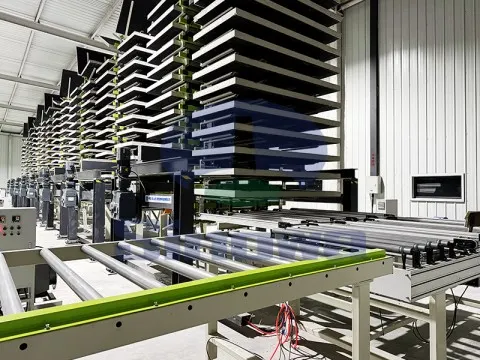
Post-processing trimming and shaping processes standardize the appearance and dimensional accuracy of finished phenolic boards. After completing curing and preliminary molding, continuous phenolic board blanks are transported to the post-processing unit for edge trimming, fixed-length cutting and surface finishing. The automatic trimming mechanism accurately removes irregular edge parts generated during continuous foaming, ensuring neat and smooth board edges. The fixed-length cutting device precisely controls the board size according to production requirements, realizing standardized product specification output. Meanwhile, the surface finishing process removes tiny surface burrs and uneven parts, improving the flatness and appearance quality of finished boards. These post-processing procedures unify product dimensional standards, enhance product applicability for subsequent installation and construction, and improve the overall yield of finished products.
The phenolic panel production line features outstanding structural optimization and operational stability, adapting to long-term continuous industrial production. The whole equipment adopts integrated mechanical structure design with compact layout and stable operation, effectively reducing equipment vibration and operation deviation during high-speed production. Key transmission and reaction components are equipped with wear-resistant and high-temperature resistant materials to adapt to long-term high-temperature foaming and curing working conditions. The modular equipment design facilitates daily maintenance and partial component replacement, reducing equipment failure rates and maintenance costs. In addition, the line is optimized for energy consumption, realizing reasonable energy distribution in heating, mixing and conveying links, avoiding unnecessary energy waste. Its stable mechanical performance and reasonable structural design ensure continuous and efficient production operation for a long time.
Products manufactured by the phenolic board foaming production line possess superior comprehensive performance and wide application value. The uniform closed-cell foam structure enables finished phenolic boards to achieve excellent thermal insulation and heat preservation effects, effectively reducing heat transfer and meeting the thermal insulation needs of various building and industrial facilities. Meanwhile, the fully cured phenolic foam structure features good compression resistance, structural stability and aging resistance, capable of adapting to complex use environments. The products also show outstanding flame retardant and sound insulation properties, making them applicable for building envelope insulation, industrial equipment heat preservation, ventilation pipeline insulation and other scenarios. The stable production quality of the line ensures that finished products maintain consistent performance in different application scenarios.
With the upgrading of insulation material manufacturing technology, the phenolic board foaming production line is constantly evolving toward higher efficiency, finer precision and stronger intelligence. Modern optimized production lines further improve the flexibility of formula and parameter adjustment, enabling them to produce phenolic boards with different densities and performance indicators to meet diversified market demands. The continuous improvement of automated control technology reduces manual operation dependence and improves production precision and consistency. Meanwhile, the optimization of reaction and foaming processes further enhances product environmental performance, reducing harmful substance generation during production. As a core equipment for phenolic foam board manufacturing, the upgraded production line will continue to support the high-quality development of the insulation material industry.
Gallery of Phenolic Board Foaming Production Line
Tags: phenolic board foaming production line, phenolic board foaming production line manufacturer, phenolic board foaming production line supplier, china phenolic board foaming production line, phenolic board foaming production line for sale
https://www.sandwichpanelmachinery.com/tags/phenolic-board-foaming-production-line.html
-
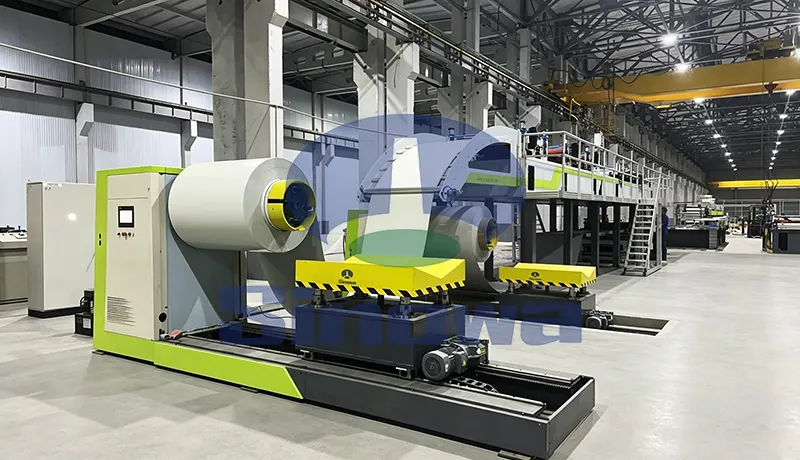
The PU sandwich panel line is a core production setup for making high-performance building insulation panels. This professional PU sandwich panel production line features automated operation to streamline the whole manufacturing process efficiently. Every component of the polyurethane sandwich panel line is precisely calibrated to ensure consistent panel thickness and structural stability. A well-maintained polyurethane sandwich panel production line can greatly boost production efficiency while reducing manual operation errors. The continuous PU sandwich panel line adapts to diverse production demands for different panel sizes and surface styles. With advanced molding technology, the PIR sandwich panel line produces panels with excellent heat preservation and sound insulation properties. Stable running of the PIR sandwich panel production line guarantees reliable product quality for various construction and industrial application scenarios.
-
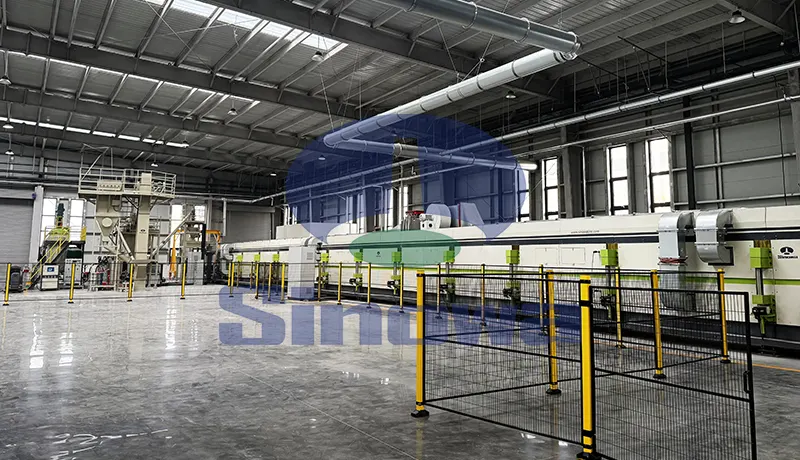
A phenolic insulation board production line serves as the core equipment for manufacturing high-performance thermal insulation building materials. This phenolic insulation panel production line integrates material mixing, foaming, molding and cutting processes to ensure continuous and stable production efficiency. Every operational link of the insulation board production line is precisely calibrated to produce uniform and durable insulation boards. The automated design of the insulation panel production line effectively reduces manual intervention and improves product consistency. Proper maintenance of the phenolic board production line can greatly extend its service life and maintain steady production output. With optimized structural design, the phenolic panel production line adapts to various production demands and delivers high-quality finished products for thermal insulation engineering applications.
-
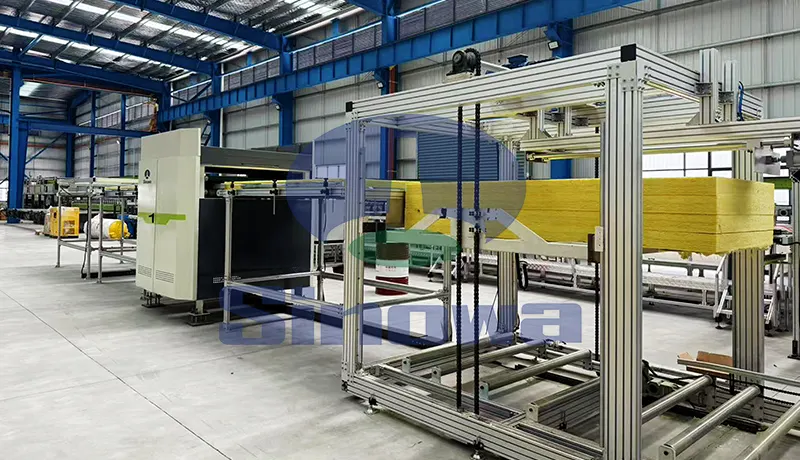
A professional rockwool sandwich panel line serves as the core equipment for producing high-performance building panels. This rockwool sandwich panel production line integrates feeding, laminating and forming processes to ensure stable and efficient production. The well-structured rock wool sandwich panel line can process raw rockwool materials into panels with excellent thermal and sound insulation properties. Operators can adjust the running parameters of the rock wool sandwich panel production line to manufacture panels of different thicknesses and specifications. The automated design of the mineral wool sandwich panel production line greatly reduces manual operation errors and improves product consistency. Regular maintenance of the mineral wool sandwich panel line is essential to sustain long-term operational efficiency and guarantee qualified finished panels for diverse construction applications.