
A polyurethane sandwich panel production line is an automated continuous manufacturing system. It integrates material processing, chemical foaming, composite molding and finishing procedures to produce high-performance insulated sandwich panels with stable structural and thermal properties.
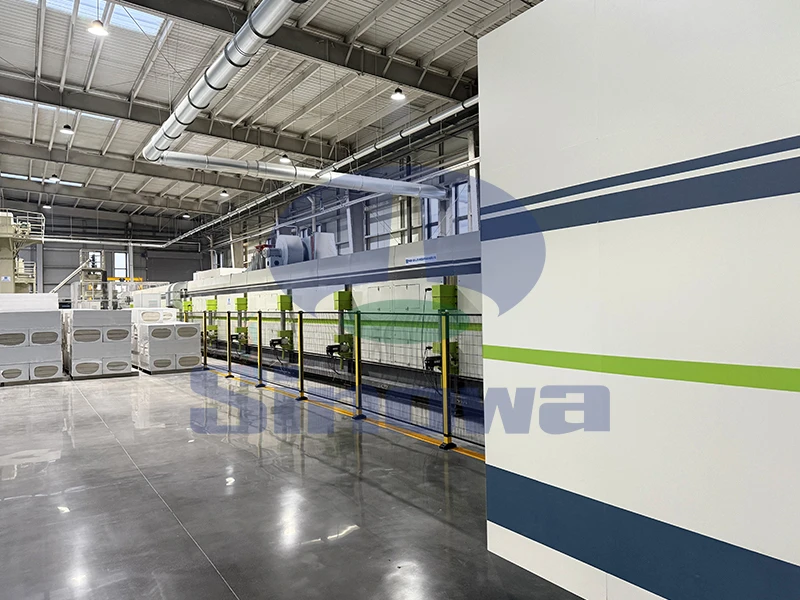
A polyurethane sandwich panel production line serves as a fully integrated automated manufacturing system dedicated to the mass production of composite sandwich panels with polyurethane foam cores. Unlike traditional discrete manufacturing equipment, this production line realizes uninterrupted continuous operation through coordinated mechanical, chemical and thermal control systems, covering all procedures from raw material feeding to finished product output. The core manufacturing logic lies in combining rigid surface facing materials with lightweight polyurethane foam cores through precise chemical foaming and constant-temperature composite curing. This systematic production mode effectively unifies product consistency, production efficiency and structural stability, making it the core equipment for manufacturing energy-saving building composite panels. It adapts to the production demands of various panel specifications and lays a solid foundation for the large-scale application of insulated building materials.
The overall structural composition of the polyurethane sandwich panel production line follows a streamlined production sequence, with each functional unit closely connected to form a closed-loop manufacturing process. The entire system mainly includes material unwinding and profiling units, surface preheating equipment, polyurethane raw material metering and mixing devices, foaming and composite pressing mechanisms, constant-temperature curing channels, fixed-length cutting equipment and finished product conveying and stacking systems. Each unit undertakes independent professional functions while maintaining synchronous operation through intelligent linkage control. The modular structural design not only ensures the continuity of the production process but also facilitates daily equipment maintenance and parameter adjustment. This scientific layout eliminates production gaps between different processes and greatly improves the overall operational efficiency of the production line.
Material pretreatment is the initial key stage of the entire production process, which directly affects the bonding quality and flatness of finished panels. This stage starts with the unwinding of coiled surface materials, where the automatic unwinding device steadily releases metal or non-metal facing materials at a constant speed to avoid material deformation and tension deviation. Subsequently, the profiling unit shapes the flat coiled materials into standardized structural profiles through multi-group roller pressing, forming the edge structures required for panel assembly and connection. Before composite molding, the independent preheating system conducts uniform temperature treatment on the surface materials. This process eliminates the low-temperature state of raw materials, optimizes the surface activity of the materials, and significantly enhances the bonding tightness between the surface layer and polyurethane foam core in subsequent processes.
The polyurethane raw material metering and mixing unit is the core component that determines the internal quality of the panel core layer. Polyurethane foam is formed by the chemical reaction of two main liquid raw materials with various functional additives. The production line is equipped with high-precision automatic metering systems to control the proportion of each raw material accurately, avoiding quality defects caused by formula deviations. Sealed thermal insulation storage tanks keep the liquid raw materials in a stable physical state, preventing temperature fluctuation from affecting chemical reaction activity. After precise metering, all raw materials are sent to the high-speed mixing head for instantaneous uniform mixing, ensuring the consistency of the foaming solution. Stable mixing quality lays the foundation for uniform foam density, fine pore structure and excellent thermal insulation performance of the panel core layer.
Foaming and composite lamination is the most critical molding procedure in the whole production flow. The uniformly mixed polyurethane liquid is evenly sprayed on the surface of the lower preformed facing material through an automatic spraying system with adjustable flow rate. Immediately after spraying, the upper facing material is accurately covered and positioned by the guide roller group to form a preliminary composite plate structure. The initially combined plate body is then sent into the closed constant-temperature pressing area. The upper and lower symmetric pressing roller sets and circulating steel belts maintain constant pressure and thickness constraints on the plate body. In the stable thermal environment of the molding cavity, the polyurethane liquid undergoes continuous foaming, expansion and curing reactions, tightly bonding with the upper and lower surface materials to form an integrated composite structure.
Constant-temperature curing treatment is an indispensable process to stabilize the structural performance of sandwich panels. After preliminary composite molding, the panels enter the long-distance constant-temperature curing channel, where the internal temperature is kept within a stable and reasonable range through circulating temperature control equipment. This continuous thermal environment enables the incomplete chemical reactions inside the polyurethane foam to proceed fully, completing the final curing and hardening of the core layer. Sufficient curing treatment effectively eliminates internal stress of the panel, avoids later deformation, warping or degumming problems, and improves the overall structural rigidity and durability of the product. The curing time and temperature can be adjusted according to different panel thicknesses and material types to adapt to diverse production requirements.
Fixed-length cutting and edge trimming processes realize the standardized sizing of finished panels. After completing curing and preliminary shaping, the continuous long-strip composite panels are transported to the cutting unit at a stable speed. The high-precision automatic cutting system executes fixed-length cutting according to preset parameter settings, ensuring consistent panel dimensions and neat cutting sections. Meanwhile, the edge trimming device polishes and trims the panel edges to remove excess foam and burrs generated during molding, making the panel edges flat and regular. This process not only guarantees the uniform specification of each finished panel but also optimizes the assembly compatibility of subsequent construction applications, improving the overall installation efficiency and sealing effect of the panels.
Cooling and shaping treatment further optimizes the finished panel quality and storage stability. The panels after cutting and trimming still retain residual internal temperature, which may cause slight structural deformation during natural cooling. The professional cooling conveyor system adopts layered circulating air cooling to uniformly dissipate heat from the inside and surface of the panels at a controllable speed. Gradual cooling can effectively fix the internal pore structure of polyurethane foam and stabilize the overall shape of the panels. This process prevents quality problems such as uneven foam shrinkage and surface wrinkling, and also improves the flatness and appearance quality of finished products. Fully cooled panels have stable physical properties and can be directly used for stacking and packaging.
Automatic stacking and auxiliary finishing systems realize the efficient collection and standardized arrangement of finished products. The cooled and shaped qualified panels are automatically conveyed to the stacking area, where the intelligent stacking device neatly arranges the panels in fixed layers and specifications according to preset procedures. The automatic stacking mode replaces manual operation, effectively avoiding panel surface scratches and placement errors caused by human factors, and greatly improving product finishing efficiency. The neatly stacked panel groups are convenient for subsequent packaging, transportation and storage. This terminal processing link completes the closed-loop of the entire production process, ensuring the neatness and integrity of finished products leaving the factory.
The core advantages of the polyurethane sandwich panel production line are reflected in its high automation, stable product quality and flexible production adaptability. The whole process realizes intelligent linkage from raw material feeding to finished product output, with minimal manual intervention, which effectively reduces human error and labor costs. The precise control of raw material proportioning, molding pressure and curing temperature ensures that each batch of panels has consistent thermal insulation, sound insulation and structural performance. In addition, the production line can adjust operating parameters to manufacture panels of different thicknesses and surface materials, meeting the diverse application needs of industrial plants, public buildings and prefabricated construction fields.