Sandwich Panel Machinery
Publication Date: Oct 15, 2026
Sandwich Panel Machinery for continuous production of PU, PIR, Rockwool & Mineral Wool insulated wall/roof panels. Fully automatic sandwich panel production line with stable performance.
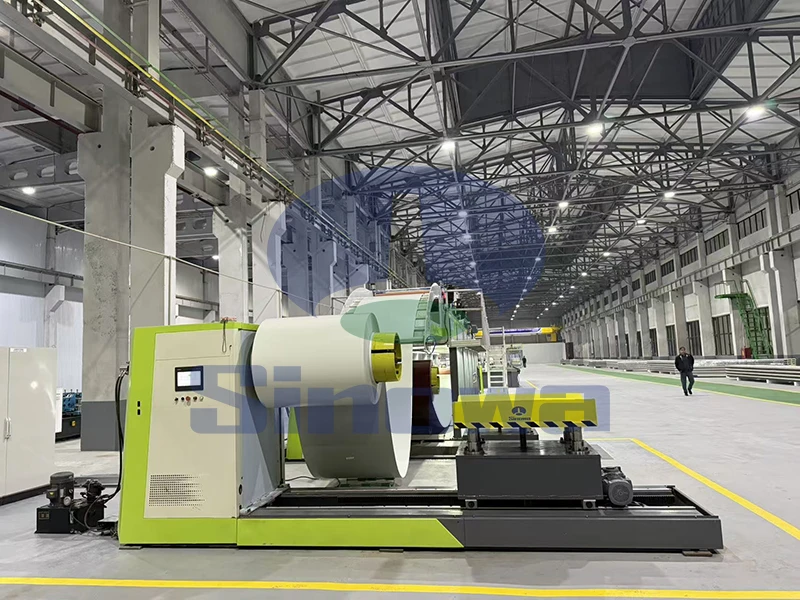
Sandwich panel machinery forms the backbone of modern prefabricated construction material manufacturing, integrating a complete workflow from metal coil unwinding, roll forming, core material processing, continuous compounding, curing and cutting to finished panel stacking. These automated systems create composite panels with two rigid outer facings bonded firmly to an insulating core, and different machinery variants are built to handle six primary core materials: polyurethane, phenolic, PIR, rock wool, mineral wool and glass wool. Each machine configuration is optimized for the physical and chemical traits of its target core, and the resulting panels serve three dominant application categories: roof panels, wall panels and cold storage panels, alongside secondary uses such as cleanroom partitions and industrial enclosure cladding. The basic mechanical framework shares many common modules, but critical stations for foaming, core feeding, gluing and temperature control are redesigned when switching between foam cores and fibrous inorganic cores. Continuous production lines deliver consistent panel thickness, uniform bonding and stable dimensional accuracy, while batch press equipment offers flexible output for smaller production runs and custom panel lengths. Operators adjust parameters such as line speed, raw material proportion, pressing pressure and curing duration to tailor finished panels to different thermal, structural and environmental requirements, ensuring reliable performance whether panels are mounted on pitched roofs, vertical building walls or insulated cold storage enclosures. As construction projects pursue faster assembly and improved energy efficiency, sandwich panel machinery has become essential for mass-producing lightweight composite panels that cut on-site labor and shorten overall construction cycles, with each core material variant carving out its own niche in building envelope design and thermal control systems.
Polyurethane sandwich panel machinery is engineered for continuous foaming and lamination, specialized to produce panels with rigid polyurethane foam core. This equipment relies on a high-pressure metering and mixing unit that combines multi-component liquid chemical raw materials and injects the mixture evenly between upper and lower formed metal facings. Once injected, the liquid blend expands rapidly in the enclosed double-belt pressing section, forming a closed-cell foam structure that bonds tightly to the metal skins without gaps or uneven density. The machine’s temperature and pressure controls are calibrated to stabilize the foaming reaction, preventing shrinkage, voids or delamination during curing. Polyurethane panels made by this machinery feature low thermal conductivity and excellent structural strength-to-weight ratio, making them widely used as wall panels for factory buildings and prefabricated housing, roof panels for large-span warehouse roofs, and cold storage panels for medium-temperature refrigerated spaces. Wall panels produced on this line adopt interlocking joint profiles to simplify installation and reduce heat leakage at seams, while roof panels incorporate trapezoidal metal profiles to improve drainage and load-bearing performance under snow or wind loads. Cold storage variants are manufactured with thicker foam cores to minimize thermal infiltration, maintaining stable internal temperatures for stored goods. The machinery can adjust panel width, thickness and cutting length dynamically, so manufacturers can switch between wall, roof and cold room panel specifications within the operational range of the line. The fully automated workflow reduces manual handling and delivers continuous long-length panels, supporting large-volume orders for building envelopes and refrigeration construction.
Phenolic sandwich panel machinery is developed to handle phenolic resin foaming, addressing the unique corrosive properties and curing characteristics of phenolic raw materials. The wetted parts of dosing, mixing and pouring stations are constructed from corrosion-resistant materials to withstand phenolic resin components, while the heating and curing sections maintain precise temperature control to complete thermosetting crosslinking reactions. Unlike polyurethane foaming, phenolic foam forms a highly stable closed-cell core with outstanding fire performance and low smoke generation when exposed to high temperatures. This machinery produces phenolic sandwich panels that serve as exterior wall panels for high-rise buildings, partition wall panels for public facilities, roof panels for commercial buildings, and special insulated panels for ventilation duct systems. In wall applications, phenolic panels provide thermal insulation while enhancing fire safety for occupied spaces, and roof panels resist thermal degradation under prolonged solar radiation. Although phenolic panels are less commonly selected for ultra-low temperature cold storage compared to polyurethane or PIR alternatives, they are still used for insulated enclosures where fire risk is the primary design concern. The equipment includes online trimming units to remove edge overflow foam and guarantee neat panel edges for seamless assembly. Centralized control systems monitor resin flow, mixing ratio and line speed in real time, keeping panel density and bonding strength consistent across batches. The combination of fire resistance and thermal insulation makes phenolic sandwich panel machinery valuable for projects where building safety requirements take priority over purely low-temperature insulation needs.
PIR sandwich panel machinery is an enhanced evolution of polyurethane production technology, built for polyisocyanurate foam core panels. PIR chemistry demands higher reaction temperatures and stricter thermal management than standard polyurethane, so the machinery adds upgraded heating modules and extended post-curing cooling sections to stabilize foam structure after forming. The high-pressure foaming system maintains ultra-precise raw material metering to form a dense, thermally stable closed-cell PIR core that retains low thermal conductivity at elevated temperatures and delivers improved fire performance relative to conventional polyurethane foam. Panels manufactured by PIR machinery are the preferred choice for cold storage panels, especially deep-freeze warehouses and low-temperature refrigeration facilities, as they minimize heat penetration and reduce energy consumption for refrigeration systems. Beyond cold storage, PIR panels function as exterior wall panels for industrial parks and commercial structures, and roof panels for large-span logistics buildings, combining excellent insulation with enhanced thermal stability. Wall panels use tongue-and-groove connections to limit thermal bridging at joints, while roof panels integrate waterproof edge profiles to stop moisture ingress. The production line can adjust core thickness to balance insulation performance and material consumption, and flying saw cutting delivers custom panel lengths to match project dimensions. Operators monitor foam curing status continuously to prevent residual heat from distorting finished panels after stacking. For cold chain infrastructure and energy-efficient building envelopes, PIR sandwich panel machinery provides a high-performance solution that merges low thermal conductivity and improved fire behavior.
Rock wool sandwich panel machinery is fundamentally different from foam-based lines, because it processes solid fibrous rock wool slabs rather than liquid foaming chemicals. The system includes automatic rock wool slitting, rotating and feeding stations that cut bulk rock wool blocks into strips, arrange the fibrous core in staggered layers, and deliver the prepared rock wool between pre-formed metal upper and lower facings. A continuous glue application unit coats the contact surfaces of rock wool and metal skins, followed by double-belt pressing to achieve reliable composite bonding without crushing the fiber structure. Rock wool, derived from molten basalt and mineral slag, delivers strong fire resistance and sound absorption, so panels from this machinery are widely used as fire-resistant wall panels for industrial plants, partition walls in public buildings, and roof panels for facilities requiring fire protection. In cold storage applications, rock wool panels are chosen less for extreme low-temperature insulation and more for cold storage spaces where fire safety codes require non-combustible core materials. Wall panels often serve as fire separation walls to contain flame spread, while roof panels withstand high-temperature exposure in manufacturing workshops. The machinery automatically fills rock wool strips into the rib cavities of trapezoidal roof profiles to maintain consistent insulation across the entire panel cross-section. Online edge trimming removes excess fiber and glue residues, ensuring clean panel edges for on-site assembly. The line’s feeding and pressing parameters are tuned to preserve rock wool’s fibrous structure and acoustic properties, avoiding excessive compression that would degrade thermal and sound insulation performance.
Mineral wool sandwich panel machinery shares many mechanical subsystems with rock wool equipment but is calibrated for mineral wool fiber characteristics, which are produced from industrial slag and mineral melt. This production line handles rigid mineral wool boards through automatic conveying, cross-cutting and positioning modules, applying adhesive evenly before metal skins and mineral wool cores enter the continuous laminating press. Mineral wool fiber has good thermal insulation, non-combustible performance and sound absorption capacity, and the machinery arranges mineral wool core segments in staggered joints to improve overall panel rigidity and reduce thermal gaps between adjacent blocks. Panels manufactured on mineral wool machinery are deployed as exterior wall panels for industrial and commercial buildings, roof panels for factory halls, and wall partitions for noise-sensitive facilities. In cold storage design, mineral wool panels are adopted for insulated rooms where fire safety is a critical factor, though their thermal conductivity is generally higher than polymer foam cores, requiring greater core thickness to reach equivalent insulation values. Wall panels can be installed vertically as exterior cladding or internal dividing walls, while roof panels use profiled metal surfaces to shed rainwater and bear live loads. The equipment includes automatic fiber dust collection systems to reduce particulate accumulation during cutting and feeding, maintaining stable operation and cleaner finished panel surfaces. Operators adjust glue dosage and pressing force to ensure durable adhesion between mineral wool fibers and metal facings, preventing delamination over long service periods. This machinery meets market demand for inorganic fiber core panels, offering an alternative to rock wool while adapting to different fiber density and slab dimensions.
Glass wool sandwich panel machinery is specialized for lightweight glass wool core composite panels, designed to handle soft, flexible glass fiber slabs rather than rigid rock wool or mineral wool blocks. The line features gentle conveying and positioning mechanisms to avoid fiber breakage, automatic slitting to trim glass wool to target width, and glue spraying stations that apply adhesive uniformly across fiber surfaces before lamination. Glass wool provides excellent sound absorption and relatively low weight, and the machinery controls compression levels carefully during pressing to retain the fiber’s porous structure and insulation performance. Panels made with glass wool machinery are commonly used as interior wall panels, acoustic partition panels, exterior wall cladding and roof panels for light steel buildings, exhibition halls and noise control structures. For cold storage applications, glass wool panels are less frequently used in deep-freeze environments because of higher moisture sensitivity, but they find uses in lightly insulated cold rooms and ventilated building enclosures where acoustic control is prioritized. Roof panels with glass wool cores help reduce external noise transmission into large interior spaces, while interior wall panels deliver sound attenuation for offices and commercial premises. The production system adjusts line speed and pressing clearance to prevent over-compression, which would reduce the air pockets inside glass wool and weaken thermal and acoustic performance. Edge trimming stations clean loose glass fibers from panel edges, minimizing fiber shedding during transportation and installation. The lightweight nature of glass wool panels reduces dead load on building structures, and the machinery supports continuous production of long panels to accelerate site erection for prefabricated building projects.
The integration of shared mechanical platforms and interchangeable modules allows flexible sandwich panel machinery to switch between multiple core materials within a single production setup, greatly expanding manufacturing versatility. A unified base line can handle metal decoiling, roll forming, flying saw cutting and stacking, while dedicated replaceable stations are installed for polyurethane, phenolic and PIR foaming, or separate fiber feeding units for rock wool, mineral wool and glass wool. When shifting from polymer foam cores to fibrous inorganic cores, operators remove the high-pressure foaming injection head and mount fiber cutting, rotating and glue application modules instead. This modular approach reduces the capital burden of purchasing separate complete production lines for each panel type, enabling manufacturers to respond dynamically to fluctuating market demand for roof panels, wall panels and cold storage panels. For instance, the same base machine can produce PIR cold storage panels during peak refrigeration construction seasons, then reconfigure to manufacture rock wool fireproof wall and roof panels for industrial building projects. Material transition requires careful recalibration of pressure, glue dosage and line speed, as foam core processes rely on chemical expansion while fiber core processes depend on mechanical compression and adhesive bonding. Centralized PLC control retains saved parameter profiles for each core material, shortening setup time between product runs. Modular sandwich panel machinery has become increasingly popular among composite panel producers that supply mixed orders combining insulated wall cladding, roof envelopes and cold room enclosures, balancing production flexibility and stable finished panel quality.
Comparing the performance characteristics of panels produced by these six types of sandwich panel machinery helps builders and designers select the right panel for roof, wall and cold storage applications. Polyurethane excels in low thermal conductivity and cost efficiency for general cold storage and standard building envelopes, while PIR machinery creates panels with superior thermal stability for demanding low-temperature cold rooms. Phenolic panels deliver strong fire and smoke control for high-risk building walls and roofs, though their foam chemistry imposes stricter requirements on machinery components. Rock wool and mineral wool machinery produce non-combustible inorganic panels ideal for fire separation walls and factory roof assemblies, sacrificing some insulation efficiency for enhanced fire safety. Glass wool machinery yields lightweight panels with outstanding sound absorption, best suited for acoustic walls and light-load roof structures rather than deep-freeze cold storage. Roof panels demand attention to structural load capacity, waterproof profiling and thermal resistance, so foam cores are often preferred for large-span roofs, while rock wool or mineral wool cores are specified where fire safety dominates design. Wall panels prioritize bonding integrity, joint sealing and fire behavior, with polyurethane, phenolic, rock wool and mineral wool all widely selected based on project needs. Cold storage panels focus almost entirely on low thermal conductivity, making polyurethane and PIR the dominant choices, with inorganic fiber cores only selected when fire safety requirements override pure insulation performance. Each machine’s design directly shapes panel physical properties, and understanding the capabilities of each sandwich panel machinery variant ensures the finished composite panels match the functional requirements of roof, wall or cold storage construction.
Looking ahead, sandwich panel machinery continues to evolve toward higher automation, improved raw material efficiency and broader adaptability across polyurethane, phenolic, PIR, rock wool, mineral wool and glass wool core materials. Modern systems add online monitoring to track panel thickness, bonding quality and core uniformity continuously, reducing defective output and material waste during continuous runs. Upgraded dosing and mixing technology for foam cores delivers finer control over chemical reactions, improving the consistency of polyurethane, phenolic and PIR foams and minimizing raw material consumption. For fibrous core machinery, advances in automatic slab positioning and staggered laying systems reduce fiber waste and improve the structural continuity of rock wool, mineral wool and glass wool panels. As prefabricated construction expands and energy-saving standards for building envelopes tighten, demand grows for roof panels, wall panels and cold storage panels manufactured on these lines. Machinery developers refine quick-changeover designs to cut downtime when switching between foam and fiber cores, helping producers deliver mixed batches of insulated panels efficiently. The core function of sandwich panel machinery remains unchanged: to fuse durable outer metal skins with specialized insulating cores, creating lightweight composite panels that speed up construction and reduce operational energy use for buildings and cold storage facilities. With six distinct core material options supported by tailored machine configurations, sandwich panel production equipment remains a foundational industrial technology for modern building envelope and refrigeration construction projects worldwide.
Gallery of Sandwich Panel Machinery






Tags: sandwich panel machinery, sandwich panel machinery manufacturer, sandwich panel machinery supplier, china sandwich panel machinery, sandwich panel machinery for sale
https://www.sandwichpanelmachinery.com/tags/sandwich-panel-machinery.html
-

The PU sandwich panel line is a core production setup for making high-performance building insulation panels. This professional PU sandwich panel production line features automated operation to streamline the whole manufacturing process efficiently. Every component of the polyurethane sandwich panel line is precisely calibrated to ensure consistent panel thickness and structural stability. A well-maintained polyurethane sandwich panel production line can greatly boost production efficiency while reducing manual operation errors. The continuous PU sandwich panel line adapts to diverse production demands for different panel sizes and surface styles. With advanced molding technology, the PIR sandwich panel line produces panels with excellent heat preservation and sound insulation properties. Stable running of the PIR sandwich panel production line guarantees reliable product quality for various construction and industrial application scenarios.
-

A phenolic insulation board production line serves as the core equipment for manufacturing high-performance thermal insulation building materials. This phenolic insulation panel production line integrates material mixing, foaming, molding and cutting processes to ensure continuous and stable production efficiency. Every operational link of the insulation board production line is precisely calibrated to produce uniform and durable insulation boards. The automated design of the insulation panel production line effectively reduces manual intervention and improves product consistency. Proper maintenance of the phenolic board production line can greatly extend its service life and maintain steady production output. With optimized structural design, the phenolic panel production line adapts to various production demands and delivers high-quality finished products for thermal insulation engineering applications.
-

A professional rockwool sandwich panel line serves as the core equipment for producing high-performance building panels. This rockwool sandwich panel production line integrates feeding, laminating and forming processes to ensure stable and efficient production. The well-structured rock wool sandwich panel line can process raw rockwool materials into panels with excellent thermal and sound insulation properties. Operators can adjust the running parameters of the rock wool sandwich panel production line to manufacture panels of different thicknesses and specifications. The automated design of the mineral wool sandwich panel production line greatly reduces manual operation errors and improves product consistency. Regular maintenance of the mineral wool sandwich panel line is essential to sustain long-term operational efficiency and guarantee qualified finished panels for diverse construction applications.