Roofing Sandwich Panel Machinery
Publication Date: Oct 15, 2026
Roofing Sandwich Panel Machinery. Fully automatic continuous production line for insulated roof panels. Supports PU, PIR & rockwool. Customizable machine for roofing sandwich panel manufacturing.
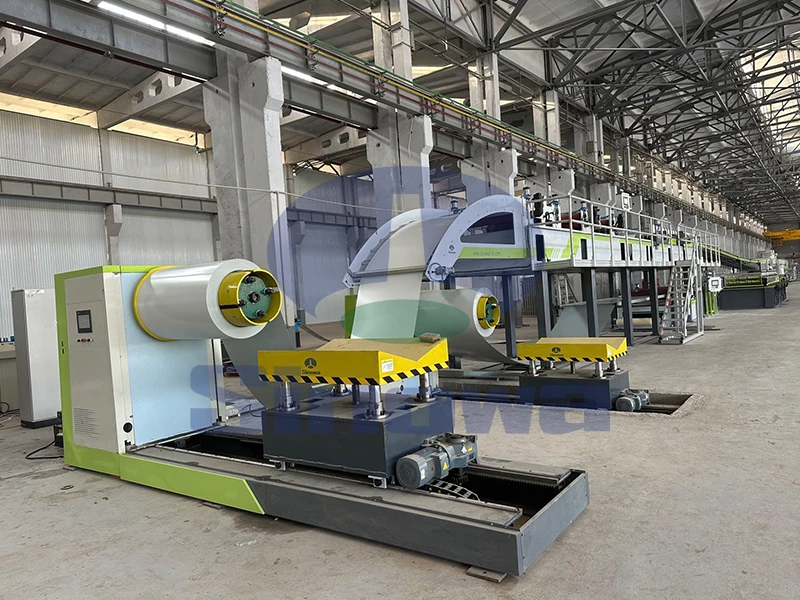
Roofing sandwich panel machinery refers to a complete integrated production system dedicated to manufacturing insulated composite panels for roof applications, combining multiple processing units into one continuous workflow. Unlike standalone metal forming equipment, this machinery is designed to bond profiled outer metal skins with lightweight insulating core materials in a single uninterrupted process, delivering finished roof panels with stable structural performance and thermal insulation functions. The whole system relies on coordinated mechanical transmission, material feeding, chemical mixing, constant-pressure lamination and automatic cutting modules, which work together to minimize manual intervention during manufacturing. As the demand for prefabricated building components keeps expanding, this type of machinery has become a core asset for factories that supply roof materials for various construction projects. It turns raw metal coils and insulation raw materials into finished roof panels efficiently, supporting the shift from traditional on-site construction to factory prefabrication. Every section of the line is carefully matched to avoid breaks in material flow, ensuring smooth continuous operation and consistent panel appearance and physical performance from one batch to another.
The production workflow of roofing sandwich panel machinery starts from the raw material unwinding station, where metal coils for upper and lower panel skins are mounted on decoilers to feed flat metal strips steadily into the subsequent roll forming section. In the roll forming unit, a series of precision rolling rollers gradually bend the flat metal sheet into trapezoidal or customized roof profiles without high-temperature processing, shaping the outer surface that will bear outdoor weather exposure. Before composite lamination, the metal surface goes through preheating treatment to improve adhesive performance between metal skins and inner core materials, reducing the risk of delamination after panel forming. Meanwhile, the core material feeding system delivers insulating materials into the space between the two metal layers, either pouring liquid foam mixtures or placing solid insulation slabs according to the selected panel formula. All material streams move forward synchronously, carefully aligned to prevent offset or uneven distribution of insulation inside the panel structure.
At the heart of roofing sandwich panel machinery sits the double-belt laminating and curing section, which directly determines the bonding quality and thickness consistency of finished roof panels. Once the metal facings and insulation core are assembled together, the composite assembly enters the enclosed double-belt press system. The upper and lower belts apply stable pressure while maintaining a fixed gap to control the final thickness of roof panels, restraining expansion force generated during foam reaction and avoiding local bulging or thickness variation. Controlled temperature conditions inside this zone support the curing reaction of core materials, allowing the insulation medium to fully solidify and tightly adhere to both metal surfaces. The continuous conveyor keeps the composite moving forward at a constant speed, so curing proceeds evenly along the full length of the continuous panel. This stage requires precise coordination of pressure, temperature and line speed, and any mismatch among these parameters will create quality defects such as hollow areas, weak bonding or surface distortion on roof panels.
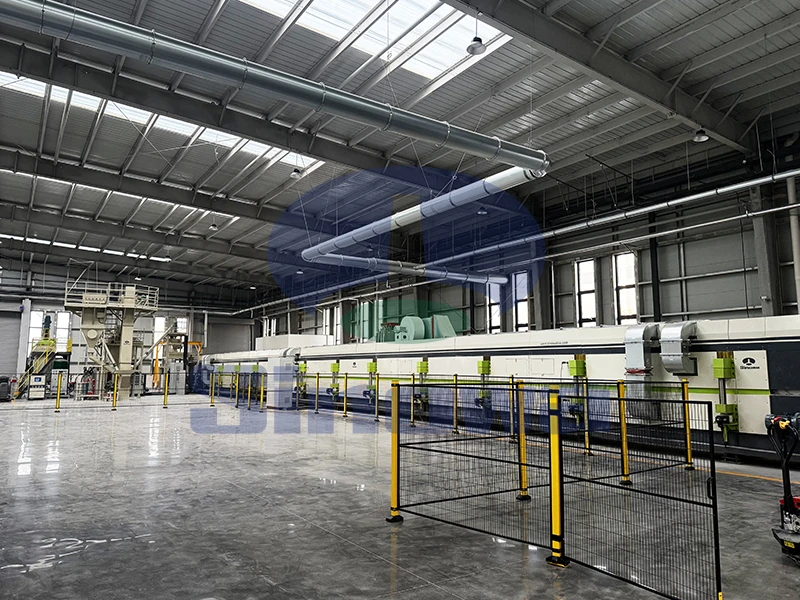
The foaming and mixing subsystem represents a key technical component for machinery producing foam-cored roofing sandwich panels. This unit handles accurate metering and high-pressure mixing of multi-component liquid raw materials, blending chemical ingredients in precise proportions before pouring the mixture between the two metal skins. The mixing head generates uniform liquid blend, which quickly expands and foams under controlled temperature to fill the cavity between facings completely. The foaming reaction must be well regulated; too fast expansion may cause overflow and uneven density, while slow reaction leads to incomplete filling and poor insulation performance. Operators can adjust mixing ratios and injection flow rates to modify the characteristics of the foam core, adapting finished roof panels to different thermal insulation requirements. Well-designed mixing hardware also reduces material waste and keeps the foaming process stable during long hours of continuous operation, lowering the frequency of maintenance and cleaning work on production lines.
After curing and lamination, the continuous long panel moves into the flying cutting unit, another essential module within roofing sandwich panel machinery. This cutting device travels synchronously with the moving panel during the cutting action, so the production line does not need to stop when separating panels to the required lengths. Servo control systems track the moving speed and position of the panel in real time, triggering the cutting blade at the exact preset length to guarantee accurate dimension of each roof panel. After cutting, finished panels are transported to the discharging area, where auxiliary mechanisms can apply protective film on panel surfaces to prevent scratches during handling and transportation. Some systems also integrate automatic stacking functions to arrange cut panels neatly, simplifying later packaging and warehouse management. This automatic cutting and discharging process eliminates repeated manual measurement and sawing, greatly improving overall production throughput while reducing human errors in length control.
Modern roofing sandwich panel machinery adopts intelligent control architecture to synchronize all functional modules and simplify daily operation and monitoring. A central control platform displays real-time operating parameters including line speed, material feed rate, pressure values and temperature readings across different sections of the equipment. Operators can adjust settings through intuitive interfaces to switch between different roof panel profiles or modify panel thickness without extensive mechanical rework. The control system also includes built-in monitoring functions to detect abnormal conditions such as material blockage, pressure fluctuation or temperature deviation. When anomalies appear, the system sends prompt alerts and can trigger protective actions to avoid equipment damage or defective product output. Such integrated control reduces reliance on skilled workers and supports stable round-the-clock production cycles, helping manufacturers respond quickly to fluctuating market demands for roof panels.
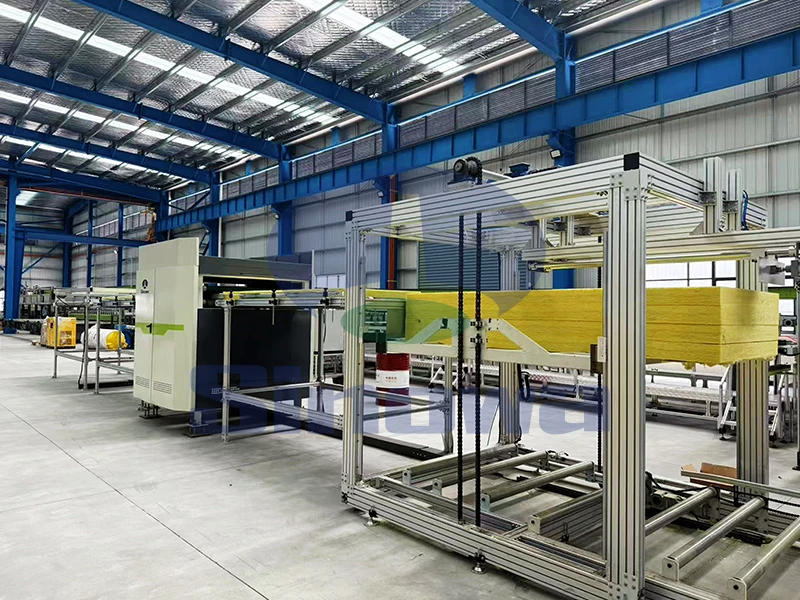
The versatility of roofing sandwich panel machinery allows manufacturers to produce roof panels with different types of insulating cores by reconfiguring certain modules of the line. Some setups are optimized for foam-based core materials, while others can process rigid mineral wool slabs for alternative roof panel solutions. By changing roll forming rollers, producers can create various roof profile shapes to suit different architectural designs and drainage needs. The adjustability of the double-belt press enables production of panels with different thickness levels, directly changing the thermal performance of finished roof products. This flexibility means a single production system can serve multiple project requirements, avoiding investment in separate dedicated lines for each panel variant. Nevertheless, switching product types requires careful adjustment of feeding speed, temperature and material formula to maintain stable panel quality during transition periods between different product runs.
The development of roofing sandwich panel machinery continues to advance as the construction industry pursues higher efficiency and better material performance. New generations of equipment focus on optimizing energy consumption during continuous operation, improving material utilization and lowering waste generation in the manufacturing process. Mechanical structures are refined to reduce wear of key moving parts, extending service life and cutting downtime for maintenance. Meanwhile, upgraded sensing and data collection functions enable better recording of production data, supporting quality traceability for batches of roof panels. As prefabricated construction gains wider acceptance, roofing sandwich panel machinery remains vital to turn lightweight, insulated roof panels into affordable and accessible building materials. Further technical improvements will keep enhancing the stability, adaptability and automation level of such machinery, continuing to reshape how roof cladding materials are manufactured for modern building projects.
Gallery of Roofing Sandwich Panel Machinery






Tags: roofing sandwich panel machinery, roofing sandwich panel machinery manufacturer, roofing sandwich panel machinery supplier, china roofing sandwich panel machinery, roofing sandwich panel machinery for sale
https://www.sandwichpanelmachinery.com/tags/roofing-sandwich-panel-machinery.html
-

The PU sandwich panel line is a core production setup for making high-performance building insulation panels. This professional PU sandwich panel production line features automated operation to streamline the whole manufacturing process efficiently. Every component of the polyurethane sandwich panel line is precisely calibrated to ensure consistent panel thickness and structural stability. A well-maintained polyurethane sandwich panel production line can greatly boost production efficiency while reducing manual operation errors. The continuous PU sandwich panel line adapts to diverse production demands for different panel sizes and surface styles. With advanced molding technology, the PIR sandwich panel line produces panels with excellent heat preservation and sound insulation properties. Stable running of the PIR sandwich panel production line guarantees reliable product quality for various construction and industrial application scenarios.
-

A phenolic insulation board production line serves as the core equipment for manufacturing high-performance thermal insulation building materials. This phenolic insulation panel production line integrates material mixing, foaming, molding and cutting processes to ensure continuous and stable production efficiency. Every operational link of the insulation board production line is precisely calibrated to produce uniform and durable insulation boards. The automated design of the insulation panel production line effectively reduces manual intervention and improves product consistency. Proper maintenance of the phenolic board production line can greatly extend its service life and maintain steady production output. With optimized structural design, the phenolic panel production line adapts to various production demands and delivers high-quality finished products for thermal insulation engineering applications.
-

A professional rockwool sandwich panel line serves as the core equipment for producing high-performance building panels. This rockwool sandwich panel production line integrates feeding, laminating and forming processes to ensure stable and efficient production. The well-structured rock wool sandwich panel line can process raw rockwool materials into panels with excellent thermal and sound insulation properties. Operators can adjust the running parameters of the rock wool sandwich panel production line to manufacture panels of different thicknesses and specifications. The automated design of the mineral wool sandwich panel production line greatly reduces manual operation errors and improves product consistency. Regular maintenance of the mineral wool sandwich panel line is essential to sustain long-term operational efficiency and guarantee qualified finished panels for diverse construction applications.