What Is The Difference Between PU And PIR Sandwich Panel Machinery?
Publication Date: Oct 9, 2026
PU and PIR sandwich panel machinery differ vastly in chemical control, thermal systems and production precision, catering to distinct foam core manufacturing needs and panel performance standards.
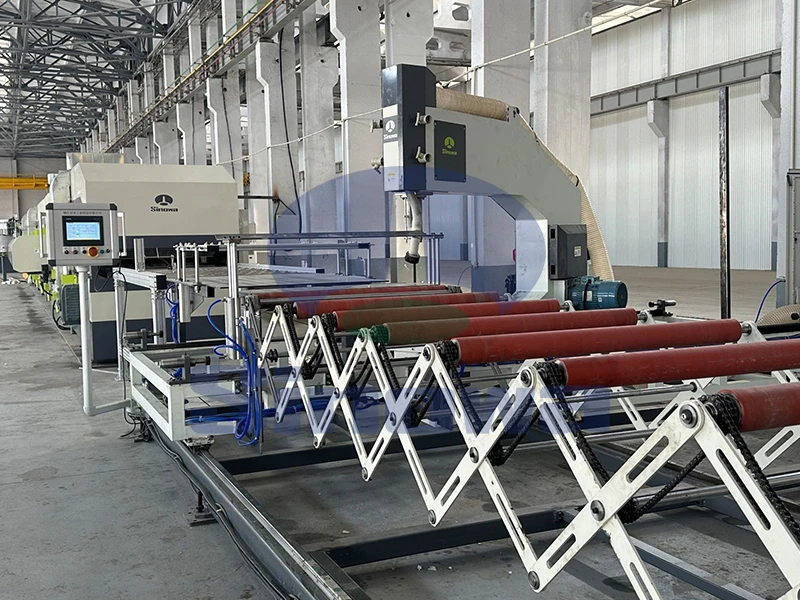
PU and PIR sandwich panel machinery serve the same core purpose of manufacturing insulated sandwich panels with foam cores, yet they are engineered to adapt to the fundamentally different chemical characteristics of polyurethane and polyisocyanurate foam materials. Though both machines adopt a continuous modular production framework that integrates material feeding, foaming, lamination and shaping processes, their internal functional configurations are customized to match the unique reaction rules of each foam type. PU machinery is designed for the relatively mild and stable chemical reaction of standard polyurethane foam, featuring simplified control logic that suits conventional insulation panel production. In contrast, PIR machinery is an upgraded and optimized version based on PU production principles, specifically modified to cope with the more complex exothermic reaction of PIR foam, which requires stricter environmental and formula control throughout the entire production cycle. This foundational difference in design orientation lays the groundwork for all subsequent functional and operational disparities between the two types of equipment.
The most essential distinction between PU and PIR sandwich panel machinery lies in their raw material proportioning and metering systems. PU foam production relies on a fixed and flexible material ratio of polyols and isocyanates, so PU machinery adopts a conventional metering unit that supports basic flow adjustment with relatively low precision requirements. The system can tolerate minor fluctuations in raw material dosage without affecting the basic forming quality of PU foam cores. PIR foam, however, requires a surplus of isocyanates to form a dense cross-linked molecular structure that enhances thermal stability and fire resistance. For this reason, PIR machinery is equipped with a high-precision intelligent metering system that enables micro-adjustment of raw material flow, catalyst dosage and blowing agent proportion. Every parameter is precisely calibrated to ensure the PIR foam undergoes complete and standardized cross-linking reactions, avoiding loose cell structures or unstable performance caused by inaccurate material ratios. This high-precision proportioning system is irreplaceable for qualified PIR panel production and is the core technical upgrade of PIR machinery over PU equipment.
Temperature control systems represent another critical gap between PU and PIR sandwich panel machinery. The foaming and curing process of PU foam takes place within a moderate temperature range, and PU machinery only needs to maintain a stable ambient temperature to complete normal production. Its temperature control module has a simple regulation range and does not require real-time dynamic monitoring of reaction heat. PIR foam reactions generate far more intense heat and demand strict multi-stage temperature control throughout foaming, expansion and curing. PIR machinery is fitted with a full-range constant-temperature circulation system that can monitor and adjust the equipment’s internal temperature in real time, effectively dissipating excess reaction heat and preventing local overheating. Precise temperature regulation ensures PIR foam forms uniform and closed cell structures, which directly determines the finished panel’s high-temperature resistance and structural stability. Without this professional temperature control system, PIR foam cannot achieve its inherent high-performance characteristics.
Foaming and mixing unit structures vary significantly between the two types of machinery to fit different reaction mechanisms. PU sandwich panel machinery uses a basic high-pressure mixing nozzle that mixes raw materials evenly at a conventional speed, which is fully compatible with the slow and stable foaming speed of PU materials. The mixing process produces uniform foam bubbles with low internal stress, meeting the requirements of ordinary insulation panels. PIR machinery adopts an upgraded high-shear mixing structure with optimized nozzle pressure and mixing speed. The enhanced mixing capacity can fully blend the specially formulated PIR raw materials in an instant, ensuring the rapid initiation of cross-linking reactions. Moreover, the mixing unit of PIR machinery is made of high-temperature resistant materials to withstand the high heat generated during PIR foaming, while the mixing components of PU machinery only need to adapt to conventional reaction temperatures. This structural difference in mixing units directly affects the foaming uniformity and core compactness of the finished panels.
Lamination and curing process settings differ greatly, leading to distinct production cycle and forming effects. PU sandwich panel machinery features a flexible curing process with a relatively short curing time, as PU foam completes structural shaping and bonding with panel facings quickly after foaming. The lamination speed of PU equipment can be adjusted in a wide range, adapting to various common panel thicknesses and production efficiency needs. PIR foam requires a longer and more stable curing period to complete sufficient molecular cross-linking and solidification. Therefore, PIR machinery is equipped with an extended constant-temperature curing channel and adjustable lamination traction parameters. The equipment controls the traction speed strictly to avoid premature deformation or structural cracking of unconsolidated PIR foam during lamination. The precise matching of curing time and lamination pressure ensures PIR foam forms a rigid and stable core structure, achieving better dimensional stability and structural durability than PU panels.
Production adaptability and parameter flexibility also separate PU and PIR sandwich panel machinery. PU machinery boasts strong versatility and can adapt to multiple conventional foam formulas and panel specifications, with low requirements for production environment and operator proficiency. It can stably produce panels of different thicknesses for general insulation scenarios, featuring simple operation and convenient parameter adjustment. PIR machinery, by contrast, has targeted production adaptability, focusing exclusively on high-performance PIR foam panel manufacturing. Its operating parameters are highly specialized, with strict restrictions on raw material types, environmental humidity and production rhythm. The equipment’s parameter adjustment range is relatively narrow, and each adjustment needs to match the professional formula system of PIR materials. Although less versatile, PIR machinery delivers more focused and stable production performance for high-standard panel manufacturing.
Finished panel performance shaping capabilities are inherently different due to equipment structural differences. PU sandwich panel machinery is optimized to produce panels with excellent basic thermal insulation performance. The equipment’s foaming and forming process ensures PU foam has fine and uniform closed cells, endowing finished panels with low thermal conductivity and good heat preservation effects suitable for conventional thermal insulation projects. PIR machinery, with its precise formula control and temperature regulation, can shape PIR foam cores with tighter cross-linked molecular structures. Panels produced by PIR machinery feature higher thermal stability, better high-temperature resistance and superior anti-aging performance. Additionally, the specialized production process of PIR machinery enables finished panels to form a dense carbonized layer when exposed to high temperatures, significantly improving fire resistance compared to ordinary PU panels, a performance advantage that cannot be replicated by PU production equipment.
Operational difficulty and daily maintenance requirements vary notably between the two machines. PU sandwich panel machinery features a simple mechanical structure and a small number of precision components, resulting in low operational difficulty. Operators can master basic production operations and parameter debugging in a short time, and daily maintenance only involves conventional cleaning, lubrication and component inspection. The failure rate of PU equipment is low, and maintenance costs are relatively economical. PIR machinery, as a high-precision specialized device, integrates numerous intelligent sensing and precise control components. It requires professional operators with systematic technical training to complete formula debugging, parameter calibration and production monitoring. Daily maintenance involves regular detection of precision metering systems, temperature circulation modules and high-shear mixing components to ensure parameter accuracy and equipment stability. The higher maintenance standards ensure the long-term stable output of high-performance PIR panels.
Production efficiency scenarios and applicable industrial fields form another key difference. PU sandwich panel machinery supports high-speed continuous production with flexible speed regulation, making it ideal for large-scale mass production of ordinary insulation panels. It is widely applied in general building insulation, ordinary cold storage facilities and simple enclosure structure projects that prioritize cost-effectiveness and basic insulation effects. PIR machinery has a relatively stable and moderate production speed, prioritizing product performance stability over ultra-high production efficiency. It is mainly used for manufacturing high-standard building enclosure panels, special industrial insulation panels and high-temperature resistant insulation facilities that require strict fire resistance and thermal stability. The equipment’s performance positioning precisely matches the market demand for high-performance insulated panels, forming a differentiated production layout with PU machinery.
In summary, the differences between PU and PIR sandwich panel machinery run through design logic, core components, process control and application positioning. PU machinery focuses on versatility, cost efficiency and basic insulation performance, meeting the needs of conventional panel production. PIR machinery achieves comprehensive upgrades in precision control, temperature adaptation and reaction optimization, targeting high-performance panel manufacturing with higher safety and stability requirements. Understanding these mechanical differences helps manufacturers select suitable production equipment according to product positioning, effectively optimizing production quality and market adaptability of sandwich panels.
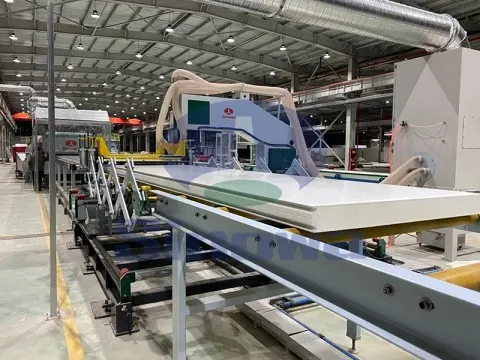
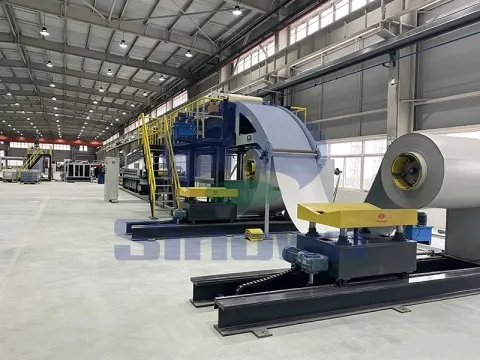
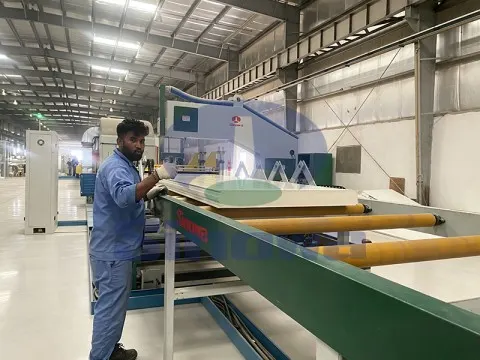
Gallery of PIR Sandwich Panel Machinery
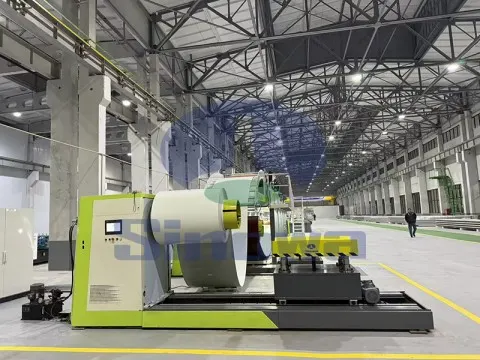
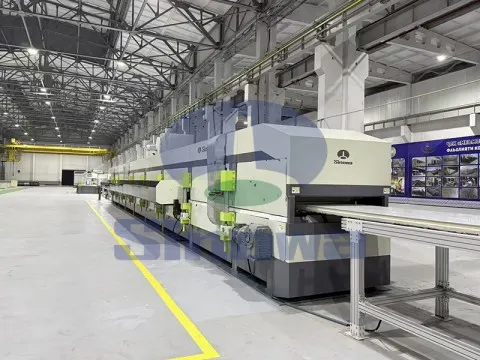
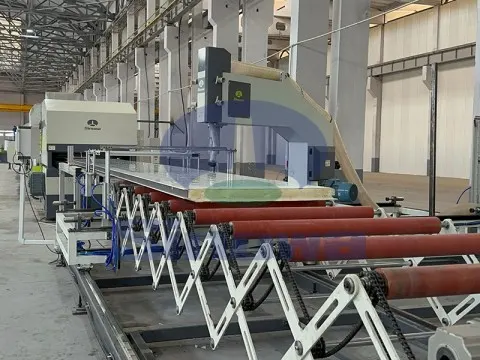
Tags: pir sandwich panel machinery, pir sandwich panel machinery manufacturer, pir sandwich panel machinery supplier, china pir sandwich panel machinery, pir sandwich panel machinery for sale
-
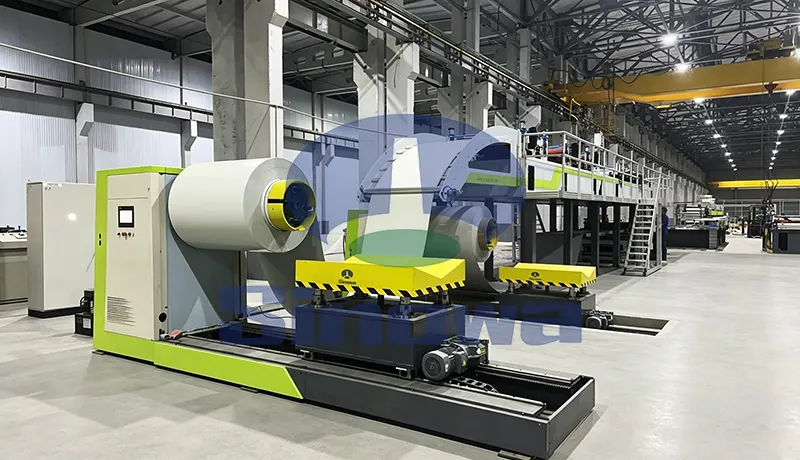
The PU sandwich panel line is a core production setup for making high-performance building insulation panels. This professional PU sandwich panel production line features automated operation to streamline the whole manufacturing process efficiently. Every component of the polyurethane sandwich panel line is precisely calibrated to ensure consistent panel thickness and structural stability. A well-maintained polyurethane sandwich panel production line can greatly boost production efficiency while reducing manual operation errors. The continuous PU sandwich panel line adapts to diverse production demands for different panel sizes and surface styles. With advanced molding technology, the PIR sandwich panel line produces panels with excellent heat preservation and sound insulation properties. Stable running of the PIR sandwich panel production line guarantees reliable product quality for various construction and industrial application scenarios.
-
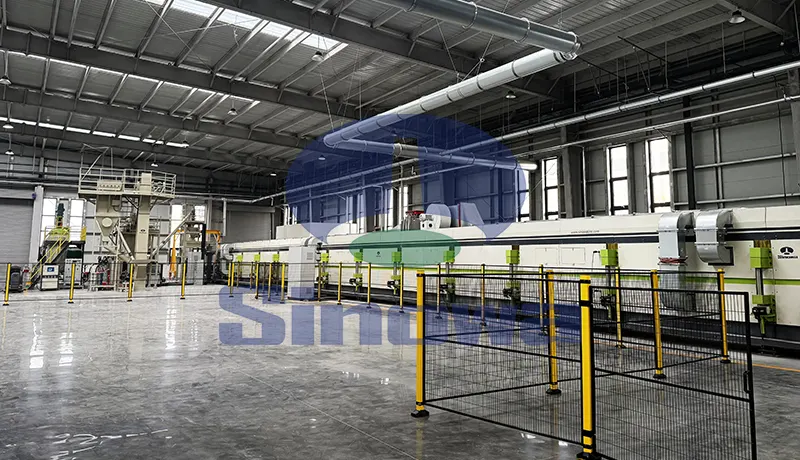
A phenolic insulation board production line serves as the core equipment for manufacturing high-performance thermal insulation building materials. This phenolic insulation panel production line integrates material mixing, foaming, molding and cutting processes to ensure continuous and stable production efficiency. Every operational link of the insulation board production line is precisely calibrated to produce uniform and durable insulation boards. The automated design of the insulation panel production line effectively reduces manual intervention and improves product consistency. Proper maintenance of the phenolic board production line can greatly extend its service life and maintain steady production output. With optimized structural design, the phenolic panel production line adapts to various production demands and delivers high-quality finished products for thermal insulation engineering applications.
-
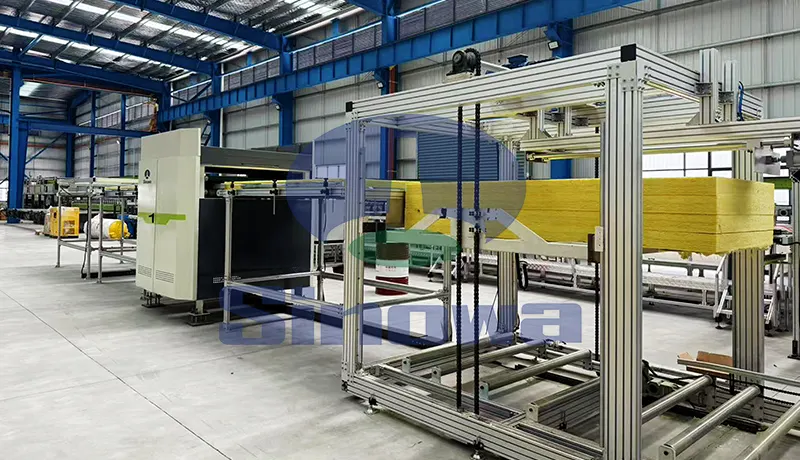
A professional rockwool sandwich panel line serves as the core equipment for producing high-performance building panels. This rockwool sandwich panel production line integrates feeding, laminating and forming processes to ensure stable and efficient production. The well-structured rock wool sandwich panel line can process raw rockwool materials into panels with excellent thermal and sound insulation properties. Operators can adjust the running parameters of the rock wool sandwich panel production line to manufacture panels of different thicknesses and specifications. The automated design of the mineral wool sandwich panel production line greatly reduces manual operation errors and improves product consistency. Regular maintenance of the mineral wool sandwich panel line is essential to sustain long-term operational efficiency and guarantee qualified finished panels for diverse construction applications.