How To Train Workers To Operate PU Sandwich Panel Equipment?
Publication Date: Oct 9, 2026
Effective PU sandwich panel equipment training equips workers with safe, standardized operation skills, reduces errors, stabilizes production quality and minimizes equipment downtime for manufacturing efficiency.
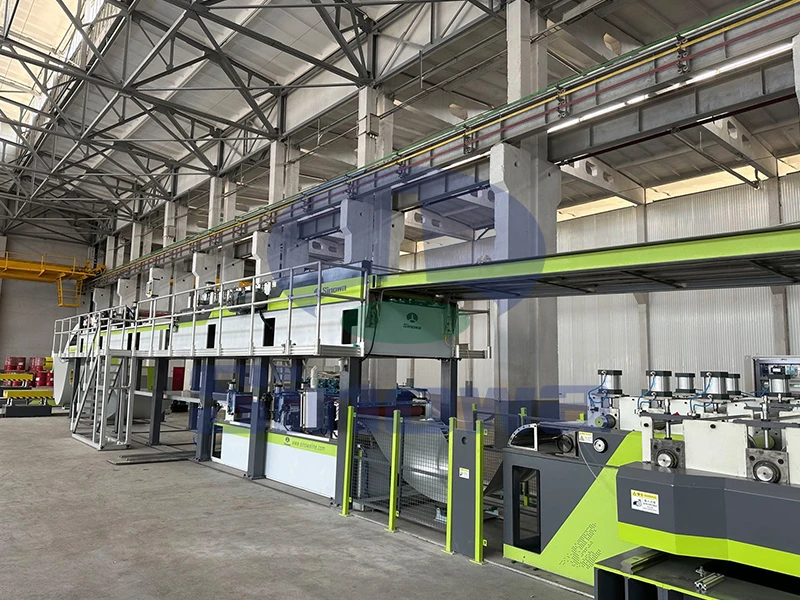
Successful operation training for PU sandwich panel equipment starts with systematic theoretical induction for all frontline workers. Before touching any mechanical parts or operating buttons, trainees need to build a basic cognitive framework of the equipment’s working principles and structural composition. PU sandwich panel production relies on integrated processes including material feeding, PU foaming, laminating, molding and fixed-length cutting, and workers must understand the linkage logic of each functional unit of the equipment. The theoretical training covers core knowledge such as the function of key components, the basic mechanism of PU material foaming and solidification, and the operational logic of automated control systems. Trainers should use plain and practical explanations instead of obscure professional jargon, combining on-site equipment display to help trainees connect theoretical knowledge with physical equipment. This foundational training also includes the classification of common production tasks, enabling workers to distinguish operational differences for panels of different thicknesses and structural types. Solid theoretical learning eliminates blind operation, helps workers judge abnormal conditions in subsequent practical operations, and lays a solid foundation for standardized and safe production.
Safety awareness training is an indispensable core module of PU sandwich panel production equipment operation training, running through the entire learning process. This type of automated mechanical equipment involves high-temperature molding, pressure lamination, material transmission and electrical control systems, with potential operational risks in daily use. The training focuses on cultivating workers’ proactive safety awareness rather than just instilling rigid rules. Trainees will learn to identify potential hazards such as equipment jamming, material leakage, high-temperature surface contact and electrical circuit abnormalities. They are trained to master standard protective operation habits, including correct wearing of labor protection supplies, standardized hand posture during material loading and inspection, and forbidden behaviors during equipment operation. In addition, the training includes basic emergency response skills, such as correct startup and shutdown procedures in case of sudden abnormalities, standard operation of emergency stop devices, and simple on-site disposal methods for minor equipment faults. By repeated explanation and case analysis of typical safety accidents caused by irregular operation, workers can deeply recognize the importance of standardized operation and form inherent safety operation awareness.
Standard operating procedure (SOP) training is the key to unifying workers’ operational behaviors and ensuring consistent product quality. Professional trainers will elaborate on the complete set of standardized operation processes of PU sandwich panel equipment in detail, covering pre-production preparation, formal operation and post-production finishing. In the pre-production stage, workers are trained to complete equipment inspection work item by item, including checking the tightness of material delivery pipelines, the flexibility of transmission parts, the stability of temperature control systems and the cleanliness of the molding area. They need to master standardized material placement and feeding preparation methods to avoid material waste and feeding jams caused by irregular placement. During formal production, trainees learn to adjust core operational parameters stably, including equipment operating speed, PU material injection flow rate, laminating pressure and molding temperature. The training emphasizes fine and gradual parameter adjustment, prohibiting large-scale one-time parameter changes that may affect panel molding quality. After production, workers are trained to complete standardized shutdown, material cleaning and equipment reset operations to ensure the equipment is in a standby state for the next use.
Supervised hands-on practice is the most effective way to convert theoretical knowledge into practical operational skills. After completing theoretical and procedural training, all trainees will enter the on-site practical training stage under the one-on-one guidance of experienced senior operators. The practical training follows a progressive learning mode, starting from simple auxiliary operations such as material sorting, equipment appearance inspection and parameter observation recording. After trainees are proficient in basic auxiliary work, they gradually participate in core operational links including parameter setting, equipment startup and commissioning, and real-time production monitoring. Trainers will correct trainees’ non-standard behaviors in real time during the operation process, such as improper parameter adjustment rhythm, irregular feeding actions and incomplete inspection steps. Trainees are encouraged to independently complete the whole process of equipment operation under supervision, and try to find and solve minor operational problems by themselves. Repeated supervised practice enables workers to gradually adapt to the equipment’s operational rhythm, improve operational proficiency, and eliminate tension and misoperation in independent work.
Parameter adjustment and quality control training helps workers master the core skills to ensure finished product qualification. The molding quality of PU sandwich panels is directly determined by the matching degree of equipment operating parameters and production requirements. In this training module, workers learn to match appropriate parameter combinations according to different panel production specifications. They systematically learn the impact of different parameters on product quality: low foaming flow rate may cause insufficient panel filling, excessive laminating pressure may lead to panel deformation, and unstable temperature will affect the solidification tightness of PU materials. Trainees are trained to observe the real-time molding state of panels, judge parameter deviations through the surface flatness, internal compactness and dimensional accuracy of semi-finished products, and complete fine parameter optimization. Meanwhile, workers learn basic on-site quality inspection methods, master the ability to distinguish qualified and unqualified products in the production process, and timely adjust equipment operation status to avoid batch unqualified products. This training enables operators to take responsibility for product quality in the production process, realizing integrated operation and quality control.
Daily equipment maintenance and inspection training extends the service life of PU sandwich panel manufacturing equipment and reduces production failures. Most equipment downtime in panel production is caused by irregular daily maintenance and neglected minor faults. The training teaches workers targeted daily maintenance skills suitable for operational posts, focusing on daily, weekly and regular inspection and maintenance contents. Workers learn to clean residual PU materials and dust on equipment surfaces, transmission parts and molding cavities after daily production to prevent material accumulation from affecting subsequent molding precision. They master the inspection methods of vulnerable parts, check the wear degree of transmission belts, the sealing performance of material pipelines and the sensitivity of temperature control and sensing devices regularly. In addition, trainees learn standardized lubrication operations for mechanical moving parts and simple troubleshooting of common minor faults such as slow material feeding and slight parameter fluctuation. The training emphasizes that daily maintenance is part of operational work, enabling workers to develop good habits of operating while inspecting and maintaining, effectively reducing equipment failure rates.
Fault identification and emergency disposal training improves workers’ ability to respond to unexpected production problems. In the actual production process, PU sandwich panel equipment may encounter occasional abnormal problems such as material blockage, foaming abnormality, equipment stalling and parameter disorder. This training focuses on cultivating workers’ rapid fault judgment and standardized disposal capabilities. Trainers summarize common equipment faults in daily production, analyze the external manifestations and common causes of each fault one by one, and teach targeted disposal steps. Trainees learn to distinguish general minor faults that can be solved on site and serious faults that need professional maintenance personnel to handle, avoiding blind disassembly and operation that may expand faults. Meanwhile, simulated emergency drills are arranged during the training process, simulating sudden equipment stalling, material leakage and other scenarios to let workers practice emergency stop operation, on-site protection and fault reporting processes. Systematic fault response training enables workers to respond calmly to abnormal situations, minimize production loss caused by equipment faults, and ensure production safety and stability.
Standardized assessment and skill verification is an essential link to test training effects and ensure operational competency. After completing all training modules, workers need to pass comprehensive theoretical and practical assessments to obtain independent operation qualifications. The theoretical assessment focuses on investigating workers’ mastery of equipment principles, safety rules, operational procedures and maintenance knowledge, covering all core content of the training course. The practical assessment adopts on-site actual production operation mode, requiring trainees to independently complete the whole process of equipment inspection, parameter setting, startup operation, production monitoring, shutdown cleaning and equipment maintenance according to production requirements. Assessors will score strictly according to standardized operational standards, deducting points for non-standard actions, incorrect parameter adjustment and incomplete inspection steps. Workers who fail the assessment will receive targeted supplementary training and secondary assessment for their weak links. Only workers who pass the comprehensive assessment can be allowed to independently operate the PU sandwich panel equipment, ensuring that all on-site operators have standardized and qualified operational skills.
Regular skill upgrading and recurrent training keeps workers’ operational capabilities adapted to optimized production requirements. Production processes and equipment operation modes will be continuously optimized with the accumulation of production experience, and long-term single operation may lead to operational inertia and skill aging. Therefore, regular recurrent training must be arranged for on-site operators. The regular training content includes updated operational specifications, optimized parameter matching schemes, new fault disposal methods and upgraded maintenance skills. Trainers summarize the common operational problems and quality errors in recent production, conduct targeted explanation and skill correction for all workers. Meanwhile, skill exchange activities are organized to let senior operators share practical operational experience and problem-solving skills accumulated on site. Recurrent training helps workers break fixed operational thinking, continuously optimize operational details, and improve overall operational accuracy and efficiency. It also ensures that all staff always maintain unified and standardized operational behaviors in long-term production.
Building a complete training supervision and feedback mechanism guarantees the long-term effectiveness of equipment operation training. A sound supervision system can avoid formalized training and ensure that all operational standards are truly implemented in daily production. Enterprises can arrange special supervisors to conduct random spot checks on workers’ on-site operation behaviors, timely discover and correct non-standard operational actions, and record typical problems for centralized training and rectification. At the same time, a smooth employee feedback channel is established to allow workers to put forward difficulties and optimization suggestions encountered in actual operation and training. Trainers and management teams sort out feedback opinions regularly, adjust training content and methods pertinently, and make the training system more in line with on-site production needs. In addition, the combination of training effect and daily performance assessment encourages workers to take the initiative to learn operational skills and abide by standardized procedures. A complete supervision and feedback system forms a closed-loop training management mode, continuously improves the overall operational level of workers, and provides stable support for efficient and high-quality production of PU sandwich panels.
Gallery of PU Sandwich Panel Equipment
Tags: pu sandwich panel equipment, pu sandwich panel equipment manufacturer, pu sandwich panel equipment supplier, china pu sandwich panel equipment, pu sandwich panel equipment for sale
-
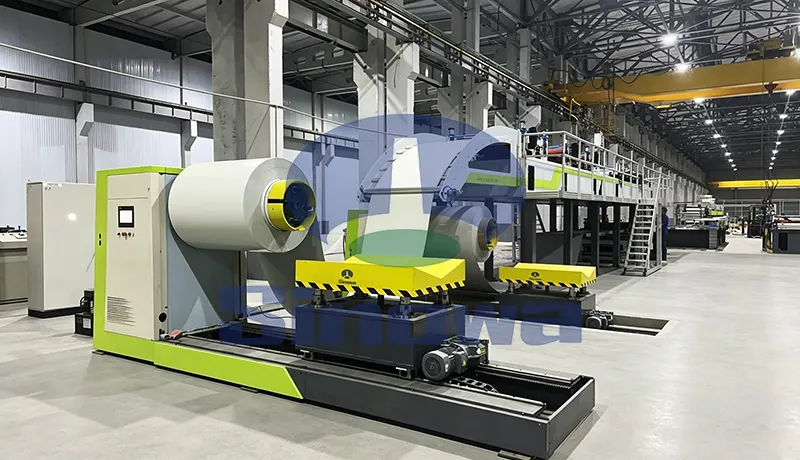
The PU sandwich panel line is a core production setup for making high-performance building insulation panels. This professional PU sandwich panel production line features automated operation to streamline the whole manufacturing process efficiently. Every component of the polyurethane sandwich panel line is precisely calibrated to ensure consistent panel thickness and structural stability. A well-maintained polyurethane sandwich panel production line can greatly boost production efficiency while reducing manual operation errors. The continuous PU sandwich panel line adapts to diverse production demands for different panel sizes and surface styles. With advanced molding technology, the PIR sandwich panel line produces panels with excellent heat preservation and sound insulation properties. Stable running of the PIR sandwich panel production line guarantees reliable product quality for various construction and industrial application scenarios.
-
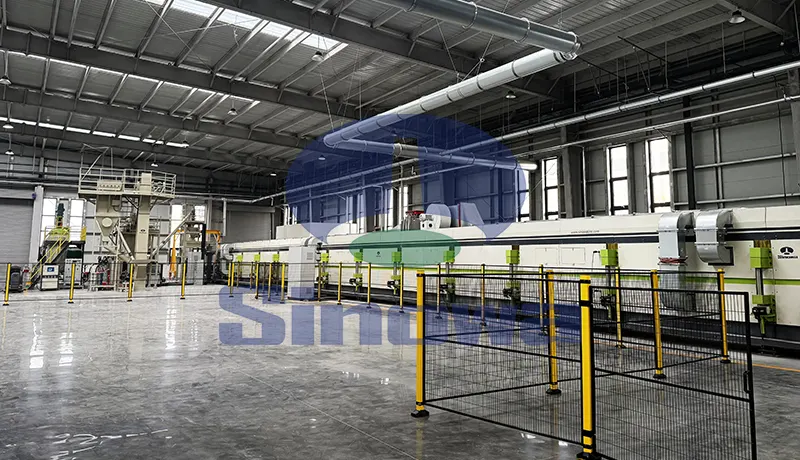
A phenolic insulation board production line serves as the core equipment for manufacturing high-performance thermal insulation building materials. This phenolic insulation panel production line integrates material mixing, foaming, molding and cutting processes to ensure continuous and stable production efficiency. Every operational link of the insulation board production line is precisely calibrated to produce uniform and durable insulation boards. The automated design of the insulation panel production line effectively reduces manual intervention and improves product consistency. Proper maintenance of the phenolic board production line can greatly extend its service life and maintain steady production output. With optimized structural design, the phenolic panel production line adapts to various production demands and delivers high-quality finished products for thermal insulation engineering applications.
-
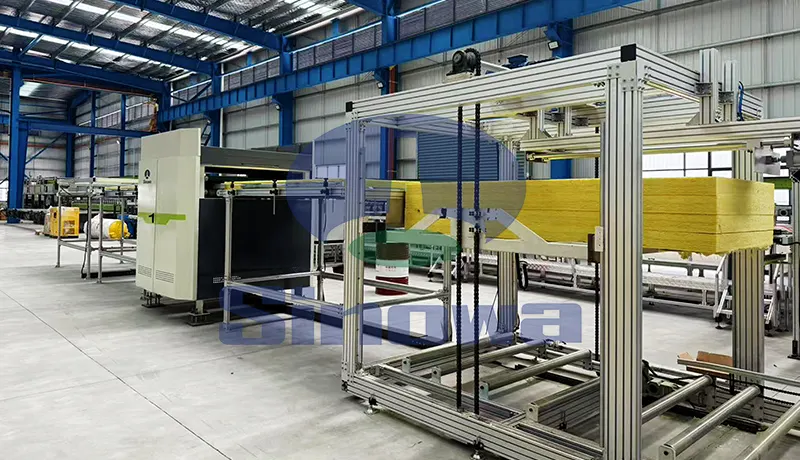
A professional rockwool sandwich panel line serves as the core equipment for producing high-performance building panels. This rockwool sandwich panel production line integrates feeding, laminating and forming processes to ensure stable and efficient production. The well-structured rock wool sandwich panel line can process raw rockwool materials into panels with excellent thermal and sound insulation properties. Operators can adjust the running parameters of the rock wool sandwich panel production line to manufacture panels of different thicknesses and specifications. The automated design of the mineral wool sandwich panel production line greatly reduces manual operation errors and improves product consistency. Regular maintenance of the mineral wool sandwich panel line is essential to sustain long-term operational efficiency and guarantee qualified finished panels for diverse construction applications.