What Causes Foaming Voids In Continuous PU Sandwich Panel Line Core Material?
Publication Date: Oct 9, 2026
Foaming voids in continuous PU sandwich panel cores stem from air entrapment, uneven material mixing, improper chemical ratios, unstable process temperatures, and mismatched line operation parameters during production.
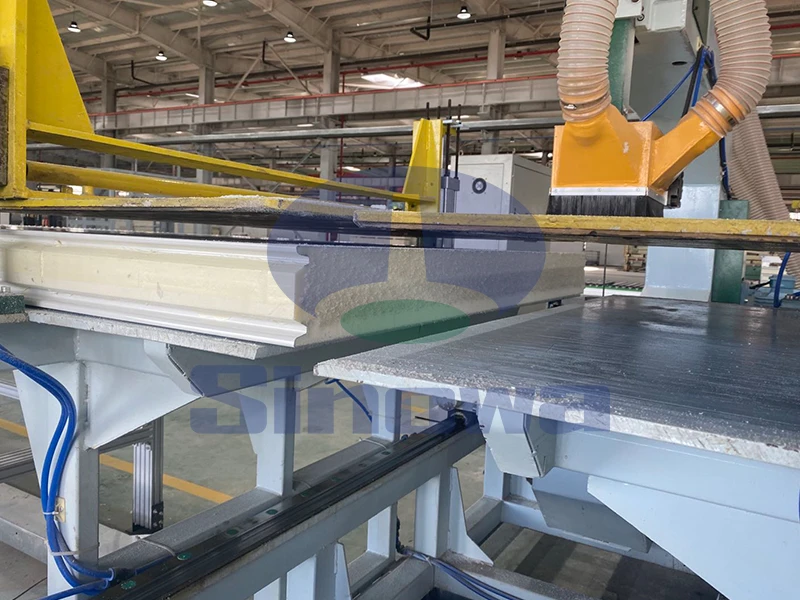
Air entrapment during material mixing and pouring is one of the most prevalent triggers of foaming voids in PU sandwich panel core materials on continuous production lines. In automated continuous production systems, polyol and isocyanate components undergo high-pressure impingement mixing to form a uniform reactive mixture. When the mixing system operates with unstable pressure or incomplete material feeding, ambient air can be easily drawn into the liquid PU mixture and form tiny invisible air bubbles. These micro air bubbles cannot escape in time during the rapid foaming and curing process of PU materials. As the foam expands and solidifies quickly on the continuous PU sandwich panel line, the trapped air accumulates and evolves into irregular hollow voids of varying sizes inside the core material. Additionally, improper pipeline exhaust design and frequent material level fluctuations in the feeding tank will further aggravate air incorporation. Even minor air entrainment in the early production stage will amplify into obvious structural voids after foam molding, damaging the compactness and uniformity of the PU core and affecting the overall structural stability of the sandwich panel.
Imbalanced chemical component ratios directly disrupt PU foaming reactions and induce localized void formation in core materials. The normal foaming and molding of PU foam relies on a precise proportional reaction between polyol and isocyanate, with auxiliary blowing agents and catalysts coordinating the reaction rate and foam expansion range. When the feeding ratio of the two main components deviates from the optimal state, the chemical cross-linking reaction becomes uneven across different areas of the mixture. Insufficient isocyanate content leads to incomplete reaction and poor foam fluidity, making it impossible for the material to fully fill the molding space and leaving vacant voids inside the core. Conversely, excessive isocyanate causes excessive local cross-linking, which accelerates partial curing and hinders uniform foam expansion. Meanwhile, unreasonable dosage of blowing agents will disrupt gas generation balance: insufficient blowing gas fails to support full foam expansion, while excessive instantaneous gas production creates oversized bubble cavities that cannot shrink uniformly during curing, eventually forming persistent void defects in the core material.
Unstable production temperature conditions are a key indirect factor causing foaming voids in continuous PU sandwich panel cores. PU foaming is a temperature-sensitive chemical reaction, and slight temperature fluctuations will alter material viscosity, reaction speed and foam expansion rhythm. When the raw material preheating temperature is too low, the viscosity of polyol and isocyanate increases significantly, reducing the fluidity of the mixed solution. The high-viscosity mixture cannot spread evenly on the continuous laminating line, resulting in local material accumulation and sparse distribution, which forms unfilled voids after curing. If the temperature is excessively high, the PU reaction speed surges instantly, causing the material to cure rapidly before completing full expansion and leveling. The premature cured foam structure cannot compensate for the volume gap generated by gas escape, forming shrinkage voids. Moreover, uneven temperature distribution in the laminating equipment creates temperature gradients in the core material. Different reaction rates in high and low temperature areas lead to inconsistent foam cell growth, breaking the integral compact structure and producing scattered tiny and large voids alternately inside the core.
Unreasonable continuous PU sandwich panel production line operating speed matching is a common process-related cause of core foaming voids. The continuous production of PU sandwich panels forms a fixed rhythm of material pouring, foam expansion, laminating and curing. The line speed must perfectly match the foam’s cream time, rise time and curing cycle. When the production line speed is excessively fast, the moving speed of the panel base material outpaces the foam expansion speed. The newly poured PU mixture does not have enough time to complete full expansion and fill the laminating cavity before being pressed and cured, resulting in intermittent hollow voids along the production direction. On the contrary, if the line speed is too slow, the foam expands excessively in a limited space. Extruded redundant foam causes local pressure accumulation, and partial gas overflows during long-term standing, leaving irregular voids inside the core after final curing. Long-term mismatched speed parameters will also cause cumulative deviations in material distribution, making void defects more regular and widespread in batch-produced panels.
Raw material moisture contamination severely damages PU foam molding integrity and creates internal voids. Water molecules react violently with isocyanate components in PU raw materials to generate carbon dioxide gas, which acts as an abnormal blowing agent in the foaming system. Normally, the foaming gas is stably produced by professional blowing agents, with a controllable gas generation rate and uniform distribution. However, moisture mixed in polyol raw materials, residual moisture on the surface of sandwich panel base materials, or moisture condensed in feeding pipelines will trigger irregular gas generation. The sudden generation of excessive carbon dioxide forms large, uneven bubble clusters inside the PU mixture. These bubbles cannot maintain uniform growth during foaming, and partial bubbles rupture prematurely while others are trapped in the curing foam. The residual bubble cavities form obvious voids and pinhole defects in the core material. In addition, moisture-induced side reactions will destroy the original cross-linking structure of PU foam, reducing material compactness and exacerbating the formation and expansion of voids.
Inadequate material mixing uniformity in high-pressure mixing systems leads to localized foaming void defects in core materials. Continuous PU production relies on high-pressure impingement mixing equipment to realize homogeneous blending of multi-component raw materials. Long-term operation of mixing heads may cause wear of internal components, partial blockage of mixing ports, or unstable mixing pressure, all of which will lead to incomplete mixing of raw materials. Local areas of the mixed solution will have uneven component distribution, with some areas rich in polyol and others concentrated with isocyanate. The inconsistent component ratio in micro-regions leads to asynchronous reaction speeds: some areas react and expand rapidly, while others react slowly or fail to react fully. The uncoordinated foam expansion rhythm creates gaps and hollow areas between different reaction regions, forming scattered voids inside the core. Meanwhile, insufficient mixing time will leave tiny unmixed material particles, which become weak points in the foam structure and evolve into small voids after molding and curing.
Improper pouring and material distribution modes on continuous sandwich panel lines trigger regional void formation in PU core materials. The pouring system determines the initial distribution state of the PU mixed solution on the base material surface. Narrow pouring width, offset pouring position, or uneven material output from the pouring port will cause uneven lateral and longitudinal material distribution. Insufficient material coverage in local areas leads to direct unfilled voids after foam curing, while excessive material accumulation in partial areas causes super-saturated expansion. The over-expanded foam is squeezed by laminating equipment, resulting in internal bubble rupture and residual cavity voids. In addition, unreasonable pouring angle and unstable material output flow will cause the mixed solution to produce splashes and laminar separation during falling. The layered material structure cannot fuse completely during foaming, forming layered void defects inside the core that seriously reduce the structural uniformity of the sandwich panel.
Abnormal laminating pressure and equipment sealing defects cause enclosed foaming voids in core materials. The laminating pressure of continuous production equipment determines the compactness of foam molding. Insufficient laminating pressure cannot effectively compress and level the expanding foam, making it impossible to eliminate tiny bubbles generated in the mixing stage. These residual tiny bubbles aggregate into large voids under the action of foam expansion. Excessively high laminating pressure will squeeze out a large amount of foaming gas in a short time, causing uneven gas discharge. Local gas cannot escape smoothly and is trapped in the foam layer, forming closed voids. Meanwhile, worn or failed side sealing structures of laminating equipment will cause local material leakage and pressure loss in the molding cavity. The unstable cavity pressure destroys the balanced foaming environment, leading to inconsistent foam expansion degrees in sealed and leaked areas, and eventually forming irregular voids at the edges and middle of the core material.
Unreasonable catalyst and surfactant dosage disrupts foam cell structure and induces void generation. Catalysts control the reaction rate and curing speed of PU materials, while surfactants stabilize foam cell structures and prevent bubble rupture. Insufficient catalyst dosage slows down the cross-linking reaction, making the foam curing speed lag behind the gas generation speed. A large amount of undischarged gas accumulates inside the foam, forming large voids after curing. Excessive catalyst causes ultra-fast curing, locking incomplete expanded bubble structures inside the core and leaving tiny cavity defects. Surfactant deficiency reduces foam surface tension stability, resulting in easy rupture of fine bubbles during expansion. Broken bubbles cannot form continuous compact cell structures, and the collapsed bubble gaps evolve into interconnected voids. Improper matching of the two auxiliaries will completely disrupt the balanced foaming state, causing widespread cell structure damage and void defects in the core material.
Long-term equipment aging and incomplete daily maintenance gradually induce recurring foaming void defects in continuous production. Key production equipment including mixing heads, feeding pumps, temperature control systems and laminating devices will experience performance degradation after long-term continuous operation. Wear of feeding pump components causes unstable material delivery flow, leading to real-time ratio deviation of raw materials and uneven reaction foaming. Aging temperature control sensors cannot accurately monitor and adjust material and equipment temperature, resulting in persistent temperature fluctuations in the foaming environment. Blocked mixing head gaps and residual material buildup cause incomplete mixing and pollute fresh raw materials, forming abnormal foaming points. In addition, neglected daily cleaning and maintenance of production lines lead to accumulated dust, residual cured materials and other impurities in the molding cavity. These impurities act as abnormal nucleation points, inducing irregular bubble growth and forming voids of different sizes inside the core material.
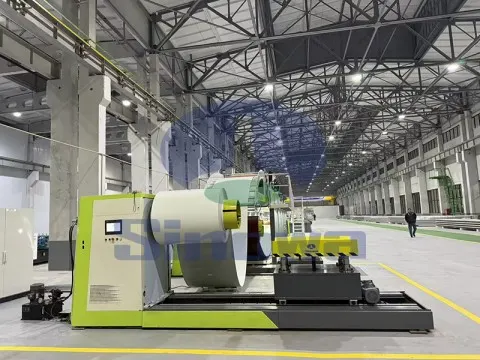
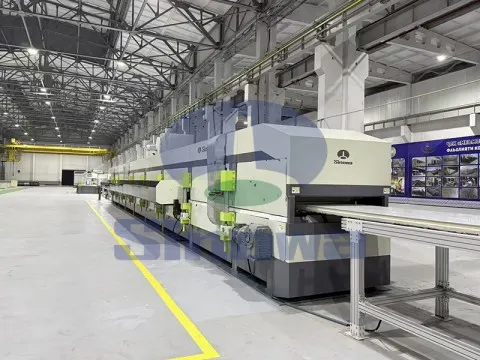
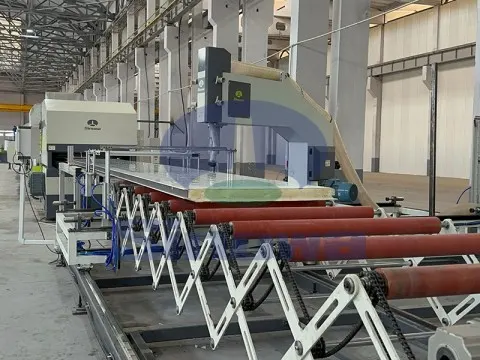
Gallery of Continuous PU Sandwich Panel Line
Tags: continuous pu sandwich panel line, continuous pu sandwich panel line manufacturer, continuous pu sandwich panel line supplier, china continuous pu sandwich panel line, continuous pu sandwich panel line for sale
-
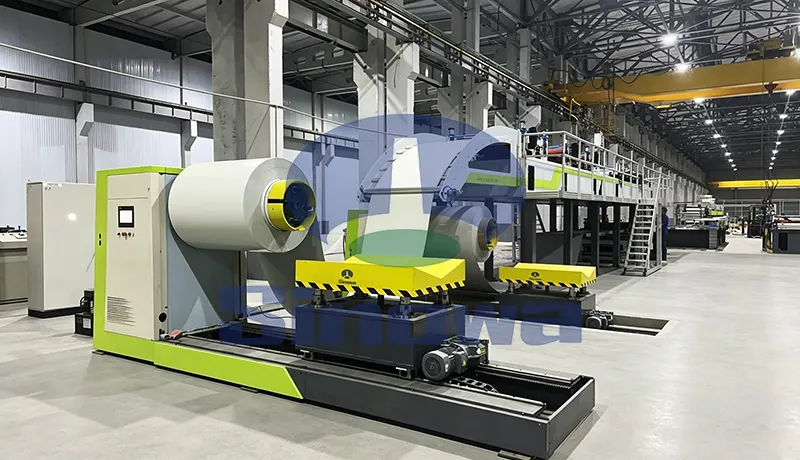
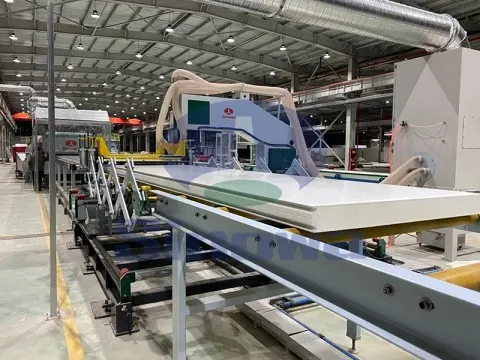
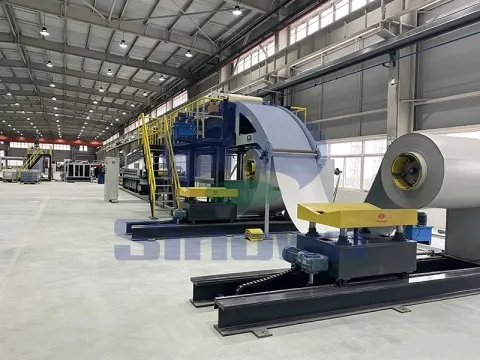
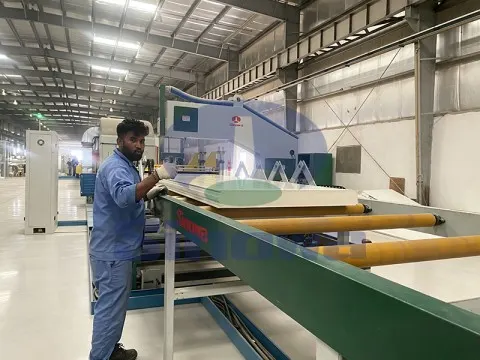
The PU sandwich panel line is a core production setup for making high-performance building insulation panels. This professional PU sandwich panel production line features automated operation to streamline the whole manufacturing process efficiently. Every component of the polyurethane sandwich panel line is precisely calibrated to ensure consistent panel thickness and structural stability. A well-maintained polyurethane sandwich panel production line can greatly boost production efficiency while reducing manual operation errors. The continuous PU sandwich panel line adapts to diverse production demands for different panel sizes and surface styles. With advanced molding technology, the PIR sandwich panel line produces panels with excellent heat preservation and sound insulation properties. Stable running of the PIR sandwich panel production line guarantees reliable product quality for various construction and industrial application scenarios.
-
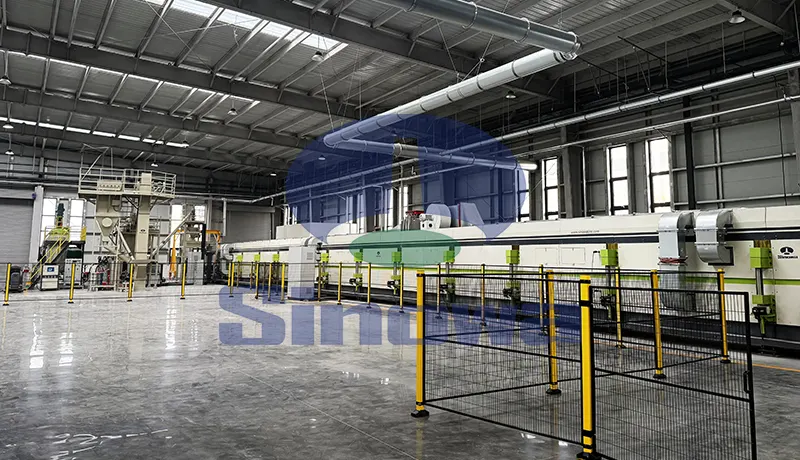
A phenolic insulation board production line serves as the core equipment for manufacturing high-performance thermal insulation building materials. This phenolic insulation panel production line integrates material mixing, foaming, molding and cutting processes to ensure continuous and stable production efficiency. Every operational link of the insulation board production line is precisely calibrated to produce uniform and durable insulation boards. The automated design of the insulation panel production line effectively reduces manual intervention and improves product consistency. Proper maintenance of the phenolic board production line can greatly extend its service life and maintain steady production output. With optimized structural design, the phenolic panel production line adapts to various production demands and delivers high-quality finished products for thermal insulation engineering applications.
-
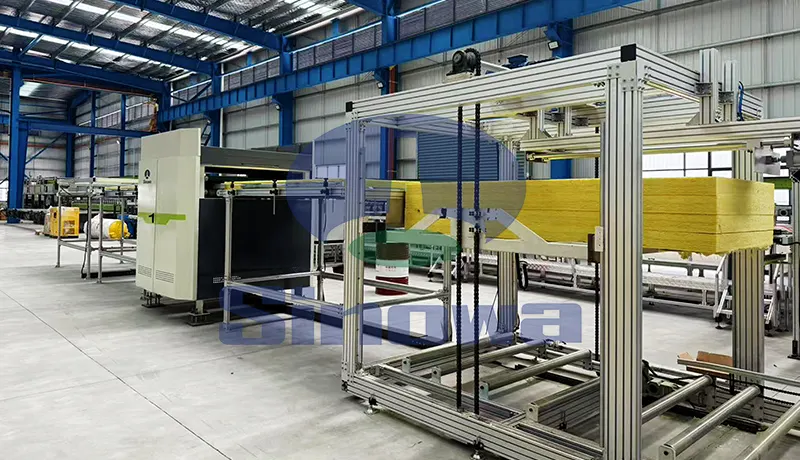
A professional rockwool sandwich panel line serves as the core equipment for producing high-performance building panels. This rockwool sandwich panel production line integrates feeding, laminating and forming processes to ensure stable and efficient production. The well-structured rock wool sandwich panel line can process raw rockwool materials into panels with excellent thermal and sound insulation properties. Operators can adjust the running parameters of the rock wool sandwich panel production line to manufacture panels of different thicknesses and specifications. The automated design of the mineral wool sandwich panel production line greatly reduces manual operation errors and improves product consistency. Regular maintenance of the mineral wool sandwich panel line is essential to sustain long-term operational efficiency and guarantee qualified finished panels for diverse construction applications.