Why Do PU Sandwich Panel Production Line Panels Have Surface Dimples?
Publication Date: Oct 8, 2026
Surface dimples on PU sandwich panels stem from foaming instability, raw material issues, temperature deviations and mechanical errors during continuous production, affecting surface flatness and appearance quality.
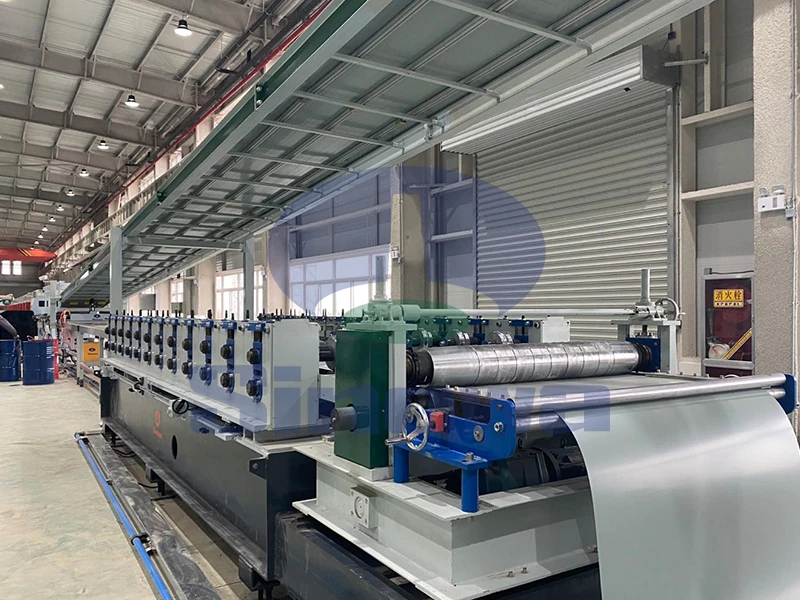
Surface dimples are one of the most common minor defects encountered in the continuous production of PU sandwich panels, presenting as irregular shallow depressions of varying sizes on the panel’s outer surface. Unlike obvious cracks or bulges, these subtle indentations are often overlooked in preliminary inspections but can greatly compromise the panel’s aesthetic uniformity and surface flatness. In practical application scenarios, such imperfect surfaces may lead to poor fitting during installation and inconsistent coating adhesion in subsequent processing. The formation of these dimples is never caused by a single factor but results from the superposition of subtle abnormalities in multiple production links, covering raw material reaction, foaming curing, mechanical pressing and environmental control. Clarifying the core causes of surface dimples is essential to stabilize panel production quality and reduce defective product rates in daily manufacturing operations.
Abnormal raw material reaction and uneven component proportioning are the primary inducements of PU sandwich panel surface dimples. PU foam formation relies on the precise chemical reaction between polyol and isocyanate components, and any deviation in the ratio of core raw materials will break the balanced foaming state. When the proportion of foaming agents or additives is inaccurate, local foaming speed differs drastically across the panel core layer. Some areas foam rapidly to form dense foam structures, while others foam insufficiently to generate loose and hollow internal structures. After the panel is cooled and shaped, the loose internal parts cannot provide uniform support for the outer metal or composite surface layer, resulting in gradual inward sinking and forming visible surface dimples. In addition, expired or poorly stored raw materials will have reduced reaction activity, triggering incomplete and uneven chemical reactions during foaming and further exacerbating surface depression defects.
Excessive moisture and impurity contamination in raw materials and substrates are key hidden causes of surface dimple formation. The PU foaming reaction is highly sensitive to water content, as free isocyanate groups in raw materials will preferentially react with water molecules instead of polyol components, generating tiny carbon dioxide gas pockets inside the foam core. These micro gas pockets cannot escape completely during continuous production and remain sealed in the core layer. In the later curing and cooling stage, the internal gas gradually dissipates and shrinks, causing local volume contraction of the foam core. Without sufficient internal support, the tight outer surface layer sinks correspondingly, forming uniform shallow dimples. Meanwhile, tiny impurities on the substrate surface or contaminated release agents will hinder the tight combination between the surface layer and foam core, creating local gaps that evolve into surface depressions after pressing and curing.
Unstable mixing process of production equipment directly leads to inconsistent foam density and surface dimples. The continuous PU sandwich panel production line relies on professional mixing equipment to blend PU raw materials evenly before foaming. If the mixing speed is unstable, mixing time is insufficient, or mixing chamber components are blocked and worn, raw materials cannot be fully fused uniformly. This results in staggered distribution of high and low-density areas inside the foam core after foaming. High-density foam parts have strong structural support, while low-density areas have poor compression resistance and structural stability. During the follow-up flat pressing and cooling shaping process of the production line, the low-density foam areas are slightly compressed and deformed, driving the surface layer to sink and form regular or irregular dimples. Long-term operation without equipment cleaning and maintenance will accumulate residual raw materials in the mixing system, further worsening uneven mixing and recurring dimple defects.
Improper temperature control in foaming and curing stages is a critical factor triggering surface dimple defects. PU foam forming requires a stable and reasonable temperature environment to ensure synchronous foaming and uniform curing of the entire core layer. When the PU sandwich panel production line's preheating temperature is too low, the raw material reaction speed slows down, leading to delayed local foaming and incomplete curing. In contrast, excessive local temperature will cause rapid over-foaming of partial foam, forming uneven internal stress inside the panel. In the cooling stage, the foam core and surface layer shrink at different rates due to inconsistent temperature curing degrees. The fully cured high-density parts shrink slightly, while the insufficiently cured low-density areas shrink significantly, resulting in unbalanced surface tension. This tension difference pulls the panel surface inward to form dimples, and temperature fluctuation during continuous production will make such defects more random and widespread on the panel surface.
Unstable mechanical pressing parameters of the production line easily induce surface depression problems. The pressing process is a key link to ensure the flatness of PU sandwich panels, and stable pressing gap and uniform pressure distribution are essential for qualified products. If the pressing gap of the upper and lower pressing rollers is uneven on both sides, or the pressing pressure fluctuates frequently during operation, the foam core will bear inconsistent pressure in different areas. Local over-pressing will cause excessive compression of the foam structure, while under-pressing leads to insufficient bonding between the core layer and surface layer. After the panel leaves the pressing device and completes natural cooling, the over-compressed foam rebounds incompletely and the under-compressed parts sink slightly, forming obvious surface dimples. In addition, vibration of the production line equipment during high-speed operation will cause instantaneous pressure deviation, leaving scattered tiny dimples on the fresh foaming panel surface.
Unbalanced ambient humidity and temperature in the production workshop cannot be ignored as secondary causes of panel surface dimples. The overall production environment directly affects the foaming and curing state of PU materials. In high-humidity workshop conditions, a thin layer of condensed water will form on the clean substrate surface before foaming. This invisible water film participates in the PU reaction, producing tiny residual gas pores in the local foam core. These subtle pore structures destroy the uniformity of the internal support structure, and finally form surface dimples after cooling and shaping. Meanwhile, drastic temperature changes in the workshop will cause inconsistent heat dissipation speed of panels in different production stages. Panels cooling too fast have unbalanced internal and external shrinkage, while panels cooling too slowly have delayed curing, both of which will induce local surface depression defects and affect overall surface flatness.
Abnormal foaming agent performance and uneven distribution aggravate surface dimple defects of PU sandwich panels. Foaming agents determine the expansion ratio and pore structure uniformity of PU foam cores. When the foaming agent content is unevenly distributed in raw materials, partial areas expand excessively while others expand inadequately during foaming. Excessive expansion will form large and loose foam pores, and these pore structures will shrink significantly during cooling, causing surface sinking. In addition, foaming agent performance degradation caused by long-term storage or improper storage environment will lead to unstable foaming efficiency. The inconsistent expansion degree of the foam core in different areas makes the internal support force uneven, and the flat surface layer cannot maintain a smooth state, thus forming dense or scattered dimples on the panel surface.
Incomplete cleaning and maintenance of sandwich panel equipment will continuously trigger recurring surface dimple problems. Long-term continuous operation of the sandwich panel production line will leave residual cured PU materials, dust and impurities on the surface of pressing rollers, conveying equipment and molds. These tiny attachments will form subtle raised obstacles on the equipment surface. When the fresh foaming and uncured panel passes through the equipment, the obstacles will cause local pressure gaps, resulting in small depressions on the panel surface. After the panel is completely cured and shaped, these temporary depressions are fixed into permanent dimples. Moreover, worn or deformed conveyor belts and pressing accessories will cause uneven stress on the panel, further increasing the number and irregularity of surface dimples in mass production.
Effective optimization measures can significantly reduce the occurrence of PU sandwich panel surface dimples targeting the above causes. Manufacturers can start with raw material management to strictly control material proportioning, storage conditions and moisture content, and screen qualified raw materials with stable reaction activity. Regular equipment maintenance is essential, including cleaning mixing systems and pressing rollers, calibrating pressing gaps and operating pressure, and eliminating mechanical vibration and blockage problems. Meanwhile, stabilizing workshop production environment, maintaining constant temperature and humidity, and avoiding condensed water on substrate surfaces can ensure uniform foaming and curing of PU cores. Standardizing production operation parameters and avoiding drastic fluctuations in line speed and temperature can balance foam expansion and shrinkage, fundamentally reducing surface dimple defects and improving overall panel surface quality.
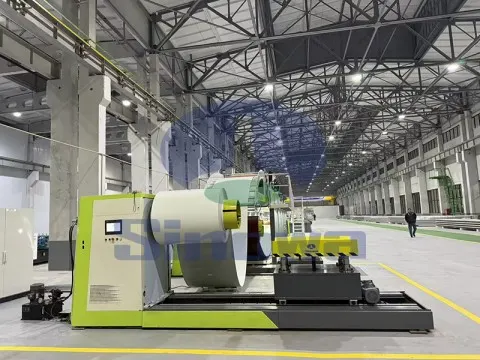
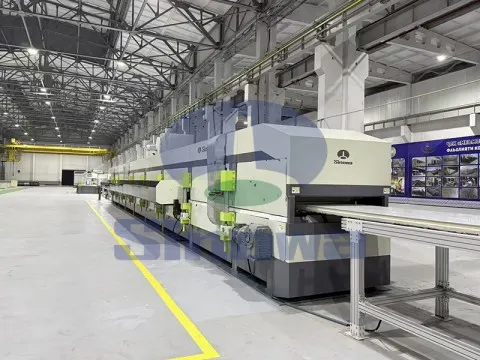
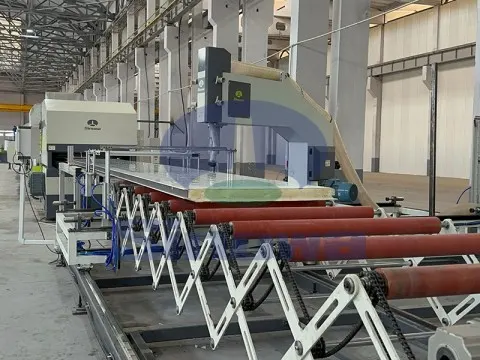
Gallery of PU Sandwich Panel Production Line
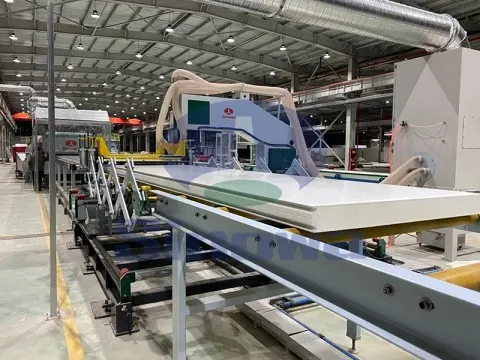
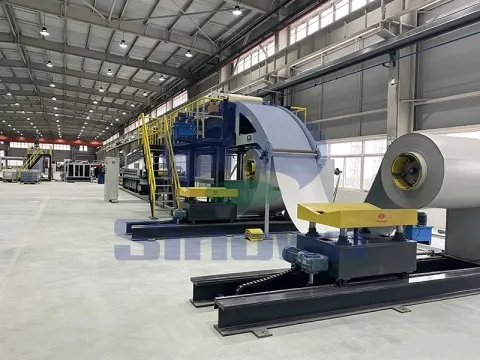
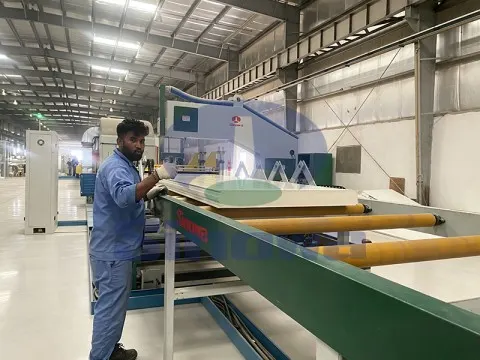
Tags: pu sandwich panel production line, pu sandwich panel production line manufacturer, pu sandwich panel production line supplier, china pu sandwich panel production line, pu sandwich panel production line for sale
-
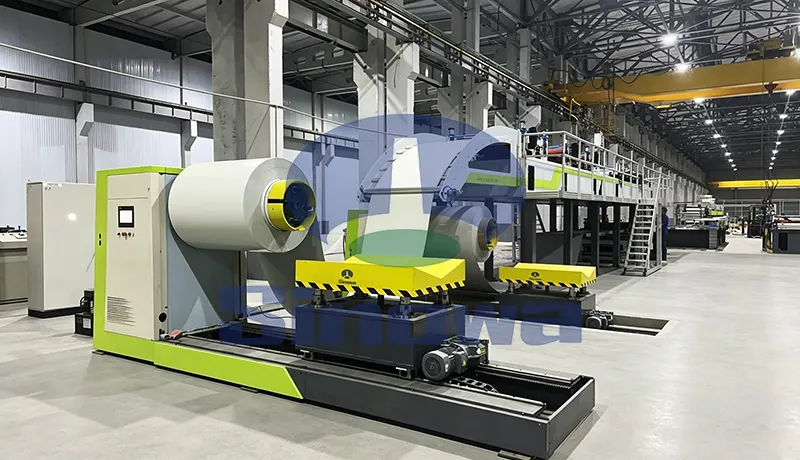
The PU sandwich panel line is a core production setup for making high-performance building insulation panels. This professional PU sandwich panel production line features automated operation to streamline the whole manufacturing process efficiently. Every component of the polyurethane sandwich panel line is precisely calibrated to ensure consistent panel thickness and structural stability. A well-maintained polyurethane sandwich panel production line can greatly boost production efficiency while reducing manual operation errors. The continuous PU sandwich panel line adapts to diverse production demands for different panel sizes and surface styles. With advanced molding technology, the PIR sandwich panel line produces panels with excellent heat preservation and sound insulation properties. Stable running of the PIR sandwich panel production line guarantees reliable product quality for various construction and industrial application scenarios.
-
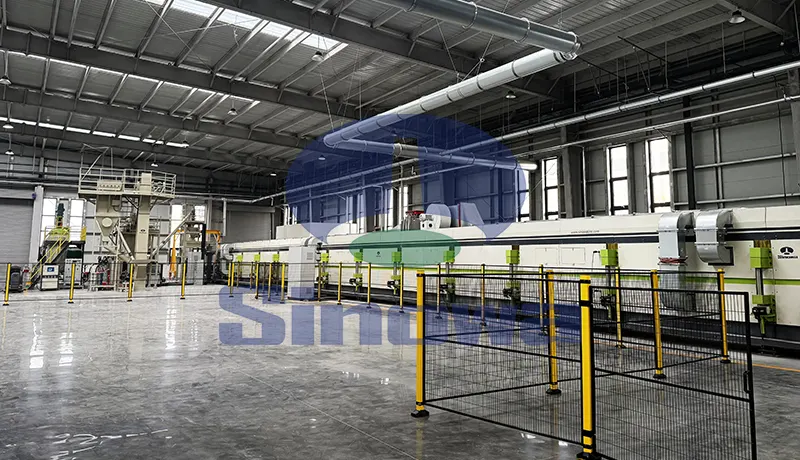
A phenolic insulation board production line serves as the core equipment for manufacturing high-performance thermal insulation building materials. This phenolic insulation panel production line integrates material mixing, foaming, molding and cutting processes to ensure continuous and stable production efficiency. Every operational link of the insulation board production line is precisely calibrated to produce uniform and durable insulation boards. The automated design of the insulation panel production line effectively reduces manual intervention and improves product consistency. Proper maintenance of the phenolic board production line can greatly extend its service life and maintain steady production output. With optimized structural design, the phenolic panel production line adapts to various production demands and delivers high-quality finished products for thermal insulation engineering applications.
-
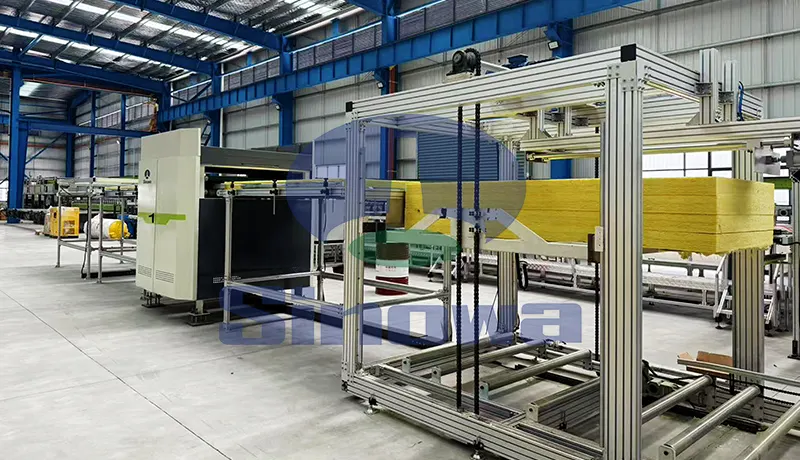
A professional rockwool sandwich panel line serves as the core equipment for producing high-performance building panels. This rockwool sandwich panel production line integrates feeding, laminating and forming processes to ensure stable and efficient production. The well-structured rock wool sandwich panel line can process raw rockwool materials into panels with excellent thermal and sound insulation properties. Operators can adjust the running parameters of the rock wool sandwich panel production line to manufacture panels of different thicknesses and specifications. The automated design of the mineral wool sandwich panel production line greatly reduces manual operation errors and improves product consistency. Regular maintenance of the mineral wool sandwich panel line is essential to sustain long-term operational efficiency and guarantee qualified finished panels for diverse construction applications.