How To Solve Inconsistent Panel Thickness On PU Foam Production Line?
Publication Date: Oct 9, 2026
Solve inconsistent panel thickness issues on your PU foam production line. Check foaming parameters, belt pressure & raw material metering to achieve uniform PU sandwich panels.
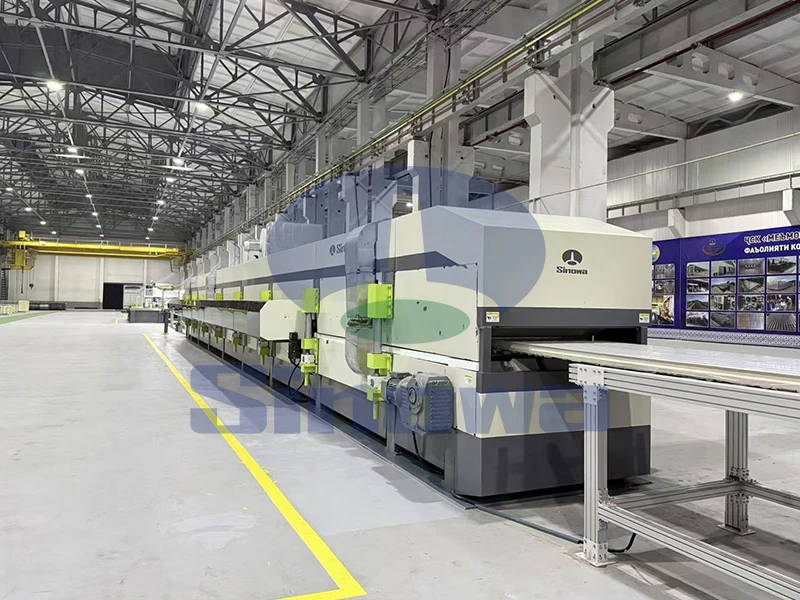
Inconsistent panel thickness is one of the most prevalent and disruptive quality defects in continuous PU foam panel production. It manifests in various forms, including unilateral edge thickness deviation, periodic thickness fluctuation along the panel length, and random thickness differences across batch products. This defect not only downgrades the appearance and structural uniformity of PU foam panels but also leads to poor assembly compatibility in downstream applications, increasing product rejection rates and production waste. Most thickness irregularities do not stem from sudden equipment failure but from cumulative deviations in process parameters, equipment operation, and material control during long-term continuous production. Identifying the root causes of uneven thickness is the first critical step to implementing targeted improvements and stabilizing overall production quality.
Unstable raw material performance and mixing uniformity are fundamental triggers for PU foam panel thickness inconsistency. PU foam production relies on the precise reaction of polyol and isocyanate materials, and subtle changes in raw material properties will directly affect foam expansion efficiency and molding thickness. Fluctuations in raw material viscosity, moisture content, and chemical activity can cause inconsistent foaming speed and expansion multiple in different production stages. When raw material mixing is incomplete or the mixing ratio deviates slightly, local foam expansion will be insufficient or excessive, resulting in uneven thickness across the panel surface. In addition, inconsistent material temperature before feeding will change material fluidity and reaction kinetics, further exacerbating thickness differences. Regular inspection of raw material batch stability and pre-production material testing can effectively reduce such inherent thickness deviations.
Metering system inaccuracies are a key equipment-related cause of unstable panel thickness. The precision of the PU foam metering pump directly determines the feeding volume of chemical raw materials, and long-term operation will lead to slight wear of pump seals, internal cavities and check valves, resulting in unstable material output flow. Even tiny flow fluctuations will be amplified in continuous production, causing periodic changes in foam dosage and further leading to regular thickness fluctuations of finished panels. Many production lines ignore regular calibration of metering equipment, resulting in gradual drift of metering accuracy over time. Conducting regular shot tests and flow calibration for metering pumps, timely replacing worn sealing components, and stabilizing tank internal pressure can effectively ensure consistent material supply and eliminate thickness deviation caused by metering errors.
Misalignment and unstable gap of the pressing system are common reasons for edge-to-middle thickness differences of PU foam panels. The continuous molding of PU foam panels depends on the stable gap and uniform pressure of the upper and lower pressing belts or pressing plates. Long-term mechanical operation will cause slight deviation in the levelness of pressing plates, wear of bearings and transmission shafts, and inconsistent tension of pressing belts, leading to uneven pressure distribution on the panel surface during foam curing molding. Insufficient local pressure will lead to excessive foam expansion and partial thickening, while excessive pressure will compress the foam layer to form thin areas. Regularly checking the horizontal calibration of the pressing system, adjusting the parallelism of upper and lower pressing structures, and balancing the tension of transmission belts can effectively eliminate lateral thickness differences of panels.
Unstable production line speed synchronization will induce continuous thickness fluctuation of PU foam panels. Continuous PU foam panel production is a coordinated operation of feeding, foaming, pressing and curing processes, and the running speed of each link must remain highly synchronized. When the main conveyor speed, raw material feeding speed and mixing head swing speed are not matched, the foam reaction time and molding pressure will change dynamically. If the line speed accelerates instantaneously, the foam fails to fully expand and cure, resulting in thinner panel thickness; if the speed decelerates abnormally, excessive foam accumulation and over-expansion will cause panel thickening. Regularly debugging the automation synchronization program of the production line, eliminating transmission jitter and speed deviation, and maintaining stable and uniform line speed are essential to stabilize panel longitudinal thickness consistency.
Ambient temperature and humidity changes interfere with foam reaction and cause thickness inconsistency. PU foam chemical reaction is highly sensitive to external environmental conditions. Changes in workshop temperature will affect raw material viscosity and reaction rate: low temperature slows down the foaming reaction and reduces expansion volume, while high temperature accelerates the reaction and leads to excessive expansion. Humidity fluctuations also interfere with foam curing molding, as excessive ambient moisture will react with isocyanate, destroying the original foaming ratio and resulting in uneven foam cell structure and unstable thickness. Establishing a constant temperature and humidity production environment, avoiding direct ventilation and temperature mutation in the production area, and adjusting process parameters adaptively according to environmental changes can reduce environmental interference on panel thickness uniformity.
Abnormal operation of the mixing head leads to local uneven foaming and partial thickness deviation. The mixing head is the core component for raw material mixing and pouring, and its operating state directly determines the uniformity of foam distribution. Long-term use will cause residual material accumulation, nozzle blockage and uneven swing speed of the mixing head, resulting in inconsistent pouring volume of PU materials in different panel areas. Blocked local nozzles lead to insufficient material supply and thin panel areas, while unbalanced swing speed causes material accumulation and local thickening. In addition, unstable mixing head pressure will lead to uneven material spraying, further aggravating thickness differences. Regular cleaning of mixing head nozzles, calibration of swing angle and speed, and inspection of spraying pressure stability can ensure uniform material pouring and consistent foam molding thickness.
Improper curing condition control leads to delayed foaming and secondary thickness deviation. After PU foam pouring and pressing, sufficient and stable curing conditions are required to complete final molding and thickness fixation. Unstable curing temperature, insufficient curing time or uneven heat distribution in the curing channel will cause inconsistent foam curing degrees. Partially uncured foam will continue to expand after leaving the pressing system, resulting in local thickening, while over-cured foam will shrink slightly and become thinner. Many production lines pursue output efficiency and improperly shorten curing time, resulting in large-scale thickness fluctuation of finished panels. Optimizing the temperature distribution of the curing channel, matching curing time with line speed, and ensuring full and uniform curing of each panel can avoid thickness changes caused by incomplete molding.
Irregular equipment maintenance exacerbates cumulative thickness errors in long-term production. Most thickness inconsistency problems are not caused by single faults but by the accumulation of minor equipment wear and parameter drift. Neglecting daily inspection and maintenance of transmission rollers, pressing structures, metering systems and mixing equipment will lead to gradual loss of equipment operation precision. Slight deformation of rollers, aging of damping components and loose transmission parts will all affect the stability of the entire production process and induce persistent thickness deviation. Establishing a standardized daily, weekly and monthly maintenance system, regularly inspecting key components, eliminating minor equipment faults in advance, and recalibrating process parameters regularly can maintain long-term stable operation of the production line and reduce batch thickness defects.
Scientific production parameter optimization and real-time monitoring are fundamental to sustainably solve panel thickness inconsistency. Based on daily production data, manufacturers should summarize the corresponding relationship between process parameters and thickness changes, and formulate standardized parameter thresholds for different production environments and raw material batches. Installing real-time thickness monitoring devices on the production line can realize online detection of panel thickness, timely capture subtle thickness changes, and feed back data to the control system for adaptive parameter adjustment. Closed-loop process control can effectively avoid manual adjustment errors and realize intelligent stabilization of panel thickness. Continuous data recording and analysis can also help predict potential thickness deviation risks and realize preventive quality control.
Standardized operation and staff skill improvement guarantee long-term thickness uniformity of PU foam panels. Even with advanced equipment and optimized parameters, non-standard manual operation will still cause thickness defects. Improper parameter adjustment, irregular material feeding operation and incomplete equipment inspection by operators will break the stability of the production process. Regular professional skill training for production staff, standardizing operation procedures for equipment debugging, parameter setting and daily inspection, and establishing a strict quality inspection system for finished panels can eliminate human-induced thickness deviation. Combining standardized operation with equipment maintenance and process optimization can form a complete quality control system to fundamentally solve the problem of inconsistent PU foam panel thickness.
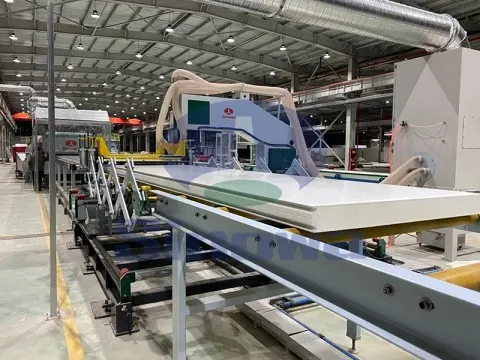
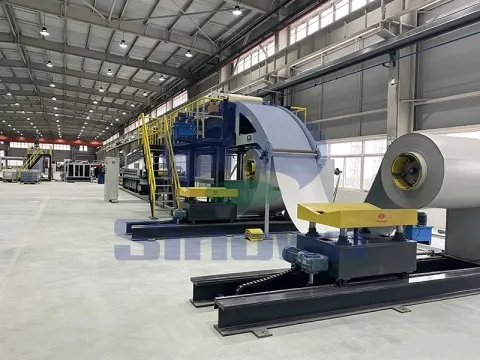
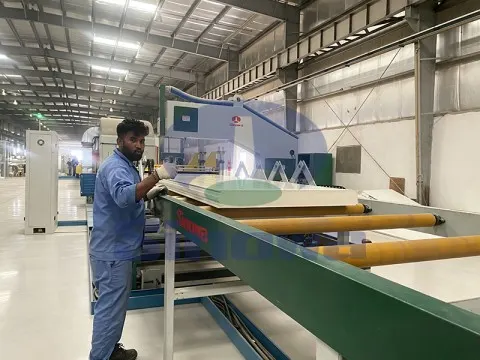
Gallery of PU Foam Production Line
Tags: pu foam production line, pu foam production line manufacturer, pu foam production line supplier, china pu foam production line, pu foam production line for sale
-
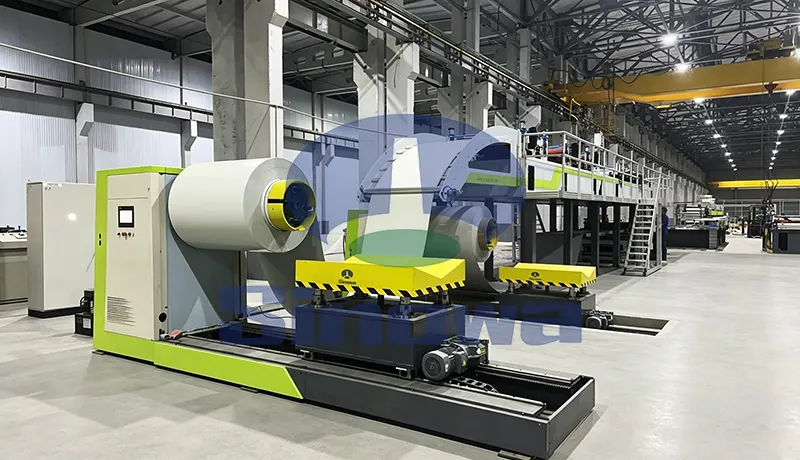
The PU sandwich panel line is a core production setup for making high-performance building insulation panels. This professional PU sandwich panel production line features automated operation to streamline the whole manufacturing process efficiently. Every component of the polyurethane sandwich panel line is precisely calibrated to ensure consistent panel thickness and structural stability. A well-maintained polyurethane sandwich panel production line can greatly boost production efficiency while reducing manual operation errors. The continuous PU sandwich panel line adapts to diverse production demands for different panel sizes and surface styles. With advanced molding technology, the PIR sandwich panel line produces panels with excellent heat preservation and sound insulation properties. Stable running of the PIR sandwich panel production line guarantees reliable product quality for various construction and industrial application scenarios.
-
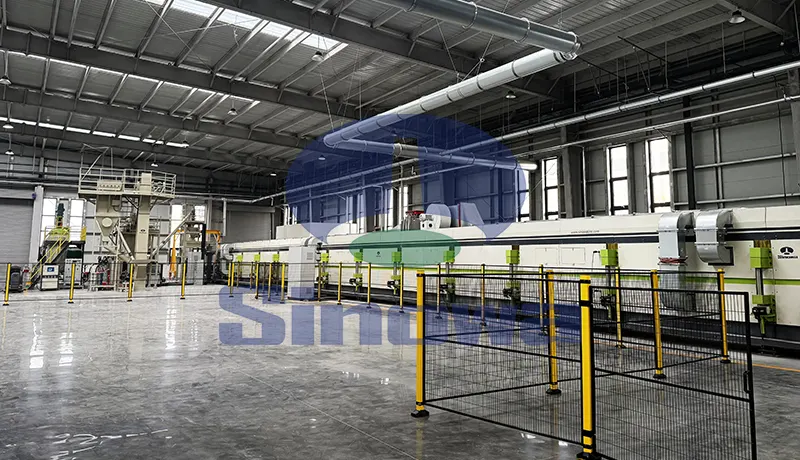
A phenolic insulation board production line serves as the core equipment for manufacturing high-performance thermal insulation building materials. This phenolic insulation panel production line integrates material mixing, foaming, molding and cutting processes to ensure continuous and stable production efficiency. Every operational link of the insulation board production line is precisely calibrated to produce uniform and durable insulation boards. The automated design of the insulation panel production line effectively reduces manual intervention and improves product consistency. Proper maintenance of the phenolic board production line can greatly extend its service life and maintain steady production output. With optimized structural design, the phenolic panel production line adapts to various production demands and delivers high-quality finished products for thermal insulation engineering applications.
-
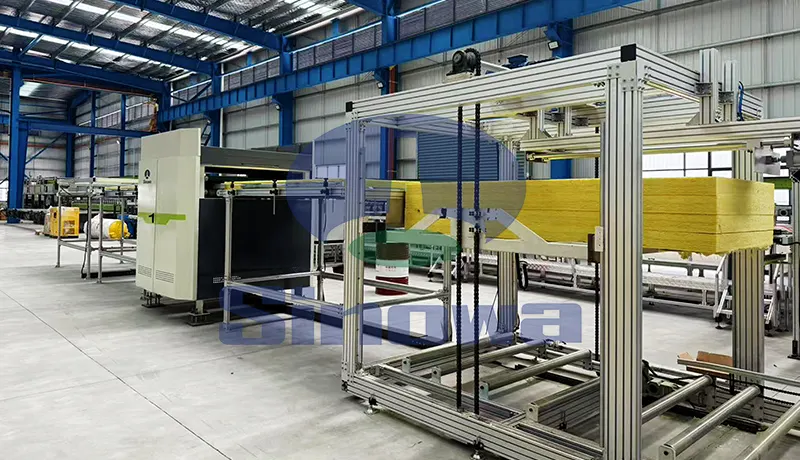
A professional rockwool sandwich panel line serves as the core equipment for producing high-performance building panels. This rockwool sandwich panel production line integrates feeding, laminating and forming processes to ensure stable and efficient production. The well-structured rock wool sandwich panel line can process raw rockwool materials into panels with excellent thermal and sound insulation properties. Operators can adjust the running parameters of the rock wool sandwich panel production line to manufacture panels of different thicknesses and specifications. The automated design of the mineral wool sandwich panel production line greatly reduces manual operation errors and improves product consistency. Regular maintenance of the mineral wool sandwich panel line is essential to sustain long-term operational efficiency and guarantee qualified finished panels for diverse construction applications.