How To Adjust Foaming Pressure Of Continuous PU Sandwich Panel Line?
Publication Date: Oct 8, 2026
Learn practical steps to adjust foaming pressure on continuous PU sandwich panel lines. Master key parameters to fix foam defects and ensure stable, high-quality panel production.
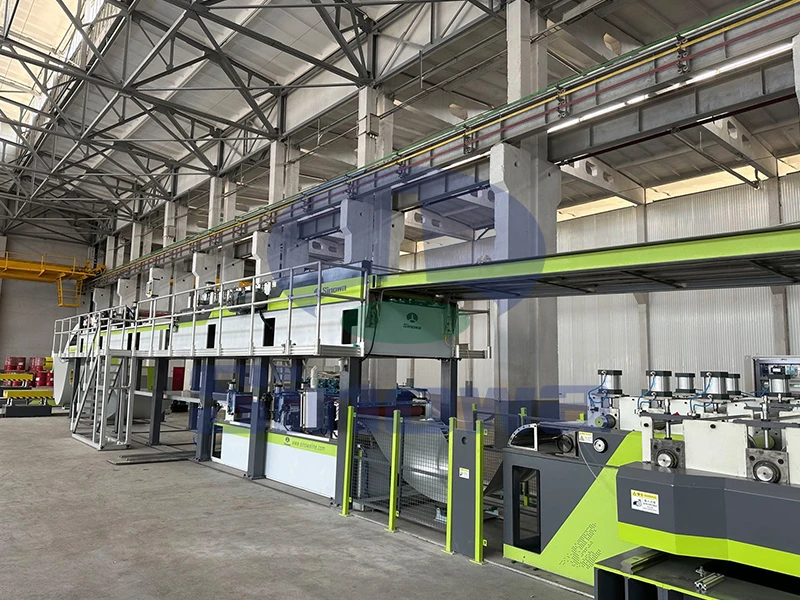
Foaming pressure serves as one of the most pivotal operational parameters for continuous PU sandwich panel production lines, directly governing the foam expansion effect, core density uniformity, and overall structural quality of finished panels. Unscientific pressure settings are the primary cause of common production defects, including foam voids, surface bulges, core delamination, and inconsistent insulation performance. In continuous production scenarios, the foaming pressure works in tandem with raw material flow rate, line running speed, and mixing status to shape the final foam structure. A precise pressure adjustment process can effectively stabilize the foaming reaction, ensure full and uniform expansion of PU materials between upper and lower panel substrates, and eliminate most quality fluctuations in mass production. Unlike intermittent production equipment, continuous lines require dynamic pressure calibration to adapt to real-time production changes, making systematic and standardized adjustment procedures essential for long-term stable operation of the production line.
Before initiating any foaming pressure adjustment, it is critical to conduct a comprehensive pre-inspection of the entire foaming system to eliminate potential mechanical and operational faults that may interfere with pressure stability. First, operators need to check the tightness of the high-pressure pipeline system, including all connecting joints, sealing components, and filter devices, as loose connections or clogged filters will cause abnormal pressure fluctuations and inaccurate pressure regulation. Next, verify the working status of the pressure monitoring sensors and hydraulic control components, ensuring real-time pressure data displayed on the operation panel is consistent with the actual working pressure of the foaming cavity. It is also necessary to confirm that PU raw materials meet pre-production processing standards, with stable material temperature and uniform viscosity, as raw material state deviations will alter foaming reaction characteristics and offset the effect of pressure adjustment. Completing these pre-checks lays a solid foundation for accurate pressure tuning and avoids ineffective adjustments caused by peripheral equipment or material problems.
The core of initial foaming pressure setting lies in matching basic pressure values with conventional production conditions to form a stable benchmark for subsequent fine-tuning. For most continuous PU sandwich panel production scenarios, the basic foaming pressure is set within a moderate range that balances foam expansion and molding efficiency. When starting the production line, operators should first set a standard baseline pressure based on the preset panel thickness and target core density. Excessively low baseline pressure will lead to insufficient extrusion during foam expansion, resulting in sparse foam cells, internal voids, and poor bonding between the PU core and metal substrates. Conversely, overly high baseline pressure will cause excessive material extrusion, trigger panel edge overflow, squeeze and damage the foam cell structure, and increase internal stress of the panel. After setting the baseline pressure, run the production line at a standard steady speed for a trial production period to observe the preliminary foaming state and lay the groundwork for targeted fine adjustment.
Real-time pressure fine-tuning should be carried out according to the running speed of the continuous production line, as line speed is a key dynamic factor affecting foaming pressure matching. When the line running speed increases, the residence time of PU raw materials in the foaming and molding section is shortened, requiring a moderate increase in foaming pressure to accelerate uniform material spreading and complete full expansion within the limited time. If the pressure remains unchanged at high line speeds, the foam will not fully fill the cavity, leading to uneven core thickness and local hollow defects. In contrast, when reducing the production line speed, the foaming reaction time is extended, and excessive pressure will cause over-expansion and compressed foam cells. At this time, operators need to slowly lower the foaming pressure to match the slow reaction rhythm, ensuring the foam expands naturally and forms a dense and uniform cellular structure. All speed-linked pressure adjustments must be completed gradually to avoid sudden pressure changes that cause instantaneous production quality abnormalities.
Foaming pressure adjustment needs to be closely linked with PU raw material flow rate and mixing ratio to achieve coordinated parameter optimization. The foaming pressure and material injection flow rate form a mutually restrictive relationship in the continuous production process. When increasing the raw material injection volume per unit time, the foaming cavity bears more material pressure, and the working pressure of the system will rise accordingly, requiring fine pressure reduction to prevent excessive material accumulation and panel bulging. When reducing the material flow rate, the system pressure drops synchronously, and a slight pressure increase is needed to avoid insufficient material spreading and sparse foam layers. In addition, the mixing uniformity of polyol and isocyanate components directly affects the foaming reaction rate. Uniform mixing leads to a stable and gentle foaming reaction, which can adapt to standard pressure settings, while uneven mixing causes local violent reactions, requiring appropriate pressure compensation to stabilize the overall foaming effect and ensure consistent panel quality across the entire production width.
Targeted pressure correction is required to solve typical foaming quality defects caused by improper pressure settings. When finished panels show internal voids, poor bonding, and local delamination, it generally indicates insufficient foaming pressure, which fails to provide enough extrusion force for foam expansion and substrate fitting. At this time, operators should increase the system foaming pressure in small increments, conduct trial production after each adjustment, and stop tuning until the foam is fully filled and tightly bonded. If the panels have edge material overflow, surface unevenness, or overly dense core layers, the pressure is excessively high, and it is necessary to gradually reduce the working pressure to release redundant extrusion force. For partial width density differences of the panel, fine regional pressure calibration can be performed through the segmented pressure control system of the continuous line to eliminate local pressure deviations and achieve consistent overall foaming quality.
Temperature changes in the production environment and raw materials also demand adaptive foaming pressure adjustment to maintain stable foaming effects. PU foaming reaction is highly sensitive to temperature variations, which directly affect material viscosity, reaction speed, and foam expansion ratio. In low-temperature production environments, raw material viscosity increases, the foaming reaction slows down, and the foam expansion resistance rises. Operators need to moderately raise the foaming pressure to assist material spreading and expansion, ensuring the foam fills the molding cavity completely. In high-temperature environments, the foaming reaction accelerates sharply, and the foam expands rapidly; excessive pressure will cause cell rupture and core layer shrinkage, so the system pressure should be appropriately reduced to match the fast reaction rhythm. Regular temperature monitoring and corresponding pressure adjustment can effectively avoid seasonal and environmental quality fluctuations in continuous production.
The synchronization adjustment of laminating pressure and foaming pressure is indispensable for continuous PU sandwich panel line operation. The foaming process and laminating molding process are carried out continuously in an interconnected state, and the two pressure parameters must be coordinated and matched. Unmatched pressure values will lead to inconsistent foam molding speeds and laminating speeds, resulting in internal stress, panel warping, and unstable bonding strength. When adjusting foaming pressure, operators need to synchronously check the laminating pressure state of the upper and lower conveyor belts. An increase in foaming pressure requires a slight matching increase in laminating pressure to ensure the substrate fits closely with the foaming core; a decrease in foaming pressure needs a corresponding reduction in laminating pressure to prevent excessive extrusion of unformed foam. Maintaining the dynamic balance of the two pressure systems is the key to realizing one-time molding of high-quality continuous panels.
Long-term stable production requires regular calibration and maintenance of the foaming pressure control system to avoid parameter drift. During long-term continuous operation, pressure sensors, hydraulic valves, and pipeline components will experience slight aging and wear, leading to gradual deviation between displayed pressure values and actual working pressure. Operators should formulate a regular calibration mechanism to check and correct the pressure system data at fixed cycles. At the same time, clean the filter elements and pressure regulating valves regularly to prevent pipeline blockage and component jamming from affecting pressure regulation accuracy. After each equipment maintenance and parameter calibration, a small batch of trial production must be carried out to verify the foaming effect, confirm that the pressure adjustment system works normally, and ensure the long-term consistency and stability of panel production quality.
Standardized operational habits and real-time data monitoring are important guarantees for scientific foaming pressure adjustment. In daily production, operators should avoid blind and large-scale pressure adjustments, and form a tuning logic of "small adjustment, frequent verification, and gradual optimization". Each pressure modification should be recorded with corresponding production parameters, including line speed, material flow rate, temperature, and panel quality status, to accumulate effective parameter matching experience for different production conditions. With the help of the real-time data monitoring system of the continuous production line, track the fluctuation range of foaming pressure throughout the production process, discover abnormal pressure changes in a timely manner, and troubleshoot hidden equipment faults in advance. Standardized operation and data-driven adjustment can greatly reduce quality risks and improve the overall yield of PU sandwich panel production.
In summary, foaming pressure adjustment for continuous PU sandwich panel lines is a systematic dynamic optimization process that integrates pre-inspection, baseline setting, dynamic fine-tuning, defect correction, and daily maintenance. It is not a fixed parameter setting but needs real-time adjustment according to line speed, material state, environmental temperature, and matching process parameters. Scientific pressure management can effectively solve various common foaming defects, stabilize the internal structure and appearance quality of PU sandwich panels, and improve production efficiency and product consistency. Mastering the complete pressure adjustment logic and operational methods is essential for operators to ensure the stable and high-efficiency operation of continuous PU sandwich panel production lines.
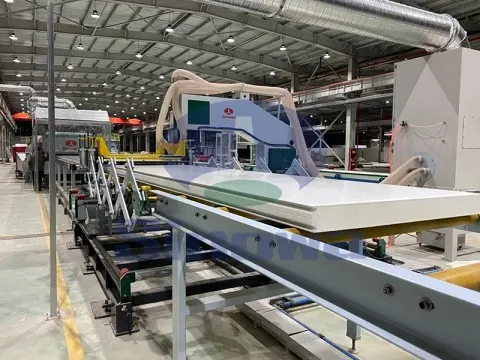
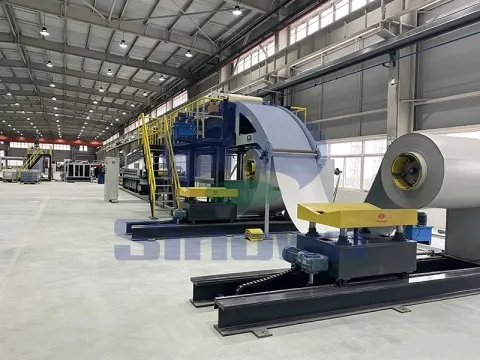
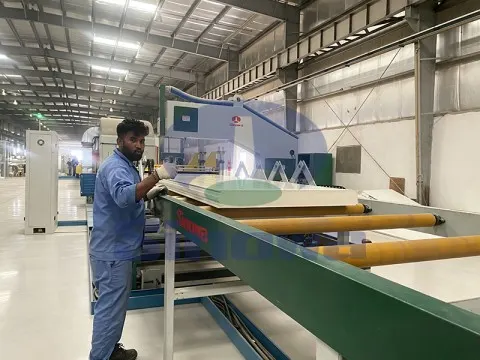
Gallery of Continuous PU Sandwich Panel Line
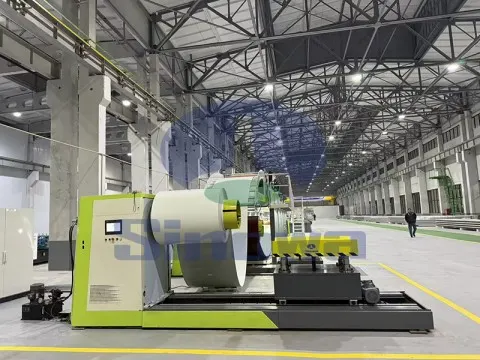
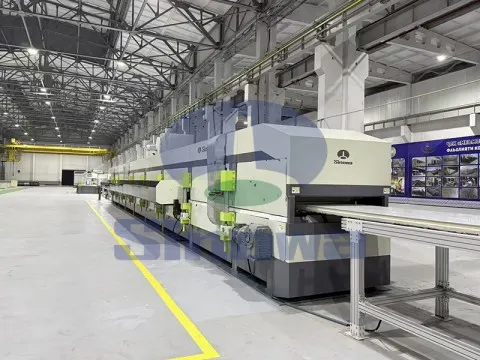
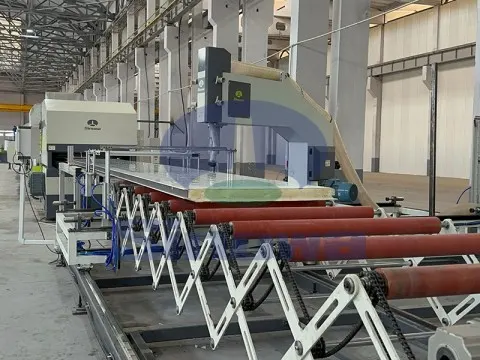
Tags: continuous pu sandwich panel line, continuous pu sandwich panel line manufacturer, continuous pu sandwich panel line supplier, china continuous pu sandwich panel line, continuous pu sandwich panel line for sale
-
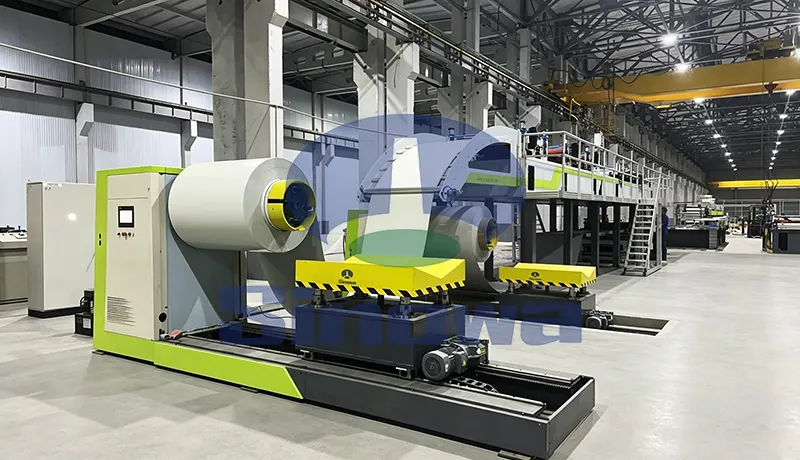
The PU sandwich panel line is a core production setup for making high-performance building insulation panels. This professional PU sandwich panel production line features automated operation to streamline the whole manufacturing process efficiently. Every component of the polyurethane sandwich panel line is precisely calibrated to ensure consistent panel thickness and structural stability. A well-maintained polyurethane sandwich panel production line can greatly boost production efficiency while reducing manual operation errors. The continuous PU sandwich panel line adapts to diverse production demands for different panel sizes and surface styles. With advanced molding technology, the PIR sandwich panel line produces panels with excellent heat preservation and sound insulation properties. Stable running of the PIR sandwich panel production line guarantees reliable product quality for various construction and industrial application scenarios.
-
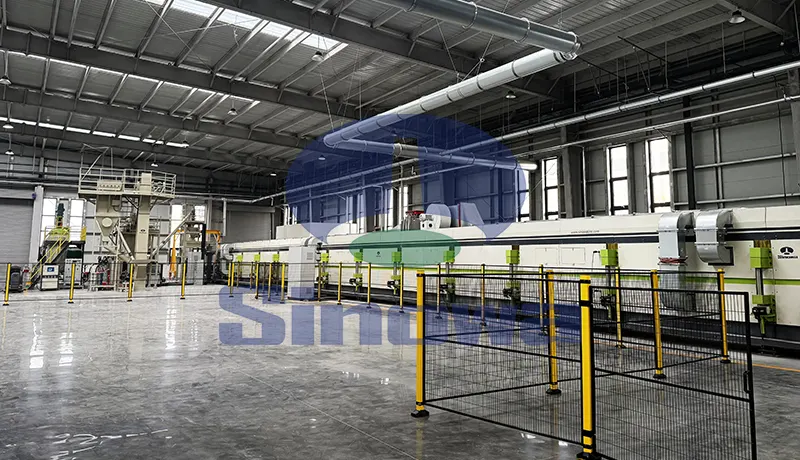
A phenolic insulation board production line serves as the core equipment for manufacturing high-performance thermal insulation building materials. This phenolic insulation panel production line integrates material mixing, foaming, molding and cutting processes to ensure continuous and stable production efficiency. Every operational link of the insulation board production line is precisely calibrated to produce uniform and durable insulation boards. The automated design of the insulation panel production line effectively reduces manual intervention and improves product consistency. Proper maintenance of the phenolic board production line can greatly extend its service life and maintain steady production output. With optimized structural design, the phenolic panel production line adapts to various production demands and delivers high-quality finished products for thermal insulation engineering applications.
-
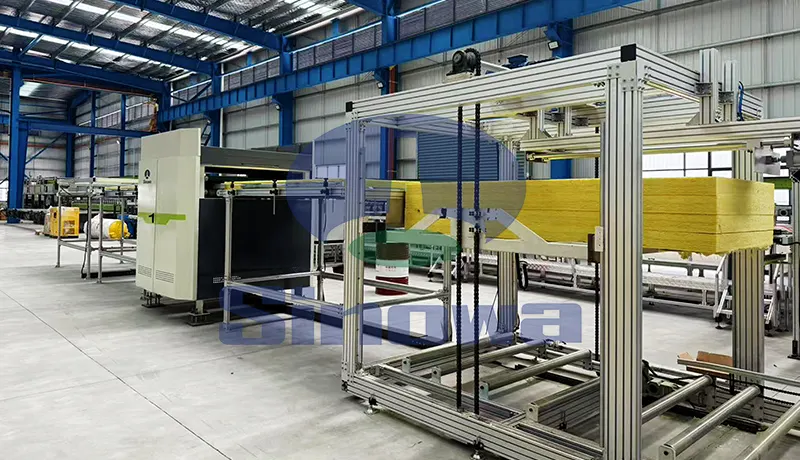
A professional rockwool sandwich panel line serves as the core equipment for producing high-performance building panels. This rockwool sandwich panel production line integrates feeding, laminating and forming processes to ensure stable and efficient production. The well-structured rock wool sandwich panel line can process raw rockwool materials into panels with excellent thermal and sound insulation properties. Operators can adjust the running parameters of the rock wool sandwich panel production line to manufacture panels of different thicknesses and specifications. The automated design of the mineral wool sandwich panel production line greatly reduces manual operation errors and improves product consistency. Regular maintenance of the mineral wool sandwich panel line is essential to sustain long-term operational efficiency and guarantee qualified finished panels for diverse construction applications.