Building Sandwich Panel Machine
Publication Date: Oct 7, 2026
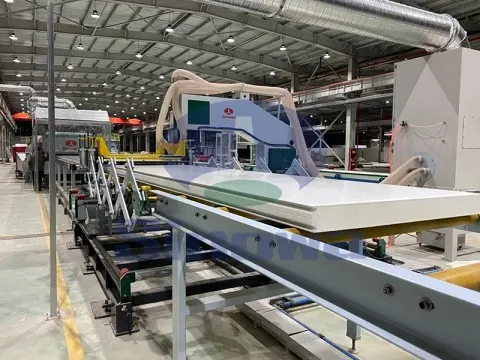
Building sandwich panel machines are integrated automated production systems for manufacturing composite building panels. They integrate material feeding, forming, laminating, curing and cutting processes, delivering lightweight, high-strength insulation panels widely used in modern construction projects.
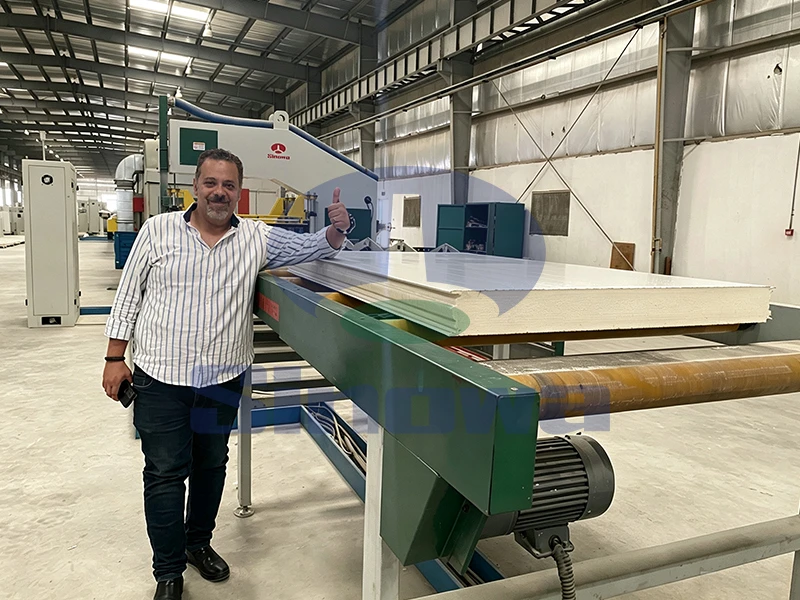
Building sandwich panel machines serve as the core automated equipment for producing composite sandwich panels, which have become indispensable lightweight building materials in modern architectural construction. These machines adopt a fully integrated continuous production mode, integrating multiple independent functional modules into a cohesive production line to complete the whole manufacturing process of sandwich panels from raw material processing to finished product molding. Unlike traditional discrete processing equipment, this integrated design realizes synchronous operation of each production link, effectively avoiding production errors and efficiency losses caused by manual docking between separate processes. The fundamental working logic of the machine lies in compounding two layers of rigid surface materials with lightweight insulating core materials through precise mechanical extrusion, constant temperature curing and stable lamination, so as to form integrated building panels that combine structural stability and thermal insulation performance. With the upgrading of building energy-saving and lightweight construction demands, modern sandwich panel machines have gradually realized adaptive adjustment of multiple materials and process parameters, greatly expanding the application scope of finished panels and meeting the diversified construction needs of different building scenarios.
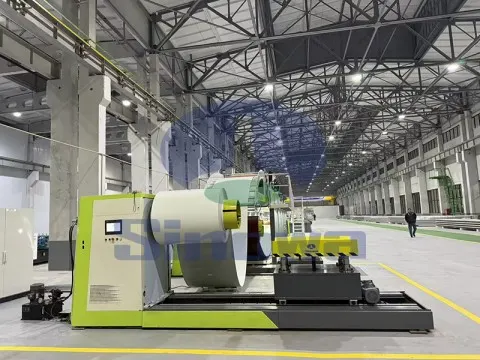
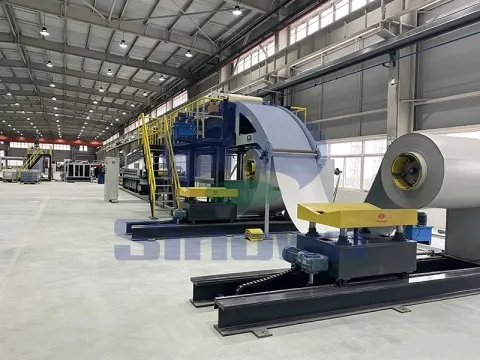
The overall structural composition of a building sandwich panel machine includes multiple collaborative functional units, each undertaking independent and irreplaceable production tasks to ensure standardized and continuous panel production. The raw material pretreatment and conveying unit is the starting point of the entire production line, mainly responsible for orderly unwinding, leveling and conveying of surface layer raw materials such as metal sheets, while completing preliminary cleaning and flatness correction of material surfaces. This unit is equipped with synchronous transmission structures to ensure stable and uniform material feeding speed, preventing material deviation or wrinkling in the subsequent forming process. The core material processing and feeding unit is specially designed for different types of insulating core materials, realizing adaptive sorting, cutting and continuous laying of bulk or plate core materials. It can flexibly adjust the feeding thickness and density of core materials according to production requirements, laying a foundation for the consistent thermal insulation performance of finished panels. All structural units are installed on an integrated stable frame, which effectively reduces mechanical vibration during high-speed operation and ensures the overall operational stability of the equipment for long-term continuous production.
The roll forming system is a key functional module that determines the surface molding quality and structural characteristics of sandwich panels. After the surface metal materials are conveyed into the system, they pass through multiple groups of precision roller sets with different forming profiles, and complete gradual bending, embossing and shaping through mechanical pressure. The multi-stage rolling process avoids one-time excessive extrusion that may cause material deformation or surface damage, ensuring the flatness and dimensional accuracy of the panel surface. The rolling parameters of the system can be freely adjusted according to the required panel specifications, realizing flexible switching of different plate types and structural profiles. In addition, the system is equipped with automatic correction devices, which can real-time monitor the material conveying trajectory and fine-tune the roller gap and pressure, effectively solving the problem of material offset during long-distance transmission. A high-precision forming effect not only improves the appearance quality of finished panels but also enhances the assembly matching degree between panels in construction applications, optimizing the overall installation efficiency of building envelope structures.
Gluing and composite lamination technology is the core process that realizes the integrated molding of sandwich panels, directly affecting the bonding firmness and overall structural stability of multi-layer materials. The machine’s automatic gluing system adopts precision quantitative coating design, which can evenly spray adhesive on the inner surface of upper and lower surface plates, realizing consistent glue thickness and coverage without local accumulation or missing coating. This uniform gluing mode ensures that the core material and surface materials can form a tight bonding interface, avoiding hollowing or delamination of panels in later use. After gluing, the surface plates and core materials are accurately stacked and sent to the lamination unit, where multi-group pressure rollers apply uniform and stable mechanical pressure to fit the multi-layer structures closely. The synchronous transmission of the lamination unit ensures that the material moving speed matches the pressing progress, maintaining the flatness of the composite structure and preventing dislocation and warping of the panel layers during lamination.
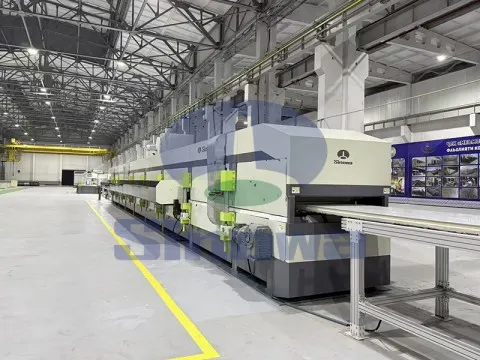
Constant temperature thermal curing is an essential link to stabilize the bonding performance and comprehensive quality of sandwich panels, and the curing system of the machine provides a stable temperature environment for adhesive solidification and core material shaping. The sealed curing chamber adopts circulating temperature control design, which can form a uniform thermal field inside the equipment and avoid local temperature difference leading to inconsistent curing effect of panels. In the curing process, the adhesive between layers completes chemical cross-linking and solidification under constant temperature conditions, forming a high-strength bonding structure, while the core material is further shaped and stabilized to maintain uniform thickness and internal structure. The curing time and temperature can be intelligently adjusted according to different adhesive types and core material characteristics, adapting to the curing requirements of various composite materials. Reasonable thermal curing treatment can significantly improve the weather resistance and structural durability of finished panels, reducing the probability of layer separation and performance attenuation in long-term building use.
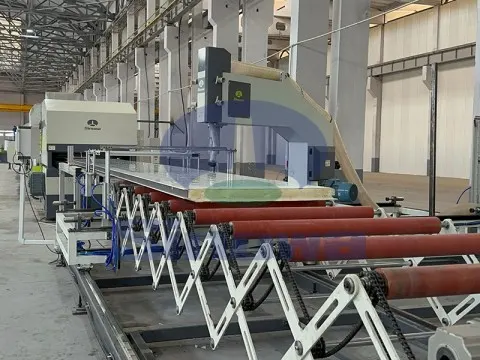
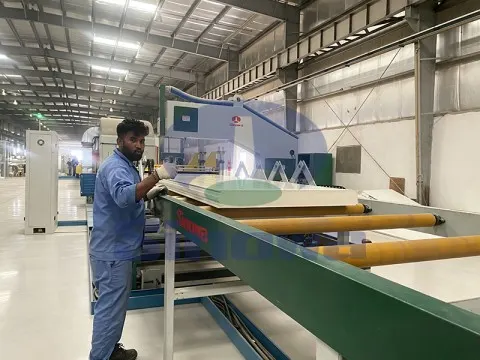
The fixed-length cutting and post-processing system undertakes the final shaping and finishing work of sandwich panel finished products, realizing standardized sizing and high-quality surface treatment of continuous composite panels. After the cured integrated panel is conveyed out of the curing chamber, the high-precision cutting device automatically cuts the panel into the required length according to preset parameters, with smooth and neat cutting sections without burrs or deformation. The cutting system supports flexible setting of different sizing parameters, meeting the customized production requirements of panels for different building structures. Subsequently, the surface post-processing unit completes fine trimming of panel edges and surface defect inspection, removing minor processing residues generated in the production process. Some advanced equipment is also equipped with surface protection film laminating functions, which can effectively protect the panel surface from scratches and pollution during transportation and installation, ensuring the integrity of the finished product’s appearance and performance.
Building sandwich panel machines are compatible with a variety of core and surface materials, showing strong production flexibility and market adaptability to meet the diverse functional needs of building envelopes. In terms of core materials, the equipment can adapt to lightweight insulating materials including polystyrene foam, polyurethane foam, rock wool and glass wool, covering the production requirements of thermal insulation, fireproof and sound-insulation panels. For rigid plate core materials, the equipment realizes neat arrangement and continuous feeding through automatic sorting structures, while for foaming core materials, it supports on-site uniform foaming and filling to ensure the continuity and uniformity of the core structure. In terms of surface materials, it can match metal sheets of different textures and thicknesses, and can also adapt to partial non-metal decorative surface materials. This multi-material compatibility enables a single device to produce multiple types of sandwich panels, effectively reducing equipment investment costs for production enterprises and improving the comprehensive utilization rate of production equipment.
Automation and intelligent control are the core advantages of modern building sandwich panel machines, which greatly optimize production efficiency and product quality stability. The equipment adopts integrated programmable control systems, which can centrally set, adjust and monitor all production parameters including feeding speed, gluing volume, lamination pressure, curing temperature and cutting size. Operators only need to input production specifications through the operating interface, and the equipment can automatically complete the whole production process, reducing the dependence on manual operation skills. The real-time monitoring system can track the operating status of each functional unit in real time, automatically identify abnormal conditions such as material blockage, parameter deviation and equipment failure, and trigger early warning and automatic protection mechanisms. The intelligent parameter memory function can store the production parameters of conventional panel specifications, realizing one-click switching of different production modes and effectively improving production efficiency while ensuring the consistency of each batch of finished panel quality.
The panels produced by building sandwich panel machines have prominent comprehensive performance advantages, making them widely applicable in multiple building fields. The composite structure of thin surface layer and lightweight core layer endows the panels with ultra-light weight, which can effectively reduce the self-weight of building envelopes, lower the load-bearing pressure of building main structures, and save overall construction costs. At the same time, the integrated composite molding structure gives the panels high structural strength and impact resistance, which can adapt to the external force changes and environmental changes in building use. In terms of functional performance, different core materials endow the panels with excellent thermal insulation, fire resistance, sound insulation and heat preservation effects, effectively improving the energy-saving performance and comfort of buildings. These advantages make the panels widely used in industrial plant enclosures, warehouse buildings, clean engineering spaces, cold storage insulation structures and temporary building facilities, becoming a key material for modern lightweight and energy-saving buildings.
With the continuous development of the construction industry towards energy conservation, environmental protection and high efficiency, building sandwich panel machines are also constantly upgrading and iterating in performance and technology. The current equipment development trend focuses on energy-saving optimization, environmental protection production and high-precision intelligent manufacturing. New generation equipment optimizes the heating and transmission structure, effectively reducing energy consumption in the production process and realizing green and low-carbon production. At the same time, the equipment’s precision control level is further improved, realizing more accurate control of material compounding and molding, and further improving the dimensional accuracy and performance stability of finished panels. In addition, the equipment’s adaptive production capacity is continuously enhanced, which can meet the production needs of high-performance customized panels for special building scenarios. As the demand for prefabricated buildings continues to grow, building sandwich panel machines will play a more important role in the field of building material production, promoting the standardized and efficient development of the construction industry.
Gallery of Building Sandwich Panel Machine
Tags: building sandwich panel machine, building sandwich panel machine manufacturer, building sandwich panel machine supplier, china building sandwich panel machine, building sandwich panel machine for sale
https://www.sandwichpanelmachinery.com/blog/building-sandwich-panel-machine.html
-
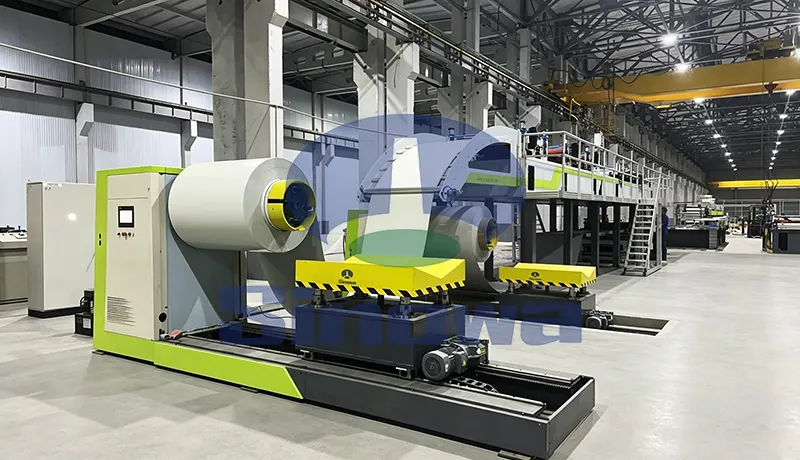
The PU sandwich panel line is a core production setup for making high-performance building insulation panels. This professional PU sandwich panel production line features automated operation to streamline the whole manufacturing process efficiently. Every component of the polyurethane sandwich panel line is precisely calibrated to ensure consistent panel thickness and structural stability. A well-maintained polyurethane sandwich panel production line can greatly boost production efficiency while reducing manual operation errors. The continuous PU sandwich panel line adapts to diverse production demands for different panel sizes and surface styles. With advanced molding technology, the PIR sandwich panel line produces panels with excellent heat preservation and sound insulation properties. Stable running of the PIR sandwich panel production line guarantees reliable product quality for various construction and industrial application scenarios.
-
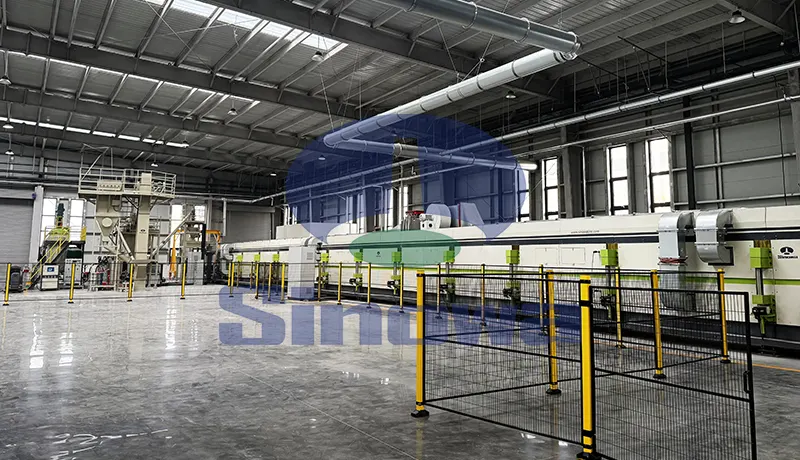
A phenolic insulation board production line serves as the core equipment for manufacturing high-performance thermal insulation building materials. This phenolic insulation panel production line integrates material mixing, foaming, molding and cutting processes to ensure continuous and stable production efficiency. Every operational link of the insulation board production line is precisely calibrated to produce uniform and durable insulation boards. The automated design of the insulation panel production line effectively reduces manual intervention and improves product consistency. Proper maintenance of the phenolic board production line can greatly extend its service life and maintain steady production output. With optimized structural design, the phenolic panel production line adapts to various production demands and delivers high-quality finished products for thermal insulation engineering applications.
-
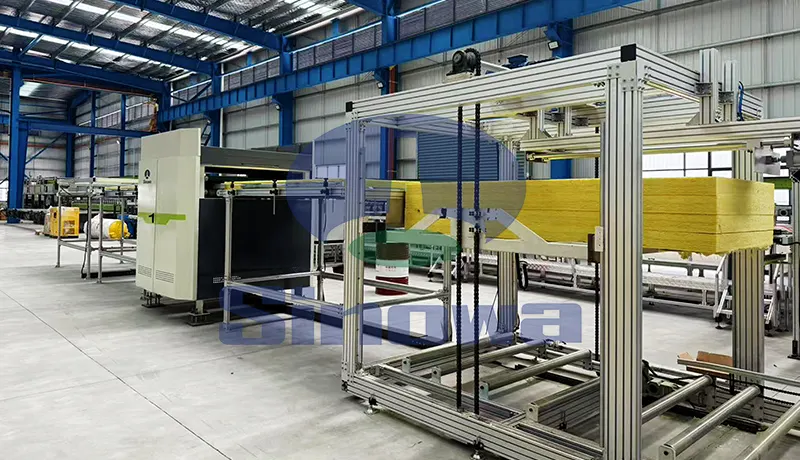
A professional rockwool sandwich panel line serves as the core equipment for producing high-performance building panels. This rockwool sandwich panel production line integrates feeding, laminating and forming processes to ensure stable and efficient production. The well-structured rock wool sandwich panel line can process raw rockwool materials into panels with excellent thermal and sound insulation properties. Operators can adjust the running parameters of the rock wool sandwich panel production line to manufacture panels of different thicknesses and specifications. The automated design of the mineral wool sandwich panel production line greatly reduces manual operation errors and improves product consistency. Regular maintenance of the mineral wool sandwich panel line is essential to sustain long-term operational efficiency and guarantee qualified finished panels for diverse construction applications.