Aluminum Sandwich Panel Machine
Publication Date: Oct 8, 2026
This automated aluminum sandwich panel machine fabricates durable composite panels via continuous feeding, laminating, cooling and cutting, ensuring high efficiency and uniform finished panel quality.
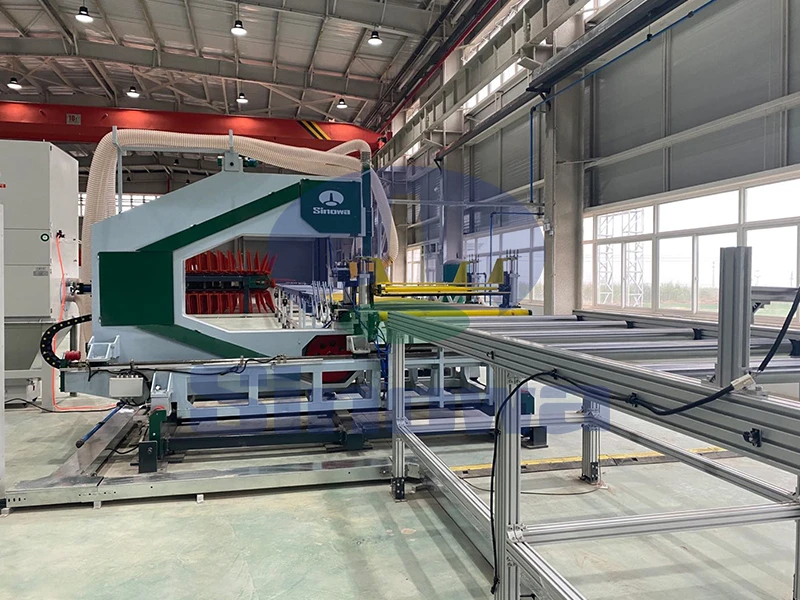
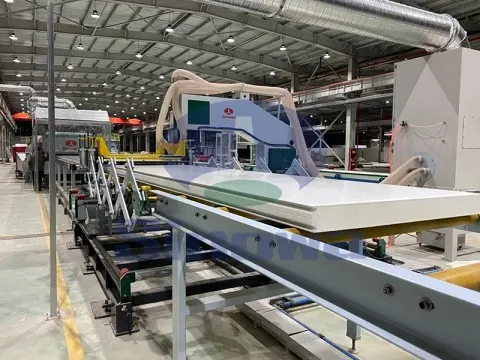
The aluminum sandwich panel machine is a fully integrated automated production system engineered to manufacture high-performance composite panels with a layered sandwich structure. At its core, the equipment is designed to bond two thin aluminum outer sheets with a lightweight functional core material, creating composite panels that balance structural rigidity, low weight and versatile usability. Unlike traditional discrete manufacturing equipment, this machine supports continuous inline production, merging multiple independent processing procedures into one streamlined workflow. It eliminates the inefficiencies of manual segmented operation, greatly boosting production consistency and output capacity. Every functional module of the equipment is precisely calibrated to coordinate with each other, ensuring that each step from raw material input to finished product output maintains stable operating states. This systematic design makes it the core processing equipment for modern lightweight building composite panel production, widely adapted to diversified manufacturing demands for architectural and decorative panel products.
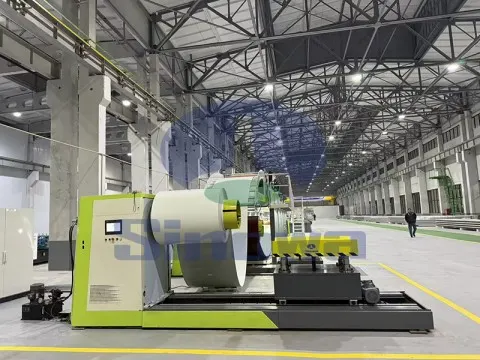
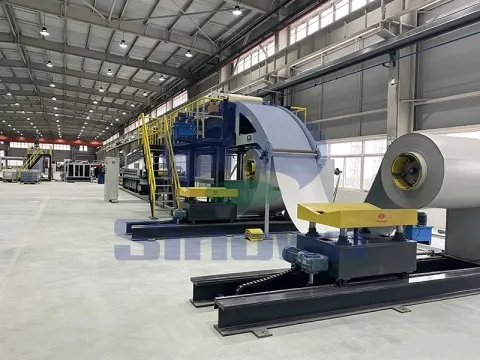
Raw material feeding and pretreatment form the foundational working stage of the aluminum sandwich panel machine, laying a critical foundation for high-quality panel molding. The system is equipped with automatic unwinding units for aluminum coil materials, which steadily release aluminum sheets at a constant speed to avoid material deviation and tension fluctuation during operation. Meanwhile, professional surface pretreatment devices conduct thorough cleaning and corona treatment on the surface of aluminum sheets, removing dust, oil stains and oxide layers that may affect bonding performance. This special surface processing technology effectively enhances the surface adhesion of aluminum materials, enabling the subsequent adhesive and core materials to form tighter and more durable composite connections. In addition, the machine features automatic material alignment and deviation correction functions in the feeding stage, which can fine-tune the material position in real time to ensure the upper and lower aluminum sheets remain completely parallel and consistent in the follow-up lamination process, avoiding defective products caused by material misalignment.
Adhesive coating and core material laying are key intermediate processes that determine the bonding quality of aluminum sandwich panels. After pretreatment, the aluminum sheets enter the automatic gluing unit, which applies a uniform and quantitative layer of high-performance adhesive on the inner surface of the aluminum panels. The gluing system adopts precision spray or roller coating technology to control the coating thickness evenly, preventing problems such as glue accumulation, missing coating or uneven thickness that may lead to local debonding of the panels. While completing aluminum sheet gluing, the synchronous core material laying device accurately paves lightweight core materials between the two layers of aluminum sheets. The core materials can be flexibly replaced and adjusted according to production needs, adapting to different panel performance requirements. The whole laying process maintains consistent density and flatness of the core layer, ensuring that the internal structure of each finished panel is uniform, and avoiding structural defects such as hollowing and uneven stress distribution.
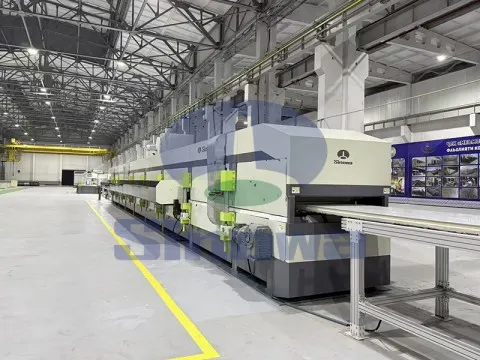
Thermal lamination is the core molding procedure of the entire production line, responsible for integrating aluminum sheets and core materials into an integral composite structure. The machine is equipped with a precision constant-temperature heating and rolling system, which provides stable and controllable thermal conditions for composite molding. During operation, the laminated semi-finished panels pass through groups of heated pressure rollers, and the combined effect of constant temperature and uniform pressure promotes the rapid curing of the adhesive and the close fusion of all structural layers. The temperature and pressure parameters of the lamination system can be finely adjusted according to different core materials and aluminum sheet specifications, realizing personalized molding control. The multi-stage rolling design ensures that the pressure acts evenly on the entire panel surface, effectively eliminating gaps between layers and enabling the aluminum sheets and core materials to form an integrated structure with excellent overall stability. This process endows the sandwich panels with outstanding bonding strength and structural firmness.
Calendering and cooling processes follow thermal lamination to finalize the flatness and dimensional stability of aluminum sandwich panels. After high-temperature lamination, the newly formed panels have residual temperature and slight structural stress, which may cause surface warping or uneven thickness if not processed in time. The machine’s multi-group calendering roller system conducts fine leveling on the panels, accurately calibrating the overall thickness and surface flatness of the products to ensure consistent dimensional accuracy of each batch of panels. Subsequently, the intelligent circulating cooling system gradually reduces the panel temperature through staged cooling treatment, which effectively releases internal structural stress generated during high-temperature processing. The gradual cooling mode avoids panel deformation, cracking or surface wrinkling caused by rapid temperature change, fully locking the molded structural state of the panels and improving the overall flatness and appearance quality of finished products.
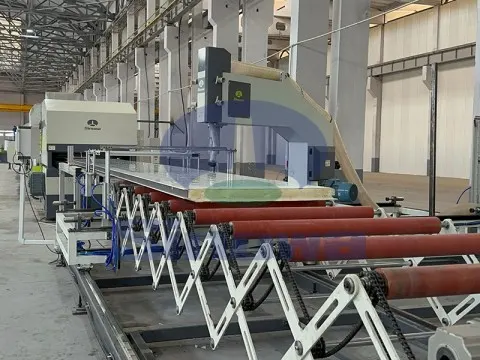
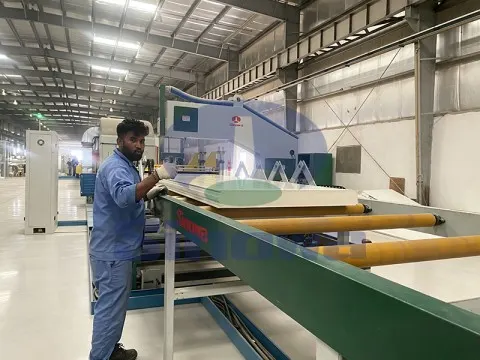
Automatic cutting and finishing procedures complete the final shaping of aluminum sandwich panels, realizing standardized finished product output. After cooling and shaping, the continuous long strip of composite panels is transported to the precision cutting unit, which automatically identifies and cuts the panels into customized lengths according to preset production parameters. The cutting system adopts high-precision servo control technology, ensuring smooth and neat cutting sections without burrs, cracks or edge warping, which greatly reduces subsequent secondary processing workload. In addition, the equipment is equipped with edge trimming and surface inspection auxiliary functions, which can trim irregular edges of the panels and preliminarily screen out products with surface defects or dimensional errors. This integrated finishing process ensures that all finished panels meet unified appearance and dimensional standards, improving the overall yield rate of production and realizing one-time molding of qualified products.
The aluminum sandwich panel machine boasts excellent operational automation and intelligent control performance, greatly reducing manual intervention and production errors. The entire production process is centrally controlled by an intelligent operating system, with all parameters including feeding speed, heating temperature, lamination pressure and cutting length adjustable through a visual operation interface. The system supports real-time monitoring of the operating status of each module, automatically identifying abnormal conditions such as material blockage, parameter deviation and equipment failure, and triggering timely alarm and protection mechanisms. The highly automated design simplifies production operation procedures, reduces the technical threshold for operators, and effectively avoids quality fluctuations caused by human operation errors. Meanwhile, the equipment supports continuous uninterrupted production, realizing seamless connection between each process link and significantly improving production efficiency and batch production capacity.
The equipment features strong structural adaptability and product flexibility, meeting diversified production and application demands. By adjusting the operating parameters and matching different material feeding modules, the machine can produce aluminum sandwich panels with different thicknesses, surface textures and structural configurations. It can adapt to the production of flat conventional panels and customized special-shaped panels, covering multiple product types required for architectural decoration, commercial signage, interior partition and other scenarios. The modular structural design of the equipment also facilitates daily maintenance and function upgrading. Each functional module is independent and interoperable, allowing targeted inspection, repair and replacement of worn parts without affecting the overall operating performance of the production line. This flexible and maintainable design extends the service life of the equipment and improves the practicability of long-term production operation.
Panels produced by the aluminum sandwich panel machine possess superior comprehensive performance, occupying an important position in modern building material applications. The unique layered composite structure gives the panels ultra-light weight while maintaining high structural strength, making them easier to transport, install and construct compared with traditional solid building panels. The integrated bonding structure provides excellent weather resistance, anti-corrosion performance and surface flatness, enabling the panels to maintain stable appearance and structural performance in various complex use environments. In addition, the finished panels have good sound insulation, heat preservation and shock resistance, with neat and diverse surface effects, which can meet both functional use needs and aesthetic decoration requirements. These excellent properties make the products widely applicable to exterior wall cladding, interior decoration, industrial plant partition and commercial display facilities.
With the continuous upgrading of modern building and decoration industries, the aluminum sandwich panel machine is evolving towards higher intelligence, energy efficiency and precision. The latest equipment optimization focuses on improving energy utilization efficiency, adopting energy-saving heating and circulating systems to reduce energy consumption in continuous production. At the same time, the intelligent data management function is continuously upgraded, which can record and analyze production data in real time, help optimize production parameters, stabilize product quality and reduce material waste. The continuous technological iteration of the equipment further improves the automation level and production precision of the entire production line, promotes the standardized and large-scale development of aluminum sandwich panel manufacturing, and provides efficient and reliable equipment support for the innovation and application of modern lightweight composite building materials.
Gallery of Aluminum Sandwich Panel Machine
Tags: aluminum sandwich panel machine, aluminum sandwich panel machine manufacturer, aluminum sandwich panel machine supplier, china aluminum sandwich panel machine, aluminum sandwich panel machine for sale
https://www.sandwichpanelmachinery.com/blog/aluminum-sandwich-panel-machine.html
-
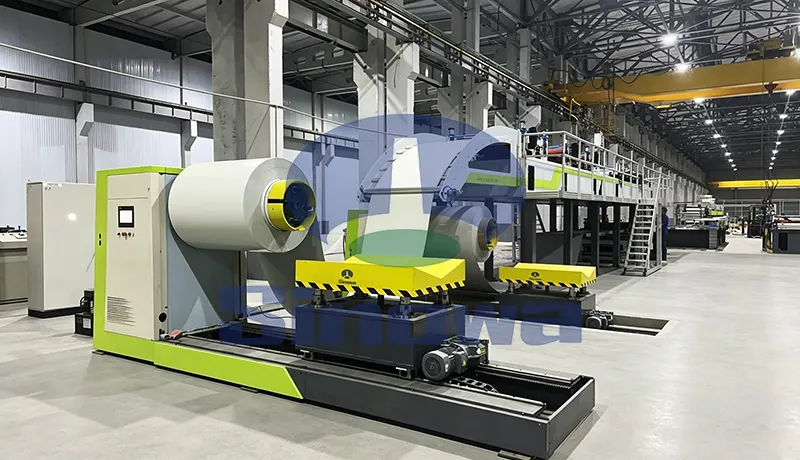
The PU sandwich panel line is a core production setup for making high-performance building insulation panels. This professional PU sandwich panel production line features automated operation to streamline the whole manufacturing process efficiently. Every component of the polyurethane sandwich panel line is precisely calibrated to ensure consistent panel thickness and structural stability. A well-maintained polyurethane sandwich panel production line can greatly boost production efficiency while reducing manual operation errors. The continuous PU sandwich panel line adapts to diverse production demands for different panel sizes and surface styles. With advanced molding technology, the PIR sandwich panel line produces panels with excellent heat preservation and sound insulation properties. Stable running of the PIR sandwich panel production line guarantees reliable product quality for various construction and industrial application scenarios.
-
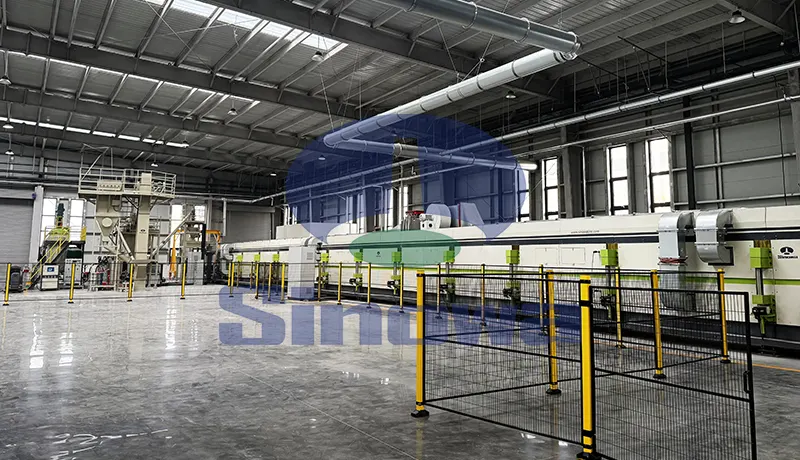
A phenolic insulation board production line serves as the core equipment for manufacturing high-performance thermal insulation building materials. This phenolic insulation panel production line integrates material mixing, foaming, molding and cutting processes to ensure continuous and stable production efficiency. Every operational link of the insulation board production line is precisely calibrated to produce uniform and durable insulation boards. The automated design of the insulation panel production line effectively reduces manual intervention and improves product consistency. Proper maintenance of the phenolic board production line can greatly extend its service life and maintain steady production output. With optimized structural design, the phenolic panel production line adapts to various production demands and delivers high-quality finished products for thermal insulation engineering applications.
-
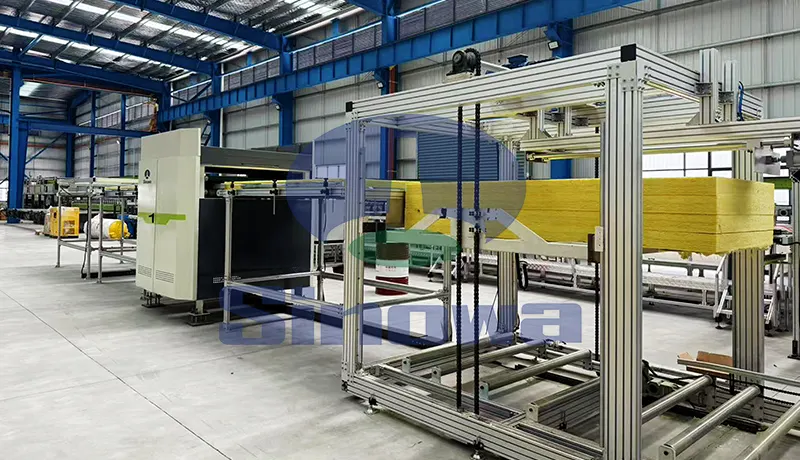
A professional rockwool sandwich panel line serves as the core equipment for producing high-performance building panels. This rockwool sandwich panel production line integrates feeding, laminating and forming processes to ensure stable and efficient production. The well-structured rock wool sandwich panel line can process raw rockwool materials into panels with excellent thermal and sound insulation properties. Operators can adjust the running parameters of the rock wool sandwich panel production line to manufacture panels of different thicknesses and specifications. The automated design of the mineral wool sandwich panel production line greatly reduces manual operation errors and improves product consistency. Regular maintenance of the mineral wool sandwich panel line is essential to sustain long-term operational efficiency and guarantee qualified finished panels for diverse construction applications.