Steel Sandwich Panel Machine
Publication Date: Oct 8, 2026
Steel sandwich panel machines are automated production lines for manufacturing insulated composite building panels, delivering efficient, high-precision panel fabrication for diverse modern construction and industrial projects.
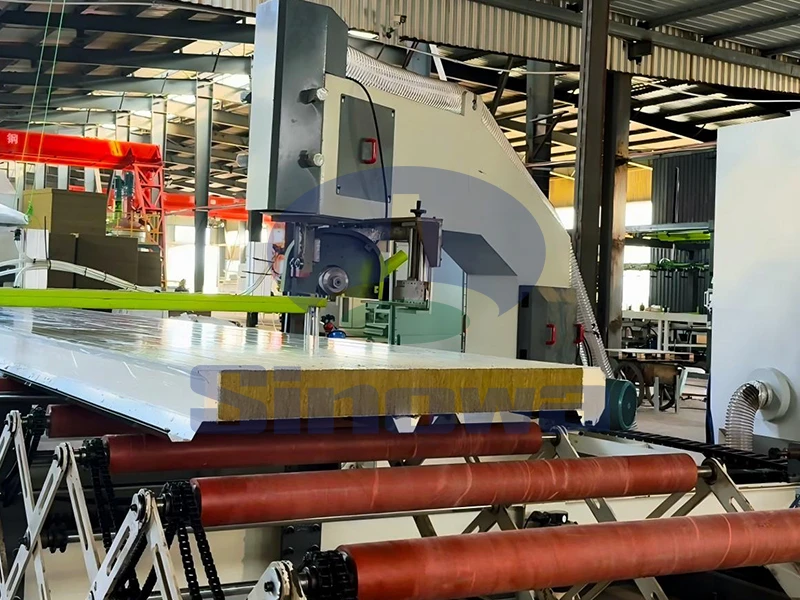
Steel sandwich panel machines serve as core automated production systems tailored for manufacturing composite insulated panels that integrate metal surface layers and functional inner cores. Unlike traditional discrete processing equipment that relies on manual intervention and segmented operation, modern machines adopt a fully continuous streamlined production mode, covering all procedures from raw material feeding to finished panel cutting. The entire production process realizes automated operation of every key link, effectively eliminating the instability caused by human operation and greatly improving production consistency. These machines are designed to process various metal coil materials and match different insulating core materials, making them highly adaptable to diversified panel production demands in the building materials industry. Their integrated structural design simplifies production workflows, condenses multiple independent processing steps into one continuous assembly line, and lays a solid foundation for large-scale and standardized production of building insulation panels.
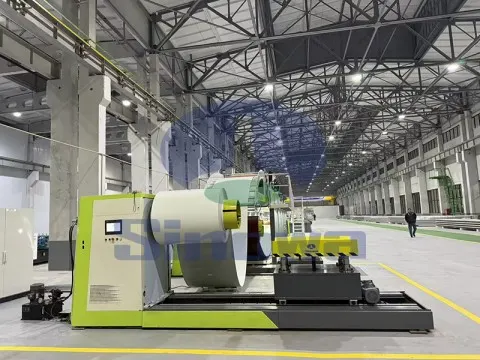
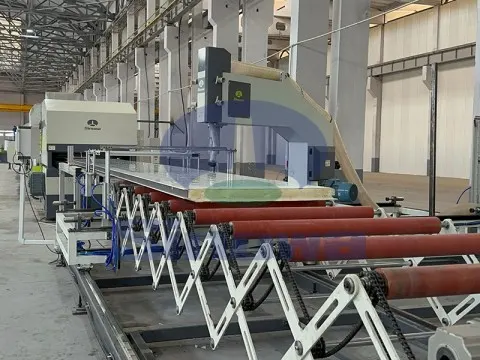
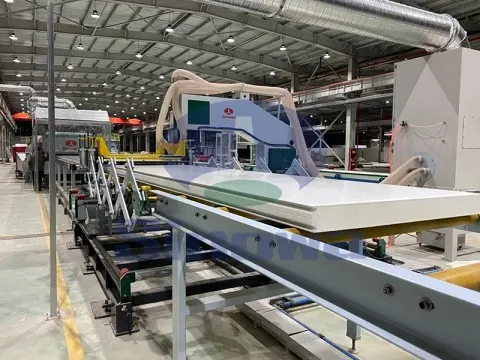
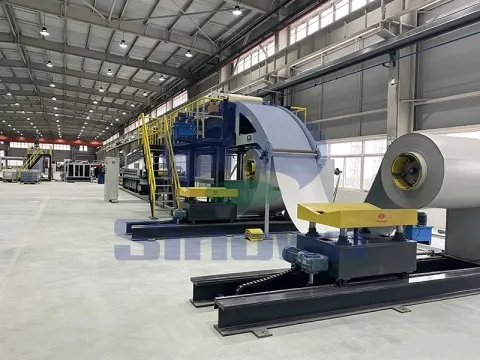
The overall working logic of steel sandwich panel machines follows a scientific and orderly production sequence, ensuring each production link is closely connected and precisely coordinated. The production process starts with automatic feeding and pretreatment of metal coils, where the equipment flattens, cleans and fine-tunes the metal sheets to remove surface impurities and eliminate material deformation, creating optimal processing conditions for subsequent forming and compounding. After pretreatment, the metal sheets enter the roll forming module, where gradient roller sets perform step-by-step micro-bending and shaping to form preset panel profiles, including trapezoidal, corrugated and flat edge structures. Subsequently, the machine quantitatively injects and lays the insulating core material between two layers of formed metal sheets, and completes integrated bonding and curing through constant temperature and pressure treatment. Finally, the continuous panel strip is cut into standard fixed-length finished products to complete the whole production cycle.
The roll forming system is one of the most critical functional modules of steel sandwich panel machines, determining the dimensional accuracy and structural stability of finished panels. This system is composed of dozens of precision roller groups arranged in gradient order, with each roller adopting customized contour design to adapt to different panel shape requirements. Different from one-time stamping forming which easily causes material damage and uneven stress, the progressive rolling forming method used by the machine realizes slow and uniform deformation of metal materials, effectively avoiding cracks, depressions and other defects on the panel surface. The precision-adjustable roller structure allows operators to flexibly adjust forming parameters according to production needs, realizing seamless switching between different panel specifications. Meanwhile, the system is equipped with automatic calibration devices to monitor the forming effect in real time and correct tiny deviations, ensuring that each batch of panels maintains consistent flatness and structural accuracy.
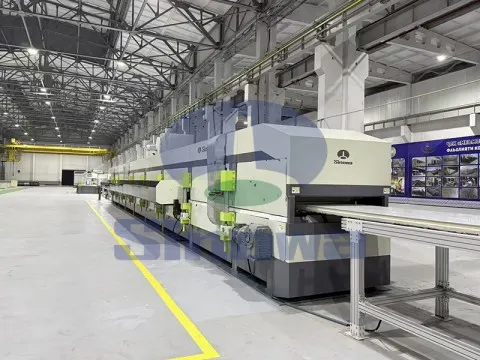
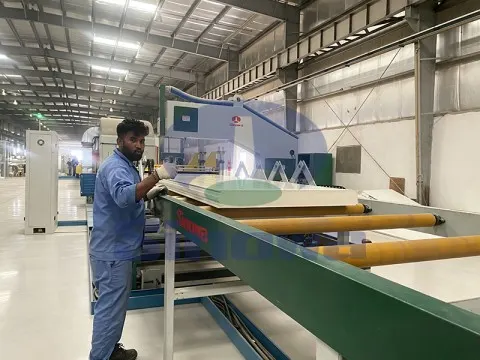
The laminating and curing module acts as the core link to ensure the composite performance of steel sandwich panels, directly affecting the bonding firmness and service life of finished products. This module relies on a stable double-belt pressing structure to clamp the formed metal sheets and intermediate insulating core materials, providing constant and uniform pressure throughout the compounding process. The built-in temperature control system can accurately adjust the curing temperature according to the characteristics of different core materials, ensuring that the core material fully foams and bonds closely with the metal layers without excessive thermal damage. The closed laminating environment avoids external dust and air interference, making the bonding interface of the panel tight and seamless. After high-precision pressure maintaining and constant temperature curing, the three-layer structure of the panel forms an integrated whole, with excellent overall rigidity and structural integrity, effectively preventing delamination and cracking during long-term use.
Steel sandwich panel machines support the production of multi-type composite panels by adapting to diverse core materials, meeting the functional needs of different application scenarios. Common matching core materials include polyurethane, rock wool and glass wool, each endowing the finished panel with unique performance advantages. Panels with polyurethane cores feature lightweight texture and excellent thermal insulation, suitable for conventional building enclosure structures. Rock wool and glass wool core panels have outstanding fire resistance and sound insulation properties, ideal for industrial workshops, public buildings and fire-proof key areas. The modular structural design of the machine enables quick switching of material feeding and laying systems, without complicated equipment transformation when replacing core materials. This flexible compatibility allows a single device to produce multiple functional panels, greatly enriching product categories and improving the comprehensive utilization rate of production equipment.
Automation and intelligent optimization are prominent advantages of modern steel sandwich panel machines, effectively reducing production costs and improving operational efficiency. The equipment is equipped with an integrated intelligent control system, through which operators can set production parameters such as panel thickness, length, forming speed and bonding pressure in a centralized manner. The system supports one-click start of full-process automatic production, realizing unmanned operation of feeding, forming, compounding, curing and cutting links. Built-in real-time monitoring sensors can track production status, identify abnormal parameters such as material blockage, temperature deviation and pressure instability, and trigger automatic alarm and protection mechanisms. This intelligent operation mode not only reduces the demand for on-site operators, but also minimizes production errors and material waste caused by manual misoperation, achieving stable and efficient batch production.
Finished panels produced by steel sandwich panel machines have comprehensive superior performance, covering structural, thermal and environmental indicators to adapt to complex usage environments. In terms of structural performance, the composite structure of metal surface and lightweight core material makes the panels light in weight but high in strength, with strong compression resistance and bending resistance, which can bear external wind pressure and structural loads stably. In terms of thermal performance, the dense insulating core layer effectively blocks heat conduction, achieving excellent heat preservation and heat insulation effects, which can significantly reduce the energy consumption of building temperature regulation. In addition, the integrated seamless structure of the panels has good waterproof and airtight performance, avoiding rainwater penetration and air leakage. The metal surface also has good corrosion resistance and weather resistance, maintaining stable performance in high temperature, humid and harsh outdoor environments for a long time.
Steel sandwich panel machines have extremely wide application coverage, running through multiple fields of modern construction and industrial engineering. In industrial construction, the produced panels are widely used in the wall and roof enclosure of steel structure workshops, warehouses and industrial plants, adapting to large-span and simple-structured industrial building needs. In cold chain and constant temperature engineering, the high-insulation panels are applied to cold storage, constant-temperature warehouses and fresh-keeping facilities, providing stable internal temperature environment for material storage. In special functional spaces such as clean rooms and purification workshops, the seamless and easy-to-clean panels meet the high hygiene and environmental control requirements of food processing, pharmaceutical and electronic manufacturing industries. They are also commonly used in temporary prefabricated buildings, municipal enclosure facilities and agricultural greenhouses, showing strong scene adaptability.
In terms of production efficiency and economic benefits, steel sandwich panel machines bring significant optimization to the panel manufacturing industry. The continuous streamlined production mode greatly shortens the single-panel production cycle, realizing uninterrupted batch production and greatly improving daily output compared with traditional intermittent production equipment. The precise material distribution and processing technology effectively reduces raw material loss, improving the utilization rate of metal plates and core materials. The highly automated operation reduces labor input and lowers long-term labor management costs. In addition, the standardized production process ensures stable and reliable product quality, reducing the defective rate and after-sales maintenance costs of finished panels. For building material manufacturers, this equipment effectively improves production scale, product quality and market competitiveness, bringing sustainable economic returns.
With the continuous upgrading of modern building industry demands, steel sandwich panel machines are evolving towards higher precision, stronger intelligence and richer functionality. The ongoing technological optimization focuses on improving the adaptive adjustment ability of the equipment, enabling it to adapt to more personalized panel specifications and special functional material production. The intelligent monitoring and data analysis functions are constantly improved to realize real-time statistics of production data, equipment operation status and product quality information, facilitating refined production management. Meanwhile, the equipment is optimized for energy-saving and environmental protection performance, reducing energy consumption and waste emission during operation. As the core supporting equipment of the prefabricated building industry, steel sandwich panel machines will continue to iterate and progress, providing more efficient and reliable production solutions for the development of modern green and prefabricated construction.
Gallery of Steel Sandwich Panel Machine
Tags: steel sandwich panel machine, steel sandwich panel machine manufacturer, steel sandwich panel machine supplier, china steel sandwich panel machine, steel sandwich panel machine for sale
https://www.sandwichpanelmachinery.com/blog/steel-sandwich-panel-machine.html
-
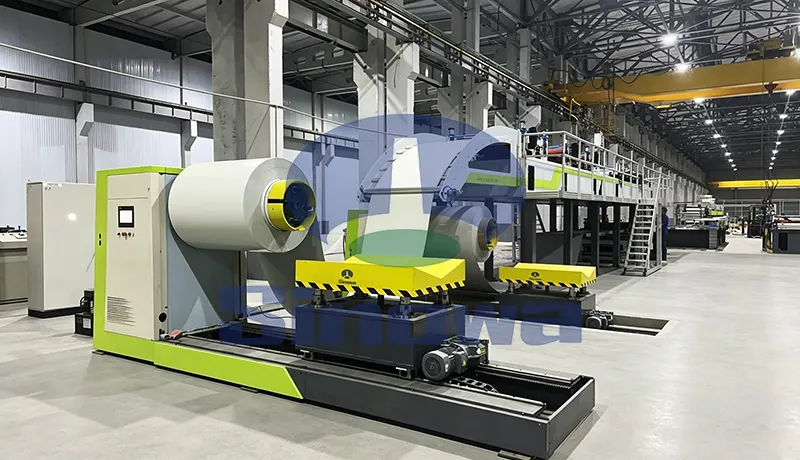
The PU sandwich panel line is a core production setup for making high-performance building insulation panels. This professional PU sandwich panel production line features automated operation to streamline the whole manufacturing process efficiently. Every component of the polyurethane sandwich panel line is precisely calibrated to ensure consistent panel thickness and structural stability. A well-maintained polyurethane sandwich panel production line can greatly boost production efficiency while reducing manual operation errors. The continuous PU sandwich panel line adapts to diverse production demands for different panel sizes and surface styles. With advanced molding technology, the PIR sandwich panel line produces panels with excellent heat preservation and sound insulation properties. Stable running of the PIR sandwich panel production line guarantees reliable product quality for various construction and industrial application scenarios.
-
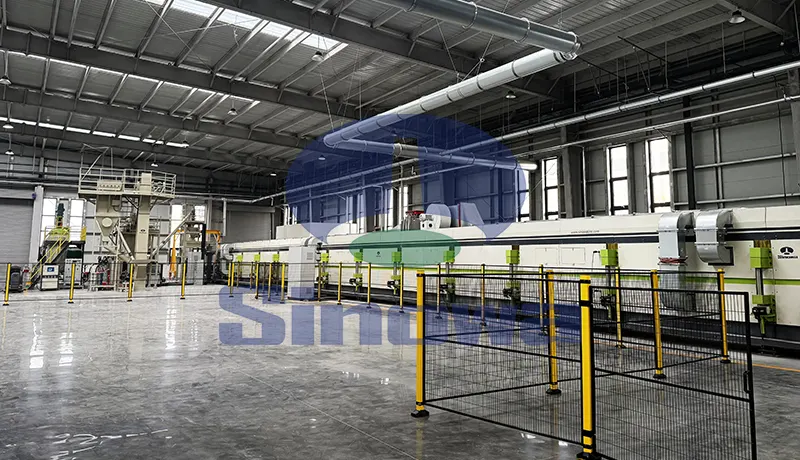
A phenolic insulation board production line serves as the core equipment for manufacturing high-performance thermal insulation building materials. This phenolic insulation panel production line integrates material mixing, foaming, molding and cutting processes to ensure continuous and stable production efficiency. Every operational link of the insulation board production line is precisely calibrated to produce uniform and durable insulation boards. The automated design of the insulation panel production line effectively reduces manual intervention and improves product consistency. Proper maintenance of the phenolic board production line can greatly extend its service life and maintain steady production output. With optimized structural design, the phenolic panel production line adapts to various production demands and delivers high-quality finished products for thermal insulation engineering applications.
-
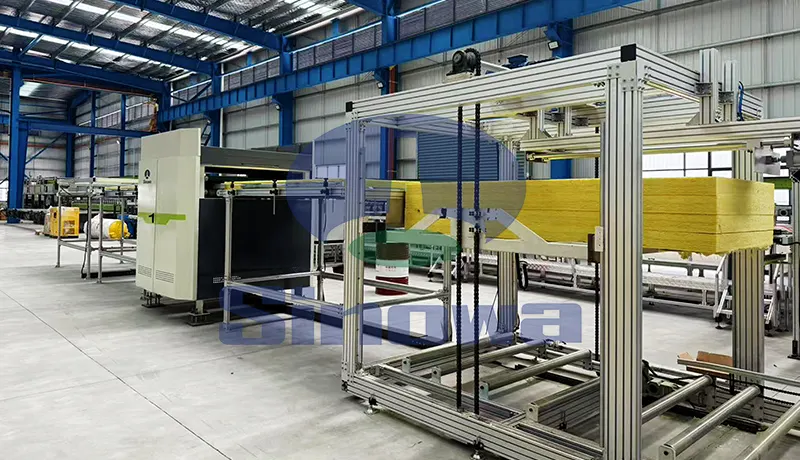
A professional rockwool sandwich panel line serves as the core equipment for producing high-performance building panels. This rockwool sandwich panel production line integrates feeding, laminating and forming processes to ensure stable and efficient production. The well-structured rock wool sandwich panel line can process raw rockwool materials into panels with excellent thermal and sound insulation properties. Operators can adjust the running parameters of the rock wool sandwich panel production line to manufacture panels of different thicknesses and specifications. The automated design of the mineral wool sandwich panel production line greatly reduces manual operation errors and improves product consistency. Regular maintenance of the mineral wool sandwich panel line is essential to sustain long-term operational efficiency and guarantee qualified finished panels for diverse construction applications.