Low Price Sandwich Panel Machine
Publication Date: Oct 7, 2026
Low price sandwich panel machines are cost-effective industrial equipment for producing insulated composite building panels. They balance basic automation, stable operation and low operational costs, ideal for small and medium manufacturers seeking affordable, functional panel production solutions.
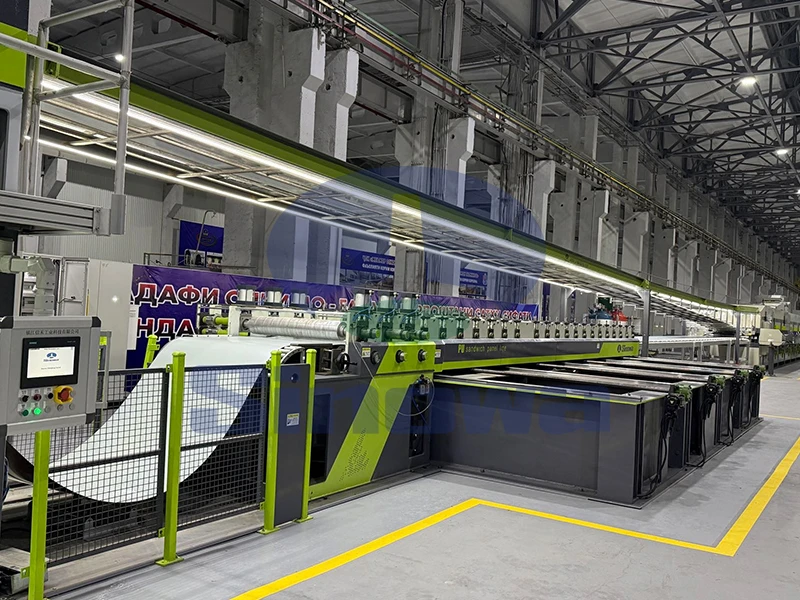
Low price sandwich panel machines stand out in the industrial equipment market for their exceptional cost-performance ratio, catering perfectly to the practical production needs of small-scale factories and emerging construction material enterprises. Unlike high-end customized production lines with redundant advanced functions, these cost-effective machines focus on core production capabilities, removing unnecessary sophisticated configurations that drive up costs while retaining all essential modules for standard sandwich panel manufacturing. The core design concept centers on practicality and efficiency, ensuring users can launch formal panel production with lower initial equipment investment. These machines are specially optimized for the production of common insulated sandwich panels with foam, rock wool and other conventional core materials, covering the mainstream panel types widely used in civil construction, temporary engineering and simple industrial buildings. Despite their accessible investment threshold, they do not compromise on basic operational stability, adopting mature and verified mechanical structures that have been polished through long-term industrial application. Each functional component is designed for universal adaptability, avoiding overly specialized accessories that are difficult to replace, which greatly lowers the threshold for equipment use and later adaptation for different production demands. For startup manufacturers and small production workshops with limited budget and flexible production requirements, this type of machine provides a viable and reliable production entry solution, effectively solving the problem of high investment barriers in traditional panel production equipment.
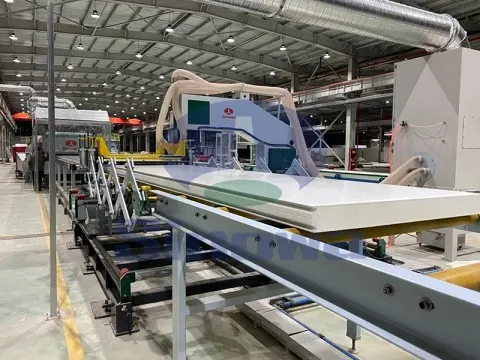
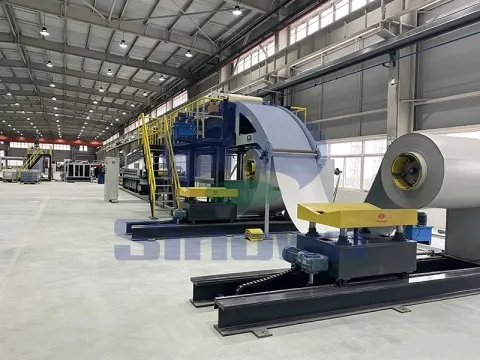
The overall structural design of low price sandwich panel machines is simple, reasonable and highly modular, which lays a solid foundation for stable operation and convenient daily maintenance. The whole equipment is composed of several relatively independent functional units including uncoiling mechanism, roll forming system, gluing device, laminating pressing system and fixed-length cutting mechanism, all arranged in a compact and orderly layout to save workshop space. The modular assembly design enables each functional unit to work independently and collaboratively, avoiding mutual interference between different production links. The main body of the machine adopts thickened steel frame welding structure, which has good overall rigidity and shock resistance, effectively reducing equipment vibration and deformation during long-term continuous operation. Transmission parts use mature gear and chain transmission structures with built-in wear-resistant and lubrication structures, which minimize mechanical friction loss and extend the service life of core components. All structural designs abandon redundant complex structures and prioritize simplicity and durability, which not only reduces the overall manufacturing cost of the equipment but also makes daily operation more stable. When individual parts fail, maintenance personnel can quickly locate the faulty module without disassembling the whole machine, greatly improving maintenance efficiency. This streamlined and practical structural design makes the equipment highly adaptable to various ordinary production workshop environments with limited space and basic operating conditions.
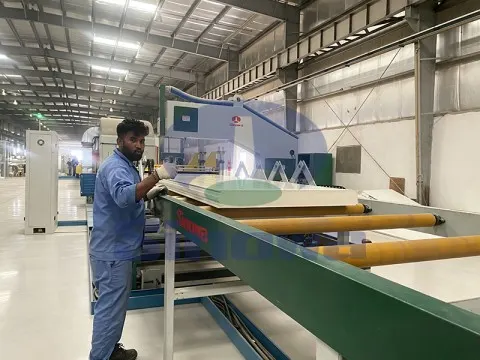
In terms of automation control, low price sandwich panel machines adopt mature and stable programmable control systems and intuitive human-machine operation interfaces, realizing semi-automatic to full-automatic continuous production. The core control system supports one-key start and stop of the whole production line, and can complete automatic operation of multiple links including material uncoiling, sheet forming, uniform gluing, constant-pressure lamination and fixed-size cutting in sequence. Operators can adjust production speed, panel length, gluing volume and other core parameters through the touch screen interface according to actual production needs, with simple and easy-to-learn operation logic that does not require professional and technical training. The system is equipped with basic fault self-diagnosis and automatic alarm functions, which can timely feed back abnormal conditions such as material blockage, uneven gluing and equipment stalling during production, helping operators quickly eliminate hidden dangers. In addition, the control system has stable parameter memory function, which can save conventional production parameters for repeated use, avoiding repeated debugging and improving production consistency. Compared with fully manual production equipment, this automated design greatly reduces manual intervention, lowers labor intensity and effectively saves labor costs. Meanwhile, the standardized parameter control avoids product quality differences caused by manual operation errors, ensuring the basic uniformity of finished sandwich panels.
Low price sandwich panel machines support the production of multiple types of conventional sandwich panels, with strong production flexibility to meet diverse market demands. The equipment can adapt to different surface metal substrates including color steel sheets and galvanized steel sheets, and can match with various common insulation core materials such as polyurethane foam, polystyrene foam and rock wool. By simply adjusting the equipment gap, pressure parameters and feeding speed, manufacturers can produce sandwich panels with different thicknesses and specifications for different usage scenarios. The finished panels produced by the machine have stable bonding performance, neat forming edges and uniform overall thickness, meeting the basic use requirements of thermal insulation, waterproofing and structural protection for building enclosure materials. The machine can continuously produce wall panels and roof panels commonly used in construction engineering, covering most low-rise building enclosure, temporary workshop, warehouse and simple facility construction scenarios. Although it cannot support the production of ultra-thick special panels or high-precision customized special-shaped panels, it fully meets the mass production needs of mainstream conventional building panels. This versatile production capability enables small and medium manufacturers to enrich product categories without purchasing multiple sets of equipment, further improving the economic benefits of equipment investment.
Production efficiency is a key advantage of low price sandwich panel machines, which can balance stable output and qualified product quality to meet daily mass production needs. After normal debugging and stable operation, the equipment can maintain continuous and smooth production rhythm, with stable hourly output that far exceeds traditional manual semi-mechanical production modes. The integrated continuous production process eliminates intermediate material handling and repeated positioning links, greatly shortening the single-panel production cycle. The precision roll forming system ensures one-time forming of metal sheets without secondary trimming, while the automatic fixed-length cutting device realizes accurate sizing of finished panels, reducing material waste caused by dimensional deviation. In actual production, the equipment can maintain long-term stable operation without frequent shutdowns caused by structural failures or system errors, ensuring continuous production progress. For small and medium-sized production lines, this efficient and stable production capacity can fully meet the daily order delivery demand, avoiding order delay problems caused by insufficient production capacity. Meanwhile, the standardized production process makes every batch of finished panels have consistent specifications and performance, effectively improving product pass rate and reducing defective product loss.
The operational cost advantage of low price sandwich panel machines runs through the whole service cycle, bringing long-term economic benefits to users. First of all, the equipment itself has low energy consumption, adopting energy-saving transmission motors and optimized power operation logic, which effectively reduces power consumption during unit product production compared with old-fashioned high-power equipment. Secondly, the equipment has high raw material utilization rate. The automatic gluing system can control the glue coating amount accurately and evenly, avoiding excessive glue waste caused by manual gluing. The precise cutting and forming structure reduces leftover materials in the production process, maximizing the utilization of metal sheets and core materials. In terms of daily operation, the equipment has low requirements for workshop conditions, no need for special constant temperature and dust-free environment, reducing workshop transformation and maintenance costs. In addition, the wearing parts of the equipment are all common standard parts with low replacement cost and easy procurement, avoiding the high cost of customized special accessories. The stable operation performance also reduces frequent equipment failure and shutdown maintenance loss, ensuring continuous and profitable production. These comprehensive low operational cost characteristics make the equipment have a very high cost recovery rate, suitable for long-term continuous production and operation.
Daily maintenance and upkeep of low price sandwich panel machines is simple and convenient, with low technical threshold and time cost for users. The modular structure design makes each functional unit relatively independent, so maintenance personnel can carry out targeted inspection and maintenance without overall disassembly. Daily maintenance work mainly includes conventional cleaning, lubrication and parameter inspection, which can be completed by ordinary operators after simple training. After daily production, only simple wiping is needed to remove surface debris and residual glue on the equipment to avoid material accumulation affecting subsequent operation. Regular quantitative lubrication of transmission gears, chains and rotating bearings can reduce component wear and keep the transmission system flexible. The equipment has no complex precision vulnerable parts, and the regular inspection work only needs to check the tightness of connecting parts, the sensitivity of the control system and the flatness of the feeding track. When minor faults occur, the system alarm prompts can guide personnel to quickly locate and solve problems, avoiding long-term shutdown. The simple maintenance mode greatly reduces the dependence on professional maintenance technicians, saves daily maintenance time and labor costs, and effectively prolongs the overall service life of the equipment.
Low price sandwich panel machines have wide market applicability and are favored by small and medium-sized building material production enterprises and individual processing workshops. In the field of civil construction, the conventional insulated sandwich panels produced by the machine are widely used in temporary construction workshops, construction site dormitories, simple warehouses and rural low-rise building enclosure structures, relying on their good thermal insulation and weather resistance. In the field of commercial auxiliary facilities, the panels can be used for simple factory enclosure, market partition walls and logistics warehouse thermal insulation enclosure, meeting the basic structural and thermal insulation needs of various light buildings. In addition, the equipment is also suitable for small batch customized production of small engineering projects, which can flexibly respond to small and scattered order demands in the market. Due to its low investment threshold, low operational cost and stable production performance, the equipment is very suitable for new entrants in the building material industry to start businesses and expand production scale. It can help users quickly occupy the low-end and mid-end conventional sandwich panel market, and has strong market competitiveness in the segmented lightweight building material production field.
Compared with high-end fully automatic sandwich panel production lines, low price sandwich panel machines have reasonable functional positioning and obvious differentiated advantages. High-end complete lines are equipped with a large number of intelligent customized functions and high-precision detection devices, which lead to high equipment cost and high requirements for workshop environment and operators, suitable for large-scale factories with large order volume and high customized demand. In contrast, low price sandwich panel machines abandon redundant high-end functions, focus on optimizing core production functions, and take practicality and economy as the core positioning. Although it lacks ultra-high precision forming and fully intelligent unmanned operation functions, it can fully meet the production standards of conventional building sandwich panels. The equipment has lower requirements for operator skills and workshop conditions, shorter equipment installation and commissioning cycle, and can be put into formal production quickly after installation. For users who focus on mass production of standard panels rather than high-precision special products, this type of machine can avoid unnecessary equipment function waste and investment redundancy, achieving a perfect balance between production performance and economic cost.
With the continuous development of the lightweight building material industry, low price sandwich panel machines are constantly optimized and upgraded to adapt to market changes. Modern optimized low-cost machines have made great progress in operational stability, production fluency and energy-saving performance compared with early low-price equipment. Manufacturers continuously optimize the mechanical transmission structure and control program logic, improving the overall operation stability and product forming consistency of the equipment. At the same time, the equipment's adaptability to new environmental protection and energy-saving core materials is gradually enhanced, which can adapt to more environmentally friendly insulated core materials and meet the market's increasing demand for green building materials. In the future, with the rapid development of temporary construction and lightweight building industries, the market demand for conventional cost-effective sandwich panels will continue to grow, which will further drive the technical iteration and popularization of low price sandwich panel machines. Relying on their outstanding cost performance, stable practical performance and wide applicability, these machines will always be important basic production equipment in the field of medium and low-end conventional sandwich panel production, providing stable and reliable production support for small and medium-sized building material enterprises.
Gallery of Low Price Sandwich Panel Machine
Tags: low price sandwich panel machine, low price sandwich panel machine manufacturer, low price sandwich panel machine supplier, china low price sandwich panel machine, low price sandwich panel machine for sale
https://www.sandwichpanelmachinery.com/blog/low-price-sandwich-panel-machine.html
-
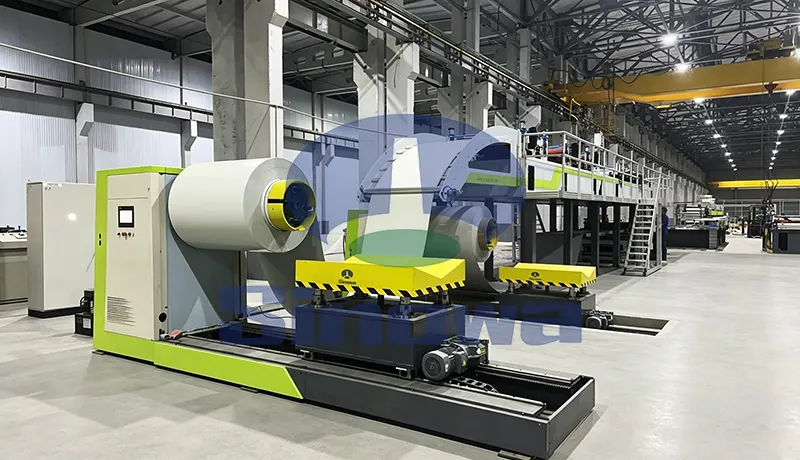
The PU sandwich panel line is a core production setup for making high-performance building insulation panels. This professional PU sandwich panel production line features automated operation to streamline the whole manufacturing process efficiently. Every component of the polyurethane sandwich panel line is precisely calibrated to ensure consistent panel thickness and structural stability. A well-maintained polyurethane sandwich panel production line can greatly boost production efficiency while reducing manual operation errors. The continuous PU sandwich panel line adapts to diverse production demands for different panel sizes and surface styles. With advanced molding technology, the PIR sandwich panel line produces panels with excellent heat preservation and sound insulation properties. Stable running of the PIR sandwich panel production line guarantees reliable product quality for various construction and industrial application scenarios.
-
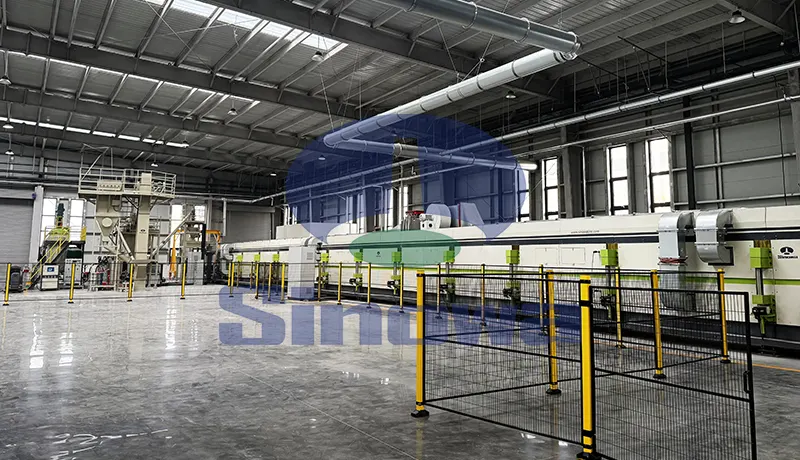
A phenolic insulation board production line serves as the core equipment for manufacturing high-performance thermal insulation building materials. This phenolic insulation panel production line integrates material mixing, foaming, molding and cutting processes to ensure continuous and stable production efficiency. Every operational link of the insulation board production line is precisely calibrated to produce uniform and durable insulation boards. The automated design of the insulation panel production line effectively reduces manual intervention and improves product consistency. Proper maintenance of the phenolic board production line can greatly extend its service life and maintain steady production output. With optimized structural design, the phenolic panel production line adapts to various production demands and delivers high-quality finished products for thermal insulation engineering applications.
-
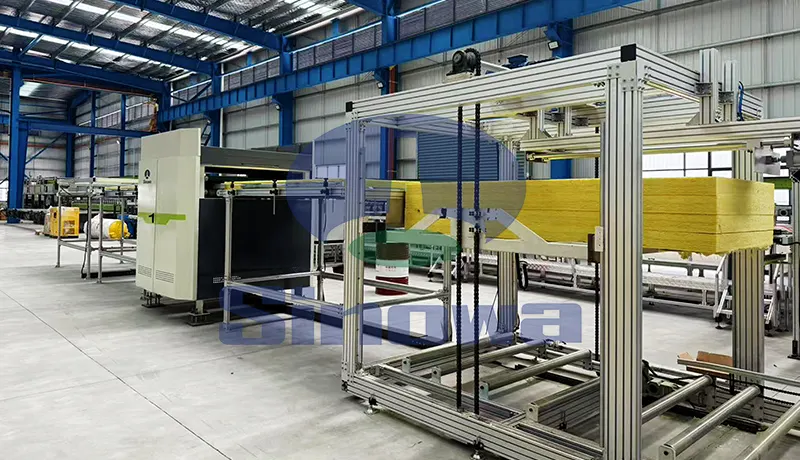
A professional rockwool sandwich panel line serves as the core equipment for producing high-performance building panels. This rockwool sandwich panel production line integrates feeding, laminating and forming processes to ensure stable and efficient production. The well-structured rock wool sandwich panel line can process raw rockwool materials into panels with excellent thermal and sound insulation properties. Operators can adjust the running parameters of the rock wool sandwich panel production line to manufacture panels of different thicknesses and specifications. The automated design of the mineral wool sandwich panel production line greatly reduces manual operation errors and improves product consistency. Regular maintenance of the mineral wool sandwich panel line is essential to sustain long-term operational efficiency and guarantee qualified finished panels for diverse construction applications.