PU Foam Panel Forming Equipment
Publication Date: Oct 26, 2026
PU Foam Panel Forming Equipment delivers continuous forming of uniform polyurethane foam panels. Equipped with accurate mixing, constant-temperature curing and automatic post-processing, it supports flexible parameter setup for insulated panel manufacturing.
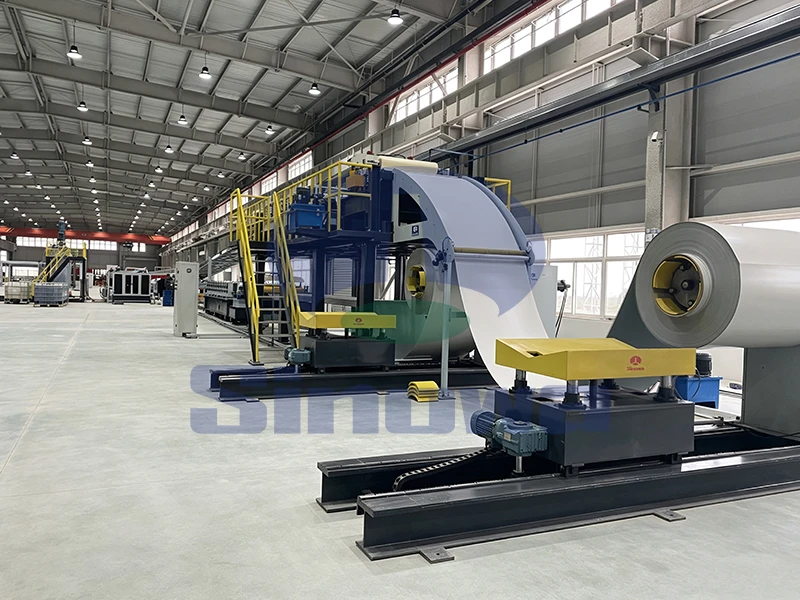
PU foam panel forming equipment stands as a core production solution designed to continuously shape polyurethane raw materials into stable, uniform foam panels for a wide range of application scenarios. The whole working cycle starts with the precise metering and mixing of polyol and isocyanate components, where auxiliary additives such as foaming agents, catalysts and stabilizers are introduced in controlled proportions to regulate the foaming reaction speed and final texture of the material. Once fully blended, the mixed liquid is evenly dispensed onto a moving carrier surface, and the chemical foaming process begins immediately under stable temperature conditions. As the liquid expands, it fills the defined forming space gradually, and the structure starts to cure and harden into a solid foam layer with consistent thickness and density. The equipment is built to maintain steady conveying speed and pressure distribution throughout this phase, avoiding common defects like uneven expansion, local voids or surface depressions that can compromise the performance of finished panels. Operators can adjust key working parameters according to the target product requirements, so the same set of equipment can produce panels with different softness, thermal resistance and mechanical properties without major structural modification. The integration of multiple functional modules ensures that the transition from raw material feeding to preliminary forming happens smoothly and continuously, laying a reliable foundation for the subsequent shaping and trimming processes. Every structural part that touches the PU mixture is treated with anti-sticking and corrosion-resistant processing to reduce material adhesion and extend the stable service life of the whole production line.
The forming section represents the most critical functional part of PU foam panel forming equipment, as it directly determines the flatness, dimensional accuracy and internal cell structure of finished foam panels. After the foaming mixture is laid on the base carrier, upper and lower forming templates close to form a closed cavity with a fixed gap, which limits the maximum expansion range of the foam material and locks the target thickness of the panel. The clamping force applied by the forming system is evenly distributed across the entire width of the cavity instead of concentrating on partial areas, which prevents warping, bending or inconsistent thickness along the length direction of the panel. A constant temperature control system wraps around the forming cavity to keep the reaction environment stable, because slight fluctuations in temperature will change the reaction rate of polyurethane and lead to irregular bubble sizes inside the foam. During the curing period inside the forming cavity, the foam completes cross-linking reaction and gains sufficient structural strength to maintain its shape after demolding. The guiding structure on both sides of the forming channel restricts lateral overflow of the foaming liquid, reducing raw material waste and preventing irregular edge shapes. The movement of the forming templates is controlled with high synchronization, so there is no offset between the upper and lower surfaces when the equipment runs at continuous production speed. Well-designed forming channels also take the natural shrinkage characteristics of cured PU foam into account, reserving reasonable compensation space to guarantee that final products meet the preset dimensional specifications after full cooling.
Conveying and traction systems coordinate closely with the forming cavity to achieve uninterrupted operation of PU foam panel forming equipment, supporting long-time continuous production without frequent shutdown for material handling. The lower conveying belt carries the base material and fresh foaming mixture forward at a stable, adjustable speed, while the upper traction belt matches this speed precisely to clamp the foam material inside the forming space and pull the semi-finished panel out after curing. All traction rollers are wrapped with wear-resistant and non-stick coating materials to avoid scratching the soft surface of uncured foam and prevent residual PU material from accumulating on roller surfaces over long running hours. Tension monitoring components are installed along the conveying path to detect abnormal pulling force in real time; when excessive tension appears, the system makes fine adjustments automatically to avoid stretching or tearing the newly formed foam panel. The conveying path adopts a horizontal layout with smooth transition sections between different modules, so the foam panel will not experience sudden bending or impact force that may damage its internal bubble structure. Speed matching between the metering mixing station and traction unit is a key coordination logic of the whole equipment, because a mismatch will cause either excessive material accumulation inside the forming cavity or insufficient filling that creates thin spots on panels. The conveying system also supports flexible speed adjustment within a reasonable range, allowing users to balance production output and product quality based on actual production plans. Simple structural design of the traction unit makes daily cleaning and routine inspection convenient, lowering the workload of regular equipment maintenance.
Temperature control subsystems run through the whole workflow of PU foam panel forming equipment and exert a profound influence on the foaming reaction and final quality of PU foam panels. Polyurethane foaming is a heat-releasing chemical reaction, and external temperature conditions will change the reaction starting time, expansion speed and curing duration significantly. Raw material storage pipelines and metering tanks are equipped with independent temperature maintaining units to keep the two main chemical components at a suitable temperature before mixing, ensuring that their viscosity stays within the optimal range for accurate measurement and uniform blending. The forming cavity maintains a steady working temperature to stabilize the cross-linking reaction inside the foam, preventing some areas from curing too fast while other areas remain under-cured. Heat exchange components are arranged reasonably to avoid local overheating, which would otherwise cause the foam cells to rupture and form hollow or brittle sections inside the panel. After the panel exits the forming cavity, a gradual cooling zone is arranged to let the cured foam release internal heat slowly; rapid cooling will create internal stress inside the panel and lead to later deformation or cracking during storage and application. The temperature control system collects data from multiple sensing points distributed on different modules and feeds data back to the central control unit to realize closed-loop regulation. Operators can view real-time temperature data of each area on the control interface and set different temperature curves for different product formulas. Reliable temperature management reduces the rate of defective products greatly and improves the consistency of batches of foam panels produced on the same equipment.
Automatic metering and mixing modules deliver accurate raw material proportioning for PU foam panel forming equipment, which is the prerequisite to obtain foam panels with stable physical performance. Two main liquid components and various functional additives are transported separately through sealed pipelines from storage containers to metering pumps, and each flow channel is equipped with independent flow monitoring devices to record the feeding volume in real time. The metering pumps adopt stable power drive structures to maintain consistent output under continuous working conditions, avoiding flow fluctuation caused by pressure changes inside material pipelines. All materials converge inside a high-speed mixing chamber at the preset ratio, and the stirring structure inside the chamber generates strong turbulent flow to achieve homogeneous mixing in a very short time. Incomplete mixing will cause uneven distribution of catalysts and foaming agents, resulting in inconsistent density and performance across different positions on a single foam panel. The mixing chamber is designed with a self-cleaning structure that can reduce residual material buildup after production stops, lowering the risk of blockage caused by cured polyurethane inside the mixing cavity. The whole mixing process is completed in a closed space, which reduces the volatilization of raw materials and improves the safety of the production environment. The proportion parameters can be saved and called through the control system, so switching between different product formulas only needs simple parameter calling instead of repeated manual debugging. Precise metering and mixing effectively reduce unnecessary consumption of raw materials and help maintain stable product quality for long-term continuous production.
Trimming and post-processing auxiliary units are matched with the main forming body of PU foam panel forming equipment to process continuous foam panels into finished products with neat edges and standard width. Right after the foam panel leaves the cooling section, edge trimming devices cut off the irregular overflow edges formed during foaming, removing parts with loose structure or uneven density. The cutting tools run synchronously with the conveying speed of the panel to avoid jagged cuts, tearing and surface extrusion marks on the soft foam surface. Some configurations also include slitting components to divide the wide continuous panel into multiple narrow strips according to required width specifications, meeting diversified size demands of downstream processing. Dust collection structures are arranged near cutting positions to collect fine foam debris generated during cutting, keeping the working area clean and preventing debris from adhering to the surface of finished panels. After trimming, the panels can go through surface inspection stations where visual monitoring components identify obvious surface defects such as bubbles, cracks and indentations. The post-processing module works in linkage with the main forming line, so the whole production process keeps continuous without separate transfer between independent equipment. The travel position of cutting tools can be adjusted conveniently on the control interface to adapt to different target product widths. These auxiliary units simplify the subsequent manual processing steps for foam panels and improve the overall production efficiency of the complete production line.
Centralized control and monitoring systems integrate all functional modules of PU foam panel forming equipment into one unified operation platform, simplifying operation logic and supporting real-time state management of the whole production line. The human-machine interaction interface displays core operating data including material flow rate, conveying speed, cavity temperature, clamping pressure and running status of each subsystem on one screen. Operators can complete parameter setting, formula storage, start-stop control and fault query through this interface without adjusting each single mechanical unit separately. The control system sets up safety interlock logic between different modules; if one key component runs abnormally, related upstream and downstream units will enter protective state automatically to prevent equipment collision or mass generation of defective products. Historical operation data and alarm records can be stored for a period of time, which helps technical personnel analyze quality fluctuation problems and optimize production parameters later. The system supports graded authority management, separating daily operation permission and advanced parameter modification permission to avoid misoperation by inexperienced staff. Signal transmission between sensors and the controller adopts stable transmission modes to reduce signal interference in the complex industrial environment. Clear alarm prompts will pop up on the screen together with corresponding fault location information when abnormal conditions appear, shortening the time required for troubleshooting. This centralized control method reduces the difficulty of equipment operation and helps maintain stable and orderly continuous production.
Reasonable daily maintenance and scientific operation habits are essential to keep PU foam panel forming equipment running stably for a long time and preserve consistent product quality. Routine maintenance mainly focuses on cleaning parts that are in direct contact with polyurethane materials, including the mixing chamber, forming cavity inner surface, conveying belts and traction rollers. Cured PU residue left on these surfaces will affect the surface quality of panels and may interfere with the normal movement of moving parts, so scheduled cleaning should be carried out after production batches. Lubrication points on transmission chains, guide rails and rotating bearings need regular inspection and lubrication supplement to reduce friction and wear between moving components and avoid abnormal noise or speed jitter. Sealing rings, pipeline gaskets and metering pump wearing parts belong to consumable components and need periodic inspection and replacement to prevent raw material leakage. Operators should check the sensitivity of temperature sensors, flow sensors and safety interlock devices at fixed intervals to ensure that monitoring signals and protective functions work normally. When the equipment is going to stop for a long time, residual raw materials inside material pipelines need to be cleaned thoroughly to prevent curing blockage inside the closed channels. Maintenance records can be kept to track the service state of key parts and arrange replacement plans in advance before failure occurs. Standardized maintenance work reduces unexpected shutdown frequency, extends the service cycle of the whole set of equipment and creates stable conditions for long-term, high-quality foam panel manufacturing.
Gallery of PU Foam Panel Forming Equipment
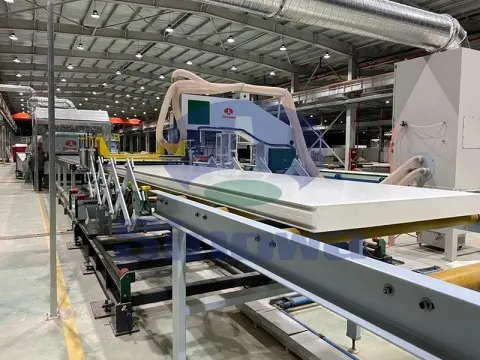
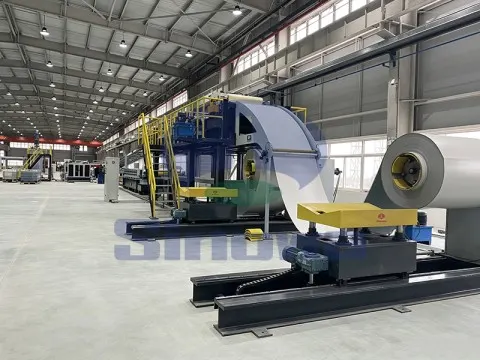
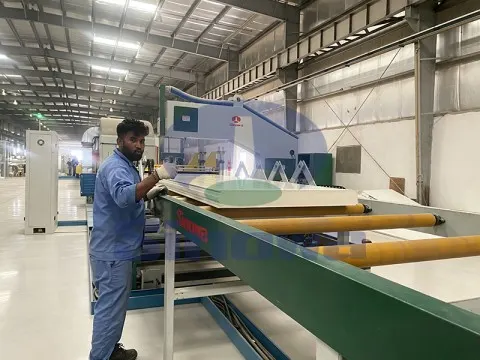
Tags: pu foam panel forming equipment, pu foam panel forming equipment manufacturer, pu foam panel forming equipment supplier, china pu foam panel forming equipment, pu foam panel forming equipment for sale
https://www.sandwichpanelmachinery.com/blog/pu-foam-panel-forming-equipment.html
-
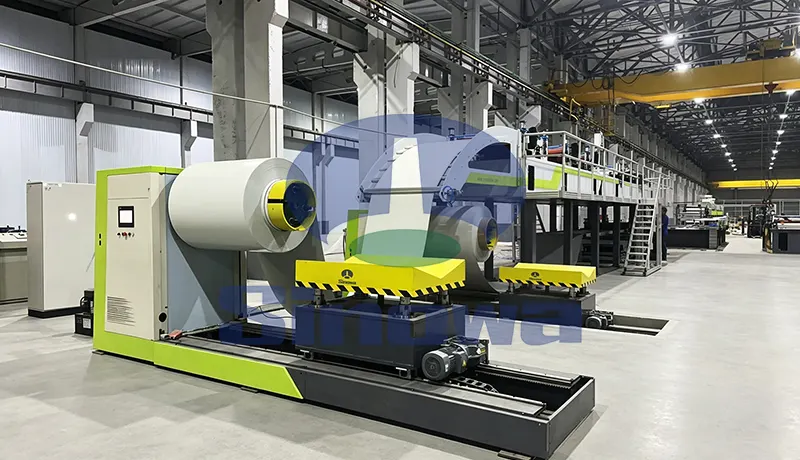
The PU sandwich panel line is a core production setup for making high-performance building insulation panels. This professional PU sandwich panel production line features automated operation to streamline the whole manufacturing process efficiently. Every component of the polyurethane sandwich panel line is precisely calibrated to ensure consistent panel thickness and structural stability. A well-maintained polyurethane sandwich panel production line can greatly boost production efficiency while reducing manual operation errors. The continuous PU sandwich panel line adapts to diverse production demands for different panel sizes and surface styles. With advanced molding technology, the PIR sandwich panel line produces panels with excellent heat preservation and sound insulation properties. Stable running of the PIR sandwich panel production line guarantees reliable product quality for various construction and industrial application scenarios.
-
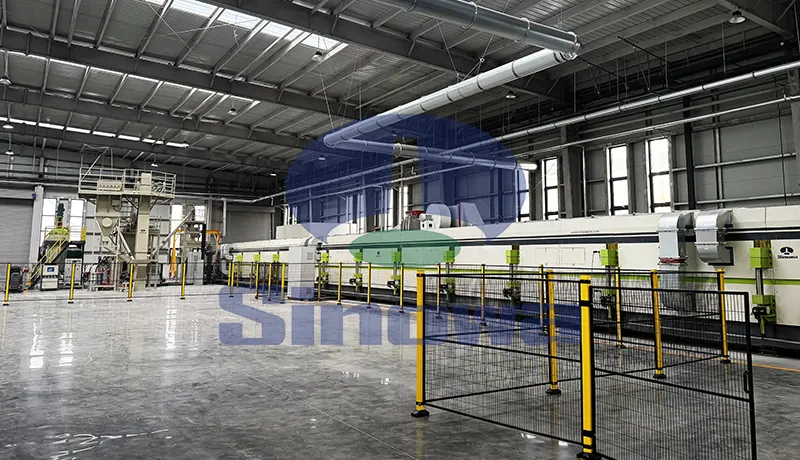
A phenolic insulation board production line serves as the core equipment for manufacturing high-performance thermal insulation building materials. This phenolic insulation panel production line integrates material mixing, foaming, molding and cutting processes to ensure continuous and stable production efficiency. Every operational link of the insulation board production line is precisely calibrated to produce uniform and durable insulation boards. The automated design of the insulation panel production line effectively reduces manual intervention and improves product consistency. Proper maintenance of the phenolic board production line can greatly extend its service life and maintain steady production output. With optimized structural design, the phenolic panel production line adapts to various production demands and delivers high-quality finished products for thermal insulation engineering applications.
-
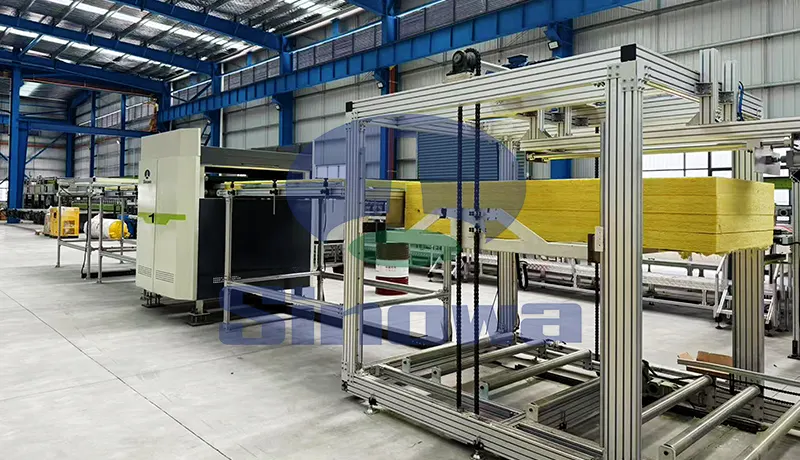
A professional rockwool sandwich panel line serves as the core equipment for producing high-performance building panels. This rockwool sandwich panel production line integrates feeding, laminating and forming processes to ensure stable and efficient production. The well-structured rock wool sandwich panel line can process raw rockwool materials into panels with excellent thermal and sound insulation properties. Operators can adjust the running parameters of the rock wool sandwich panel production line to manufacture panels of different thicknesses and specifications. The automated design of the mineral wool sandwich panel production line greatly reduces manual operation errors and improves product consistency. Regular maintenance of the mineral wool sandwich panel line is essential to sustain long-term operational efficiency and guarantee qualified finished panels for diverse construction applications.