Why Does Polyurethane Sandwich Panel Production Line Mixing Head Block Frequently?
Publication Date: Oct 12, 2026
A polyurethane sandwich panel production line mixing head blocks frequently because raw material residue, temperature swings, pressure imbalance, mechanical wear, and poor cleaning habits combine to interrupt continuous dosing and foam quality.
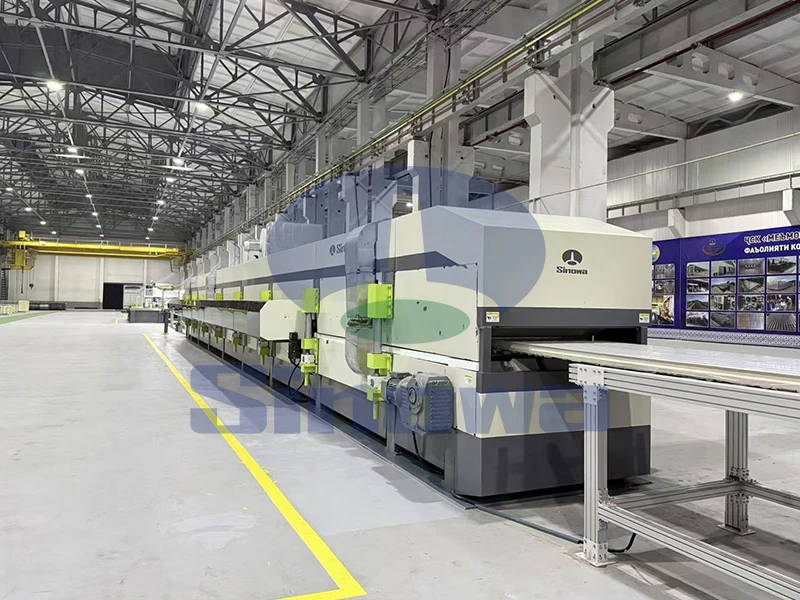
The mixing head sits at the very heart of any continuous polyurethane sandwich panel line, and its job is far more demanding than most operators realize. Inside a chamber barely larger than a fist, two highly reactive liquid components—the polyol blend on one side and the isocyanate on the other—are forced together at pressures often exceeding one hundred bars, slammed into each other by turbine-style impellers rotating at several thousand revolutions per minute, and then flung out onto a moving decorative foil or steel sheet in a finely atomized spray. For this tiny chamber to keep working hour after hour, every surface must remain clean, every passage must stay open, and every seal must hold. The moment any of these conditions slips, material begins to accumulate. Once a thin layer of reacted polyurea or polyurethane residue coats the walls, it no longer behaves like the liquid that entered it; it behaves like a hard, growing crust that narrows the flow path, distorts the spray pattern, and eventually jams the impeller or blocks the outlet. What operators often mistake for a sudden breakdown is really the end of a slow process that started days earlier, when a cleaning cycle was shortened, a temperature setpoint drifted, or a filter was left in service past its useful life.
The single most common root cause is inadequate or incorrectly performed purge cleaning. At the end of every production shift, and during every material-color or formulation change, the mixing head must be flushed with a suitable solvent—typically a combination of cleaned methylene chloride alternatives or specialized glycol-ether based purge agents—while the impeller keeps turning. If the operator simply hits the purge button for the default few seconds and walks away, residual isocyanate and polyol trapped in the dead corners of the chamber, around the seal rings, and behind the impeller hub have no chance to leave. They react in place, forming a dark, rubbery plug that adheres tightly to metal. The next start-up sprays fresh chemical directly into that plug, which softens only its outer layer and then hardens again as solvent evaporates. Over three or four shifts the plug grows until it begins to shear small fragments into the spray pattern, which show up as dark streaks, dry spots, or surface pits on the finished panel. The fix is not more aggressive chemical; it is a disciplined purge routine that matches solvent volume to chamber size, keeps the shaft spinning long enough for the color to run clear, and includes a scheduled manual teardown where the chamber, impeller, and outlet nozzle are inspected and physically scraped at intervals defined by actual usage rather than by the calendar alone.
Temperature problems are the second major contributor, and they work in two opposite directions. Polyurethane chemistries are extremely sensitive to heat. If the component temperature is too low, viscosity rises sharply, the two streams do not break into fine droplets even at high pressure, and the resulting mixture exits the chamber as a thick, stringy ribbon rather than an even spray. That ribbon cures slowly inside the head itself, sticking to walls and building residue. Conversely, if the head or its close-coupled heating jackets run too warm—often because a cooling water circuit is neglected or a thermocouple has drifted high—the isocyanate begins to pre-react with any trace of moisture or residual amine catalyst inside the chamber, forming polyurea crusts that are far harder to dissolve than fresh foam. Ambient conditions in the plant matter too. A line that runs reliably in May can start blocking in July because the air conditioning in the metering section cannot keep up, or in January because drafty doors let cold air hit the head just before it closes onto the panel. Stable, documented temperatures at the tank, at the heat exchanger, at the mixhead inlet, and at the dispensing nozzle itself are therefore not a comfort detail; they are a maintenance requirement.
Pressure imbalance between the A and B components deserves attention because it is invisible until a blockage is well advanced. Each stream is delivered by its own metering pump, through its own filter, its own pressure control valve, and its own injection nozzle into the mixing chamber. If one side—almost always the isocyanate side because it is more prone to crystallize—develops a partially plugged filter or a sticking valve, its flow drops while the other side continues at full volume. The mix ratio instantly skews, which means far more of one chemical hits the impeller than the other was designed to wash out. The over-rich component cures on contact, and because the pressure drop also slows the impeller tip speed, atomization worsens, the spray goes coarse, and residue builds even faster. Operators notice this as a load fluctuation on the mixhead drive, a faint change in the pitch of the turbine, or a panel weight that is suddenly uneven across its width. Catching it requires real-time pressure readouts on both lines with alarms set at narrow bands, not just a total system pressure gauge that averages everything together. Once a blockage is blamed on ratio drift, restoring the pumps and filters usually means the head must be fully cleaned anyway, because the asymmetry has already deposited hard material.
Mechanical wear inside the head is the third family of causes and the one that quietly sets the stage for chemical fouling. The impeller spins on a shaft supported by bearings and sealed by a set of mechanical lip seals or, on more modern machines, a combination of dynamic and static seals. Every seal has a finite life measured in operating hours, not in calendar months. As the lip seal wears, tiny amounts of liquid chemical migrate along the shaft into the bearing area, where they meet air and moisture and cure into a brown, varnish-like deposit. That deposit increases friction, which heats the shaft, which accelerates seal wear, which lets more chemical in—a feedback loop that ends with the impeller seizing mid-shot. The chamber itself also erodes: high-pressure fluid containing small, hard catalyst crystals or unfiltered debris acts like a sandblaster on the inner wall, and once the wall develops roughness, residue grips it far more strongly than on a polished surface. Regular replacement of seal kits, inspection of impeller tip clearance against the chamber liner, and honing or replacement of scored chambers are therefore not optional overhauls. They are the difference between a head that blocks once per quarter and one that blocks once per shift.
Raw material handling upstream of the head has a surprising downstream effect. Polyol blends contain catalysts, surfactants, blowing agents, flame retardants, and sometimes fillers. If the blend is allowed to sit in a tank without agitation, heavy components settle; if it is agitated too violently, air is whipped in, and that air reaches the head and forms compressible bubbles that distort dosing. Isocyanate, for its part, reacts with any atmospheric moisture it meets, forming solid diamine crystals and CO₂ gas. A tank whose breather cap is missing, or whose nitrogen blanket has been turned off to save gas, will feed crystals into the proportioning pumps. Those crystals wear pump seats, score injection nozzles, and eventually lodge in the mixhead, where they act as nuclei around which fresh material cures. Filters between the tank and the head catch some of this, but filters themselves become blockage points if they are not changed on a schedule tied to actual delta-pressure readings rather than a remembered date. Many chronic mixhead problems trace directly back to a material drum that was left open on the floor, a return line that sucks air at startup, or a filter basket that was never opened after the last formulation change.
Operating practice during product changes is another frequent trigger. A sandwich panel line runs many different densities, facings, and insulation thicknesses in a single day. Every time the density setpoint changes, the shot volume, the ratio, and the head traverse speed change with it. If the operator switches directly from a high-density, high-fill formulation to a low-density, light-fill one without flushing the head and readjusting pressure, the residual high-viscosity material from the previous shot lingers in the chamber and cures under the very different next shot. Similarly, stopping the line for a lunch break without performing a full purge—often rationalized as "we'll only be twenty minutes"—lets the last shot sitting in the chamber react hard against metal that is still warm. Some lines install automatic standby cycles that keep a small solvent flush circulating through the head during short stops, but these cycles themselves must be verified; a clogged standby line gives a false sense of protection. The rule that prevents most of these events is simple: the head is treated as if it will be idle for the rest of the day every single time it stops.
Design and maintenance of the surrounding dispense system also matter more than many line supervisors admit. The injection nozzles that shoot A and B streams into the chamber are small tungsten or carbide inserts, and their orifices wear. A worn nozzle widens, which drops injection pressure, which collapses atomization. Because each nozzle has its own expected life measured in liters dispensed, tracking that consumption on a per-head basis prevents the slow drift that looks like a mysterious "head getting worse." The hydraulic or pneumatic actuator that closes the front outlet cap must also seat cleanly every cycle; if it sticks even slightly, a thin bead of material dribbles out of the closing gap and cures into a lip around the outlet, which overhangs into the spray path and deflects it. Sight glasses, drain valves, and recirculation loops that run continuously during production should be checked for leaks; a small isocyanate leak is cheap to fix today and expensive as a seized head three shifts from now. None of these is glamorous, but mixheads are, in essence, precision hydraulic components, and they respond to the same kind of planned maintenance that injection molding machines already receive.
Diagnosing a chronic blocking head requires stepping back from the symptom and asking which of these causes is actually dominant. A head that blocks immediately after formulation changes points to practice and purge discipline. A head that blocks more often in summer points to temperature control. A head whose impeller load rises gradually over weeks points to seal wear and chamber buildup, not to a bad batch of chemical. A head that blocks suddenly with a panel covered in streaks points to a filter or nozzle that has failed open or shut. The most useful diagnostic routine is a structured log: time of blockage, last formulation run, recent purge history, head temperature at the moment of failure, A and B pressures just before the fault, and the visual appearance of the residue itself—crumbly light-colored residue usually means ratio drift or moisture, dark rubbery residue means poor purge, hard crystalline specks mean contaminated material. Over a few months this log tells a story far more reliably than guesswork, and it separates problems that engineering can solve from problems that shift discipline can solve. In most real plants the answer is a mixture of both, and the lines that stop blocking frequently are not the ones that bought a fancier head; they are the ones that started measuring what was already happening, trained operators to respect the purge cycle, and treated the mixing head as the single most sensitive piece of equipment on the line rather than as a fixture that only gets attention when it stops.
Gallery of Polyurethane Sandwich Panel Production Line






Tags: polyurethane sandwich panel production line, polyurethane sandwich panel production line manufacturer, polyurethane sandwich panel production line supplier, china polyurethane sandwich panel production line, polyurethane sandwich panel production line for sale
-

The PU sandwich panel line is a core production setup for making high-performance building insulation panels. This professional PU sandwich panel production line features automated operation to streamline the whole manufacturing process efficiently. Every component of the polyurethane sandwich panel line is precisely calibrated to ensure consistent panel thickness and structural stability. A well-maintained polyurethane sandwich panel production line can greatly boost production efficiency while reducing manual operation errors. The continuous PU sandwich panel line adapts to diverse production demands for different panel sizes and surface styles. With advanced molding technology, the PIR sandwich panel line produces panels with excellent heat preservation and sound insulation properties. Stable running of the PIR sandwich panel production line guarantees reliable product quality for various construction and industrial application scenarios.
-

A phenolic insulation board production line serves as the core equipment for manufacturing high-performance thermal insulation building materials. This phenolic insulation panel production line integrates material mixing, foaming, molding and cutting processes to ensure continuous and stable production efficiency. Every operational link of the insulation board production line is precisely calibrated to produce uniform and durable insulation boards. The automated design of the insulation panel production line effectively reduces manual intervention and improves product consistency. Proper maintenance of the phenolic board production line can greatly extend its service life and maintain steady production output. With optimized structural design, the phenolic panel production line adapts to various production demands and delivers high-quality finished products for thermal insulation engineering applications.
-

A professional rockwool sandwich panel line serves as the core equipment for producing high-performance building panels. This rockwool sandwich panel production line integrates feeding, laminating and forming processes to ensure stable and efficient production. The well-structured rock wool sandwich panel line can process raw rockwool materials into panels with excellent thermal and sound insulation properties. Operators can adjust the running parameters of the rock wool sandwich panel production line to manufacture panels of different thicknesses and specifications. The automated design of the mineral wool sandwich panel production line greatly reduces manual operation errors and improves product consistency. Regular maintenance of the mineral wool sandwich panel line is essential to sustain long-term operational efficiency and guarantee qualified finished panels for diverse construction applications.