Factory Direct Sandwich Panel Machine
Publication Date: Oct 15, 2026
Factory Direct Sandwich Panel Machine. Fully automatic continuous line for PU, PIR & rock wool wall/roof panels. Customized production line, factory price & reliable after-sales.
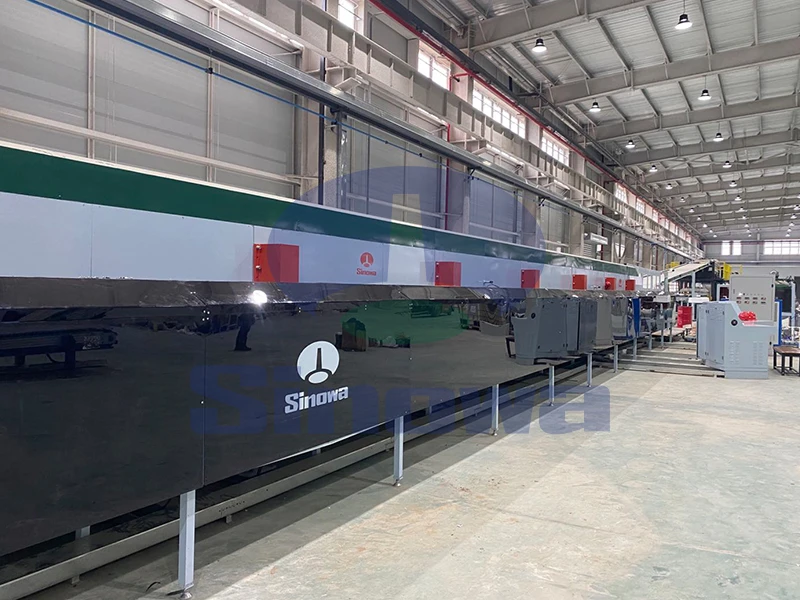
Factory direct sandwich panel machine represents a complete continuous production system built for manufacturing composite insulated panels, delivered straight from the manufacturing workshop without extra intermediate links. Unlike scattered standalone devices, this integrated line connects multiple functional modules into one coordinated workflow, turning raw coil materials and insulation core materials into finished panels in a seamless sequence. The whole system is engineered to handle metal sheet unwinding, roll forming, core material placement, gluing, composite pressing, thermal curing, fixed-length cutting and finished panel transportation in one uninterrupted run. Buying factory direct equipment removes unnecessary layers between equipment makers and end users, allowing buyers to get machinery designed, assembled and tested directly at the production base. This direct supply mode also supports more targeted communication about layout planning, production capacity matching and functional customization, as technical teams come from the original manufacturing side. Users can discuss production targets, workshop space and material compatibility with the engineering team to ensure the machine matches their actual manufacturing goals, rather than accepting generic equipment that may not fit operational needs. Each module is tested before delivery, checking synchronization, transmission stability and control responsiveness to reduce on-site commissioning risks after shipment.
The mechanical structure of factory direct sandwich panel making machine adopts a modular layout, with every functional unit mounted on a solid welded main frame built to withstand long-term continuous operation and stable pressing force. At the front of the line sits the unwinding section, which holds raw metal coils and feeds sheets evenly while correcting material deviation to prevent sideways shifting during movement. Next comes the roll forming unit, where rows of precision rollers gradually bend flat metal sheets into the required profile shapes for panel edges and surface textures. After forming, the surface material moves to the gluing station, where the system applies adhesive evenly across the inner face of metal sheets, controlling coating volume to avoid excessive waste or insufficient bonding. The core material feeding module can deliver different insulation materials steadily into the gap between two metal skins, adjusting feeding speed to match the running pace of the whole line. All these separate modules are locked into synchronous movement, so no single section runs faster or slower than others. Precise alignment between each unit is critical, as misalignment can cause uneven panel thickness, surface scratches or weak bonding between skins and core.
The core working principle of factory direct sandwich panel manufacturing machine relies on synchronized transportation, uniform pressure and controlled thermal conditions to bond surface sheets and insulation cores into solid composite panels. Once metal sheets and core materials enter the laminating section, the double-belt pressing mechanism applies consistent pressure across the entire panel width, holding all layers tightly together while heat supports adhesive curing or foaming reaction. Pressure distribution must remain balanced across the whole surface; uneven pressure leads to local gaps, delamination and inconsistent physical performance of finished panels. The thermal zone maintains stable temperature throughout the curing phase, giving adhesives enough time to solidify and form reliable connections between dissimilar materials. After curing and cooling, the continuous long panel moves forward to the cutting unit, which automatically cuts products to preset lengths according to production settings. The cutting mechanism follows the line speed dynamically to keep cut edges neat and avoid deformation during separation. This continuous forming approach greatly differs from batch production equipment, which requires manual loading and separate pressing cycles, creating gaps and inconsistencies between individual panels.
Intelligent control is one of the defining features of factory direct sandwich panel production machine, managed by a programmable logic system paired with an intuitive touchscreen interface for daily operation. Operators can set production speed, panel thickness, cutting length, adhesive dosage and heating parameters directly on the screen, storing multiple groups of parameter formulas for quick switching between different panel types. The control system monitors real-time running data of motors, pressure sensors and temperature detectors across the whole line. If abnormal vibration, temperature fluctuation or material blockage appears, the system triggers alerts and can slow down or stop the machine automatically to protect mechanical parts and prevent defective products. Built-in fault diagnosis functions help operators locate issues quickly, reducing time spent on troubleshooting. The control program supports fine adjustment of every linked unit, so operators can tune the coordination between unwinding, forming, gluing and pressing without mechanical rework. This level of automation lowers reliance on manual labor, reduces human errors in parameter adjustment and improves consistency of finished panel quality batch after batch.
Factory direct sandwich panel machine offers flexible production capacity, able to manufacture multiple varieties of sandwich panels by adjusting settings and swapping simple auxiliary parts. It can process different core insulation materials, adapting to lightweight foam cores and fibrous insulation cores according to market demands. The surface layers can use various metal substrates, and the roll forming tooling can produce diverse surface profiles to meet aesthetic and structural requirements for different construction projects. Operators can modify panel thickness by adjusting the gap between upper and lower pressing belts, while changing cutting length allows the line to produce panels of customized dimensions. This flexibility makes the equipment suitable for manufacturers who need to serve multiple market segments without investing in several independent production lines. When switching from one panel specification to another, the changeover process does not require large-scale disassembly of main machine structures. Manufacturers can respond faster to shifting order requirements, adjusting product types within the same workshop space. This multi-product capability improves asset utilization and expands the product portfolio for panel producers.
Finished panels produced by factory direct sandwich panel machinery serve a wide range of construction and industrial applications, thanks to their combination of low weight, thermal insulation, sound reduction and structural rigidity. These composite panels are widely used for wall cladding and roof covering in large industrial workshops and storage buildings, delivering fast installation and reliable thermal performance. They are also commonly used for temperature-controlled spaces, helping maintain stable internal environments and reduce energy consumption for heating and cooling. Clean working environments also adopt these panels, where smooth panel surfaces support simple cleaning and stable enclosure structures. In temporary building projects, the lightweight nature of sandwich panels lowers transportation and assembly workload, shortening overall construction schedules. The finished panels maintain stable physical performance after installation, resisting deformation under normal environmental changes. Because the machine produces continuous composite structures with tightly bonded layers, finished panels avoid many common defects found in manually assembled alternatives, delivering uniform quality for end construction projects.
Proper daily operation and regular maintenance are essential to keep factory direct sandwich panel line running steadily and extend its service life. Operators should follow standardized operating sequences during startup and shutdown, checking raw material status, pipeline conditions and sensor readings before launching continuous production. Transmission rollers, pressing belts and guiding parts need periodic cleaning to remove residual adhesive, dust and insulation debris, which may accumulate and scratch panel surfaces or disrupt material movement. Bearings, chains and gear sets require scheduled lubrication to reduce friction, noise and wear during long running hours. Operators should inspect bolts and connecting components regularly, tightening loose fittings to avoid structural shifting under continuous vibration. Foaming or glue delivery pipelines need routine purging to prevent solidified leftover materials from blocking nozzles and affecting coating uniformity. The control system and sensors should undergo regular calibration to guarantee accurate feedback of temperature, speed and pressure data. Establishing a maintenance log helps track component wear and arrange part replacement before breakdown occurs, minimizing unexpected production downtime.
Choosing factory direct sandwich panel machine brings practical operational advantages for panel manufacturers beyond the equipment itself. Direct communication with the original manufacturing team allows buyers to get professional guidance on workshop layout design, power configuration and raw material preparation before installation. Technical teams provide on-site assembly guidance, equipment commissioning and operator training after the machine arrives, helping production staff master operation procedures and basic troubleshooting skills. Users can obtain clear guidance on spare part selection and replacement methods, ensuring easier access to matching components when wear parts need updating. This direct cooperation model supports continuous technical communication after commissioning, so operators can seek advice when optimizing production parameters or adjusting product types. For growing panel businesses, factory direct machinery offers a scalable foundation; as market demand rises, auxiliary modules can be added to expand functions without replacing the main production line. By optimizing workflow stability and reducing defective rates, the equipment helps manufacturers maintain consistent product quality and build reliable supply capacity for long-term business development.
Gallery of Sandwich Panel Machine






Tags: sandwich panel machine, sandwich panel machine manufacturer, sandwich panel machine supplier, china sandwich panel machine, sandwich panel machine for sale
https://www.sandwichpanelmachinery.com/blog/factory-direct-sandwich-panel-machine.html
-

The PU sandwich panel line is a core production setup for making high-performance building insulation panels. This professional PU sandwich panel production line features automated operation to streamline the whole manufacturing process efficiently. Every component of the polyurethane sandwich panel line is precisely calibrated to ensure consistent panel thickness and structural stability. A well-maintained polyurethane sandwich panel production line can greatly boost production efficiency while reducing manual operation errors. The continuous PU sandwich panel line adapts to diverse production demands for different panel sizes and surface styles. With advanced molding technology, the PIR sandwich panel line produces panels with excellent heat preservation and sound insulation properties. Stable running of the PIR sandwich panel production line guarantees reliable product quality for various construction and industrial application scenarios.
-

A phenolic insulation board production line serves as the core equipment for manufacturing high-performance thermal insulation building materials. This phenolic insulation panel production line integrates material mixing, foaming, molding and cutting processes to ensure continuous and stable production efficiency. Every operational link of the insulation board production line is precisely calibrated to produce uniform and durable insulation boards. The automated design of the insulation panel production line effectively reduces manual intervention and improves product consistency. Proper maintenance of the phenolic board production line can greatly extend its service life and maintain steady production output. With optimized structural design, the phenolic panel production line adapts to various production demands and delivers high-quality finished products for thermal insulation engineering applications.
-

A professional rockwool sandwich panel line serves as the core equipment for producing high-performance building panels. This rockwool sandwich panel production line integrates feeding, laminating and forming processes to ensure stable and efficient production. The well-structured rock wool sandwich panel line can process raw rockwool materials into panels with excellent thermal and sound insulation properties. Operators can adjust the running parameters of the rock wool sandwich panel production line to manufacture panels of different thicknesses and specifications. The automated design of the mineral wool sandwich panel production line greatly reduces manual operation errors and improves product consistency. Regular maintenance of the mineral wool sandwich panel line is essential to sustain long-term operational efficiency and guarantee qualified finished panels for diverse construction applications.