New Sandwich Panel Machine
Publication Date: Oct 15, 2026
Industrial New Sandwich Panel Machine. Continuous laminating line for construction insulated panels. Precise control, high output, reliable after-sales service.
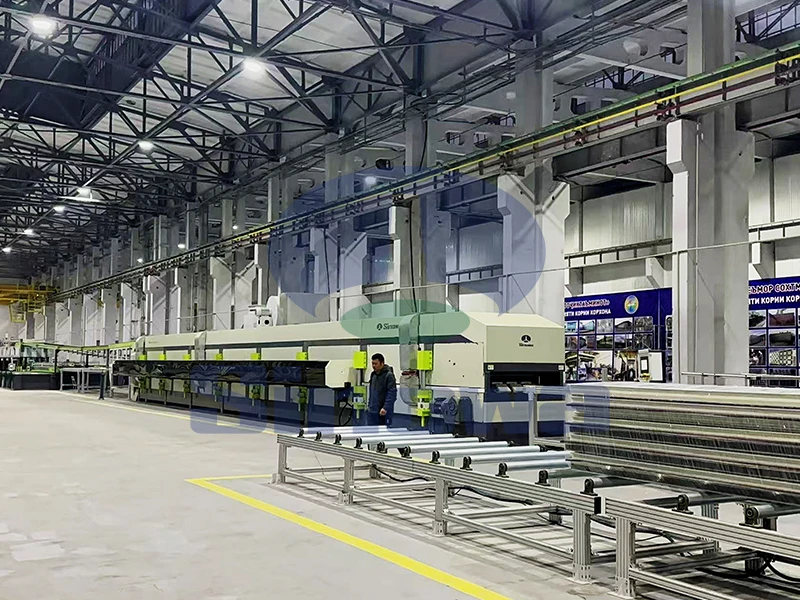
The new sandwich panel machine represents a major leap forward in composite building material manufacturing, designed to deliver continuous, streamlined production of multi-layer insulated panels that serve modern construction demands. This integrated production system unites multiple functional units into one coordinated workflow, removing many bottlenecks found in older semi-automatic equipment. From raw material unwinding and surface sheet leveling to core material placement, bonding, forming and cutting, most operational steps run in sequence with limited manual involvement. The machine is engineered to adapt to different core materials, including foam and mineral wool options, while working with varied surface sheet types to create panels for walls, roofs and special insulated structures. Operators can adjust dimensional parameters easily to change panel thickness and width, supporting flexible production batches rather than only fixed-size runs. The whole layout prioritizes stable material transport and uniform pressure distribution, which directly reduces surface defects, uneven bonding and internal gaps that often appear in panels made by outdated machinery. Every mechanical movement is synchronized to avoid material slippage, ensuring each finished panel maintains consistent geometry and reliable bonding performance across long production cycles.
At the heart of the new sandwich panel machine lies the intelligent control architecture that manages every production parameter in real time. Equipped with a central control platform and distributed sensors spread across the entire line, the system continuously monitors temperature, running speed, feeding volume and pressure within the forming zone. When minor deviations are detected during operation, the control unit automatically fine-tunes settings without pausing the whole line, which greatly lowers the rate of defective products. The human-machine interface simplifies operation, allowing staff to call up preset production recipes for different panel types and review operational data, fault logs and output statistics. Instead of relying on manual calibration for each production shift, the machine retains saved parameter profiles, cutting down changeover time between different product specifications. Safety interlock functions are built into moving sections, triggering protective responses if abnormal conditions emerge, which reduces workplace risks during continuous operation. This intelligent framework also supports data recording for production batches, helping operators trace quality issues and optimize running conditions over extended periods of operation.
The mechanical structure of the new sandwich panel machine is redesigned to enhance stability and extend service life under heavy continuous workloads. Key load-bearing frames use reinforced structural components to resist deformation caused by long-term pressure and vibration, preserving alignment between upper and lower conveying systems. The double-belt laminating section is the core forming area, delivering evenly distributed pressure across the full panel width to ensure tight adhesion between surface sheets and insulation cores. Independent temperature control zones inside the laminator maintain a stable thermal environment for curing, preventing overheating or insufficient bonding in different parts of the panel. Moving parts adopt low-friction transmission structures, which reduce wear and cut down on routine lubrication requirements. Quick-change modules are integrated for tooling and guiding components, so switching between panel profiles does not require extensive disassembly. Overall mechanical rigidity minimizes vibration during high-speed operation, which helps keep panel edges straight and surface texture uniform throughout the manufacturing process.
The raw material feeding system of the new sandwich panel machine improves handling flexibility and material utilization efficiency. Separate feeding stations handle surface sheet coils and insulating core materials respectively, with automatic splicing devices for continuous sheet feeding to stop frequent stops for coil replacement. For liquid foam core materials, the metering and mixing unit precisely combines raw components before injection, controlling foam density and expansion rate to avoid excessive waste or inconsistent core formation. For solid core boards such as mineral wool, the feeding mechanism aligns and positions core pieces accurately between the two facing sheets, preventing offset during lamination. Material tension control keeps metal or composite surface sheets flat, eliminating wrinkling and stretching that would compromise final panel appearance and strength. Sensors detect material shortages or misalignment and send alerts to the control system, avoiding wasted raw materials and damaged equipment. Better material control directly reduces scrap rates and supports more sustainable manufacturing by cutting unnecessary consumption of raw ingredients.
The lamination and curing process optimized in the new sandwich panel machine defines the bonding quality of finished panels. After surface sheets and insulation cores enter the double-belt laminator, combined heat and controlled pressure trigger the curing reaction of adhesive or foam materials, forming a permanent composite structure. Zoned temperature regulation balances heat input across the panel cross-section, ensuring full curing of the core without damaging the outer facing materials. Pressure remains consistent along the production direction so the core does not deform or shift while hardening. The curing length can be adjusted according to different core material characteristics, giving the machine compatibility with slow and fast-curing formulations. After leaving the laminator, panels pass through a gradual cooling section to release internal stress, which prevents warping or bending after cutting. This carefully controlled thermal and pressure cycle ensures strong interlayer bonding, so finished panels maintain structural integrity under long-term environmental exposure.
The cutting and post-processing segment of the new sandwich panel machine delivers precise sizing and neat finished panel edges. Once continuous composite panels exit the cooling zone, they travel to the fixed-length cutting unit, which uses high-speed cutting mechanisms triggered by length measurement signals. The cutting tool maintains stable vertical movement to produce clean cut surfaces without burrs, tearing or edge distortion. After cutting, optional trimming devices remove excess material from panel sides to meet required width tolerances. A conveyor system moves finished panels toward the stacking station, where automated handling components arrange panels neatly without scratching the surface coating. Operators can set multiple target lengths in one production run, so the machine can produce mixed-size panel batches automatically. This post-processing workflow eliminates manual measurement and cutting work, improves dimensional accuracy and reduces physical labor required to handle heavy finished panels.
Energy efficiency and environmental design are prominent upgrades built into the new sandwich panel machine compared to older generations. The thermal circulation system recovers waste heat generated during the curing stage and redirects it to preheating zones, lowering total energy consumption. Sealed structures around foaming and bonding sections limit volatile substance release, creating a cleaner working environment and reducing raw material loss through evaporation. Optimized drive motors only output power matched to real-time load conditions, cutting idle power consumption during standby and low-load periods. Noise reduction treatments are applied to transmission and pumping components, bringing operational noise to a more acceptable level for factory workshops. The machine also reduces water usage in daily operation, as most process stages rely on dry thermal and mechanical treatment. These green-oriented designs help production facilities reduce operating costs while lowering the environmental footprint of sandwich panel manufacturing.
The practical value of the new sandwich panel machine lies in its wide application adaptability and long-term operational economy. Panels produced on this equipment serve a broad range of building projects, including industrial enclosures, temperature-controlled storage spaces, clean working areas and prefabricated building structures. The machine can switch between multiple panel types to meet varying demands for thermal insulation, sound reduction and structural performance. Higher continuous output capacity lowers unit production time, while stable quality reduces rework and after-production rejection. Maintenance access points are well arranged, making routine inspection, part replacement and cleaning simpler and shortening downtime for servicing. The modular design also allows users to add auxiliary units gradually according to growing production needs, instead of replacing the whole line when expanding capacity. As demand for efficient insulated building components continues to rise, this updated sandwich panel machine offers a reliable production solution that balances output speed, product consistency and operational cost control for modern composite material manufacturers.
Gallery of New Sandwich Panel Machine






Tags: new sandwich panel machine, new sandwich panel machine manufacturer, new sandwich panel machine supplier, china new sandwich panel machine, new sandwich panel machine for sale
https://www.sandwichpanelmachinery.com/blog/new-sandwich-panel-machine.html
-

The PU sandwich panel line is a core production setup for making high-performance building insulation panels. This professional PU sandwich panel production line features automated operation to streamline the whole manufacturing process efficiently. Every component of the polyurethane sandwich panel line is precisely calibrated to ensure consistent panel thickness and structural stability. A well-maintained polyurethane sandwich panel production line can greatly boost production efficiency while reducing manual operation errors. The continuous PU sandwich panel line adapts to diverse production demands for different panel sizes and surface styles. With advanced molding technology, the PIR sandwich panel line produces panels with excellent heat preservation and sound insulation properties. Stable running of the PIR sandwich panel production line guarantees reliable product quality for various construction and industrial application scenarios.
-

A phenolic insulation board production line serves as the core equipment for manufacturing high-performance thermal insulation building materials. This phenolic insulation panel production line integrates material mixing, foaming, molding and cutting processes to ensure continuous and stable production efficiency. Every operational link of the insulation board production line is precisely calibrated to produce uniform and durable insulation boards. The automated design of the insulation panel production line effectively reduces manual intervention and improves product consistency. Proper maintenance of the phenolic board production line can greatly extend its service life and maintain steady production output. With optimized structural design, the phenolic panel production line adapts to various production demands and delivers high-quality finished products for thermal insulation engineering applications.
-

A professional rockwool sandwich panel line serves as the core equipment for producing high-performance building panels. This rockwool sandwich panel production line integrates feeding, laminating and forming processes to ensure stable and efficient production. The well-structured rock wool sandwich panel line can process raw rockwool materials into panels with excellent thermal and sound insulation properties. Operators can adjust the running parameters of the rock wool sandwich panel production line to manufacture panels of different thicknesses and specifications. The automated design of the mineral wool sandwich panel production line greatly reduces manual operation errors and improves product consistency. Regular maintenance of the mineral wool sandwich panel line is essential to sustain long-term operational efficiency and guarantee qualified finished panels for diverse construction applications.