Phenolic Foam Board Making Machine
Publication Date: Oct 12, 2026
A phenolic foam board making machine transforms liquid phenolic resin into rigid insulation panels through continuous foaming, curing, and cutting, delivering lightweight, fire-resistant thermal boards for construction and industrial use.
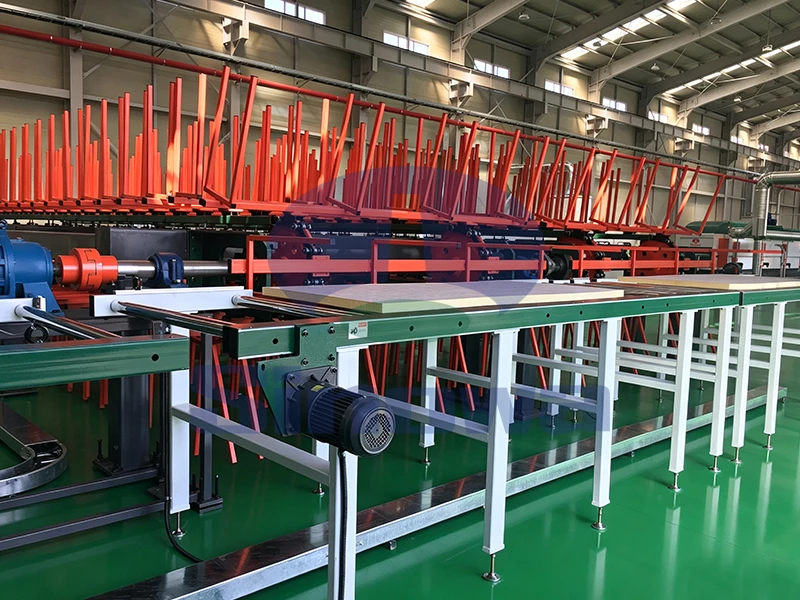
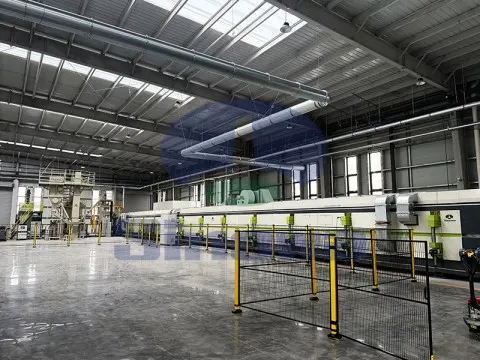
Phenolic foam board making machinery represents a specialized manufacturing system designed to convert liquid phenolic resin formulations into uniform, rigid foam insulation panels on a continuous production line. At its core, the machine receives carefully metered raw materials—phenolic resin, blowing agent, curing catalyst, surfactant, and flame-retardant additives—from precision metering pumps and combines them in a mixing head before discharging the reactive mixture onto a moving conveyor. The entire process is engineered around the thermosetting nature of phenolic foam, where exothermic chemical reactions simultaneously expand the material and cross-link its molecular structure into a stable, closed-cell cellular matrix. Unlike discontinuous batch molding, a continuous line produces boards of consistent thickness, density, and dimensional quality, making the machine a critical asset for manufacturers seeking scalable output without compromising product uniformity. The system integrates several synchronized stations—mixing, foaming expansion, curing, edge trimming, and cutting—so that material flows uninterrupted from liquid chemicals to finished panels.
The raw material preparation and metering section is the foundation of board quality. Liquid phenolic resin is typically stored in temperature-controlled tanks with agitators to prevent settling and maintain viscosity within a workable range. Separate tanks house the blowing agent, acid catalyst, and any functional additives, each connected to its own gear or piston pump that delivers precise volumetric dosing into the mixing chamber. Modern machines incorporate closed-loop flow control systems that adjust pump speed in real time based on output feedback, ensuring the resin-to-catalyst ratio remains stable even when ambient temperature shifts change material viscosity. The blowing agent—a key determinant of foam density and thermal conductivity—is injected under pressure to prevent premature flashing, and its proportion directly affects both the final panel weight and insulation performance. Surfactants are blended in to stabilize the bubble structure during expansion, preventing cell coalescence and collapse before the matrix cures. Because small deviations in dosing can cause large variations in board density across a production run, the metering system is calibrated regularly and often includes redundant sensors that trigger alerts when flow drifts outside an acceptable range.
The mixing head is where all components meet and the foaming reaction begins. A high-shear or low-shear design, depending on the resin system and desired cell structure, blends the resin, catalyst, blowing agent, and additives in seconds, producing a homogeneous reactive mixture that is then poured or sprayed onto the lower release film of the conveyor. The choice of mixing action influences cell size distribution: more vigorous shear tends to create finer cells, while gentler mixing preserves larger, more uniform cells that can improve thermal performance. The mixed material must land on the moving belt at a controlled rate and width, guided by adjustable dams or a traverse pouring device that spreads the material evenly across the board width. As the mixture exits the head, chemical activation begins immediately—the catalyst triggers resin cross-linking while the blowing agent vaporizes, generating gas bubbles that expand the material many times its liquid volume. The machine's geometry at this stage is carefully tuned so that the reacting foam neither sits too thin nor bulges too high, ensuring the board reaches its target thickness as it enters the curing tunnel.
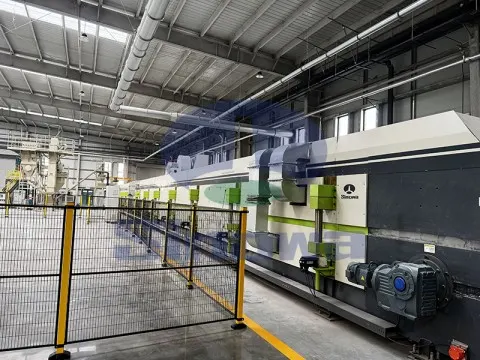
The foaming and forming tunnel follows the mixing section, where the expanding sandwich of release film and foam travels between upper and lower conveyor belts that constrain the material to a fixed thickness. This tunnel is divided into temperature-controlled zones, typically heated from below and above, to accelerate the reaction and set the foam structure. The initial zones encourage rapid expansion and skin formation, while later zones hold the board at a stable temperature long enough for cross-linking to complete before the material exits the constrained belt. Release films—often paper or plastic-coated film—are fed from rollers on both the top and bottom surfaces, preventing the sticky, uncured foam from adhering to the belt and giving the board a smooth, faceted surface that may require minimal secondary finishing. The conveyor speed, belt gap, and tunnel temperature profile are interrelated settings that operators adjust based on the board thickness, density, and resin reactivity. Thicker boards require slower line speeds and gentler heat input to avoid scorching the surface while the core remains uncured, whereas thinner boards can move faster with higher heat intensity.
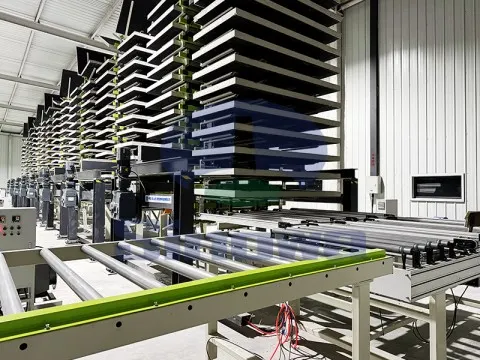
Curing is the chemical phase that determines whether the foam reaches its final mechanical and thermal properties. Phenolic foam cures through an acid-catalyzed condensation reaction that generates water as a byproduct and builds a rigid, three-dimensional network. The curing tunnel must supply enough heat to drive this reaction to completion but not so much that the outer surface degrades or emits excessive volatile compounds. Many production lines include a secondary aging or holding section after the forming tunnel, where freshly cut boards rest in a conditioned environment for hours or days to allow residual reaction to finish and internal stresses to relax. This post-curing step is essential because boards that are packaged or laminated too soon can warp, shrink, or develop internal cracks as the reaction continues after leaving the machine. Temperature and humidity in the aging area are maintained within a moderate range to speed equilibrium without promoting condensation on the board surfaces. The length of the aging period depends on board thickness and formulation, and it directly affects the dimensional stability customers expect from insulation panels used in building envelopes and HVAC ductwork.
Edge trimming and sizing come next, as the continuous foam slab exits the tunnel and moves toward the end of the line. Circular saw blades or rotary cutters trim the side edges to remove uneven, over-expanded material and produce boards of precise width. A cutting system—often a reciprocating blade, flying saw, or hot-wire cutter—then slices the continuous slab into specified lengths as it moves along the conveyor. Flying cutters synchronize their speed with the line to make square, clean cuts while the material is still moving, whereas stationary cutters require the line to pause briefly between cuts. The choice of cutting method affects edge quality: sharp, fine-tooth saw blades produce smooth edges suitable for direct lamination, while hot-wire cutting can leave a slightly melted surface that may need sanding. Dust collection systems are integrated near cutting stations because phenolic foam dust is fine and potentially irritating, and extraction keeps the work area clean while preventing dust accumulation on equipment surfaces. Modern machines also incorporate length encoders and programmable cut counts, allowing operators to switch between board sizes through a touchscreen interface without mechanical retooling.
Surface finishing and optional lamination expand the range of products a phenolic foam board line can produce. After cutting, bare foam boards may pass through sanding machines that shave the surfaces to a uniform thickness and smoothness, preparing them for adhesive application. Many insulation boards are faced on one or both sides with aluminum foil, fiberglass tissue, or woven scrim during production, and the machine can be configured with unwind stations for these facings at the forming tunnel entrance. The facing material acts as a vapor barrier, improves surface durability, and enhances fire performance by sealing the foam against direct flame contact. Some lines also include embossing or scoring stations that create grooves on the board surface for easier mechanical fastening or improved adhesive grip. For specialized applications, boards can be laminated to metal sheets, plaster layers, or other insulation substrates in a downstream process. The flexibility to switch between bare boards, foil-faced boards, and laminated panels on the same machine allows manufacturers to serve multiple market segments—from residential wall insulation to commercial HVAC duct panels—without investing in entirely separate equipment.
Control systems and automation tie the entire line together, allowing operators to monitor and adjust every critical parameter from a central human-machine interface. PLC-based controllers track pump speeds, mixing head temperature, conveyor speed, tunnel zone temperatures, cutting length, and material flow rates, displaying them on live dashboards and storing production data for later analysis. Recipe management allows operators to save and recall settings for different board thicknesses, densities, and formulations, reducing setup time between product runs. Sensors at key points detect anomalies—such as blocked nozzles, film breakage, or temperature overshoot—and trigger alarms or automatic shutdowns to protect both the equipment and the material already in the tunnel. Safety systems include emergency stop circuits, interlocked guarding around moving belts and saws, and ventilation to capture fumes released during curing. Many modern installations also include remote diagnostic capabilities, where equipment manufacturers can access the control system over a secure connection to troubleshoot issues, recommend maintenance, or update software. This level of automation reduces reliance on manual judgment, improves repeatability across shifts, and lowers the skill barrier for new operators.
Maintenance, energy use, and operational economics are practical considerations that shape the real-world value of a phenolic foam board making machine. Because the line handles chemically reactive materials and heat-intensive processes, regular cleaning of the mixing head and flow paths is essential—cured resin buildup can block nozzles and disrupt dosing precision. Wear parts such as saw blades, release film rollers, belt surfaces, and pump seals are inspected on scheduled intervals and replaced before they cause quality defects. Energy consumption is concentrated in the curing tunnel heaters and conveyor drives, and efficient insulation of the tunnel walls plus heat recovery from exhaust air can significantly reduce operating costs. Water-cooling circuits on the mixing head and hydraulic systems maintain stable temperatures during long runs. Material waste occurs mainly during startup, color or formulation changes, and quality rejects, and experienced operators minimize these losses by carefully ramping the line speed and temperature profile. While the capital investment in a continuous phenolic foam line is substantial, its ability to produce large volumes of consistent, high-performance insulation boards at low per-unit labor cost makes it a viable long-term production asset for manufacturers serving the growing demand for energy-efficient building materials.
The market context and future direction of phenolic foam board machinery are shaped by the broader push toward greener, safer building insulation. Phenolic foam is valued for its low thermal conductivity, excellent fire resistance, and low smoke emission compared with many other rigid foam insulations, and manufacturers continue to refine formulations to reduce volatile organic compound emissions and improve recyclability. Machine builders are responding by designing systems that accommodate next-generation blowing agents with lower environmental impact, adjusting pressure and temperature profiles to work with new chemistries. Energy efficiency improvements—such as more precise zone heating, better insulation of the tunnel, and variable-frequency drives on all motors—help producers lower their carbon footprint and operating costs simultaneously. Digital monitoring and predictive maintenance are becoming standard, using sensor data to forecast component wear before failures occur. As building codes worldwide tighten requirements for thermal efficiency and fire safety, demand for high-performance phenolic insulation is likely to grow, and the machines that produce it will continue evolving toward greater precision, flexibility, and sustainability. For manufacturers considering entry into this field, investing in a well-engineered phenolic foam board line means not only acquiring production equipment but also building the process knowledge and quality systems needed to compete in a demanding market.
Gallery of Phenolic Foam Board Making Machine
Tags: phenolic foam board making machine, phenolic foam board making machine manufacturer, phenolic foam board making machine supplier, china phenolic foam board making machine, phenolic foam board making machine for sale
https://www.sandwichpanelmachinery.com/blog/phenolic-foam-board-making-machine.html
-

The PU sandwich panel line is a core production setup for making high-performance building insulation panels. This professional PU sandwich panel production line features automated operation to streamline the whole manufacturing process efficiently. Every component of the polyurethane sandwich panel line is precisely calibrated to ensure consistent panel thickness and structural stability. A well-maintained polyurethane sandwich panel production line can greatly boost production efficiency while reducing manual operation errors. The continuous PU sandwich panel line adapts to diverse production demands for different panel sizes and surface styles. With advanced molding technology, the PIR sandwich panel line produces panels with excellent heat preservation and sound insulation properties. Stable running of the PIR sandwich panel production line guarantees reliable product quality for various construction and industrial application scenarios.
-

A phenolic insulation board production line serves as the core equipment for manufacturing high-performance thermal insulation building materials. This phenolic insulation panel production line integrates material mixing, foaming, molding and cutting processes to ensure continuous and stable production efficiency. Every operational link of the insulation board production line is precisely calibrated to produce uniform and durable insulation boards. The automated design of the insulation panel production line effectively reduces manual intervention and improves product consistency. Proper maintenance of the phenolic board production line can greatly extend its service life and maintain steady production output. With optimized structural design, the phenolic panel production line adapts to various production demands and delivers high-quality finished products for thermal insulation engineering applications.
-

A professional rockwool sandwich panel line serves as the core equipment for producing high-performance building panels. This rockwool sandwich panel production line integrates feeding, laminating and forming processes to ensure stable and efficient production. The well-structured rock wool sandwich panel line can process raw rockwool materials into panels with excellent thermal and sound insulation properties. Operators can adjust the running parameters of the rock wool sandwich panel production line to manufacture panels of different thicknesses and specifications. The automated design of the mineral wool sandwich panel production line greatly reduces manual operation errors and improves product consistency. Regular maintenance of the mineral wool sandwich panel line is essential to sustain long-term operational efficiency and guarantee qualified finished panels for diverse construction applications.