Rock Wool Panel Making Machine
Publication Date: Oct 12, 2026
Rock wool panel making machines transform molten rock into high-performance insulation panels through spinning, curing, and forming lines, delivering efficient, consistent production for modern construction and industrial needs.
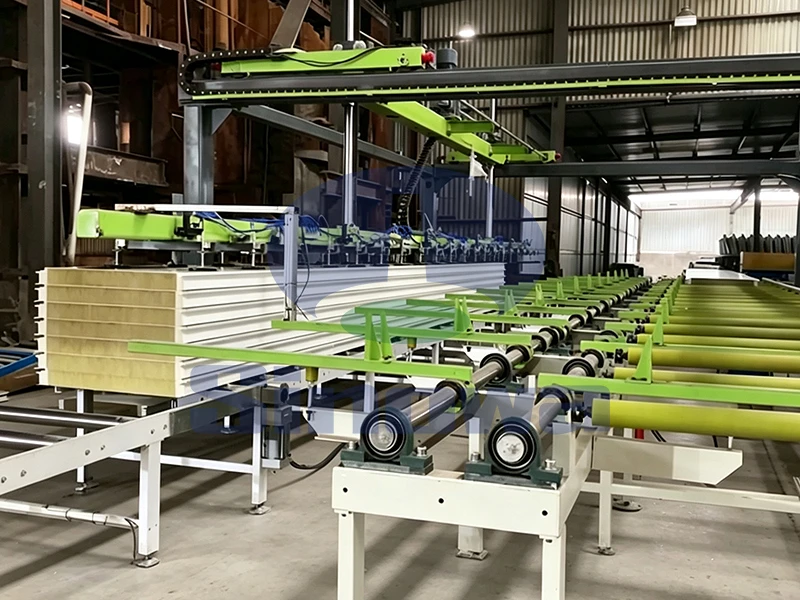
Rock wool panels have become a cornerstone material in the insulation industry, valued for their exceptional fire resistance, thermal performance, and sound absorption qualities. At the heart of this production is the rock wool panel making machine—a sophisticated industrial line that takes natural volcanic rock, typically basalt or diabase, and converts it into uniform, rigid panels suitable for walls, roofs, and industrial equipment. The entire process is engineered to maximize fiber orientation, density control, and dimensional stability while minimizing waste. As building standards around the world continue to emphasize energy efficiency and fire safety, the demand for reliably manufactured rock wool insulation has grown substantially, pushing manufacturers to invest in production lines that balance throughput with precision. A well-designed rock wool panel making machine represents not just a single piece of equipment but an integrated system of thermal, mechanical, and pneumatic subsystems working in continuous harmony.
The production journey begins with the melting stage, where raw materials—primarily basalt, along with slag and a small amount of binder—are loaded into a cupola or electric furnace and heated to temperatures exceeding 1400 degrees Celsius. This extreme heat reduces the rock to a glowing, lava-like liquid that flows out of the furnace at a controlled rate. The consistency and temperature of this molten stream are critical, because any variation directly affects the fiber quality downstream. Modern rock wool panel making machines often include automated temperature monitoring and flow regulation to ensure the melt remains within the optimal window. The furnace itself is lined with refractory materials designed to withstand continuous exposure to extreme heat, and operators carefully manage the ratio of raw materials to achieve the desired chemical composition, which in turn influences the final panel's mechanical and thermal properties.
Once the molten rock reaches the spinning chamber, it is flung onto a series of high-speed spinning wheels or rotors that rotate at several thousand revolutions per minute. Centrifugal force pulls the liquid rock into ultra-fine fibers, each only a few micrometers in diameter. Simultaneously, a phenolic or thermosetting binder is sprayed onto the fibers to bind them together. This stage is where the characteristic wool-like texture of rock wool is born. The spinning process must be finely tuned: too much centrifugal force produces overly fine, fragile fibers, while too little results in coarse, uneven strands that compromise the panel's insulation value. Air currents within the spinning chamber carry the newly formed fibers downward, and the binder begins its chemical reaction, setting the foundation for the mat that will eventually become a panel. Precision here is essential, because fiber diameter and distribution directly determine the panel's density, thermal conductivity, and acoustic performance.
After leaving the spinning chamber, the fibers accumulate on a moving conveyor belt in a loose, fluffy layer. At this point, the material resembles cotton rather than a rigid panel. A pendulum spraying device or a cross-laying conveyor then distributes the fibers in a layered, oscillating pattern, building up a continuous mat of controlled thickness and width. This oscillating layering is a deliberate design choice: it aligns fibers in multiple directions rather than letting them all lie flat, which improves the panel's transverse strength and dimensional stability. The mat passes through a series of compression rollers that gently consolidate it to a target thickness before it enters the curing oven. Throughout this forming section, sensors monitor weight distribution and edge alignment, automatically adjusting conveyor speed and pendulum motion to compensate for any uneven accumulation. The goal is to produce a continuous felt of perfectly uniform density across its entire width.
The curing oven is one of the most energy-intensive and technically critical stages of the rock wool panel making machine. Inside the oven, the mat travels through a long, heated tunnel where hot air is forced through the fiber mat from both above and below. This dual-direction airflow ensures even heat penetration, curing the binder throughout the panel rather than only on the surface. Oven temperatures are typically maintained in the range of 200 to 250 degrees Celsius, and the residence time is precisely controlled to allow the binder to fully polymerize without overheating or scorching the fibers. As the mat exits the oven, it has transformed from a soft felt into a rigid, self-supporting slab. A series of cooling zones immediately follows, lowering the temperature of the slab to a stable level before cutting begins. Proper curing is essential: under-cured panels remain soft and deform over time, while over-cured panels become brittle and lose their resilience.
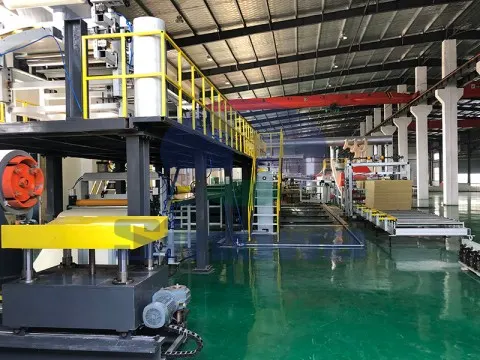
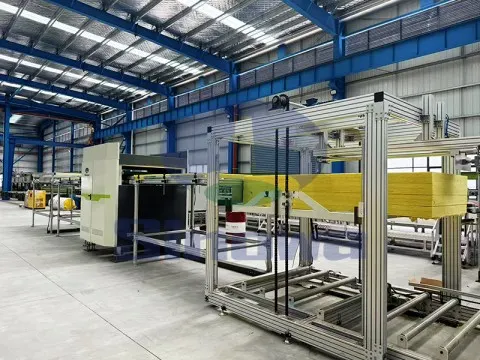
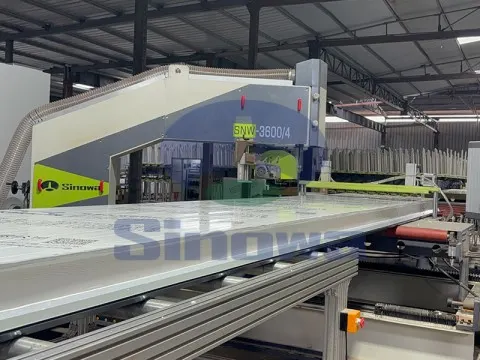
Once the slab has cooled to the correct temperature, it moves into the cutting section of the machine, where diamond-tipped saws and guillotine knives slice it into the specified lengths and widths. The cutting process must be extremely precise because rock wool panels are manufactured to tight tolerances for easy installation. A longitudinal saw trims the edges to the exact width, while a transverse cutter slices the continuous slab into individual panels at programmed intervals. Some production lines also incorporate a notching or slotting station that creates tongue-and-groove edges or curved profiles for specialized applications. After cutting, the panels are conveyed to a stacking and packaging area, where robotic arms or automated stacking systems gather them into bundles and wrap them for shipping. Modern lines can produce panels of varying thickness—from thin boards for HVAC duct insulation to thick slabs for industrial furnace lining—all on the same machine by adjusting conveyor speed, oven temperature, and cutting parameters.
Behind the physical machinery, the automation and control system ties the entire rock wool panel making line together. A central PLC (programmable logic controller) coordinates every subsystem: furnace temperature, spinning wheel speed, pendulum oscillation, oven airflow, conveyor tension, and cutting dimensions. Operators interact with human-machine interface (HMI) screens that display real-time data, production rates, and any fault alerts. Recipe management software allows manufacturers to quickly switch between different panel specifications—changing thickness, density, or width—by loading a saved parameter set rather than manually recalibrating each component. Sensors placed throughout the line continuously feed data back to the controller, enabling closed-loop adjustments that compensate for subtle variations in raw material quality or ambient conditions. This level of automation not only improves consistency but also reduces labor requirements and minimizes the risk of human error during production runs.
The quality of the final rock wool panel depends on several interrelated factors that the machine must continuously manage. Fiber orientation plays a major role: panels with fibers running predominantly perpendicular to the surface offer better compressive strength, while those with fibers lying parallel provide superior thermal performance. The binder application rate must be carefully balanced—too little binder results in loose, crumbly panels, while too much adds unnecessary weight and reduces insulation efficiency. Density uniformity across the panel's width and length is another critical parameter; variations create weak points and inconsistent thermal resistance. Manufacturers also monitor the panel's water repellency, as many rock wool products are treated with a water-repellent additive during the fiber formation stage. The machine's design directly influences all of these factors: precision rollers ensure even compaction, calibrated spray nozzles deliver consistent binder coverage, and closed-loop temperature control guarantees reliable curing. Operators routinely sample panels for density, thickness, and thermal conductivity, and the production line is adjusted based on these feedback loops.
Rock wool panels produced by these machines find application across a remarkably broad range of industries. In commercial and residential construction, they are used as exterior wall insulation, roof insulation, and fire-resistant partitions, valued for their non-combustible nature and ability to improve a building's energy efficiency. In industrial settings, they line furnaces, boilers, pipelines, and storage tanks, where they withstand high temperatures while reducing heat loss. The HVAC sector uses rock wool panels for duct wrapping and acoustic lining, where sound absorption is as important as thermal performance. The petrochemical, power generation, and shipbuilding industries also rely on rock wool for fire protection and thermal management. Because rock wool is inorganic, it does not rot, support mold growth, or attract pests, giving it a long service life that reduces maintenance costs over time. The versatility of the material means that a single rock wool panel making machine can serve multiple market segments by adjusting panel density, thickness, and surface treatment.
The rock wool insulation industry continues to evolve, driven by advances in materials science, energy efficiency regulations, and automation technology. Modern production lines are increasingly designed with energy recovery systems that capture waste heat from the furnace and curing oven to pre-heat incoming combustion air, significantly reducing overall energy consumption. Digital monitoring systems now collect data across entire production lines, enabling predictive maintenance that identifies worn bearings, declining nozzle performance, or degrading refractory lining before they cause unplanned downtime. Sustainability considerations are also shaping machine design: manufacturers are exploring ways to increase the use of recycled slag in the raw material mix, reduce binder emissions through more efficient curing processes, and design equipment for easier disassembly and recycling at end of life. As the construction sector worldwide commits to lower carbon emissions and stricter fire safety, the rock wool panel making machine will remain a critical piece of industrial infrastructure, continuously refining its ability to convert raw stone into a material that protects buildings, conserves energy, and enhances fire safety for decades to come.
Gallery of Rock Wool Panel Making Machine
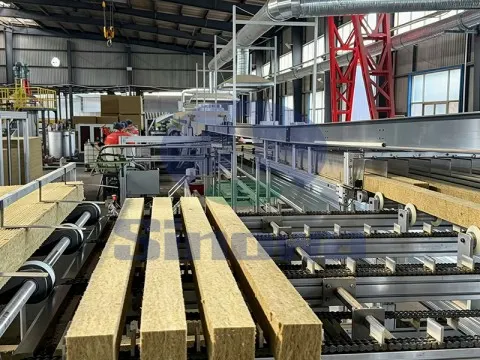
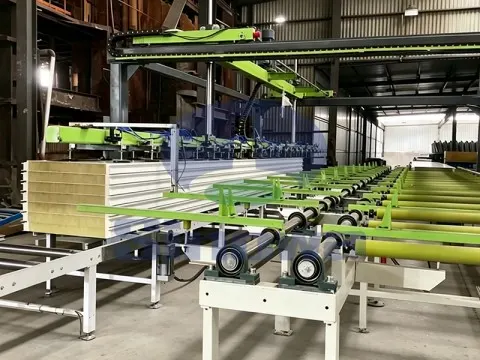
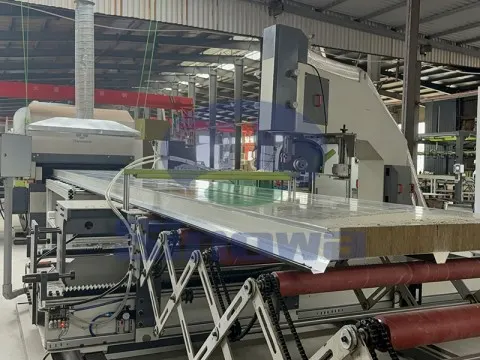
Tags: rock wool panel making machine, rock wool panel making machine manufacturer, rock wool panel making machine supplier, china rock wool panel making machine, rock wool panel making machine for sale
https://www.sandwichpanelmachinery.com/blog/rock-wool-panel-making-machine.html
-

The PU sandwich panel line is a core production setup for making high-performance building insulation panels. This professional PU sandwich panel production line features automated operation to streamline the whole manufacturing process efficiently. Every component of the polyurethane sandwich panel line is precisely calibrated to ensure consistent panel thickness and structural stability. A well-maintained polyurethane sandwich panel production line can greatly boost production efficiency while reducing manual operation errors. The continuous PU sandwich panel line adapts to diverse production demands for different panel sizes and surface styles. With advanced molding technology, the PIR sandwich panel line produces panels with excellent heat preservation and sound insulation properties. Stable running of the PIR sandwich panel production line guarantees reliable product quality for various construction and industrial application scenarios.
-

A phenolic insulation board production line serves as the core equipment for manufacturing high-performance thermal insulation building materials. This phenolic insulation panel production line integrates material mixing, foaming, molding and cutting processes to ensure continuous and stable production efficiency. Every operational link of the insulation board production line is precisely calibrated to produce uniform and durable insulation boards. The automated design of the insulation panel production line effectively reduces manual intervention and improves product consistency. Proper maintenance of the phenolic board production line can greatly extend its service life and maintain steady production output. With optimized structural design, the phenolic panel production line adapts to various production demands and delivers high-quality finished products for thermal insulation engineering applications.
-

A professional rockwool sandwich panel line serves as the core equipment for producing high-performance building panels. This rockwool sandwich panel production line integrates feeding, laminating and forming processes to ensure stable and efficient production. The well-structured rock wool sandwich panel line can process raw rockwool materials into panels with excellent thermal and sound insulation properties. Operators can adjust the running parameters of the rock wool sandwich panel production line to manufacture panels of different thicknesses and specifications. The automated design of the mineral wool sandwich panel production line greatly reduces manual operation errors and improves product consistency. Regular maintenance of the mineral wool sandwich panel line is essential to sustain long-term operational efficiency and guarantee qualified finished panels for diverse construction applications.