Mineral Wool Panel Manufacturing Machine
Publication Date: Oct 12, 2026
Mineral wool panel manufacturing machines automate the production of lightweight, fire-resistant insulation panels used across commercial, industrial, and residential construction, combining fiber formation, curing, and lamination in a single continuous line.
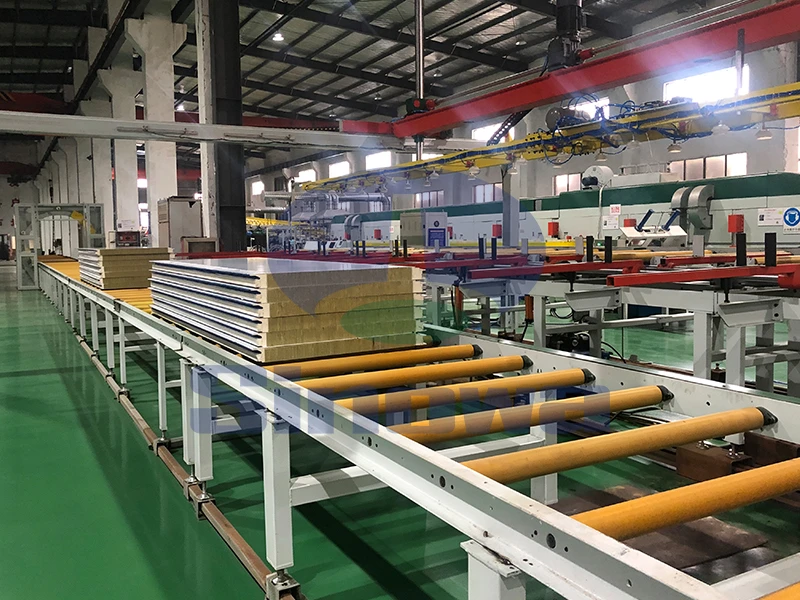
The core of any mineral wool panel production line begins with the melting and fiberizing stage. Raw materials—typically a blend of basalt rock, dolomite, and slag—are fed into a cupola furnace where they are heated to temperatures exceeding 1,400 degrees Celsius until they become a flowing, viscous lava. This molten material is then poured onto a rapidly spinning spinner or a series of rotating wheels that fling the molten stream outward, stretching it into extremely fine fibers measured in single-digit micrometers. A high-velocity air stream cools and carries these fibers downward, while a binder resin is sprayed evenly onto them as they travel. The ratio of fiber to binder is carefully controlled because it directly influences the panel's density, rigidity, and thermal performance. This initial stage is critical: inconsistencies in fiber diameter or binder distribution become permanent defects in the finished board, so modern lines incorporate laser sensors and feedback loops to maintain uniformity.
Once the fibers and binder mixture is formed, it falls onto a conveyor belt that transports it through a collection chamber. Here, the loose wool is collected and shaped into a continuous mat of controlled thickness. The mat then enters a pendulum spreading or cross-laying section, where the fiber orientation is manipulated to build up a layered structure. This step is far more than mere stacking—by layering the fibers in overlapping, directional patterns, manufacturers can tune the panel's mechanical strength across different axes. A panel that will be used as a structural sheathing, for instance, benefits from a different fiber layering geometry than one intended solely for thermal insulation. The collected mat is then passed through a compression conveyor that sets its preliminary thickness before entering the curing oven.
The curing oven is the heart of the production line and where the chemical transformation occurs. The layered wool mat passes through a long, tunnel-like oven heated to temperatures between 200 and 300 degrees Celsius. Hot air is forced through the mat from top and bottom, triggering the polymerization of the phenolic binder resin. As the resin cures, it bonds individual fibers together into a rigid, self-supporting board. The oven speed, air temperature, and airflow volume are interrelated variables that operators must balance: too much heat or too long a dwell time can degrade the fiber surface and discolor the board, while insufficient curing leaves a tacky, structurally weak product. Advanced ovens use multiple heating zones with independent control, allowing the line to ramp up gradually, hold at peak temperature, and then cool slightly before exit. This zone-by-zone approach produces a more consistent cure across the entire width of the panel, particularly important for wide-format boards used in curtain wall and roof applications.
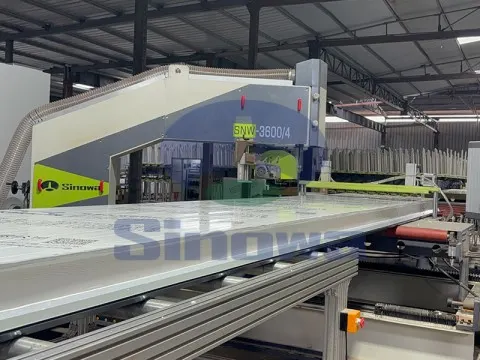
After exiting the oven, the rigid panel passes through a series of cooling rollers that bring its temperature down to near ambient. This rapid cooling locks in the cured structure and prevents warping that could occur if the board were stacked while still warm. The cooled board then reaches the cutting station, where rotating saw blades or abrasive cutters trim the edges to exact width and crosscut the panel to specified lengths. High-speed lines may employ flying saws that cut on the fly to maintain continuous production, while smaller or more precise operations use stationary cutters with servo-driven positioning. Dust extraction systems surround the cutting area, since mineral wool dust, though non-hazardous in most occupational contexts, must be contained for both air quality and product cleanliness. The trimmed-off edges and off-cuts are collected and recycled back into the fiberizing stage, minimizing waste.
Surface finishing represents another important segment of the line. Depending on the intended application, panels may undergo facing lamination immediately after cutting or at a separate downstream station. Common facings include aluminum foil, fiberglass tissue, kraft paper, or specialized glass cloth. These facings serve multiple functions: they act as vapor barriers, improve acoustic performance, provide a sacrificial surface for adhesive bonding, or simply protect the wool from mechanical damage during handling. The lamination process applies a thin layer of adhesive to the panel surface, rolls the facing material onto it under pressure, and passes the assembly through a short curing section to set the bond. Some lines also incorporate scoring or grooving mechanisms that create deliberate lines of weakness in the panel, allowing it to be bent around curved ducts or architectural contours without cracking. The ability to add these features inline eliminates the need for secondary processing and significantly improves overall factory efficiency.
Quality monitoring on a modern line is increasingly automated and spans the entire process. At the fiberizing stage, cameras and optical scanners measure fiber diameter distribution and mat weight per unit area. As the board exits the oven, inline thickness gauges using laser or nuclear gauge technology continuously check dimensions to tolerances within a fraction of a millimeter. Density is estimated from weight and thickness measurements, and thermal conductivity samples are periodically taken for laboratory verification. Any panel that falls outside preset thresholds is automatically flagged or rejected by the line's control system. Many installations also include acoustic absorption testers or mechanical strength rigs that sample panels at regular intervals, feeding data back into the process control loop. This data-driven approach allows operators to trace any defect back to the exact time, oven zone, or raw material batch, supporting continuous improvement rather than mere end-of-line inspection.
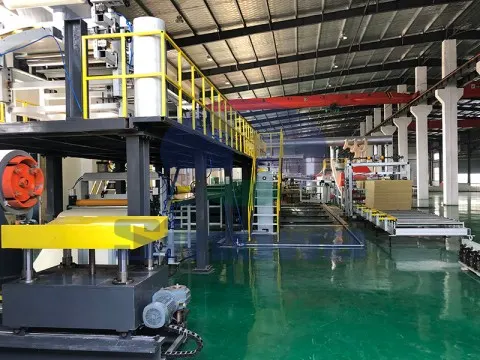
The mechanical design of the line itself reflects decades of engineering refinement. Heavy-gauge steel frames support rotating components that run at very high speeds—the spinner wheels, for example, may rotate at several thousand revolutions per minute, demanding precision balancing and robust bearing housings. Conveyor systems use heat-resistant fabrics or chains that can withstand oven temperatures without degrading. Pneumatic cylinders and servo motors actuate gates, blades, and pressure rollers with repeatable accuracy. Because the production environment involves both high heat and fine dust, all electrical enclosures are sealed and ventilated separately, and moving parts are guarded to stringent occupational safety standards. Maintenance access platforms are integrated along the line, allowing technicians to service spinners, oven burners, and cutter blades without interrupting neighboring sections. The overall footprint of a full-scale line can exceed one hundred meters in length, requiring careful factory layout planning to accommodate raw material storage on one end and finished goods warehousing on the other.
Energy consumption and environmental performance are increasingly central considerations in both the design and operation of these machines. The cupola furnace is the single largest energy consumer, burning coke or alternative fuels to melt the raw stone. Modern installations recover waste heat from the furnace exhaust and from the cooling section of the curing oven, redirecting it to preheat combustion air or to warm factory spaces. Emissions from the melting process are treated through baghouse filters and, in many configurations, scrubbing systems that capture particulate matter and volatile organic compounds released during binder curing. Water used for quenching or cooling is recirculated in closed loops rather than discharged. Equipment manufacturers continue to explore electric melting technologies that could reduce reliance on fossil fuels, though these approaches are still scaling commercially. For plant operators, the payoff of these efficiency measures extends beyond compliance—it directly lowers the per-unit cost of production over a multi-decade equipment lifespan.
The flexibility of a given production line determines the range of products it can economically serve. Some lines are purpose-built for a narrow product specification—say, low-density insulation batts for residential walls—running at high speeds with minimal changeover. Other lines are engineered for versatility, able to switch between different densities, thicknesses, and facings within a single production shift. This versatility requires adjustable oven zones, modular cutter assemblies, and programmable control recipes that store settings for each product type. The business trade-off is clear: dedicated lines achieve lower unit costs at high volume, while flexible lines better serve markets with fragmented demand or shorter product runs. Many manufacturers invest in a mixed configuration, pairing a high-volume core line with a secondary finishing line that handles specialized laminates or custom cuts.
Looking ahead, mineral wool panel manufacturing technology continues to evolve along several interconnected paths. Digitalization is pushing line operators toward fully integrated plant systems where production schedules, quality data, energy use, and maintenance alerts are unified in a single dashboard. Robotics are being introduced for finished-panel stacking and packaging, reducing repetitive manual handling and improving warehouse throughput. Materials science is exploring lower-temperature curing binders and alternative fiber blends that could reduce energy use and broaden performance characteristics. At the same time, growing demand for sustainable, circular construction is encouraging manufacturers to incorporate more recycled slag and post-consumer rock wool back into the melt. For architects, contractors, and building owners, these shifts matter because they translate into panels that are more consistent in quality, more transparently documented, and increasingly aligned with the broader movement toward lower-carbon built environments. The machine itself, in this sense, is not just industrial equipment—it is the bridge between raw geology and the fire-safe, thermally efficient buildings that society depends on.
Gallery of Mineral Wool Panel Manufacturing Machine
Tags: mineral wool panel manufacturing machine, mineral wool panel manufacturing machine manufacturer, mineral wool panel manufacturing machine supplier, china mineral wool panel manufacturing machine, mineral wool panel manufacturing machine for sale
https://www.sandwichpanelmachinery.com/blog/mineral-wool-panel-manufacturing-machine.html
-

The PU sandwich panel line is a core production setup for making high-performance building insulation panels. This professional PU sandwich panel production line features automated operation to streamline the whole manufacturing process efficiently. Every component of the polyurethane sandwich panel line is precisely calibrated to ensure consistent panel thickness and structural stability. A well-maintained polyurethane sandwich panel production line can greatly boost production efficiency while reducing manual operation errors. The continuous PU sandwich panel line adapts to diverse production demands for different panel sizes and surface styles. With advanced molding technology, the PIR sandwich panel line produces panels with excellent heat preservation and sound insulation properties. Stable running of the PIR sandwich panel production line guarantees reliable product quality for various construction and industrial application scenarios.
-

A phenolic insulation board production line serves as the core equipment for manufacturing high-performance thermal insulation building materials. This phenolic insulation panel production line integrates material mixing, foaming, molding and cutting processes to ensure continuous and stable production efficiency. Every operational link of the insulation board production line is precisely calibrated to produce uniform and durable insulation boards. The automated design of the insulation panel production line effectively reduces manual intervention and improves product consistency. Proper maintenance of the phenolic board production line can greatly extend its service life and maintain steady production output. With optimized structural design, the phenolic panel production line adapts to various production demands and delivers high-quality finished products for thermal insulation engineering applications.
-

A professional rockwool sandwich panel line serves as the core equipment for producing high-performance building panels. This rockwool sandwich panel production line integrates feeding, laminating and forming processes to ensure stable and efficient production. The well-structured rock wool sandwich panel line can process raw rockwool materials into panels with excellent thermal and sound insulation properties. Operators can adjust the running parameters of the rock wool sandwich panel production line to manufacture panels of different thicknesses and specifications. The automated design of the mineral wool sandwich panel production line greatly reduces manual operation errors and improves product consistency. Regular maintenance of the mineral wool sandwich panel line is essential to sustain long-term operational efficiency and guarantee qualified finished panels for diverse construction applications.