Is The Cutting Of Sandwich Panel Machine Hydraulic or Electric?
Publication Date: Oct 13, 2026
The cutting action in a sandwich panel machine can be hydraulic, electric, or a hybrid of both; the choice depends on panel thickness, core density, line speed, noise limits, and maintenance preferences.
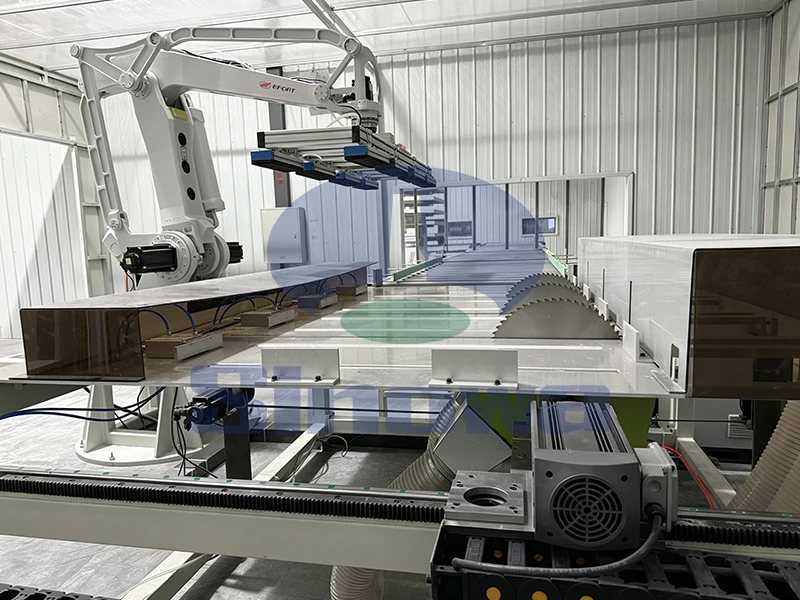
A sandwich panel line forms two thin metal skins around an insulating core, then cuts the continuous panel into desired lengths. The cutting unit sits after the laminating or roll-forming section, and its job is to sever metal facings and core material in one stroke without disturbing the panel’s flatness, insulation, or edge quality. Because the machine can handle light foam cores, dense mineral wool, thin sheets, or heavier gauges, the cutting actuator must deliver the right combination of force, speed, and synchronization. Some machines use a straight shearing blade, while others use a circular saw, a moving cut-off carriage, or a fixed cut after the line stops. In each case, the real question is not whether the machine as a whole is electric, but what directly drives the blade through the panel.
Hydraulic cutting systems use a power pack, oil reservoir, valves, piping, and a cylinder to push the blade or blade holder downward. The cylinder provides high force in a compact package, which is especially useful when the panel has thick steel skins or a dense mineral core. A hydraulic accumulator can deliver a fast, powerful stroke, allowing the blade to cut through hard material quickly while the line is still moving. This makes hydraulic cutting common in heavy-duty or high-speed lines where electric force alone would be insufficient. The trade-off is that hydraulic systems require oil, filters, seals, hoses, and regular leak inspection. They can also generate heat and noise, and an oil leak may contaminate finished panels or the factory floor.
Electric cutting systems use motors, usually servo motors or gear motors, to drive the blade through mechanical transmission parts such as ball screws, racks, pinions, eccentric shafts, or crank mechanisms. An electric machine tends to be cleaner because there is no hydraulic oil to maintain, and it is often easier to connect to digital controls. Servo-driven cutters can be programmed to accelerate with the panel during a flying cut, then return to the home position. This type of system is attractive for light foam panels, lower production volumes, locations with strict noise or cleanliness expectations, and plants where technicians prefer electrical maintenance over hydraulic maintenance. The limitation is that very high cutting force may require larger motors and more robust mechanical parts, which can make the cutting head heavier and more expensive.
Many modern sandwich panel machines are not purely one type or the other. A machine may use an electric servo motor to move the cut-off carriage, but still use a small hydraulic or pneumatic cylinder to clamp the panel before cutting. Conversely, a hydraulic shear may use an electric motor to drive the hydraulic pump. Some machines use a circular saw blade powered by an electric motor, while the feed motion of the saw head is hydraulic. Therefore, an “electric cutting machine” may refer to the main motion control rather than the actual cutting stroke. If the answer matters for equipment selection, it is better to ask what actuator pushes the blade through the panel and what system controls the cut length.
The cutting method itself also influences the power source. A guillotine-style shear performs a straight shearing action, which often requires high instantaneous force and therefore commonly uses hydraulics. A circular saw uses a rotating blade, so the cutting energy is mostly provided by an electric motor; however, the saw head may still need a hydraulic or pneumatic feed to move through the panel. Shearing creates a clean square edge without removing material, while sawing creates chips, dust, and noise. For insulated panels with metal skins, mechanical cutting is usually necessary because the skin cannot be softened easily or melted without damaging the panel.
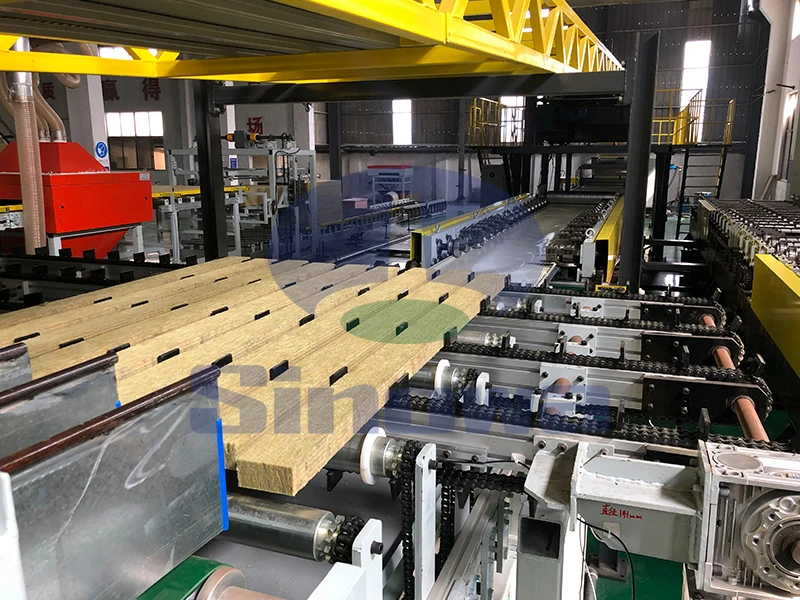
Panel thickness and core density are among the biggest factors. A light foam panel with thin skins may be cut comfortably by an electric servo-driven blade because the material offers little resistance. A dense wool panel, a thick sheet, or a high-load line may need the extra force and rigidity of a hydraulic cylinder. Cutting also involves synchronization. If the line runs continuously, the blade must move with the panel during the cut; otherwise it can scratch the surface, produce a skewed edge, or cause length errors. Hydraulic systems can provide strong dynamic movement, while electric servo systems provide precise motion profiles. The best solution is the one that matches both the material force requirement and the line speed.
Cutting accuracy depends on more than the power source. Electric systems often show strong repeatability because encoders, servo drives, and ball screws can position the blade with consistent response. Hydraulic systems can also be accurate when they use proportional valves, position feedback, and controlled oil temperature. However, hydraulic oil viscosity changes with temperature, seals wear, and valves may respond differently over time. Blade condition, hold-down pressure, support under the panel, and alignment between blade and anvil also affect the final cut. A well-maintained hydraulic cutter may outperform a poorly tuned electric one, and vice versa.
Maintenance and environmental conditions often decide which system operators prefer. Hydraulic systems require oil checks, filter replacement, leak inspection, cylinder rod care, and valve cleaning. They may be less suitable for clean areas where oil contamination must be avoided. Electric systems require lubrication, belt or gear inspection, motor tuning, brake checks, and screw or rack alignment. They are generally cleaner and quieter when idle, although sawing noise may still be high. Plants with experienced electrical technicians may find electric cutters easier to service, while plants already familiar with hydraulic equipment may prefer the robustness of a hydraulic cutting head.
Energy use also differs. A hydraulic power pack may consume energy even when the machine is waiting, partly because oil generates heat. Electric cutting systems usually draw power during the actual cut and return more quickly to low-energy standby. This can make electric systems attractive for intermittent production or light-duty lines. On the other hand, heavy continuous production often values the high force and mechanical simplicity of hydraulics, even if energy efficiency is lower. The right choice is not simply “electric is always better” or “hydraulic is always stronger”; it depends on running hours, material hardness, and production stability.
There is no single universal answer. The cutting of a sandwich panel machine may be hydraulic when high force is needed, electric when cleanliness and motion precision are important, or hybrid when the main drive is electric and a smaller actuator provides clamping or feed. When evaluating a machine, look beyond the marketing label and identify the actual cutting actuator: hydraulic cylinder, servo screw, electric blade ram, circular saw motor, or pneumatic hold-down. Then compare it with the panel types, line speed, maintenance capability, noise limits, and factory environment. That approach leads to a cutting system that cuts cleanly, stays in tolerance, and fits the real production requirements.
Gallery of Sandwich Panel Machine






Tags: sandwich panel machine, sandwich panel machine manufacturer, sandwich panel machine supplier, china sandwich panel machine, sandwich panel machine for sale
-

The PU sandwich panel line is a core production setup for making high-performance building insulation panels. This professional PU sandwich panel production line features automated operation to streamline the whole manufacturing process efficiently. Every component of the polyurethane sandwich panel line is precisely calibrated to ensure consistent panel thickness and structural stability. A well-maintained polyurethane sandwich panel production line can greatly boost production efficiency while reducing manual operation errors. The continuous PU sandwich panel line adapts to diverse production demands for different panel sizes and surface styles. With advanced molding technology, the PIR sandwich panel line produces panels with excellent heat preservation and sound insulation properties. Stable running of the PIR sandwich panel production line guarantees reliable product quality for various construction and industrial application scenarios.
-

A phenolic insulation board production line serves as the core equipment for manufacturing high-performance thermal insulation building materials. This phenolic insulation panel production line integrates material mixing, foaming, molding and cutting processes to ensure continuous and stable production efficiency. Every operational link of the insulation board production line is precisely calibrated to produce uniform and durable insulation boards. The automated design of the insulation panel production line effectively reduces manual intervention and improves product consistency. Proper maintenance of the phenolic board production line can greatly extend its service life and maintain steady production output. With optimized structural design, the phenolic panel production line adapts to various production demands and delivers high-quality finished products for thermal insulation engineering applications.
-

A professional rockwool sandwich panel line serves as the core equipment for producing high-performance building panels. This rockwool sandwich panel production line integrates feeding, laminating and forming processes to ensure stable and efficient production. The well-structured rock wool sandwich panel line can process raw rockwool materials into panels with excellent thermal and sound insulation properties. Operators can adjust the running parameters of the rock wool sandwich panel production line to manufacture panels of different thicknesses and specifications. The automated design of the mineral wool sandwich panel production line greatly reduces manual operation errors and improves product consistency. Regular maintenance of the mineral wool sandwich panel line is essential to sustain long-term operational efficiency and guarantee qualified finished panels for diverse construction applications.