Construction Phenolic Foam Panel Line
Publication Date: Oct 26, 2026
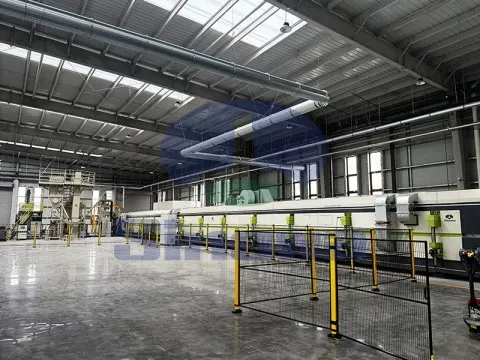
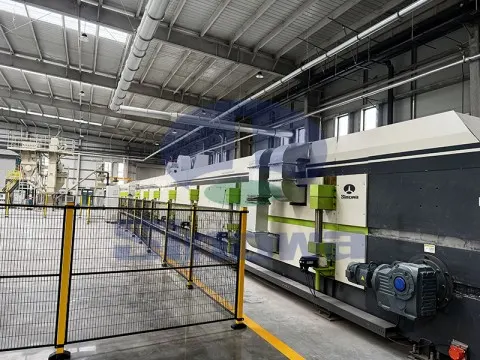
Automated construction phenolic foam panel line for continuous production of thermal insulation sandwich panels. It covers precise batching, foaming, lamination, curing, cutting & stacking, supports various facers for building wall and roof insulation with stable output.
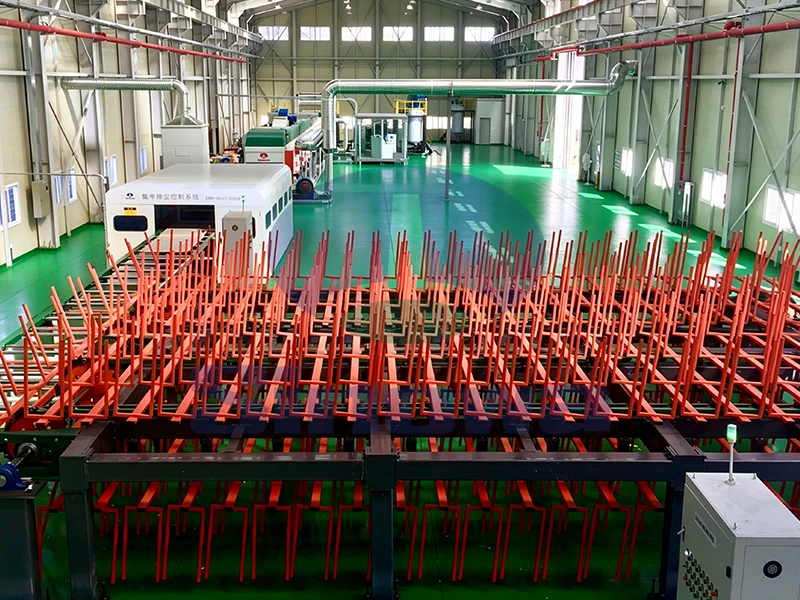
The construction phenolic foam panel line represents a specialized set of interconnected production equipment built to continuously fabricate rigid phenolic foam panels widely adopted within modern building enclosure systems. This production setup integrates raw material feeding, precise proportional mixing, high-pressure foaming, continuous curing, surface lamination, trimming, and finished product conveying into one streamlined workflow, removing fragmented manual handling that often leads to inconsistent panel quality. At the core of the line lies the foaming station, where phenolic resin and curing agents are blended under tightly controlled temperature and pressure conditions to trigger uniform cellular formation inside the foam matrix. Operators adjust flow rates and mixing speed according to target panel thickness and density, ensuring each batch maintains stable internal cell structure without hollow cavities or uneven expansion. Supporting modules deliver facing materials such as composite fabric or metal sheets to bond firmly with foam core during the early curing phase, creating a unified panel structure that combines insulation performance with mechanical strength. Every moving section of the line runs at a synchronized speed, so foaming progression matches the forward movement of surface materials and prevents delamination or incomplete adhesion. Regular visual monitoring and sampling checks are carried out alongside automated sensing components, allowing minor parameter corrections before defects accumulate across long production runs. This continuous working mode greatly raises overall throughput compared with intermittent batch foaming methods, while cutting down material waste caused by repeated setup and mold preparation between separate production cycles.
Material preparation forms the foundational stage for reliable operation of the construction phenolic foam panel line, as the quality and consistency of input ingredients directly shape the final thermal and physical traits of finished panels. The primary liquid components include phenolic resin base, hardener, surfactant, blowing agent, and auxiliary modifiers, all stored in sealed temperature-controlled tanks to avoid premature chemical reaction or property degradation before mixing. Separate pumping circuits transport each ingredient toward the mixing head, with flow regulators designed to sustain fixed mixing ratios throughout extended production periods. Surfactants play a critical role in stabilizing the forming foam bubbles, stopping cell rupture that would otherwise create open-cell structures and weaken thermal resistance, while blowing agents drive controlled expansion to reach the targeted panel density. Solid facing materials are unwound from large rolls at the inlet of the line, guided through tension adjustment rollers to maintain flatness and avoid wrinkles or misalignment as they enter the foaming zone. Dust and surface contaminants on facing layers are removed through simple cleaning units, because foreign particles between foam core and facer will reduce bonding force and create weak points on the panel. All material supply systems feature buffer storage capacity, enabling uninterrupted production during routine roll changes or ingredient refilling, and reducing unexpected stops that disrupt foam curing timing and cause non-conforming products. Careful segregation of incompatible chemicals also eliminates accidental cross-contamination inside pipelines, protecting equipment service life and keeping chemical reactions predictable.
Once raw materials reach the high-pressure mixing unit of the construction phenolic foam panel line, rapid homogenization starts before the mixed compound is evenly distributed onto the moving lower facing sheet. The mixing head uses dynamic agitation to combine all liquid streams in milliseconds, ensuring every tiny volume of the mixture carries the identical proportion of resin, hardener and additives, which is essential for consistent foaming behavior across the full width of the panel. Right after discharge, the blend begins an exothermic foaming reaction, expanding gradually within the confined space between upper and lower facers as the whole assembly travels forward along the production path. Guide plates and forming jigs define the panel width and control vertical expansion to lock in the required thickness, preventing excessive bulging or uneven surface profiles. The initial foaming stage demands strict thermal management, since ambient temperature and the heat released from the chemical reaction jointly influence expansion rate and gel time. If reaction proceeds too fast, foam sets before full expansion and results in overly dense, rigid panels with poor insulation; if too slow, foam may sag or flow sideways and create thin, irregular core layers. Operators rely on real-time feedback from temperature and speed sensors to fine-tune mixing head output and line travel speed, balancing expansion rhythm with curing progression. This synchronized forming process is what distinguishes continuous phenolic foam panel manufacturing from discrete mold-based production, delivering panels with uniform thickness and flat surfaces ready for subsequent processing.
Continuous curing is an extended phase inside the construction phenolic foam panel line, where the freshly formed composite panel moves through a segmented heating tunnel to complete cross-linking of the phenolic resin system. Inside the tunnel, temperature zones are arranged sequentially, starting with mild heat to support stable gelation and gradually shifting to higher sustained heat to advance full curing without inducing thermal damage to the foam cells or outer facers. Air circulation systems spread heat evenly across the top and bottom surfaces of the moving panel, eliminating hot spots that might cause localized shrinkage, cracking or discoloration of the foam core. During this journey, the phenolic matrix builds its inherent structural rigidity and stable closed-cell structure, locking in low thermal conductivity and resistance to dimensional change under normal temperature fluctuation. The duration spent inside the curing tunnel is matched to line speed, so panels exit only after chemical curing reaches a sufficient level, rather than leaving prematurely with uncured inner resin that would deform later in storage or application. Excessive curing time wastes production capacity and may make the foam overly brittle, while insufficient curing leads to post-production shrinkage, surface warping and reduced bond strength between facer and foam core. The tunnel structure also retains volatile substances released during resin cross-linking, directing them to dedicated exhaust treatment instead of dispersing freely into the surrounding workshop space. Proper curing control preserves the core advantages of phenolic foam, including stable thermal performance and inherent fire reaction characteristics that are valued in building thermal insulation projects.
After exiting the curing tunnel, the continuous phenolic foam web enters the cutting and trimming section of the construction phenolic foam panel line, where oversized edges are removed and the endless panel strip is divided into preset finished lengths. Side trimming saws run parallel to the direction of travel, shaving off uneven overflow foam and misaligned facer edges to deliver consistent panel width and clean, straight side edges suitable for tight jointing during building installation. These saw units feature dust collection hoods to capture fine foam debris generated in cutting, maintaining workshop cleanliness and reducing airborne particulate accumulation on adjacent production equipment. Cross-cutting saws activate at programmed intervals synchronized with line speed, slicing the long web into individual panels of custom lengths according to production orders. Cutting blades are selected and maintained to deliver smooth cut surfaces free of crumbling foam edges, because crumbly cut ends create gaps when panels are fitted together on building facades and weaken continuous thermal insulation layers. Following cutting, panels pass through inspection stations where surface flatness, facer integrity and cutting dimension accuracy are quickly checked. Panels with obvious dimensional deviation, surface scratches or edge damage are separated automatically from qualified products, avoiding packing and shipment of defective goods. All trim waste collected at this stage can be gathered for centralized disposal or further processing, supporting orderly waste management within the production workshop layout.
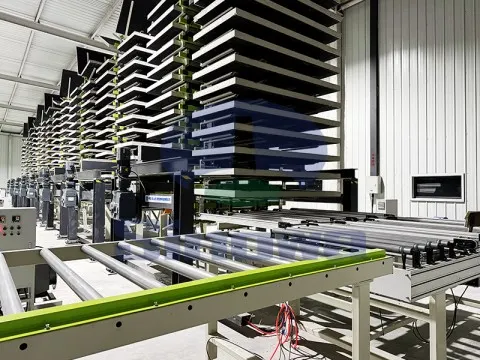
Surface finishing and stacking operations mark the later stage of workflow on the construction phenolic foam panel line, preparing cut and inspected panels for packaging and temporary storage before delivery. Some configurations of the line include optional surface treatment modules that apply protective coatings or release films over the outer facers, shielding panel surfaces from scratches, moisture absorption and dirt contamination during transportation and on-site construction. These coating or film application devices operate at low tension to avoid stretching or wrinkling the facing materials, and they can be activated or bypassed depending on customer requirements for the final panel surface condition. After surface treatment, panels move onto roller conveyors that feed into automatic stacking equipment, which neatly piles panels layer by layer with consistent alignment. Separator sheets may be placed between stacked panels if facer surfaces are prone to sticking under pressure during storage, especially in environments with elevated ambient temperature. Stack height is limited to prevent excessive compressive load from crushing foam cores or causing permanent indentation on panel surfaces. Once each stack reaches the target quantity, it is transferred away from the line by handling equipment to the packing zone, where stacks are bundled and wrapped to resist moisture and mechanical impact in transit. This automated stacking sequence replaces heavy manual lifting, lowering the risk of panel damage from dropping or uneven handling and improving overall production efficiency for large order volumes.
Daily maintenance and condition monitoring are indispensable to sustain stable, long-term performance of the construction phenolic foam panel line and reduce unexpected downtime. Key focus areas include the mixing head, where residual cured phenolic material can build up inside nozzles and pipelines if not cleaned according to fixed schedules, disrupting ingredient flow and ruining mixing uniformity. Seals, pumping diaphragms and tension rollers are inspected regularly for wear, since worn components can cause liquid leakage, unstable material flow or loose facer tension that generates defective panels. Heating elements, circulation fans and temperature sensors within the curing tunnel are calibrated periodically to ensure temperature readings match actual conditions inside each zone, preventing hidden curing inconsistencies that may not appear until panels are used in construction. Drive chains, belts and gearboxes receive scheduled lubrication to maintain synchronized speed across all linked segments of the line; speed mismatch between foaming, curing and cutting stations is one of the most frequent sources of continuous production faults. Operators keep simple operational logs recording running hours, parameter adjustments and fault occurrences, helping maintenance teams identify recurring issues and plan proactive component replacement before failure. The workshop layout around the line also reserves access space for inspection and part removal, so maintenance work can be completed quickly without full disassembly of large production modules. Consistent upkeep preserves production stability and extends the usable service lifespan of the whole line system.
The construction phenolic foam panel line serves as a foundational industrial solution to meet the rising market demand for high-performance thermal insulation panels used across diverse building thermal preservation systems. Compared with equipment for other foam insulation materials, this line is engineered specifically to accommodate the unique chemical traits of phenolic resin, managing its exothermic reaction, curing characteristics and tendency toward brittleness with tailored mixing, forming and curing controls. Panels produced on this line find application on exterior building walls, roof insulation, partition systems and ventilation duct insulation, delivering reliable thermal resistance while supporting lightweight building assembly. As building design continues to place greater emphasis on thermal management and long-term enclosure durability, the flexible adjustability of this production line allows manufacturers to switch between different panel thicknesses, facer types and core densities to match varied project needs. The continuous production principle embedded in the line balances output scale with product consistency, helping to stabilize supply of phenolic foam panels for construction projects of different sizes. While operation requires skilled personnel familiar with both mechanical adjustment and the chemical behavior of phenolic foaming systems, well-managed lines can sustain steady, predictable output over long operating cycles. Ongoing refinement of auxiliary control systems continues to optimize material utilization and operational convenience, keeping this production technology relevant as building enclosure practices evolve year after year.
Gallery of Construction Phenolic Foam Panel Line
Tags: construction phenolic foam panel line, construction phenolic foam panel line manufacturer, construction phenolic foam panel line supplier, china construction phenolic foam panel line, construction phenolic foam panel line for sale
https://www.sandwichpanelmachinery.com/blog/construction-phenolic-foam-panel-line.html
-
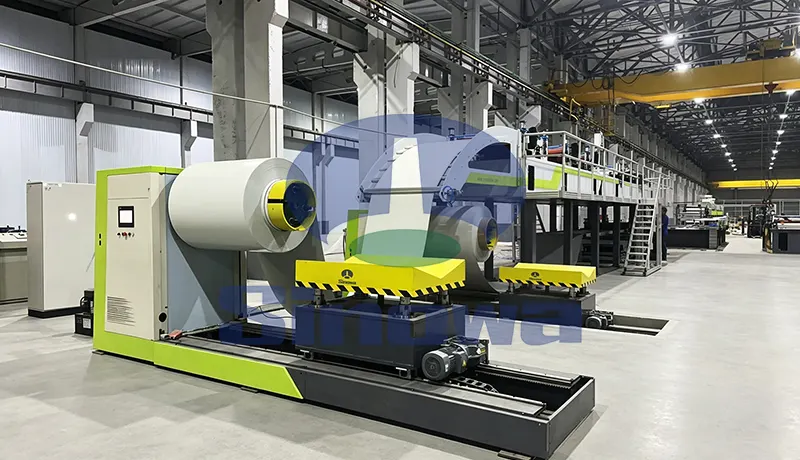
The PU sandwich panel line is a core production setup for making high-performance building insulation panels. This professional PU sandwich panel production line features automated operation to streamline the whole manufacturing process efficiently. Every component of the polyurethane sandwich panel line is precisely calibrated to ensure consistent panel thickness and structural stability. A well-maintained polyurethane sandwich panel production line can greatly boost production efficiency while reducing manual operation errors. The continuous PU sandwich panel line adapts to diverse production demands for different panel sizes and surface styles. With advanced molding technology, the PIR sandwich panel line produces panels with excellent heat preservation and sound insulation properties. Stable running of the PIR sandwich panel production line guarantees reliable product quality for various construction and industrial application scenarios.
-
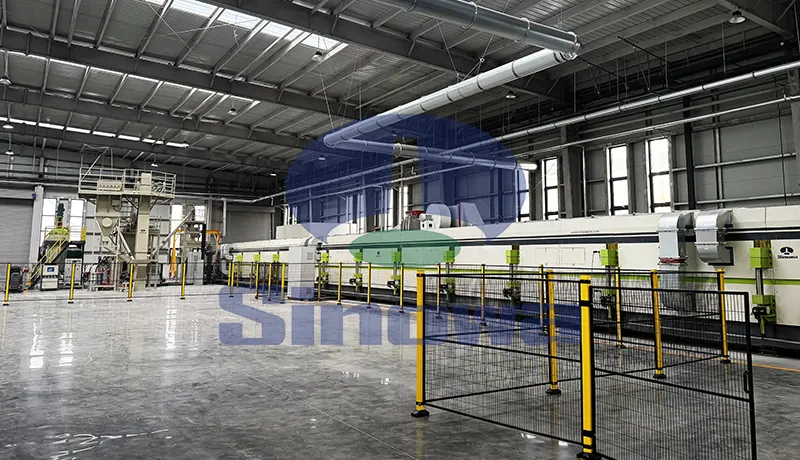
A phenolic insulation board production line serves as the core equipment for manufacturing high-performance thermal insulation building materials. This phenolic insulation panel production line integrates material mixing, foaming, molding and cutting processes to ensure continuous and stable production efficiency. Every operational link of the insulation board production line is precisely calibrated to produce uniform and durable insulation boards. The automated design of the insulation panel production line effectively reduces manual intervention and improves product consistency. Proper maintenance of the phenolic board production line can greatly extend its service life and maintain steady production output. With optimized structural design, the phenolic panel production line adapts to various production demands and delivers high-quality finished products for thermal insulation engineering applications.
-
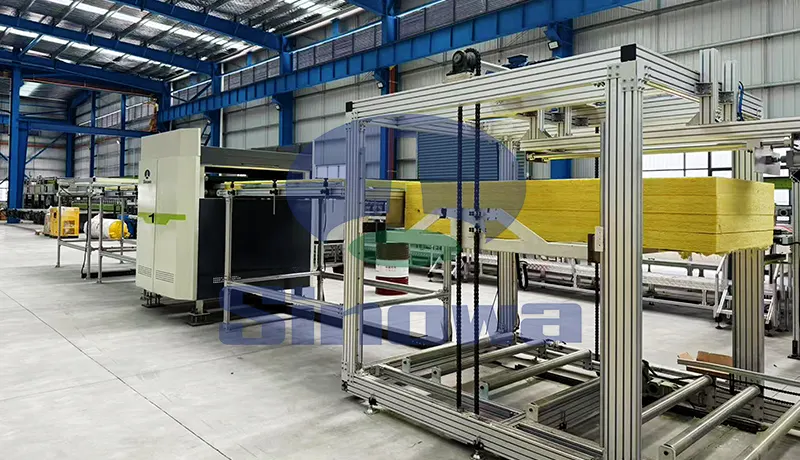
A professional rockwool sandwich panel line serves as the core equipment for producing high-performance building panels. This rockwool sandwich panel production line integrates feeding, laminating and forming processes to ensure stable and efficient production. The well-structured rock wool sandwich panel line can process raw rockwool materials into panels with excellent thermal and sound insulation properties. Operators can adjust the running parameters of the rock wool sandwich panel production line to manufacture panels of different thicknesses and specifications. The automated design of the mineral wool sandwich panel production line greatly reduces manual operation errors and improves product consistency. Regular maintenance of the mineral wool sandwich panel line is essential to sustain long-term operational efficiency and guarantee qualified finished panels for diverse construction applications.