What Fire Rating Can Panels From PIR Sandwich Panel Production Line Achieve?
Publication Date: Oct 20, 2026
PIR sandwich panels made on continuous production lines can deliver fire resistance ranging from 30 minutes up to over 120 minutes. The PIR core forms a protective char layer under flame, limiting heat transfer. Achievable fire performance depends on core thickness, facing materials, foam formulation and panel edge finishing for building wall and roof assemblies.
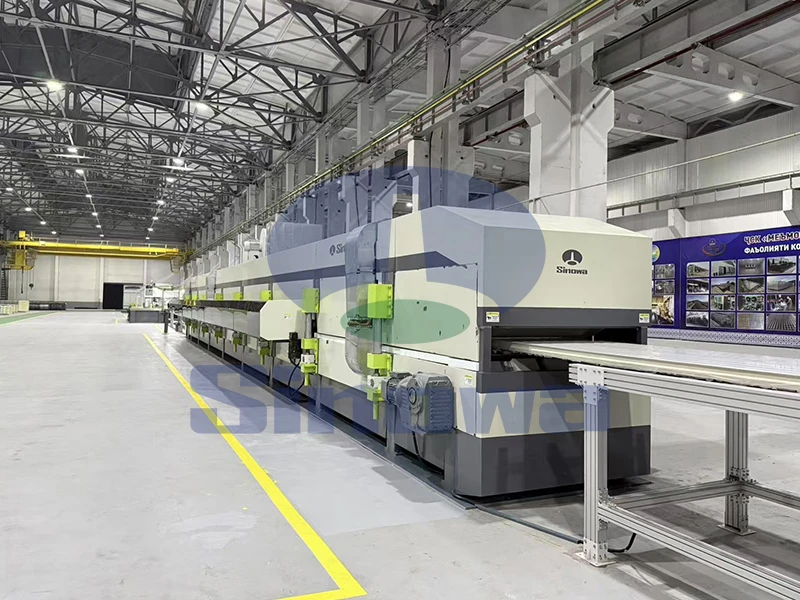
When evaluating the fire performance of panels produced by a PIR sandwich panel production line, it is essential to start with the inherent chemical structure of the polyisocyanurate core that forms the heart of these composite building components. Unlike many foam insulation materials that melt and drip rapidly when exposed to flame, PIR material undergoes a charring process upon heating, creating a stable carbonised layer that covers the surface of the foam core. This char layer acts as a natural barrier, slowing the transfer of heat from the fire source deeper into the panel and limiting the release of flammable vapours that would otherwise feed combustion. The production line plays a key role in shaping this behaviour, as precise control over raw material mixing, foaming temperature, curing time and panel pressing ensures consistent cellular structure across the full surface of each finished panel. Variations in these manufacturing parameters can alter the density and uniformity of the PIR core, which in turn changes how quickly the protective char forms during a fire event. Even with identical raw material formulations, inconsistent production may create weak spots where heat can penetrate faster, reducing the overall fire resistance that the panel can deliver. Carefully calibrated production processes therefore lay the foundation for reliable fire behaviour, by making sure every section of the panel core develops that insulating char barrier when exposed to high temperatures.
The fire rating achievable by panels from a PIR sandwich panel production line is also heavily influenced by the type and thickness of the metal or non-metal facing sheets bonded to both sides of the foam core during continuous manufacturing. These facings are not merely decorative or structural elements; they form the first line of defence against flame contact and radiant heat. Thicker facings can delay the moment when heat reaches the PIR core, extending the time before the core begins to react and form its char layer. Different facing materials respond to heat in distinct ways, with some maintaining structural integrity longer under fire exposure while others may deform or crack more quickly. The production line controls the adhesion between facings and the PIR foam, ensuring a strong, continuous bond across the entire panel. Poor bonding can create gaps between the skin and core, allowing hot gases and flame to travel along the interface, bypassing the protective char and accelerating panel degradation. During continuous panel forming, the pressure applied while the PIR foam cures locks the facings firmly to the core, eliminating hidden voids that could compromise fire performance. Matching the selection of facing materials to the intended application allows manufacturers to tune the fire performance range of the finished panels, expanding the scope of fire resistance levels that can be reached from the same production setup.
Another major factor affecting the fire rating of PIR sandwich panels from the production line is the thickness of the PIR foam core itself, which can be adjusted by modifying the spacing of forming equipment within the continuous line. Thicker PIR cores contain more material available to form the heat-resistant char layer when fire strikes, and they provide greater thermal resistance to slow heat transfer through the full depth of the panel. As core thickness increases, the time required for heat to pass from the exposed side to the unexposed side grows significantly, which directly improves the fire performance metrics measured in fire exposure tests. However, core thickness alone cannot guarantee higher fire performance, as the quality of the foam matrix remains critical. If the foaming process generates large, uneven air pockets within the core, heat can move through those voids more quickly, negating some of the benefits of extra thickness. Operators of the production line adjust chemical injection rates and line speed to maintain fine, closed-cell foam structure even when producing thicker panels. Balancing line speed, foam expansion and curing time prevents incomplete reaction of the PIR chemicals, which would leave unreacted components that can increase flammability. This means that the production line can produce panels across a range of core thickness options, each capable of delivering different fire performance levels when manufactured under stable and well-monitored operating conditions.
How the panels are cut, handled and finished after exiting the PIR sandwich panel production line also has a meaningful impact on the fire rating they can achieve in real use conditions. The continuous line outputs long panel stock that is later cut to custom lengths, and cutting operations create exposed edges where the PIR foam core is no longer protected by the outer facings. These raw cut edges are vulnerable points, because flame can directly contact the foam core without first passing through the facing sheet. Without suitable edge treatment, fire can attack the core at panel joints and cut ends, spreading along the foam and reducing the overall fire resistance of an assembled wall or roof system. The production environment can include optional edge profiling stations that shape panel ends to fit together tightly during installation, minimising open gaps between adjacent panels. Small gaps between joined panels can allow hot gas penetration, creating paths for fire to spread behind the facings. In some cases, supplementary edge treatments can be applied either inline or as a secondary process to cover exposed foam edges. Even well-produced panels with strong fire performance can underperform in a fire if their cut edges remain unprotected after installation. This demonstrates that fire rating is not only a property of the panel material itself, but also depends on the finishing processes connected to the main production line and the final assembly method on site.
It is important to distinguish between surface flame spread performance and load-bearing fire resistance when discussing what fire rating PIR sandwich panels from the production line can achieve, as these two properties describe separate behaviours during fire exposure. Surface flame spread describes how quickly fire travels across the outer surface of the panel, while fire resistance refers to how long the panel assembly can maintain its separation function, stopping heat and flame from moving through to the opposite side. PIR sandwich panels produced on properly managed lines typically show limited flame spread across their outer facings, because the facings resist ignition and the PIR core tends to char rather than support rapid flame propagation once ignited. The production process affects both characteristics at the same time. If foam curing is incomplete, residual reactive compounds can increase flame spread across exposed foam surfaces. The continuous line’s ability to maintain consistent chemical ratios ensures that the finished foam suppresses flame propagation once the char layer forms. However, the panels are not designed to retain structural load indefinitely under intense fire. As temperatures rise over extended exposure, facings may lose strength and the charred foam core will gradually lose its insulating capacity. The production line can optimise formulations to improve one or both of these fire-related properties, but the achievable fire performance will always sit within a defined range that must be assessed under realistic fire exposure conditions.
The formulation of the PIR raw materials used in the sandwich panel production line represents one of the most powerful ways to adjust the fire performance of finished panels. The base polyisocyanurate chemistry can be modified through carefully selected additives that influence ignition threshold, smoke generation and char stability during combustion. Different additive packages alter how much smoke forms when the panel is heated, alongside the tendency of the burning material to release flammable gases. The continuous production process requires additives to mix uniformly with the PIR resin stream as it is pumped into the sandwich panel forming zone. Poor mixing leads to uneven distribution of additives across the foam core, creating areas with reduced fire protection and inconsistent test results. Production line operators must maintain precise temperature control of the liquid chemical streams before mixing, as temperature changes affect viscosity and mixing efficiency. When raw materials are combined correctly, the resulting foam forms a denser, more robust char layer that resists erosion by hot flames and air flow. Even minor changes to the chemical formulation can shift the fire performance range of the panels, so any adjustments to raw material blends require careful monitoring of line conditions. This flexibility allows the same production line to manufacture panels with different fire performance capabilities to match different building use scenarios.
Smoke behaviour during fire exposure is closely tied to the fire rating discussion for panels made on a PIR sandwich panel production line, as smoke development is a critical safety consideration alongside flame resistance. When PIR foam is subjected to heat, the carbonised char layer limits the amount of material that undergoes full combustion, which helps restrict the total volume of smoke produced compared with many other organic foam materials. The production line’s control over foam density and chemical formulation directly impacts smoke characteristics. Higher density PIR cores produced under fully cured conditions tend to produce less smoke when heated, while incomplete curing can increase smoke emission during thermal breakdown. The facings also affect smoke output; metal facings do not burn and contribute very little smoke, while alternative facing materials may generate smoke once their own ignition threshold is reached. It is worth noting that smoke behaviour is not identical to fire resistance, and panels that deliver strong resistance to flame penetration may still produce measurable smoke under intense heating. The continuous manufacturing process can be tuned to reduce smoke development without completely sacrificing thermal insulation or mechanical panel strength. This balance is a key consideration, as building applications often require both the ability to resist flame spread and controlled smoke release in the event of fire, and the production line can be configured to meet these combined requirements within its achievable performance range.
Real-world installation conditions ultimately determine whether PIR sandwich panels from the production line can realise their full achievable fire rating, because panels are almost never used as standalone individual pieces. Once manufactured, panels are assembled into larger wall, partition or roof systems with fasteners, sealing materials, support frames and joints between panels. Each of these additional components can become weak points in a fire. Fasteners that conduct heat can transfer thermal energy through the panel assembly, creating local hot spots that break down the panel structure faster. Sealants used at joints may soften or burn when exposed to heat, opening gaps that allow flame and hot gases to penetrate behind the panel facings. Even panels produced perfectly on the PIR sandwich panel production line can fail to reach their expected fire performance if installed with incompatible accessories or poorly sealed joints. The design of the supporting structure also plays a role, because if the frame holding the panels collapses under fire, the panel assembly will lose its separating function regardless of the panel core’s fire properties. Understanding this relationship highlights that the fire performance from the production line sets a baseline capability, but the final fire behaviour of the completed building assembly depends on the full system design. Proper installation practices and compatible auxiliary materials are required to preserve the fire characteristics built into each panel during continuous manufacturing, ensuring the panels perform as anticipated when faced with fire in an actual building environment.
Gallery of PIR Sandwich Panel Production Line
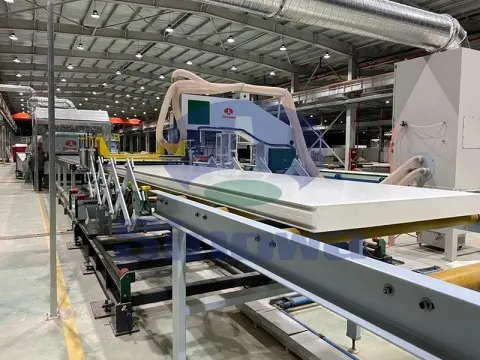
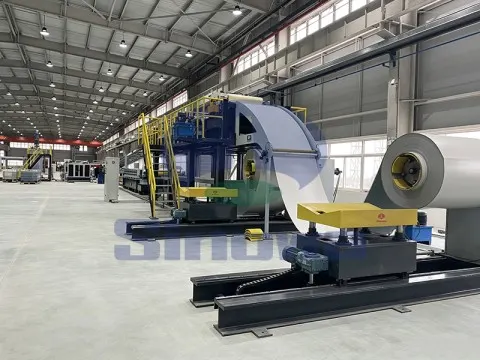
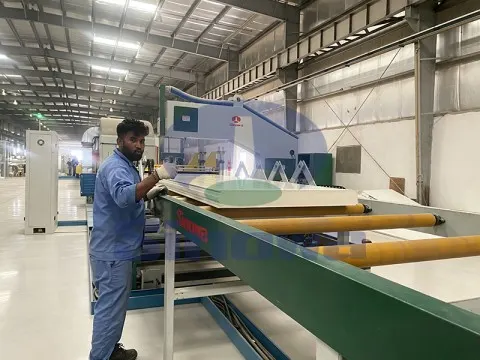
Tags: pir sandwich panel production line, pir sandwich panel production line manufacturer, pir sandwich panel production line supplier, china pir sandwich panel production line, pir sandwich panel production line for sale
-
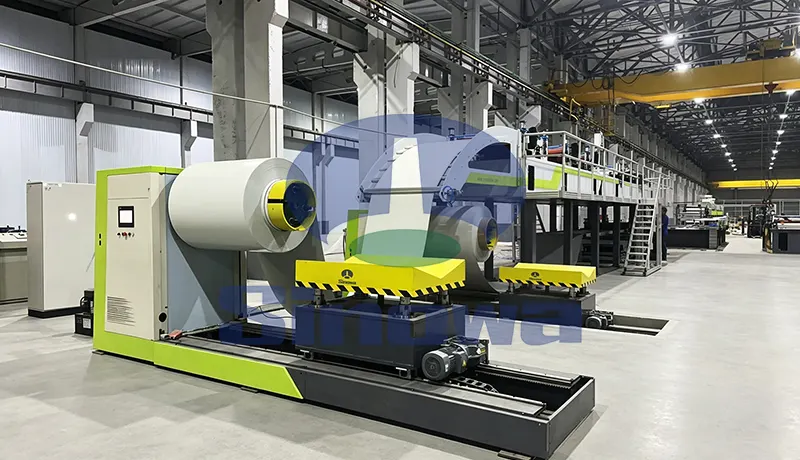
The PU sandwich panel line is a core production setup for making high-performance building insulation panels. This professional PU sandwich panel production line features automated operation to streamline the whole manufacturing process efficiently. Every component of the polyurethane sandwich panel line is precisely calibrated to ensure consistent panel thickness and structural stability. A well-maintained polyurethane sandwich panel production line can greatly boost production efficiency while reducing manual operation errors. The continuous PU sandwich panel line adapts to diverse production demands for different panel sizes and surface styles. With advanced molding technology, the PIR sandwich panel line produces panels with excellent heat preservation and sound insulation properties. Stable running of the PIR sandwich panel production line guarantees reliable product quality for various construction and industrial application scenarios.
-
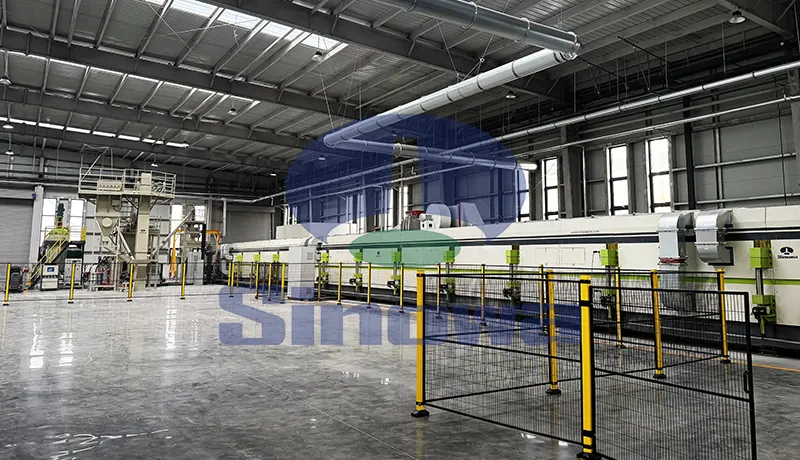
A phenolic insulation board production line serves as the core equipment for manufacturing high-performance thermal insulation building materials. This phenolic insulation panel production line integrates material mixing, foaming, molding and cutting processes to ensure continuous and stable production efficiency. Every operational link of the insulation board production line is precisely calibrated to produce uniform and durable insulation boards. The automated design of the insulation panel production line effectively reduces manual intervention and improves product consistency. Proper maintenance of the phenolic board production line can greatly extend its service life and maintain steady production output. With optimized structural design, the phenolic panel production line adapts to various production demands and delivers high-quality finished products for thermal insulation engineering applications.
-
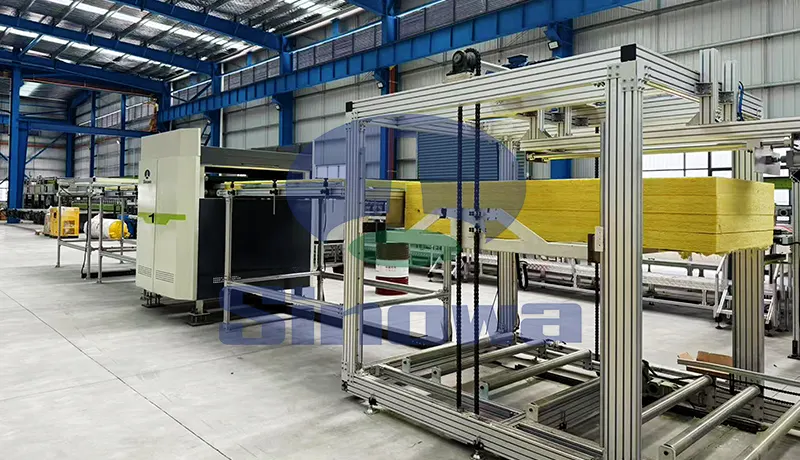
A professional rockwool sandwich panel line serves as the core equipment for producing high-performance building panels. This rockwool sandwich panel production line integrates feeding, laminating and forming processes to ensure stable and efficient production. The well-structured rock wool sandwich panel line can process raw rockwool materials into panels with excellent thermal and sound insulation properties. Operators can adjust the running parameters of the rock wool sandwich panel production line to manufacture panels of different thicknesses and specifications. The automated design of the mineral wool sandwich panel production line greatly reduces manual operation errors and improves product consistency. Regular maintenance of the mineral wool sandwich panel line is essential to sustain long-term operational efficiency and guarantee qualified finished panels for diverse construction applications.