PU Foam Panel Manufacturing Machine
Publication Date: Oct 15, 2026
PU Foam Panel Manufacturing Machine, automatic continuous production line for PU/PIR insulated sandwich panels. Make wall & roof panels for buildings, cold storage. High precision foaming, stable operation, customizable sizes.
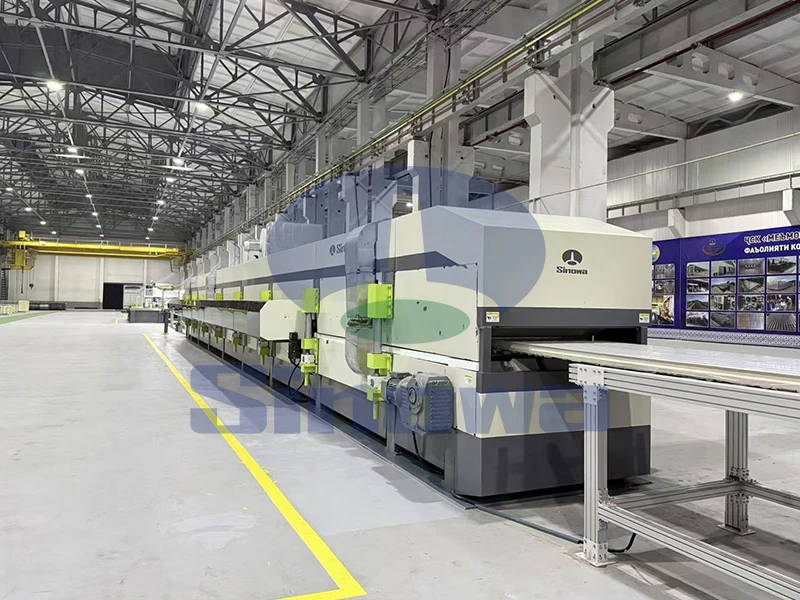
PU Foam Panel Manufacturing Machine represents an integrated industrial system built to produce continuous polyurethane foam composite panels, merging mechanical motion, chemical metering, reactive foaming and automatic shaping functions into one coordinated workflow. At its core, the machine is designed to bond outer facing materials with rigid PU foam core through in-situ chemical reaction, forming lightweight composite boards with reliable thermal insulation performance. The whole setup consists of multiple interconnected modules, each performing a dedicated task that synchronizes with other segments to maintain stable running status. Raw material storage units hold liquid chemical components under controlled temperature conditions to preserve consistent viscosity and reactivity, preventing variations that could compromise foam cell formation. Material feeding mechanisms deliver upper and lower facing sheets into the production line at a matched speed, guiding them steadily toward the foaming station. Operators can adjust basic running parameters via a central control interface, modifying production speed, material dosage and panel thickness to accommodate different product requirements. This kind of equipment has gradually replaced intermittent manual forming methods because it reduces human interference and maintains consistent output quality over long operating cycles, serving as a foundational solution for manufacturing insulation panels used in many industrial and building sectors.
The raw material metering and mixing unit acts as the heart of the PU foam panel manufacturing machine, governing the chemical reaction that creates the closed-cell foam structure. Two primary liquid components, polyol blend and isocyanate, are pumped from insulated tanks into precision metering pumps that regulate flow rates according to preset ratios. Minor additives including catalysts, foam stabilizers and blowing agents are introduced into the formula through separate auxiliary pipelines, each dosed with precise volume control to fine-tune reaction speed, cell uniformity and foam density. All ingredients converge inside a high-pressure mixing head, where intense turbulence achieves thorough blending within milliseconds. Once mixed, the reactive liquid mixture flows onto the moving lower facing sheet through an oscillating dispensing nozzle, spreading evenly across the full width of the substrate. The chemical reaction begins immediately after mixing, triggering exothermic expansion that fills the space between upper and lower facings. Slight deviations in metering proportion will lead to uneven foam density, brittle cell structure or poor adhesion between foam and surface layers, so the control system continuously monitors flow data and makes minor real-time corrections to keep the foaming process stable throughout production runs.
Following material dispensing, the double-belt conveyor and constant-temperature curing section shape the composite panel and support the foam expansion process. After the PU mixture is laid onto the lower sheet, the upper facing material closes the sandwich structure, and the assembly enters the long continuous double-belt press. This mechanism applies uniform clamping force from top and bottom while maintaining a stable temperature environment, restricting the foam expansion within a fixed gap to lock in the target panel thickness. As the composite moves forward along the conveyor, the reacting liquid expands, cross-links and gradually solidifies into rigid foam, forming a tight bonded connection with both surface layers. The length of the curing tunnel is engineered to provide sufficient residence time for the chemical reaction to complete before the panel exits the pressing zone. If conveyor speed does not match the foam curing rate, internal stress may build up inside the panel, resulting in warping, surface bubbling or weak bonding. The double-belt system absorbs the expansion pressure generated during foaming, avoiding local bulges and ensuring flatness across the entire panel surface, which is essential for subsequent handling and end-use installation.
Once the fully cured continuous panel leaves the curing tunnel, the cutting and post-processing module takes over to divide the endless web into individual panels of required lengths. A flying saw cutting unit travels synchronously with the moving panel during the cutting stroke, eliminating the need to halt the production line and preserving continuous output. Before cutting, sensors measure the moving panel length and feed real-time data back to the control system, triggering the cutting action at the exact position. After separation, trimming devices remove edge scraps that form along the sides of the panel, smoothing edges and removing areas with incomplete foam filling. Scrap collection channels gather trimmed waste material for separate handling. Some configurations include stacking conveyors that automatically arrange finished panels into neat piles ready for packaging. This automated finishing segment reduces manual handling, lowers the risk of surface scratches or panel damage, and improves overall production throughput. Operators can modify target panel lengths directly from the control panel, enabling flexible switching between different product dimensions without extensive mechanical reconfiguration of the whole line.
Automation and control systems are embedded across every functional module of the PU foam panel manufacturing machine to synchronize all production steps and maintain stable operation. The central control platform collects feedback signals from flow sensors, temperature detectors, speed encoders and pressure monitors distributed along the line. It adjusts pump output, conveyor velocity and mixing head movement dynamically to keep all process variables within target ranges. Alarms activate automatically when abnormal readings appear, such as blocked pipelines, temperature drift or raw material shortage, helping operators locate issues quickly before defective products accumulate. Historical operation data can be stored for later review, supporting routine equipment inspection and process optimization. Servo drives manage the oscillating motion of the mixing head and the synchronized movement of the flying cutter, delivering precise positioning and repeatable performance. This intelligent control framework reduces reliance on operator experience, making consistent product quality easier to sustain during long continuous shifts and lowering the chance of human error affecting foaming and forming results.
Equipment adaptability is one of the key strengths of the PU foam panel manufacturing machine, as it can work with various types of facing materials to create panels for different application scenarios. Metal sheets, fiber reinforced sheets and other non-metal substrates can be used as outer layers, provided the feeding and guiding assemblies are adjusted to match substrate thickness and surface properties. By changing raw material formulas and adjusting machine parameters, the foam core can be produced with different density and mechanical strength, balancing thermal insulation performance and compressive resistance. Operators can adjust the gap between the double belts to produce panels ranging from relatively thin to thick specifications, catering to different insulation requirements. Minor modifications to the dispensing nozzle and mixing program allow production adjustments to alter foam cell structure and surface bonding characteristics. This flexibility helps manufacturers respond to shifting market demands without investing in completely separate production equipment. However, material switching requires careful cleaning of mixing pipelines and mixing heads to prevent residual chemical components from contaminating new batches and causing defects in the finished foam.
Routine maintenance directly affects service life, operational stability and product consistency of the PU foam panel manufacturing machine. Regular cleaning of the mixing head is critical because residual PU material will harden inside the chamber and block flow paths, damaging internal components and disrupting mixing uniformity. Seals, metering pumps and servo valves need periodic inspection and replacement, as chemical raw materials and pressure cycling gradually wear these precision parts. Temperature sensors and pressure gauges should be calibrated at regular intervals to guarantee accurate process readings. The double belts and supporting rollers require cleaning and tension adjustment to maintain stable panel transport and even pressure distribution. Lubrication of transmission chains and guide rails reduces friction and noise while preventing premature mechanical wear. Maintenance work must follow safe operational procedures, as leftover reactive chemicals can still cause unexpected reactions. Planned maintenance schedules reduce unplanned downtime and extend the working life of expensive core components, keeping the production line running reliably and minimizing unexpected interruptions to manufacturing schedules.
PU foam panels produced by this machine find wide application across multiple sectors, thanks to the balanced physical properties delivered by the controlled foaming and integrated forming process. The closed-cell foam core effectively slows heat transfer, making panels suitable for thermal preservation and temperature-controlled environments. The composite structure combines the impact resistance of outer facings with the lightweight insulating core, so finished panels are easy to transport and install while maintaining structural integrity under normal load conditions. The continuous bonding between foam and surface layers reduces the risk of delamination over time when panels are properly applied. Beyond thermal insulation, the material also offers sound attenuation and moisture resistance benefits in many working environments. As market demand for energy-saving building materials continues to expand, the PU foam panel manufacturing machine remains a vital production asset. Ongoing refinements focus on improving raw material utilization, optimizing energy consumption during operation and expanding the range of usable raw material formulations. Continuous improvements to mechanical design and control algorithms will keep advancing the capability of this equipment to deliver reliable, high-performance foam composite panels for diverse industrial and construction applications.
Gallery of PU Foam Panel Manufacturing Machine






Tags: pu foam panel manufacturing machine, pu foam panel manufacturing machine manufacturer, pu foam panel manufacturing machine supplier, china pu foam panel manufacturing machine, pu foam panel manufacturing machine for sale
https://www.sandwichpanelmachinery.com/blog/pu-foam-panel-manufacturing-machine.html
-

The PU sandwich panel line is a core production setup for making high-performance building insulation panels. This professional PU sandwich panel production line features automated operation to streamline the whole manufacturing process efficiently. Every component of the polyurethane sandwich panel line is precisely calibrated to ensure consistent panel thickness and structural stability. A well-maintained polyurethane sandwich panel production line can greatly boost production efficiency while reducing manual operation errors. The continuous PU sandwich panel line adapts to diverse production demands for different panel sizes and surface styles. With advanced molding technology, the PIR sandwich panel line produces panels with excellent heat preservation and sound insulation properties. Stable running of the PIR sandwich panel production line guarantees reliable product quality for various construction and industrial application scenarios.
-

A phenolic insulation board production line serves as the core equipment for manufacturing high-performance thermal insulation building materials. This phenolic insulation panel production line integrates material mixing, foaming, molding and cutting processes to ensure continuous and stable production efficiency. Every operational link of the insulation board production line is precisely calibrated to produce uniform and durable insulation boards. The automated design of the insulation panel production line effectively reduces manual intervention and improves product consistency. Proper maintenance of the phenolic board production line can greatly extend its service life and maintain steady production output. With optimized structural design, the phenolic panel production line adapts to various production demands and delivers high-quality finished products for thermal insulation engineering applications.
-

A professional rockwool sandwich panel line serves as the core equipment for producing high-performance building panels. This rockwool sandwich panel production line integrates feeding, laminating and forming processes to ensure stable and efficient production. The well-structured rock wool sandwich panel line can process raw rockwool materials into panels with excellent thermal and sound insulation properties. Operators can adjust the running parameters of the rock wool sandwich panel production line to manufacture panels of different thicknesses and specifications. The automated design of the mineral wool sandwich panel production line greatly reduces manual operation errors and improves product consistency. Regular maintenance of the mineral wool sandwich panel line is essential to sustain long-term operational efficiency and guarantee qualified finished panels for diverse construction applications.