How To Reduce The Defective Rate Of Phenolic Insulation Board Production Line?
Publication Date: Oct 15, 2026
Discover actionable methods to cut phenolic insulation board production defects. Control raw materials, stabilize mixing & curing, run online quality checks and standardize operation to reduce warping, voids and surface defects.
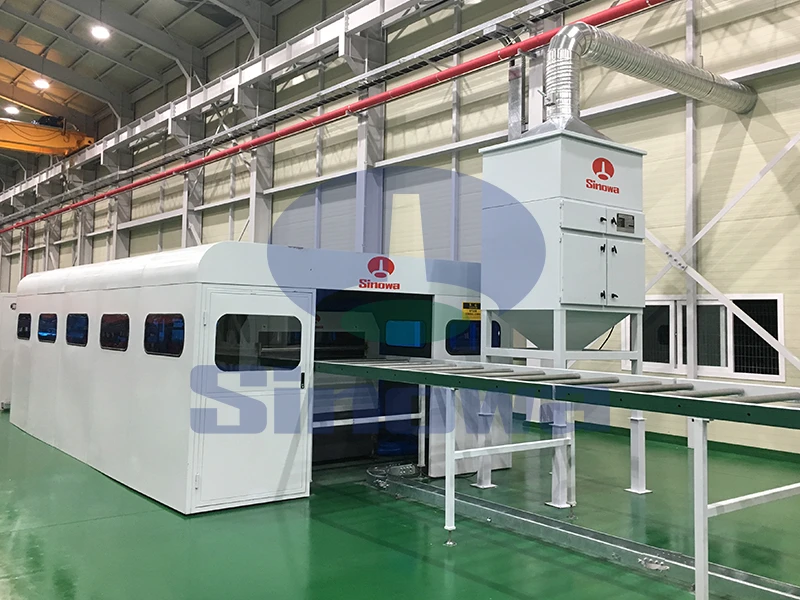
Stable raw material quality serves as the foundational factor to lower the defective rate of phenolic insulation board production line, since slight fluctuation in raw material composition will directly change the curing reaction and final physical performance of finished boards. The main raw materials include phenolic resin, foaming agent, curing agent and reinforcing filler, and every batch of incoming materials needs to go through consistent pre-testing before feeding into the production system. Operators should record the viscosity, solid content and activity of phenolic resin continuously, and reject raw materials with unstable chemical properties instead of putting them into production blindly. Improper matching of foaming agent and curing agent often leads to uneven foam pores, local hollowing or incomplete surface curing on boards. It is necessary to set up fixed proportion ranges and avoid random adjustment of feeding ratio according to subjective experience. Even small differences in filler particle size can affect the uniformity of material mixing. Raw materials should be stored in dry and temperature-controlled environments to prevent moisture absorption, which may break the balance of chemical reactions during foaming. Without standardized raw material management, subsequent process adjustment can hardly compensate for quality defects formed at the source, and random quality problems will repeatedly appear on finished products, making it difficult to achieve stable reduction of defective products.
Precise control of the mixing process is another critical link to cut down defects in phenolic insulation board manufacturing. After all raw materials are transported to the mixing station, the mixing speed, mixing duration and material temperature must be maintained within a stable window to guarantee homogeneous blending of all components. Insufficient mixing will cause local concentration of curing agent, resulting in premature partial curing and formation of hard blocks inside the board, while excessive mixing may cause pre-foaming before the material enters the mold, destroying the expected pore structure of the insulation core. The mixing equipment needs regular inspection on stirring blades and sealing parts. Worn blades reduce mixing efficiency, and leakage will change the actual proportion of mixed materials silently. Operators should monitor the real-time state of mixed materials, checking the fluidity and color uniformity of the mixture at fixed intervals. Any abnormal state of the mixture requires pausing feeding immediately instead of sending unqualified mixture to the next forming procedure. Continuous minor deviation in mixing parameters accumulates and forms large-area defects on continuous boards. By keeping mixing parameters consistent and maintaining mixing equipment properly, the probability of internal non-uniform defects can be obviously controlled in the whole production flow.
Temperature management in the foaming and curing tunnel exerts a decisive influence on the forming quality of phenolic insulation boards. After the mixed material is poured onto the base material, foaming reaction starts quickly, and the temperature distribution inside the tunnel determines the speed and completeness of cross-linking reaction. If the tunnel temperature is too low, the curing reaction proceeds slowly, the board core cannot fully harden, and finished boards will suffer from soft texture, easy deformation and powder falling on the surface. Over-high local temperature will trigger ultra-fast foaming, generating oversized pores, cracks and internal voids inside the plate. Uneven temperature distribution across the width direction of the production line causes inconsistent curing degree at different positions of one single board, leading to warping after cutting. The heating system should be checked regularly to eliminate dead zones of heat transfer. Temperature sensors need calibration at fixed cycles to avoid inaccurate data feedback that misleads parameter adjustment. Besides tunnel temperature, the temperature of raw materials before foaming also needs monitoring. Material temperature change alters foaming rate, so preheating can be adopted to stabilize material temperature before mixing. Stable and uniform thermal environment allows phenolic material to complete foaming and curing step by step, greatly reducing thermal-induced defects of finished boards.
The control of conveying speed and mold clearance helps reduce dimensional defects of phenolic insulation boards in continuous production lines. The production line runs continuously, and the matching degree between material foaming expansion rate and line running speed directly decides board thickness and flatness. When the conveyor moves too fast, the foaming material cannot fully expand, resulting in thin boards with insufficient volume and poor thermal insulation performance. If the speed is too slow, excessive expansion creates over-thick plates, and excessive internal stress may form hidden cracks inside the core. The clearance between upper and lower forming templates must be adjusted evenly across the whole width. Uneven clearance will produce boards with varying thickness from left to right, which become defective after cutting. The conveying chains and rollers should be maintained to avoid jitter or deviation during operation. Mechanical jitter causes fluctuation of board surface and tiny internal fractures that cannot be observed immediately after production and may expand in later storage. Operators should check the thickness of semi-finished boards at regular intervals and fine-tune line speed and template clearance slightly instead of making large parameter changes at one time. Stable mechanical operation and matched speed parameters effectively lower dimensional non-conformity defects of phenolic boards.
Surface treatment of upper and lower base materials cannot be ignored in reducing surface defects of phenolic insulation boards. The base materials bond tightly with foamed phenolic core during curing, and any contamination or poor surface state will cause delamination, bubbling or incomplete bonding on the finished product. Dust, oil and moisture on base material surface will weaken interface adhesion force between base material and phenolic foam. Before entering the forming section, base materials should pass through surface cleaning devices to remove impurities. Tension control of base material roll also matters. Too large tension stretches the base material, and after curing, the board will shrink and warp; insufficient tension leads to wrinkling on the board surface. The base material unwinding device needs to keep stable tension during continuous feeding, preventing offset and wrinkling. In addition, the surface flatness of base material rolls should be checked before use. Damaged, folded or locally thin base materials should not be used for production, otherwise corresponding surface defects will appear on the finished insulation board. Careful management of base material quality and surface state reduces surface bubbling, delamination and wrinkling defects, improving the appearance and structural integrity of phenolic boards.
Real-time monitoring and online inspection systems can capture emerging defects at an early stage and prevent mass defective products in phenolic insulation board production. Many tiny defects such as tiny pores, local discoloration and slight thickness deviation cannot be fully identified by manual observation alone. Online detection equipment can continuously scan the surface and thickness of semi-finished boards during operation and feed abnormal signals back to the control system promptly. Once abnormality is detected, the system can remind operators to check raw materials or process parameters before a large number of defective boards are produced. Manual sampling inspection still serves as an important supplement to online monitoring. Sampling points should be set at different positions of board width and different time periods, rather than only sampling at fixed positions. The inspection records should be sorted and analyzed to find the correlation between defect types and corresponding process changes. For example, concentrated hollow defects in a certain period can be traced back to raw material ratio or tunnel temperature fluctuation. Timely discovery and root cause analysis avoid repeated occurrence of the same defect mode, turning post-production defect screening into in-process prevention, which significantly cuts the total defective rate of the whole line.
Equipment maintenance and routine troubleshooting are essential to maintain stable production and reduce mechanical-induced defects of phenolic insulation boards. Long-term continuous operation will bring wear, aging and blockage to pumps, pipelines, stirring units and heating components of the production line. Blockage in raw material delivery pipelines causes intermittent interruption of feeding, leading to discontinuous material supply and hollow sections on boards. Wear of metering pumps changes the feeding quantity of each component, breaking the formula proportion and generating unstable foaming effect. A complete equipment maintenance schedule should be formulated, including daily cleaning, weekly component inspection and regular overhaul of key parts. Cleaning of residual phenolic material inside pipelines and mixing tanks prevents old cured material from mixing into new batches and forming hard impurity particles inside finished boards. Operators need to master basic equipment fault identification skills and deal with small abnormal phenomena immediately instead of waiting until equipment breakdown. Well-maintained production equipment reduces unexpected parameter fluctuations and foreign impurity defects, removing mechanical hidden troubles that trigger large-scale quality problems.
Operational training and standardized operation procedures help eliminate human-caused defects in phenolic insulation board production. Many quality deviations come from irregular manual operation rather than raw material or equipment problems. Operators who lack systematic training may adjust process parameters arbitrarily, neglect routine inspection items or misjudge abnormal material states. A complete set of standardized operation documents should clarify the operation steps of each station, parameter adjustment limits and abnormal handling processes. Staff training needs to cover chemical characteristics of phenolic foaming system, equipment operation points and defect identification knowledge. Regular skill assessment can consolidate operation norms and reduce misoperation probability. Handover management between shifts is also important. Detailed records of production parameters, raw material batch information and abnormal conditions should be handed over clearly, so the next shift can continue stable production without blind parameter modification. Operators are required to record production data truthfully instead of filling in records casually. Improving staff awareness of quality control and standardizing every operation action effectively reduce human error-induced defects and stabilize the overall quality level of phenolic insulation boards.
Post-curing and cooling process control helps reduce late-stage deformation and hidden defects of phenolic insulation boards after they leave the curing tunnel. Even if boards are initially shaped in the tunnel, the internal cross-linking reaction continues for a period of time. Rapid cooling right after curing will create large internal temperature difference, produce internal stress and cause warping, bending or cracking during subsequent cutting and storage. The semi-finished boards should go through a gradual cooling section, so that internal and external temperature can decrease slowly and uniformly. Stacking method after cooling also influences finished quality. Over-high stacking weight squeezes boards and causes permanent deformation; uneven stacking support leads to bending. Boards need to be placed on flat supporting frames and stacked within specified height limits. Sufficient post-curing time allows the phenolic foam to complete residual chemical reaction and stabilize physical properties. Cutting operation should be arranged after the board is fully stabilized. Cutting when the material is still not fully cured will result in rough edge, crumble and dimensional instability. Reasonable control of post-curing, cooling and stacking prevents latent defects from appearing after production, lowering the reject rate in finished product inspection.
Defect data analysis and continuous improvement mechanism form a closed loop to steadily reduce the defective rate of phenolic insulation board production line. All defective products generated in each shift should be classified by defect types, such as internal voids, surface bubbling, dimensional deviation, delamination and edge damage, and the quantity of each type is counted. The data can be analyzed to find the most frequent defect type and trace its root causes, targeting the key links that affect quality. After improvement measures are put into practice, the defect data in the following production periods should be tracked to verify whether the measures work. If the defective proportion of a certain defect decreases obviously, the relevant operation rules can be fixed and promoted; if the effect is not ideal, the process plan needs to be re-examined and optimized. Continuous improvement does not rely on one-time large transformation, but accumulates small optimization of raw material control, process parameters, equipment maintenance and operation norms step by step. The production team can hold regular quality review meetings to share defect cases and experience, so every member understands the impact of each operation link on final quality. With long-term persistent data tracking and iterative optimization, the overall defective rate of phenolic insulation board production can keep declining and maintain at a stable low level.
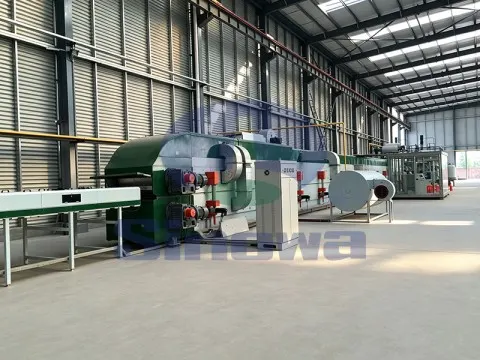
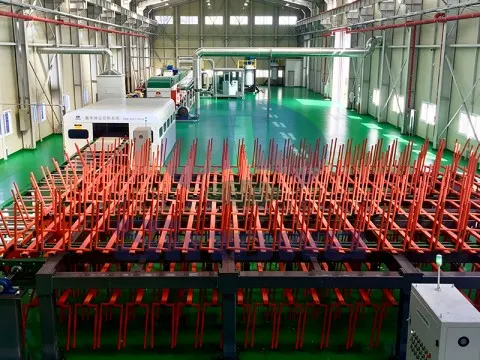
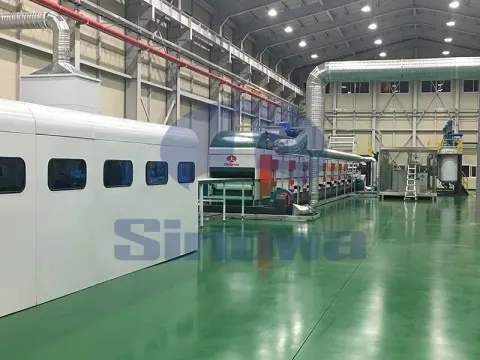
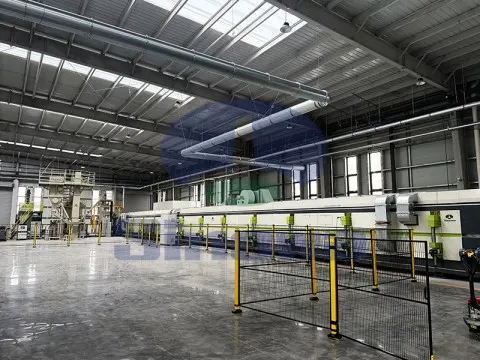
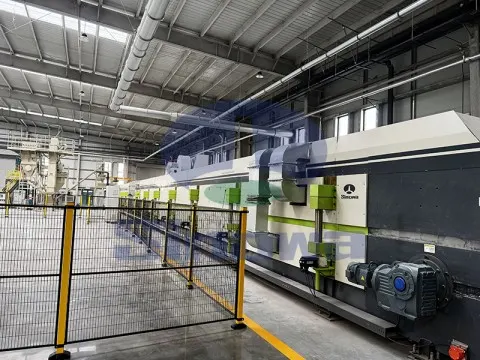
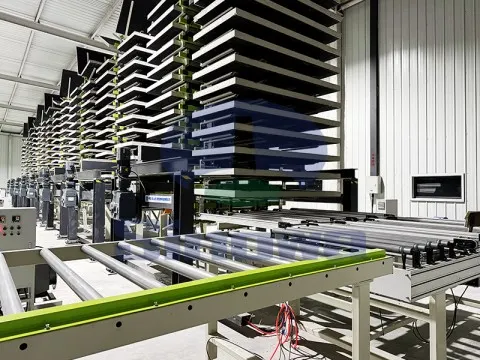
Gallery of Phenolic Insulation Board Production Line
Tags: phenolic insulation board production line, phenolic insulation board production line manufacturer, phenolic insulation board production line supplier, china phenolic insulation board production line, phenolic insulation board production line for sale
-

The PU sandwich panel line is a core production setup for making high-performance building insulation panels. This professional PU sandwich panel production line features automated operation to streamline the whole manufacturing process efficiently. Every component of the polyurethane sandwich panel line is precisely calibrated to ensure consistent panel thickness and structural stability. A well-maintained polyurethane sandwich panel production line can greatly boost production efficiency while reducing manual operation errors. The continuous PU sandwich panel line adapts to diverse production demands for different panel sizes and surface styles. With advanced molding technology, the PIR sandwich panel line produces panels with excellent heat preservation and sound insulation properties. Stable running of the PIR sandwich panel production line guarantees reliable product quality for various construction and industrial application scenarios.
-

A phenolic insulation board production line serves as the core equipment for manufacturing high-performance thermal insulation building materials. This phenolic insulation panel production line integrates material mixing, foaming, molding and cutting processes to ensure continuous and stable production efficiency. Every operational link of the insulation board production line is precisely calibrated to produce uniform and durable insulation boards. The automated design of the insulation panel production line effectively reduces manual intervention and improves product consistency. Proper maintenance of the phenolic board production line can greatly extend its service life and maintain steady production output. With optimized structural design, the phenolic panel production line adapts to various production demands and delivers high-quality finished products for thermal insulation engineering applications.
-

A professional rockwool sandwich panel line serves as the core equipment for producing high-performance building panels. This rockwool sandwich panel production line integrates feeding, laminating and forming processes to ensure stable and efficient production. The well-structured rock wool sandwich panel line can process raw rockwool materials into panels with excellent thermal and sound insulation properties. Operators can adjust the running parameters of the rock wool sandwich panel production line to manufacture panels of different thicknesses and specifications. The automated design of the mineral wool sandwich panel production line greatly reduces manual operation errors and improves product consistency. Regular maintenance of the mineral wool sandwich panel line is essential to sustain long-term operational efficiency and guarantee qualified finished panels for diverse construction applications.