How To Adjust The Curing Temperature Of Phenolic Panel Production Line For Better Board Quality?
Publication Date: Oct 15, 2026
Adjust phenolic panel line curing temp by board thickness; avoid undercure or overheating to boost panel strength & stability.
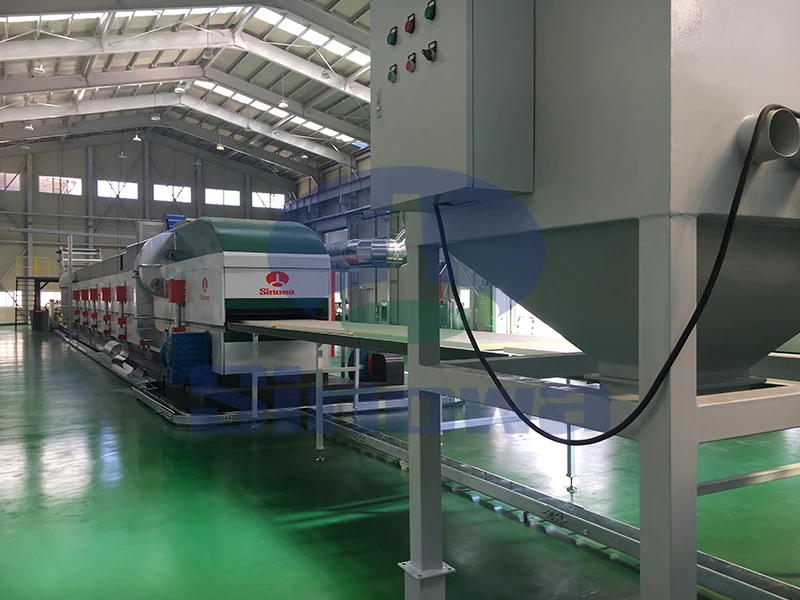
The curing stage defines the fundamental physical and chemical traits of phenolic panels, and temperature acts as the most influential variable that shapes resin cross-linking behavior throughout the continuous production line. Phenolic resin undergoes irreversible thermosetting reactions when exposed to heat, where rising temperature accelerates molecular condensation and builds a stable three-dimensional network structure. If the curing temperature remains too low, the resin cannot achieve adequate cross-linking within the preset dwell time, leaving partial reactive groups unreacted inside the panel. These incomplete cured regions create soft internal layers, weaken interfacial bonding between resin and reinforcing substrates, and make finished boards prone to moisture absorption, dimensional swelling and surface abrasion after leaving the production line. Operators often mistakenly compensate low temperature by extending production time, yet this method cannot fully resolve uneven curing and will reduce overall line throughput significantly. Conversely, excessive temperature triggers overly fast exothermic reactions in phenolic resin, generating large volumes of steam and volatile byproducts in a short time. These trapped vapors create micro voids, blisters and surface cracks on panels, and over-cured resin turns brittle, lowering impact resistance and causing edge chipping during later cutting. Therefore, adjusting curing temperature cannot rely on simple fixed values, and operators must understand resin reaction characteristics to establish a matched thermal profile according to panel thickness, substrate type and resin impregnation condition. Every small adjustment to line temperature needs careful observation of panel surface texture, internal compactness and post-production stability, avoiding one-sided pursuit of faster production speed at the cost of consistent product quality.
Understanding thermal gradient distribution across the panel cross-section forms the foundation for precise curing temperature adjustment in phenolic panel lines. Heat transfers gradually from the outer surface to the core layer during continuous curing, which creates temperature differences between the surface and the central part of the board. Thin phenolic panels achieve thermal balance quickly, and the surface temperature stays close to the internal temperature, so the line can adopt a relatively stable curing temperature setting. Thick panels face much larger thermal resistance; heat penetrates slowly toward the core, and the surface resin may reach full cure long before the core temperature rises to the reaction threshold. If operators set the heating zone temperature too high to speed up core heating, panel surfaces will become over-cured and scorched while the middle section remains insufficiently cross-linked. This internal temperature imbalance generates persistent thermal stress inside finished panels, which gradually releases after cooling and leads to warping, twisting and shape deformation during storage. Practical adjustment strategies focus on staged temperature control rather than uniform heat input across all sections of the production line. The initial heating zone uses milder temperature to slowly raise panel temperature, reduce viscosity of impregnated phenolic resin and promote uniform wetting of reinforcing materials without triggering rapid gelation. Middle curing zones increase temperature moderately to sustain steady cross-linking reactions, and the final holding zone maintains stable heat to ensure core layer resin completes condensation. Monitoring temperature difference between panel surface and core during trial runs helps operators modify zone settings step by step, minimizing internal thermal gradients and reducing residual stress in finished phenolic boards.
The matching relationship between resin formulation and curing temperature must be evaluated before modifying thermal parameters on phenolic panel production lines. Different phenolic resin systems have distinct reaction onset temperatures, exothermic peaks and curing rates, which directly decide the suitable temperature window for the manufacturing process. Some resin formulations contain added catalysts that lower the activation energy required for cross-linking, so these materials can achieve complete curing at relatively moderate temperature levels. Resin products without catalyst additives demand higher thermal input to drive molecular condensation forward. If operators apply a temperature curve designed for fast-curing resin to slow-reacting phenolic materials, the finished panels will show incomplete bonding and poor structural integrity. On the other hand, using high-temperature profiles for catalytic resin leads to abrupt exothermic spikes, trapping volatile compounds and forming porous structures inside panels. The moisture content of impregnated substrates also interacts closely with curing temperature adjustments. Raw materials carrying high moisture release more steam once heated, which raises internal pressure within panels. In such cases, excessively fast temperature increases cause vapor entrapment and blister defects, so operators need to lower the heating rate and set a slightly lower peak curing temperature to allow gradual vapor escape before resin gelation. Any adjustment to line temperature should be accompanied by small-batch trial production using the exact resin and substrate combination, collecting samples to examine cross-linking uniformity and surface quality. Only after confirming stable performance in trial batches can the revised temperature profile be applied to full-scale continuous production, preventing widespread quality defects caused by mismatched thermal parameters and resin properties.
Uniform temperature control across the full width and length of the production line is essential when optimizing curing temperature for phenolic panels, as localized hot spots or cold zones create inconsistent quality on a single board. Many continuous phenolic panel lines use segmented heating systems, and minor differences in heating element performance, heat transfer medium flow or thermal insulation can create uneven temperature distribution along the conveyor direction and across the panel width. Areas exposed to higher local temperature experience faster resin curing, while cold zones delay cross-linking progress. A single phenolic panel produced under such uneven thermal conditions will have alternating fully cured and under-cured regions, leading to inconsistent hardness, uneven coloration and unpredictable mechanical performance. These hidden defects often pass visual inspection but fail when subjected to external force or humidity changes in later applications. Operators need to carry out regular thermal mapping of the curing chamber to measure temperature at multiple positions across the working area, identifying cold areas and overheated zones accurately. When adjusting overall curing temperature, they should also calibrate individual heating segments to narrow temperature variation within the curing chamber. If one side of the panel consistently displays darker discoloration, the corresponding heating segment temperature needs to be reduced slightly; if another area keeps soft spots, local heating output can be raised moderately. Maintaining consistent conveyor speed together with uniform temperature distribution is equally important, since changing line speed alters the time panels spend inside each thermal zone. Balancing conveyor velocity and segmented temperature ensures every part of each phenolic panel receives identical thermal exposure, delivering stable and uniform board quality for every production batch.
Heating rate adjustment works alongside peak curing temperature setting to optimize phenolic panel quality, and the two parameters cannot be modified separately during process tuning. Rapid heating pushes phenolic resin quickly through its gelation stage, which may lock volatile byproducts inside the panel matrix before vapor can escape freely. Trapped gas creates micro voids that weaken interlayer bonding and increase the risk of bubbling on panel surfaces. Slow heating gives resin enough time to flow evenly through fiber or filler substrates, releasing water vapor and other reaction byproducts gradually before the molecular network solidifies completely. However, an overly slow heating cycle extends production time, reduces line output and raises operational costs. When adjusting peak curing temperature, operators must re-examine the heating ramp speed of the front thermal zones. For instance, if the production team needs to raise peak temperature to improve core curing of thick phenolic panels, they should slow down the initial heating stage to prevent sudden exothermic reaction and vapor buildup. Lowering peak temperature usually allows a moderately faster heating rate, but the dwell time at the holding temperature needs extension to guarantee sufficient cross-linking. Operators should record the heating ramp rate, holding temperature duration and cooling transition together during each test run. After producing trial panels, inspectors check internal void ratio, interlayer adhesion and dimensional stability to judge whether the combination of heating rate and peak temperature works properly. Fine tuning these linked thermal parameters reduces internal defects effectively and strikes a reasonable balance between product quality and production efficiency in phenolic panel manufacturing lines.
Cooling phase temperature management is often overlooked, yet it strongly affects final panel quality after the main high-temperature curing process completes on phenolic production lines. After resin finishes cross-linking under heat, phenolic panels still contain residual internal stress accumulated during thermal processing. Direct exposure of hot cured panels to sharp temperature drops creates thermal shock, where surface layers cool and shrink rapidly while the warm core maintains larger volume. This mismatch in contraction rate introduces new internal stress and frequently causes warping, micro cracks and shape distortion after panels cool fully. When adjusting the curing temperature profile upstream, operators must also revise the cooling section settings accordingly. If the main curing zone uses a higher peak temperature, the cooling segment needs slower temperature reduction to allow gradual and synchronized contraction of the panel cross-section. A gentle cooling gradient enables internal stress to release steadily without damaging the cured resin network. Abnormal cooling can also affect surface appearance, leading to uneven gloss and color variation even when high-temperature curing steps are performed correctly. Operators should avoid opening curing chamber doors or introducing large volumes of cool air too quickly after panels exit the heating zones. Continuous lines with separated cooling tunnels can set segmented cooling temperatures, reducing heat step by step from the panel surface toward the core. Testing different cooling slopes after modifying curing temperature helps identify the proper transition from high holding temperature down to ambient levels. A well-designed cooling cycle preserves the structural integrity achieved during curing and minimizes post-production deformation of phenolic panels in storage and application environments.
Operators must establish systematic sampling and testing workflows to evaluate the impact of curing temperature adjustments on phenolic panel quality. Visual inspection alone cannot detect hidden internal defects or incomplete resin cross-linking, so physical tests on sampled boards provide objective feedback for parameter optimization. After modifying curing temperature settings, manufacturers collect samples from multiple positions within the production batch, including board edges, central sections and areas near heating boundaries. These samples undergo assessments covering surface condition, internal compactness, interlayer bonding strength and dimensional change after moisture exposure. Under low curing temperature settings, test results usually show poor bonding performance and high moisture absorption rates. Panels cured at excessively high temperature display reduced toughness and increased brittleness. By comparing test data from samples produced under varied temperature profiles, technicians can identify the optimal thermal window that balances mechanical performance and dimensional stability. Data collection should record not only curing temperature values but also supporting parameters such as conveyor speed, substrate moisture and resin loading rate, because these factors interact with temperature to influence final quality. Operators need to make small incremental temperature changes rather than large one-time jumps. Adjusting by small increments allows quality teams to observe performance changes clearly and avoid massive waste caused by dramatic parameter shifts. Continuous data recording over multiple batches builds a practical reference database for temperature tuning, helping production teams respond steadily to raw material fluctuations and maintain consistent phenolic panel quality.
Raw material variation requires dynamic curing temperature adjustment on phenolic panel production lines to sustain stable board quality. Batch changes in reinforcing substrates, resin solid content or impregnation degree alter thermal response during curing, even when all equipment settings remain unchanged. Substrates with higher density have lower heat conductivity, slowing heat penetration to the panel core, which may demand slight increases in holding temperature or extended thermal dwell time. Materials with lower density transfer heat faster, and using the original curing temperature may lead to surface over-curing. Variations in resin impregnation weight also change thermal behavior; panels carrying more phenolic resin generate greater exothermic heat during cross-linking. In such cases, operators need to lower the preset curing temperature to prevent overheating inside the panel, as the reaction heat adds to external heating from the line. If resin loading decreases, additional thermal input becomes necessary to ensure adequate cross-linking. Raw material moisture fluctuation is another key factor. Wetter feedstock releases more vapor during heating, so temperature ramp-up speed needs reduction to avoid trapping steam inside panels. Production teams should carry out raw material property checks before each batch and adjust curing temperature profiles accordingly. This flexible approach prevents quality drift caused by raw material inconsistency. Instead of using a single fixed temperature setting for all batches, experienced operators treat curing temperature as an adaptive parameter that responds to material characteristics, stabilizing phenolic panel quality across changing raw material conditions.
Common panel defects can be traced back to improper curing temperature settings, and targeted temperature adjustments offer practical solutions for these recurring quality issues. Blisters and bubbles on panel surfaces mostly arise when temperature rises too rapidly, trapping volatile products before resin forms a solid network. Reducing the heating rate in early curing zones and slightly lowering peak temperature gives vapors time to escape and eliminates bubble formation. Warping and twisting usually stem from uneven temperature distribution across the panel cross-section or rapid cooling after curing. Resolving this defect requires calibrating heating segments to reduce thermal gradients and implementing gradual cooling sequences. Soft spots and weak interlayer adhesion point to insufficient curing temperature or inadequate dwell time at target temperature, which means raising the holding temperature moderately or slowing conveyor speed to extend thermal exposure. Dark discoloration and brittle board texture indicate over-curing caused by excessive temperature, so operators reduce peak temperature and shorten high-temperature holding duration to limit resin thermal degradation. It is critical for technicians to distinguish temperature-related defects from issues triggered by pressure variation, resin quality or substrate contamination. Before adjusting curing temperature, teams verify that other process parameters remain stable to avoid misdiagnosing the root cause. Addressing defects through precise temperature tuning improves finished phenolic panel performance, reduces scrap rates and raises overall production efficiency on continuous manufacturing lines.
Long-term monitoring and regular calibration of curing temperature systems maintain the reliability of temperature adjustment strategies for phenolic panel production lines. Heating equipment gradually drifts from original settings after prolonged operation, with sensor aging, blocked heat pipelines and degraded thermal insulation creating deviations between displayed temperature and actual temperature inside the curing chamber. If operators rely only on control panel readings without periodic calibration, temperature adjustments will be based on inaccurate data and fail to deliver expected quality improvements. Production teams should conduct regular calibration of temperature sensors and thermal mapping of curing zones to confirm real thermal conditions inside the line. Maintenance work on heating elements, heat circulation systems and sealing structures also supports stable temperature distribution. When equipment performance degrades, even well-designed curing temperature profiles cannot produce qualified phenolic panels. Besides hardware maintenance, continuous quality tracking of finished products helps identify slow quality drift caused by subtle thermal parameter changes. Trends in sample test results can signal that temperature calibration is needed long before obvious defects appear. Operators should document every temperature adjustment, equipment calibration event and corresponding quality outcome, forming accumulated knowledge for continuous process optimization. By combining accurate temperature measurement, regular equipment maintenance and consistent quality monitoring, phenolic panel manufacturers can fine-tune curing temperature reliably, achieve stable cross-linking of phenolic resin, and consistently produce high-quality panels with uniform physical properties and dependable long-term stability.
Gallery of Phenolic Panel Production Line
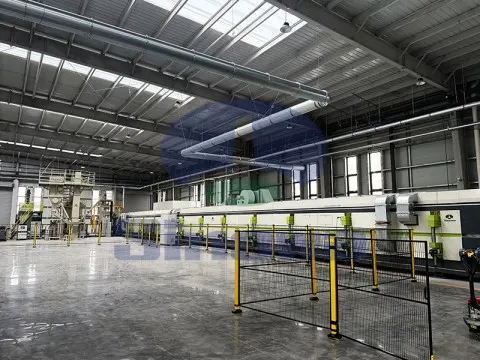
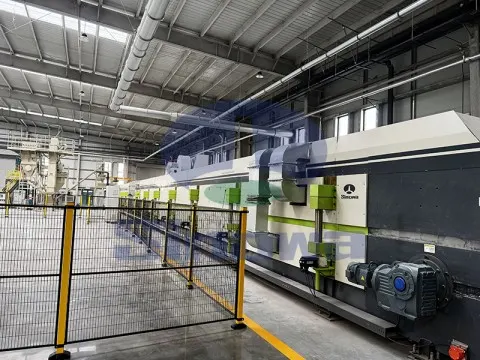
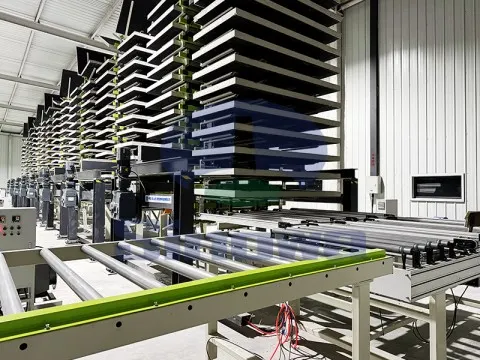
Tags: phenolic panel production line, phenolic panel production line manufacturer, phenolic panel production line supplier, china phenolic panel production line, phenolic panel production line for sale
-

The PU sandwich panel line is a core production setup for making high-performance building insulation panels. This professional PU sandwich panel production line features automated operation to streamline the whole manufacturing process efficiently. Every component of the polyurethane sandwich panel line is precisely calibrated to ensure consistent panel thickness and structural stability. A well-maintained polyurethane sandwich panel production line can greatly boost production efficiency while reducing manual operation errors. The continuous PU sandwich panel line adapts to diverse production demands for different panel sizes and surface styles. With advanced molding technology, the PIR sandwich panel line produces panels with excellent heat preservation and sound insulation properties. Stable running of the PIR sandwich panel production line guarantees reliable product quality for various construction and industrial application scenarios.
-

A phenolic insulation board production line serves as the core equipment for manufacturing high-performance thermal insulation building materials. This phenolic insulation panel production line integrates material mixing, foaming, molding and cutting processes to ensure continuous and stable production efficiency. Every operational link of the insulation board production line is precisely calibrated to produce uniform and durable insulation boards. The automated design of the insulation panel production line effectively reduces manual intervention and improves product consistency. Proper maintenance of the phenolic board production line can greatly extend its service life and maintain steady production output. With optimized structural design, the phenolic panel production line adapts to various production demands and delivers high-quality finished products for thermal insulation engineering applications.
-

A professional rockwool sandwich panel line serves as the core equipment for producing high-performance building panels. This rockwool sandwich panel production line integrates feeding, laminating and forming processes to ensure stable and efficient production. The well-structured rock wool sandwich panel line can process raw rockwool materials into panels with excellent thermal and sound insulation properties. Operators can adjust the running parameters of the rock wool sandwich panel production line to manufacture panels of different thicknesses and specifications. The automated design of the mineral wool sandwich panel production line greatly reduces manual operation errors and improves product consistency. Regular maintenance of the mineral wool sandwich panel line is essential to sustain long-term operational efficiency and guarantee qualified finished panels for diverse construction applications.