What Causes Uneven Thickness Of Panels From Rockwool Sandwich Panel Production Line?
Publication Date: Oct 15, 2026
Uneven rockwool sandwich panel thickness comes from rockwool core variation, roller misalignment, unstable pressure & feeding faults.
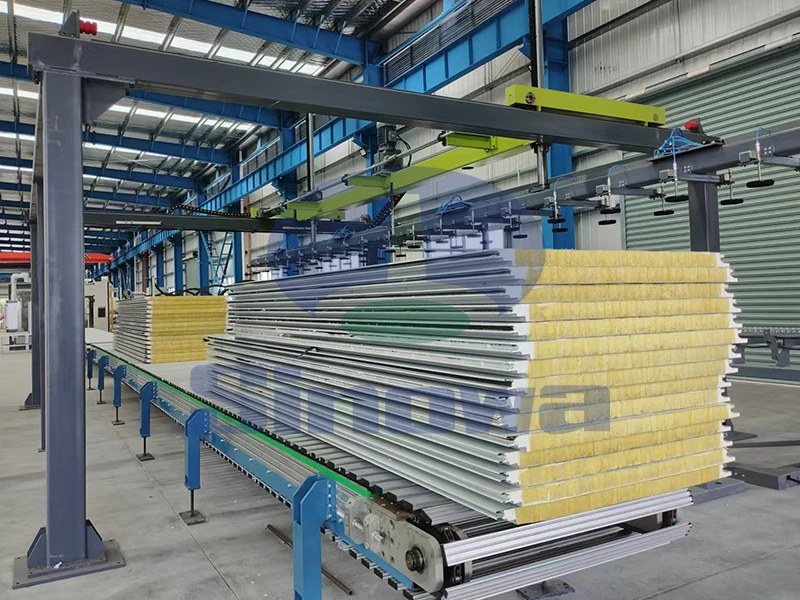
Uneven panel thickness represents one of the most persistent quality challenges encountered on continuous rockwool sandwich panel production lines, and it can emerge from a complex combination of raw material, mechanical, and process control factors rather than a single isolated fault. Rockwool, as a fibrous porous core, behaves differently from rigid foam cores because its compressibility varies with fiber orientation, internal density distribution, and the presence of gaps or overlaps between adjacent rockwool segments. When the finished panel shows inconsistent thickness, operators often first measure thickness values at multiple points across the panel width and along its length to determine whether variation appears on one edge, fluctuates periodically, or drifts slowly over long production runs. Edge-thick or edge-thin panels usually point toward misalignment in the laminator system, while repeated up-and-down thickness changes along the panel length tend to relate to unstable feeding of rockwool core material. Even minor deviations, which may seem negligible at first glance, accumulate during continuous manufacturing and can affect later assembly work, thermal performance consistency, and surface flatness of finished panels. Many production teams mistakenly focus only on adjusting the laminator gap without checking upstream rockwool preparation, which means the same thickness defect returns quickly after short-term adjustments. Understanding the full chain of causes helps separate temporary process fluctuations from chronic mechanical wear that requires scheduled maintenance and equipment correction.
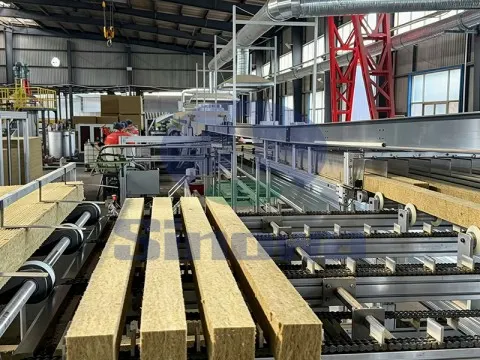
The feeding system for rockwool core material stands as a primary source of uneven thickness defects in sandwich panel production. Rockwool used for composite panels is delivered as pre-slabbed or continuously layered fibrous blocks, and any instability in material delivery directly creates uneven filling between the two metal facings. When rockwool slabs are fed with inconsistent spacing, overlapping sections create locally thicker zones while gaps between slabs leave thin, underfilled regions inside the panel. Pendulum laying devices, which distribute rockwool fibers or cut slabs across the production width, may suffer from irregular reciprocating speed, uneven swing amplitude, or delayed response to line speed changes, leading to heavier deposition in certain transverse zones and sparse material in others. Vibration on the feeding conveyor also shifts rockwool sideways, causing one side of the panel to carry more core material than the opposite side. Compression history of rockwool before entering the laminator matters too: rockwool that has been partially crushed during storage or handling will compress less under laminator pressure, resulting in thicker spots, while loosely packed fiber regions compress more and become thinner. Variations in rockwool bulk density from batch to batch amplify this effect, as higher density sections resist compression differently from low-density areas even when the mechanical gap remains unchanged. Operators must monitor the continuity and uniformity of rockwool feeding in real time, checking for slab separation, fiber shedding, and lateral drift before the material enters the composite pressing zone.
Misalignment and mechanical wear within the double-belt laminator create steady thickness inconsistencies across the panel width. The laminator controls the final panel thickness by maintaining a fixed gap between upper and lower circulating belts, and any distortion in this gap directly translates into dimensional variation. Over extended operating hours, support rollers behind the belts wear unevenly, causing localized sagging or bulging of the belt surface. When rollers wear more heavily on one side, the effective gap opens wider on that side and produces thicker panels along the corresponding edge. Roller bearing damage also introduces small amounts of vibration, which makes the gap fluctuate periodically and creates repeating thickness ripples along the panel length. Belt tension imbalance is another common factor: if one edge of the upper or lower belt runs tighter than the other, the belt tilts slightly, changing the compression force applied to rockwool across the panel width. Belt tracking drift, where the belt creeps sideways during operation, alters pressure distribution and may leave continuous thin or thick streaks parallel to the production direction. Even if the digital readout shows a set gap value, physical measurement with gauges across the full width often reveals hidden deviations, because sensor readings only sample a limited area. Regular inspection of roller roundness, bearing condition, belt splices, and tension balance is essential to keep the laminator gap uniform across the entire working width.
Fluctuations in line speed and synchronization errors between different production modules also trigger uneven rockwool sandwich panel thickness. Continuous production lines coordinate uncoiling of metal facings, rockwool feeding, adhesive application, laminator movement, and downstream cutting, and all these sections must maintain matched linear speed. When the laminator runs slightly faster than the rockwool feeding conveyor, the core material stretches and thins locally; conversely, slower laminator speed causes rockwool to pile up and form thicker lumps. Metal facing uncoiling units with unstable tension control add secondary distortion. If tension on the upper metal coil suddenly rises, the metal sheet pulls tight and presses harder on the rockwool core, compressing it more and reducing local panel thickness. Sudden tension drops allow the metal sheet to relax, reducing compression and leaving thicker sections. Short speed spikes from motor torque variation, worn drive chains, or inconsistent frequency converter output create transient compression changes. These synchronization faults are often difficult to spot because they appear intermittently, especially during transitions between product specifications or at startup after production stops. The impact grows more obvious when running at higher line speeds, as small timing mismatches expand quickly and affect larger areas of the continuous panel. Logging speed data from each drive unit helps identify desynchronization events that correlate with thickness measurement records.
Variations in adhesive application and curing conditions contribute to uneven thickness by altering interfacial bonding and internal stress within the finished panel. Adhesive binds rockwool core to metal facings, and uneven glue distribution changes how the composite structure responds under laminator pressure. Areas receiving excessive adhesive develop thicker glue layers, and as the adhesive cures, volumetric changes can push the metal skin outward slightly. Regions with insufficient adhesive cannot fully anchor the rockwool to the metal sheet, allowing local delamination or uneven rebound after leaving the laminator. Adhesive temperature and viscosity also affect spreading behavior; colder, higher-viscosity glue tends to form concentrated streaks, while overheated glue flows too freely and drains away from certain zones. Curing temperature profiles inside the laminator and post-curing section influence residual stress. Uneven heating across the panel width creates differential thermal expansion between metal facings and rockwool core. Hotter zones expand more, pushing the metal skin outward and increasing measured thickness, while cooler areas remain more compressed. When temperature fluctuates over time, the degree of adhesive curing changes continuously, leading to gradual thickness drift throughout a production shift. Even if physical compression remains identical, incomplete curing allows partial springback after the panel exits the press, which distorts final thickness readings taken at the quality inspection station.
Rockwool raw material internal structure and density variation represent a less obvious but impactful driver of uneven finished panel thickness. Rockwool fibers form a porous network, and fiber orientation changes how the material compresses under pressure. Rockwool with fibers aligned horizontally compresses more easily, while vertically oriented fiber layers resist compression and retain greater thickness. Internal voids, cavities, and compressed patches inside incoming rockwool slabs create inconsistent compression response. Dense solid regions withstand laminator pressure and stay thick, while hollow or loosely packed zones collapse more and become thinner. The presence of large fiber clusters or unfiberized mineral particles also creates hard spots that do not compress uniformly. Moisture content within rockwool affects compression behavior as well. Damp rockwool is softer and compresses more readily, whereas dry rockwool maintains higher rigidity under the same pressure. Batch variation from upstream rockwool manufacturing may deliver material with differing bulk density, fiber length, and binder content, all of which modify compressibility. If production parameters are calibrated for one rockwool batch and then used unchanged for a new batch without adjustment, thickness deviation appears immediately. Regular sampling and compression testing of incoming rockwool help operators adjust laminator pressure and gap settings to match material properties before defects appear in finished panels.
Metal facing deformation and tension instability in the uncoiling and forming section can falsely present as rockwool core thickness variation, complicating root cause analysis. Thin metal facings are sensitive to uneven tension, edge bending, and residual stress from coil rolling. When one edge of the metal sheet carries higher tension, the sheet pulls into a slight curved shape, and after composite pressing, this curvature creates thickness differences across the panel width even if the rockwool core itself is uniform. Wavy or wrinkled metal sheets entering the laminator carry surface irregularities that remain after bonding, leading to variable thickness readings taken at different surface points. Coil edge damage, scratches, or localized hardening from prior processing also cause uneven resistance against compression. Roll forming stations before the composite zone may introduce asymmetric stress if forming rollers are misaligned, pulling the metal sheet toward one side and creating uneven pressure distribution on the rockwool core. Many quality teams fail to separate metal skin distortion from core material variation, measuring panel thickness at surface peaks and valleys and incorrectly attributing all readings to rockwool feeding or laminator problems. Simple tests, such as separating facings from core after production and measuring rockwool slab thickness independently, can distinguish defects originating in metal sheets from those in the fibrous insulation core.
Hydraulic and pneumatic pressure instability within the laminator system causes uneven compression force and corresponding thickness variation across the panel. The laminator relies on hydraulic cylinders or air pressure assemblies to maintain consistent clamping force between upper and lower belt assemblies. Pressure leaks in cylinder seals, blocked pressure lines, or worn control valves create unequal force on different sides of the press frame. If hydraulic pressure drops on the left side of the laminator, clamping force weakens there, the rockwool compresses less, and panels become thicker along that edge. Pressure surges from pump cycling also create periodic compression changes that produce repeating thickness patterns along the panel length. Accumulation of air inside hydraulic circuits delays pressure response, so adjustments to set pressure do not transfer instantly to the press frame. Pressure sensors mounted in only a few locations may show stable readings while other areas of the press frame experience unmeasured pressure loss. Temperature changes of hydraulic fluid alter fluid viscosity, which modifies pressure transmission and creates slow thickness drift over long production runs. Regular bleeding of air from hydraulic circuits, inspection of seals and valves, and multi-point pressure monitoring across the laminator frame reduce these pressure-related thickness inconsistencies.
Vibration across the production line amplifies many minor mechanical faults and contributes to irregular rockwool panel thickness. Large continuous production equipment generates vibration from drive motors, rotating rollers, cutting saws, and material impact points. Vibration transmits to the rockwool feeding area, causing fibrous slabs to shift, separate, or pile up unevenly before entering the laminator. At the laminator, vibration creates tiny rapid movements between upper and lower belts, which changes effective compression force cyclically. Heavy vibration can also loosen mounting fixtures for rollers and sensors, gradually shifting roller alignment and laminator gap over time. Vibration effects grow worse when equipment foundations are insufficiently rigid or when mounting bolts become loose after prolonged operation. The influence of vibration is often intermittent, appearing only at certain production speeds or when specific equipment components activate. This makes it harder to identify than static misalignment defects. High-precision thickness measurement records often show periodic waveforms matching the rotation frequency of faulty rollers or drive shafts, providing clues to locate vibration sources. Reducing vibration requires reinforcing equipment bases, tightening loose connections, balancing rotating parts, and isolating sensitive feeding and laminator sections from vibration generated by cutting and auxiliary machinery.
Effective control of uneven rockwool sandwich panel thickness requires systematic troubleshooting and continuous monitoring rather than isolated parameter tweaks. The diagnostic workflow should first map thickness measurements across the panel width and length to identify defect patterns, which guides technicians toward the correct subsystem, whether rockwool feeding, laminator mechanics, drive synchronization, adhesive curing, or raw material quality. Operators should carry out periodic physical calibration of laminator gap across the full width instead of trusting only digital sensor feedback, and inspect belt condition, roller wear, bearing integrity, and pressure balance during routine maintenance. Monitoring incoming rockwool density, fiber structure, and moisture reduces surprises caused by raw material batch changes. Synchronization checks between all drive units ensure rockwool feed speed, metal facing speed, and laminator speed remain matched. Adhesive delivery systems need regular cleaning and calibration to maintain consistent flow and temperature. Data collection of thickness, line speed, pressure, and temperature creates historical records that reveal slow drifting trends before defects become serious. Even with careful maintenance, minor thickness variation cannot be fully eliminated, but structured process management keeps deviations within acceptable ranges. By treating uneven thickness as a system-level problem that links raw material handling, mechanical health, and real-time process control, manufacturers can stabilize panel dimensions and reduce reject rates in rockwool sandwich panel production.
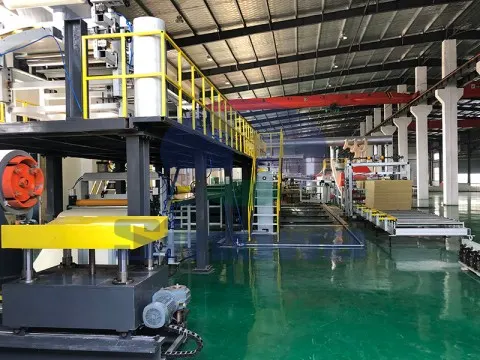
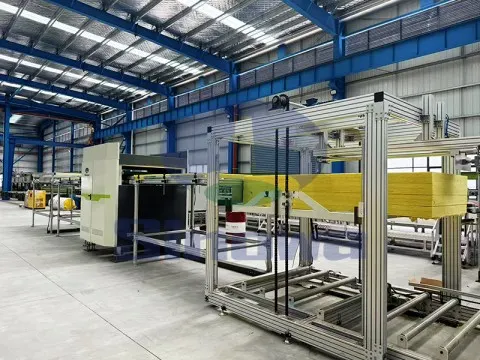
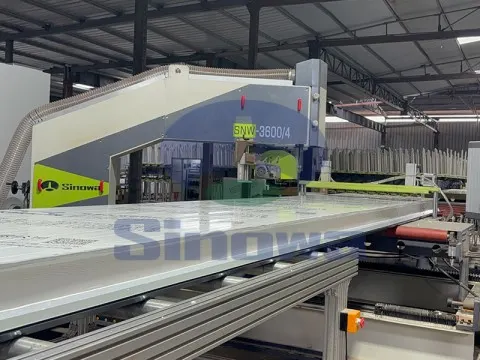
Gallery of Rockwool Sandwich Panel Production Line
Tags: rockwool sandwich panel production line, rockwool sandwich panel production line manufacturer, rockwool sandwich panel production line supplier, china rockwool sandwich panel production line, rockwool sandwich panel production line for sale
-

The PU sandwich panel line is a core production setup for making high-performance building insulation panels. This professional PU sandwich panel production line features automated operation to streamline the whole manufacturing process efficiently. Every component of the polyurethane sandwich panel line is precisely calibrated to ensure consistent panel thickness and structural stability. A well-maintained polyurethane sandwich panel production line can greatly boost production efficiency while reducing manual operation errors. The continuous PU sandwich panel line adapts to diverse production demands for different panel sizes and surface styles. With advanced molding technology, the PIR sandwich panel line produces panels with excellent heat preservation and sound insulation properties. Stable running of the PIR sandwich panel production line guarantees reliable product quality for various construction and industrial application scenarios.
-

A phenolic insulation board production line serves as the core equipment for manufacturing high-performance thermal insulation building materials. This phenolic insulation panel production line integrates material mixing, foaming, molding and cutting processes to ensure continuous and stable production efficiency. Every operational link of the insulation board production line is precisely calibrated to produce uniform and durable insulation boards. The automated design of the insulation panel production line effectively reduces manual intervention and improves product consistency. Proper maintenance of the phenolic board production line can greatly extend its service life and maintain steady production output. With optimized structural design, the phenolic panel production line adapts to various production demands and delivers high-quality finished products for thermal insulation engineering applications.
-

A professional rockwool sandwich panel line serves as the core equipment for producing high-performance building panels. This rockwool sandwich panel production line integrates feeding, laminating and forming processes to ensure stable and efficient production. The well-structured rock wool sandwich panel line can process raw rockwool materials into panels with excellent thermal and sound insulation properties. Operators can adjust the running parameters of the rock wool sandwich panel production line to manufacture panels of different thicknesses and specifications. The automated design of the mineral wool sandwich panel production line greatly reduces manual operation errors and improves product consistency. Regular maintenance of the mineral wool sandwich panel line is essential to sustain long-term operational efficiency and guarantee qualified finished panels for diverse construction applications.