How To Solve Surface Bubble Defects Of Rockwool Sandwich Panel Production Line Products?
Publication Date: Oct 15, 2026
How to solve surface bubble defects of rockwool sandwich panel products on production line. Learn root causes & practical solutions to eliminate bubbles, improve panel surface quality & reduce rejection rate.
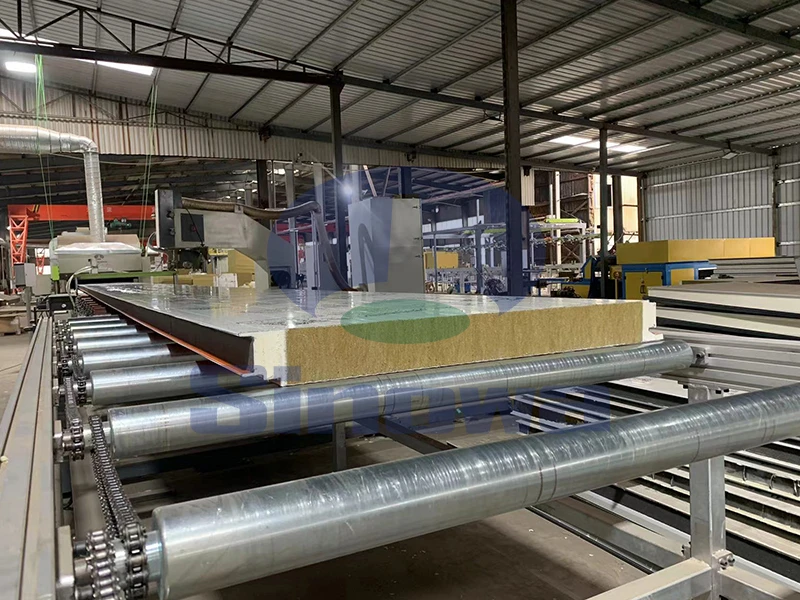
Surface bubble defects are one of the most persistent quality issues encountered during the continuous manufacturing of rockwool sandwich panels, manifesting as raised blisters, scattered air pockets and uneven bulges trapped between the metal facing sheet and rockwool core. These bubbles vary significantly in size, ranging from tiny pinhole-shaped protrusions to large irregular bulges that cover broad sections of panel surface. Visually, they directly damage the flatness and aesthetic quality of finished panels, while structurally, they create discontinuous bonding zones. In these zones, the adhesive cannot form complete contact between the metal sheet and rockwool substrate, which weakens interlayer adhesion and raises the risk of delamination after installation. Many production teams tend to treat surface bubbles as a single type of failure, but in practice, bubbles can be triggered by multiple overlapping factors, including trapped air, excessive moisture, unstable adhesive reactions, uneven laminator pressure and raw material contamination. Before implementing corrective adjustments, production technicians must first classify bubble characteristics by observing their distribution pattern. Bubbles that appear randomly across the whole panel often relate to raw material moisture and air entrapment, while bubbles concentrated along panel edges usually point to poor alignment of rockwool blocks or edge sealing failures. Bubbles that emerge in fixed repeating positions are generally linked to mechanical faults on the continuous line, such as damaged conveyor belts or uneven glue spraying. Conducting on-site sampling and cross-section cutting analysis helps identify the exact interface where gas accumulates, distinguishing whether bubbles form at the metal-adhesive interface or inside the rockwool fiber layer. This basic diagnostic step prevents blind modification of production parameters and ensures subsequent troubleshooting targets the real root cause rather than adjusting unrelated equipment settings blindly. A systematic inspection framework is essential at the initial stage of defect control, as it separates surface bubble problems from other similar defects such as wrinkles, indentations and glue shortage spots, avoiding misjudgment that may waste production time and generate more rejected panels.
Moisture inside rockwool core material stands as a primary source of surface bubble generation in rockwool sandwich panel production. Rockwool consists of tangled mineral fibers with abundant internal voids, which easily absorb water vapor from ambient workshop air during storage, transportation and feeding processes. When damp rockwool enters the laminating section, the heat from continuous pressing converts trapped moisture into water vapor. As vapor volume expands rapidly under confined conditions, it pushes upward against the metal facing sheet and forms surface bubbles, especially when the adhesive layer has already begun to cure and cannot allow gas to escape outward. Even minor moisture fluctuations can create visible defects, because vapor pressure builds quickly within the sealed composite structure. Many production operations overlook core material storage management and directly use rockwool batches exposed to humid workshop environments, without pre-drying treatment before feeding onto the production line. To mitigate this issue, manufacturers need to build stable storage spaces for rockwool raw materials, isolating stacked rockwool blocks from concrete floors and external humid air flow. Covering rockwool stacks with breathable protective barriers reduces direct contact with moist air, while regular moisture monitoring of incoming rockwool batches prevents excessively wet raw materials from entering continuous production. When moisture levels exceed the acceptable range, low-temperature pre-drying treatment can remove excess water without damaging rockwool fiber structure. Operators should also avoid transferring rockwool materials from cold outdoor storage directly into warm production workshops, as temperature differences cause condensation on fiber surfaces and introduce extra moisture. Controlling rockwool moisture cannot rely solely on spot checks; consistent sampling records help track seasonal humidity variations and adjust raw material reservation strategies accordingly, cutting down vapor-induced bubble formation from the material source.
Contamination and poor cleanliness on the inner surface of metal facing sheets are another major contributor to surface bubble defects. Before composite bonding, residual oil film, dust particles, rust spots and residual release agents left on metal surfaces can form tiny isolation layers between the adhesive and metal substrate. These isolated areas prevent full wetting of adhesive on the metal surface, leaving micro gaps where air can remain trapped after lamination. As the composite panel undergoes heating and pressure in the continuous laminator, air sealed inside these micro gaps expands and develops into observable surface bubbles. In some cases, pollutants also interfere with adhesive chemical reactions, causing incomplete curing and local foaming of glue components. The metal decoiling and forming sections of the production line are prone to accumulating lubricants and metal dust, which may transfer to the inner side of panels if cleaning procedures are insufficient. Establishing regular surface cleaning procedures for metal sheets is necessary to eliminate surface contaminants. Simple wiping methods may not achieve stable cleaning results, so many continuous lines integrate surface brushing and air blowing devices before adhesive coating to remove solid particles. For stubborn oil residues, mild surface treatment can improve surface tension of metal substrates and enhance adhesive wetting performance. Operators should perform periodic surface tension tests on metal sheets to verify whether the surface condition supports uniform adhesive spreading. It is also important to maintain the cleaning equipment itself, as worn brush rollers or blocked air nozzles will reduce cleaning efficiency and introduce new debris onto the metal surface. Keeping the decoiling area clean and minimizing lubricant usage during metal forming further reduces pollutant sources, ensuring the adhesive can make full and continuous contact with the metal sheet and eliminate isolated air pockets caused by surface contamination.
Unstable adhesive application and uneven glue distribution frequently lead to localized surface bubble formation on rockwool sandwich panels. The adhesive system for rockwool composite panels relies on precise coating quantity, uniform spreading and matched open time to form a complete bonding layer. If glue spraying or roller coating equipment works abnormally, some areas receive insufficient adhesive while other zones accumulate excessive glue. Regions with inadequate glue coverage cannot fully wrap rockwool fibers and metal surfaces, leaving open voids where air gets trapped during lamination. Over-applied adhesive creates another set of problems: excess glue flows and gathers, undergoes violent chemical reaction under heat, and generates volatile gas that cannot escape from the bonding interface, pushing up the metal sheet and forming blisters. The nozzle condition of adhesive spraying devices directly affects coating uniformity. Blocked, worn or misaligned nozzles produce discontinuous glue stripes, resulting in alternating glued and uncoated bands on the metal sheet. Operators must regularly inspect and clean glue nozzles, check pipeline pressure stability and calibrate adhesive flow rates according to line running speed. Matching adhesive open time is equally critical. When line speed does not fit the adhesive reaction characteristics, the glue may start partial curing before contacting rockwool, losing fluidity and failing to discharge trapped air during pressing. Adjustments should balance coating thickness and reaction timing, ensuring the adhesive maintains proper fluidity to expel air bubbles during the laminating process. Regular visual inspection of glued surfaces and sampling peel tests help verify bonding quality, identifying uneven coating issues before composite forming. Stabilizing adhesive supply temperature and mixing ratio also prevents abnormal foaming inside the glue itself, reducing gas generation from adhesive chemical reactions.
Air entrapment during the rockwool feeding and pre-composite stage is often overlooked when analyzing surface bubble defects. Rockwool raw materials are supplied as segmented blocks arranged sequentially on the production line conveyor before meeting the metal facing sheets. Gaps between adjacent rockwool blocks, uneven block thickness and misaligned fiber layers all trap pockets of air when the upper and lower metal facings close over the core. Once the assembly enters the laminator, rising temperature increases air volume, and trapped air lifts the metal surface to create bubbles concentrated around rockwool seams. Inconsistent rockwool block cutting quality also worsens this problem. Rough, irregular edges of rockwool slabs create irregular gaps between blocks, while loose fiber fragments fall onto the adhesive surface and form separation points. Operators need to improve rockwool pre-processing quality, ensuring rockwool blocks are cut to consistent dimensions with smooth and neat edges. During feeding, mechanical positioning devices keep rockwool blocks tightly arranged without obvious gaps, and fiber debris is removed through air suction systems before composite assembly. The transition section where rockwool contacts the metal sheet should be designed to gradually expel air outward rather than sealing air inside instantly. Moderate pre-compression of rockwool core before lamination reduces large voids inside the fiber structure and helps squeeze out trapped air. Operators should observe the feeding area continuously during line operation, checking for offset rockwool blocks and loose fibers. Synchronization between rockwool conveying speed and metal sheet movement speed must remain precise; mismatched speed causes rockwool shifting and reopening of gaps between blocks. Optimizing rockwool arrangement and pre-compression procedures effectively removes large air pockets before lamination and cuts down seam-related surface bubbles on finished panels.
Improper temperature and pressure parameters inside the continuous laminator represent a major mechanical factor triggering surface bubble defects. The laminator provides constant pressure and controlled heat to promote adhesive curing and close the bonding interface. If pressure distribution is uneven along the belt width, some areas receive insufficient compression, so trapped air and vapor cannot be squeezed out from the bonding interface. Low local pressure allows gas to expand freely and bulge the metal surface, while excessive pressure may squeeze too much adhesive out and create glue-shortage zones. Temperature settings also carry dual effects. Insufficient heating slows adhesive curing, so the bonding layer remains soft and cannot lock the panel structure; gas inside the interface can still move and form bubbles after the panel leaves the laminator. Overly high temperature accelerates moisture vaporization and adhesive volatile release at a rate faster than gas discharge, generating massive gas accumulation beneath the metal sheet. Temperature inconsistency across the laminator width creates uneven curing speed, with some sections curing rapidly and sealing gas inside while other sections cure slowly. Technicians should carry out full-width pressure and temperature mapping of the laminator to detect abnormal zones. Adjustment of belt tension ensures uniform pressure transfer across the entire panel width, and worn laminator belts with surface indentations must be replaced promptly. Temperature zones should be segmented reasonably: the front section uses mild heat to help adhesive wet the substrate and gradually release gas, and the rear section raises temperature to complete curing after most gas escapes. Line speed must coordinate with temperature and pressure parameters. Slowing line speed appropriately extends dwell time inside the laminator and facilitates gas discharge, but excessive speed reduction harms overall production efficiency. Fine tuning of laminator parameters requires repeated trial runs and sample analysis to find a stable working window that suppresses bubble formation while maintaining production capacity.
Ventilation and volatile gas removal in the production line environment play a supporting role in reducing surface bubble occurrence. During adhesive curing, low-molecular volatile substances release from glue components. If these volatiles cannot dissipate before the bonding interface closes, they turn into gas bubbles trapped between metal sheet and rockwool core. Poor workshop ventilation causes volatile compounds to accumulate around the composite forming area, slowing evaporation from adhesive surfaces. High ambient humidity also worsens the situation, as moisture in the air can react with adhesive raw materials and produce extra gas inside the bonding layer. The drying tunnel and preheating section before lamination serve as key areas for volatile removal. Adequate air circulation inside these sections carries away solvent vapor and water vapor from glued metal surfaces before the rockwool core and metal facings are combined. Air flow direction must be arranged to avoid directly blowing dust onto the fresh adhesive layer, which would introduce new contaminants. Regular inspection of ventilation ducts, fans and exhaust outlets prevents blockages that reduce air exchange efficiency. Workshop environmental parameters including temperature and relative humidity need routine monitoring, and adjustments to ventilation capacity can be made according to seasonal humidity changes. Operators should avoid opening access panels of the laminator and preheating tunnel randomly during stable production, as sudden air flow disturbance disrupts the curing environment and introduces external moisture. Maintaining balanced ventilation helps remove volatiles step by step, preventing gas buildup that contributes to surface bubbles, and works together with raw material moisture control and laminator parameter optimization to stabilize panel surface quality.
Equipment synchronization and mechanical alignment throughout the continuous production line directly affect surface bubble formation. A rockwool sandwich panel line includes decoiling, forming, adhesive coating, rockwool feeding, laminating and cutting units, all of which need to maintain synchronized running speed. Speed mismatch between any two units generates tension variation on metal sheets and position shifting of rockwool core. When metal sheet tension fluctuates sharply, local wrinkles appear and trap air pockets during composite pressing. Rockwool displacement creates uneven stacking and gaps between blocks, which lead to bubble clusters in offset positions. Misaligned guide rollers, deformed conveying belts and inaccurate position sensors are common mechanical causes of synchronization failure. Guide rollers should be checked regularly for parallelism and surface smoothness; tilted rollers apply uneven lateral force on metal sheets and cause deviation during movement. Tension control systems for metal coils need calibration to maintain stable tension, avoiding over-tightening or slack conditions during continuous operation. Position sensors for rockwool feeding require periodic calibration to ensure rockwool blocks enter the composite zone at correct timing and position. Mechanical wear accumulates gradually during long-term production. Establishing a routine equipment maintenance schedule helps discover worn parts before they trigger quality defects. Minor mechanical deviations may not produce obvious bubbles at the start of production, but defects will multiply after the line runs continuously for several hours. By maintaining precise synchronization of all segments and correcting mechanical misalignment, production teams eliminate air trapping caused by material shifting and tension instability, reducing recurring surface bubble defects during long-run continuous manufacturing.
Post-lamination cooling and shaping processes are often ignored, yet improper cooling can induce delayed surface bubble defects on rockwool sandwich panels. After panels exit the laminator, adhesive continues its curing reaction and internal gas remains under pressure for a period. Rapid and uneven cooling causes thermal contraction differences between metal facings, adhesive layer and rockwool core. Uneven contraction creates local stress on the bonding interface, and residual gas trapped inside expands or migrates to form new surface blisters. Some bubbles do not appear immediately after panels leave the laminator and only emerge after cooling, which makes troubleshooting more difficult because technicians tend to focus only on conditions inside the laminator. The cooling section should adopt gradual cooling rather than sudden cold air blasting. Layered air flow design allows panel temperature to drop slowly and uniformly across both surface and thickness direction, reducing thermal stress and giving residual gas time to disperse without lifting the metal sheet. Cooling conveyor speed must match the previous laminator speed to avoid panel squeezing or stretching during temperature reduction. Operators should not stack hot finished panels tightly right after cutting. Compact stacking restricts heat dissipation and traps hot vapor inside panel stacks, which may trigger secondary bubbling even after inspection. Finished panels require proper spacing during cooling to ensure free air circulation around every panel surface. Sampling inspection should be carried out after full cooling, not immediately after cutting, so that delayed bubbles can be detected. Adjusting cooling procedures addresses late-stage bubble defects that cannot be solved by modifying laminator temperature and pressure alone, forming a complete quality control chain from raw material preparation to finished panel cooling.
Comprehensive quality management and continuous defect tracking form the foundation for long-term control of surface bubble defects in rockwool sandwich panel production. Even with optimized equipment parameters and raw material handling rules, occasional bubbles still emerge under changing workshop conditions, so systematic monitoring is required to prevent large-scale defective output. Production teams can set up real-time visual inspection stations after the cooling section, where inspectors check panel surface conditions and record bubble distribution, size and frequency for every production batch. All defect records are linked to corresponding raw material batches, production line parameter logs, workshop humidity and equipment maintenance history. By analyzing historical data, technicians can identify recurring trigger patterns, such as rising bubble rates during rainy seasons caused by high ambient humidity, or defects appearing after adhesive batch replacement. Regular technical review meetings allow operators, equipment technicians and material specialists to discuss defect trends and adjust operation standards collaboratively. Small-scale trial production is recommended after major parameter modification or raw material switching, to verify whether adjustments effectively suppress bubbles before restarting full-capacity production. Operator training also carries great importance. Frontline staff need to recognize different bubble types, understand corresponding root causes and master basic on-site inspection methods. Building standardized operating procedures clarifies requirements for raw material receiving, cleaning, adhesive coating, laminator operation and finished panel handling. Quality management is not a one-time repair task but a continuous improvement cycle. By tracking defects consistently, accumulating production data and updating operating specifications, production lines steadily reduce surface bubble frequency, lower reject rates and maintain stable surface quality of rockwool sandwich panels in long-term continuous manufacturing.
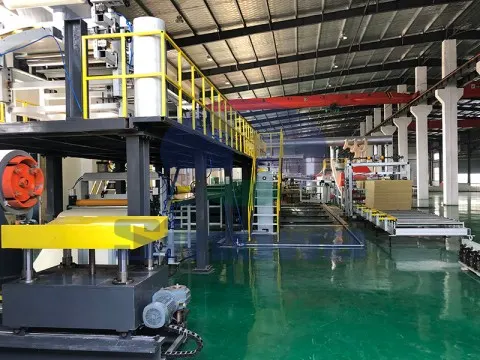
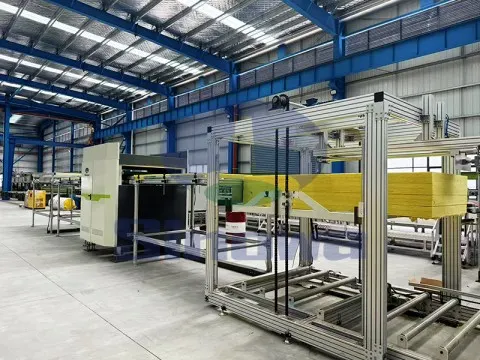
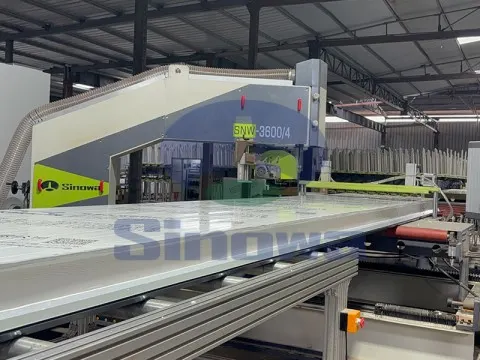
Gallery of Rockwool Sandwich Panel Production Line
Tags: rockwool sandwich panel production line, rockwool sandwich panel production line manufacturer, rockwool sandwich panel production line supplier, china rockwool sandwich panel production line, rockwool sandwich panel production line for sale
-

The PU sandwich panel line is a core production setup for making high-performance building insulation panels. This professional PU sandwich panel production line features automated operation to streamline the whole manufacturing process efficiently. Every component of the polyurethane sandwich panel line is precisely calibrated to ensure consistent panel thickness and structural stability. A well-maintained polyurethane sandwich panel production line can greatly boost production efficiency while reducing manual operation errors. The continuous PU sandwich panel line adapts to diverse production demands for different panel sizes and surface styles. With advanced molding technology, the PIR sandwich panel line produces panels with excellent heat preservation and sound insulation properties. Stable running of the PIR sandwich panel production line guarantees reliable product quality for various construction and industrial application scenarios.
-

A phenolic insulation board production line serves as the core equipment for manufacturing high-performance thermal insulation building materials. This phenolic insulation panel production line integrates material mixing, foaming, molding and cutting processes to ensure continuous and stable production efficiency. Every operational link of the insulation board production line is precisely calibrated to produce uniform and durable insulation boards. The automated design of the insulation panel production line effectively reduces manual intervention and improves product consistency. Proper maintenance of the phenolic board production line can greatly extend its service life and maintain steady production output. With optimized structural design, the phenolic panel production line adapts to various production demands and delivers high-quality finished products for thermal insulation engineering applications.
-

A professional rockwool sandwich panel line serves as the core equipment for producing high-performance building panels. This rockwool sandwich panel production line integrates feeding, laminating and forming processes to ensure stable and efficient production. The well-structured rock wool sandwich panel line can process raw rockwool materials into panels with excellent thermal and sound insulation properties. Operators can adjust the running parameters of the rock wool sandwich panel production line to manufacture panels of different thicknesses and specifications. The automated design of the mineral wool sandwich panel production line greatly reduces manual operation errors and improves product consistency. Regular maintenance of the mineral wool sandwich panel line is essential to sustain long-term operational efficiency and guarantee qualified finished panels for diverse construction applications.