Why Does Polyurethane Sandwich Panel Production Machinery Have Foaming Overflow Phenomenon?
Publication Date: Oct 13, 2026
Polyurethane sandwich panel foaming overflow stems from mismatched chemistry, unstable metering, poor mold release, and process drift. Fixing it means balancing raw materials, equipment, and line parameters before foam escapes the cavity.
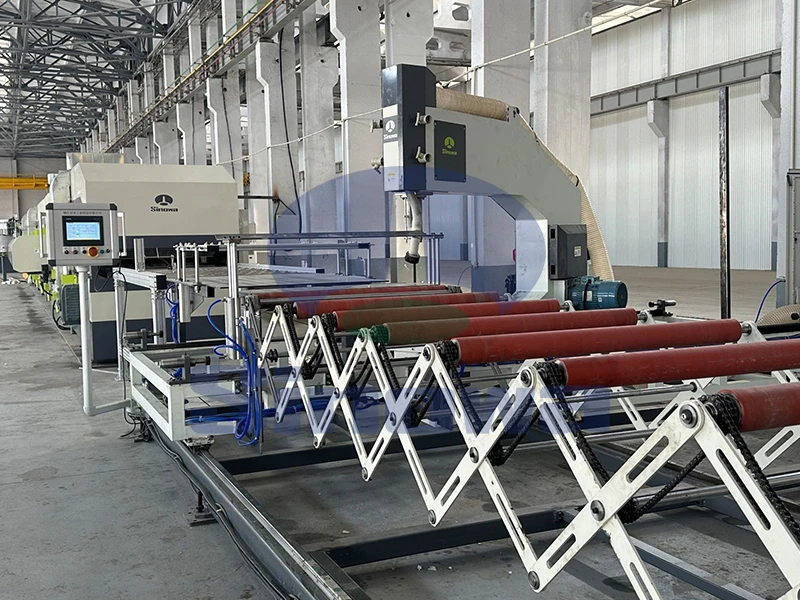
The most frequent root cause of overflow is an imbalance in the chemical reaction itself. Polyurethane systems rely on a precise ratio between polyol and isocyanate, along with blowing agent, catalyst, surfactant, and chain extender. When the formulation is not tuned to the panel's density target and line speed, the cream time, rise time, and gel time no longer align with how fast the facing sheets move through the laminator. If the system reacts too slowly, material piles up under the cover sheet and squeezes out at the side edges; if it reacts too fast, it gels before filling the cavity, yet excess shot weight still escapes as flash at the exit die. Temperature swings in the day tank amplify this effect, because viscosity drops and reactivity shifts as the material warms, silently changing the effective profile.
Metering and mixing precision is the second major contributor. High-pressure foaming machines dose each component through piston or gear metering units, and even small wear in the seals, check valves, or non-return valves can pull the actual mix ratio several points away from the set point. A richer isocyanate stream changes the overall reaction heat and free-rise density, while a richer polyol side usually means more blowing gas and a softer, more expansive foam that tends to push past the side dams. Inside the mixing head, worn cleaning pistons or degraded self-cleaning action leave residual material that cures in the chamber, altering impeller shear and producing inconsistent shot quality. Operators often see the symptom at the panel edge but never connect it to a drift inside the metering unit.
The third area is the pouring and lay-down geometry. The foam gun's spray pattern, oscillation speed, trajectory height, and bead distribution across the width of the lower facing all determine how material spreads as the upper sheet closes. A gun that sweeps too slowly dumps a thick band near the center, which the laminator immediately compresses outward toward the side seals, creating visible overflow along the edges. Conversely, a nozzle held too far above the sheet causes splatter and uneven lay-down, which again pushes volume to the sides. When the shot weight calculation is set for a nominal panel thickness but the actual mold gap is narrower because of worn conveyor chains or uneven roller pressure, the extra volume has nowhere to go except out of the cavity.
Tooling, side dams, and end-stop conditions play a surprisingly large role. Side sealing bristles or silicone strips age, harden, and develop gaps after months of contact with hot foam. Once a leak path opens, even a well-balanced formulation bleeds out as thin webbing along the panel edge. Entry and exit dies that are not cleaned between shifts accumulate cured foam scraps that interfere with the seal, and panel width changes without resetting the side rails leave a mismatch between the poured bead and the sealed cavity. In continuous lines, the pull speed of the facing sheets must match the chemical rise profile; a slow pull with a fast rise creates a backlog of expanding material that is forced out before it can gel.
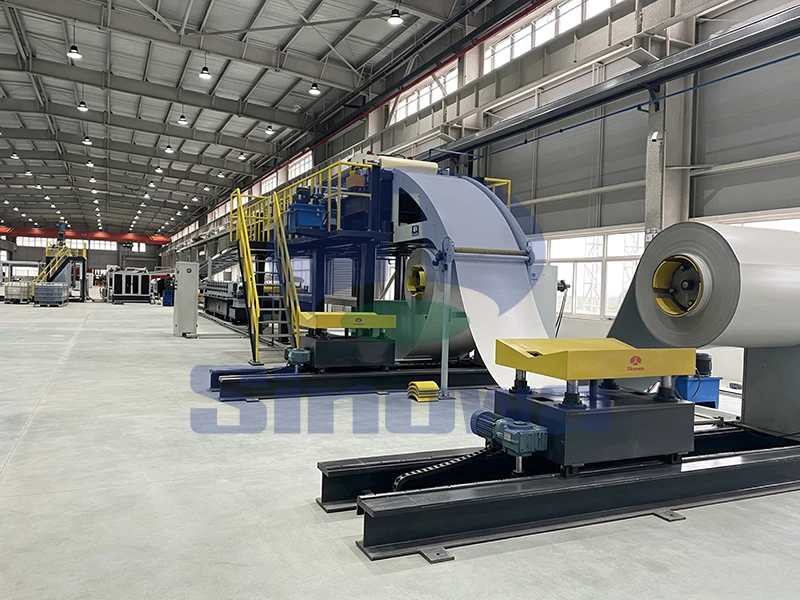
Raw material and environmental factors complete the picture. Polyol systems are hygroscopic, and moisture picked up during storage reacts with isocyanate to produce extra CO₂, effectively turning the panel into a system that generates more gas than the recipe assumed. Blow agent loss from open drums changes the overall foam density and cell structure, producing a more expansive, wetter foam that escapes more easily. Ambient temperature and humidity in the workshop also matter: a cold morning raises material viscosity and delays initial flow, while a hot afternoon speeds the reaction, and both conditions shift the balance between fill volume and cavity volume.
Equipment maintenance gaps often sit behind all of these causes. Temperature control on the heat exchangers, cooling water to the mixing head, hydraulic pressure to the impeller, and piston return strokes are rarely checked on a daily basis, yet each one changes the behavior of the foam the moment it leaves the gun. Filters that are overdue for cleaning raise the pressure drop on one side of the proportioner, which changes the effective output and disturbs the mix ratio without any visible alarm on the control panel. Operators who compensate by increasing output to keep density on target inadvertently add more material per meter, which is exactly the condition that produces overflow.
Diagnosing an overflow event usually requires looking at several layers at once rather than chasing a single adjustment. Technicians should first confirm the actual mix ratio by measuring output from each component over a timed period, then check the lay-down pattern by running a short test on a released lower sheet. From there they can compare the measured cream, rise, and gel times against the line speed and the laminator length, and inspect the side seals, die gaps, and facing pull tension. Only after these measurements line up should they change the catalyst package, shot weight, or tank temperature, because adjusting one variable without measuring the others often trades an overflow problem for a void or density problem further down the line.
Prevention ultimately comes down to treating the process as a closed loop. Daily checks on material temperature, pump pressure, filter condition, and seal wear; weekly verification of the mix ratio and spray pattern; and a clear reaction-time test before each new drum of polyol is opened. Operators benefit from recording the density, edge condition, and overflow appearance on every shift, because gradual drift is much easier to spot in a log than on a live line. When a formulation change, a change in facing material, or a change in panel thickness is introduced, the entire balance between chemistry, metering, and tooling should be re-established from scratch rather than tuned on the fly.
When overflow is brought under control, the benefits go well beyond a cleaner line. Less escaped foam means less trim waste, fewer damaged facing edges, lower rejection rates, and a more stable density profile across the panel width. It also reduces the load on edge-trimming saws and downstream handling, because the cured flash no longer chips off as dust and scraps. In practice, most overflow episodes are not caused by a single broken part but by the slow accumulation of small mismatches between formulation, metering wear, tooling condition, and operating temperature, and resolving them requires the same level of discipline that originally tuned the line for the product.






Tags: polyurethane sandwich panel production machinery, polyurethane sandwich panel production machinery manufacturer, polyurethane sandwich panel production machinery supplier, china polyurethane sandwich panel production machinery, polyurethane sandwich panel production machinery for sale
-

The PU sandwich panel line is a core production setup for making high-performance building insulation panels. This professional PU sandwich panel production line features automated operation to streamline the whole manufacturing process efficiently. Every component of the polyurethane sandwich panel line is precisely calibrated to ensure consistent panel thickness and structural stability. A well-maintained polyurethane sandwich panel production line can greatly boost production efficiency while reducing manual operation errors. The continuous PU sandwich panel line adapts to diverse production demands for different panel sizes and surface styles. With advanced molding technology, the PIR sandwich panel line produces panels with excellent heat preservation and sound insulation properties. Stable running of the PIR sandwich panel production line guarantees reliable product quality for various construction and industrial application scenarios.
-

A phenolic insulation board production line serves as the core equipment for manufacturing high-performance thermal insulation building materials. This phenolic insulation panel production line integrates material mixing, foaming, molding and cutting processes to ensure continuous and stable production efficiency. Every operational link of the insulation board production line is precisely calibrated to produce uniform and durable insulation boards. The automated design of the insulation panel production line effectively reduces manual intervention and improves product consistency. Proper maintenance of the phenolic board production line can greatly extend its service life and maintain steady production output. With optimized structural design, the phenolic panel production line adapts to various production demands and delivers high-quality finished products for thermal insulation engineering applications.
-

A professional rockwool sandwich panel line serves as the core equipment for producing high-performance building panels. This rockwool sandwich panel production line integrates feeding, laminating and forming processes to ensure stable and efficient production. The well-structured rock wool sandwich panel line can process raw rockwool materials into panels with excellent thermal and sound insulation properties. Operators can adjust the running parameters of the rock wool sandwich panel production line to manufacture panels of different thicknesses and specifications. The automated design of the mineral wool sandwich panel production line greatly reduces manual operation errors and improves product consistency. Regular maintenance of the mineral wool sandwich panel line is essential to sustain long-term operational efficiency and guarantee qualified finished panels for diverse construction applications.