Heavy Duty Sandwich Panel Machine
Publication Date: Oct 9, 2026
Heavy duty sandwich panel machines are high-efficiency automated production systems for manufacturing durable composite panels, ideal for large-scale construction and industrial insulation panel fabrication.
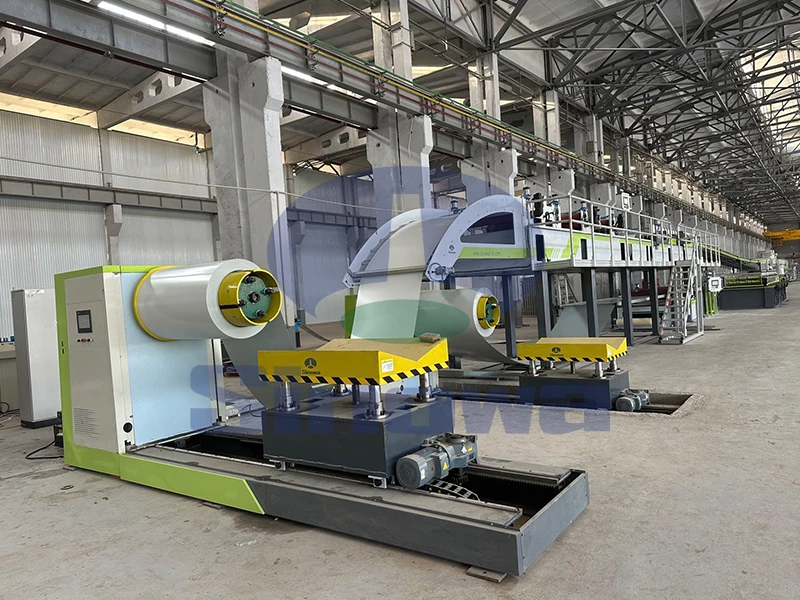
Heavy duty sandwich panel machines stand out as advanced industrial manufacturing equipment engineered to deliver consistent, high-volume production of premium composite sandwich panels. Unlike standard light-duty machines built for small-batch and low-frequency production, this heavy-duty variant is optimized for long-hour, uninterrupted operational cycles, making it a staple in modern building material manufacturing. It integrates multiple independent functional modules into a unified, synchronously operating production workflow, eliminating the inefficiencies of manual intervention and intermittent processing that plague traditional panel production setups. Every structural component and functional unit is reinforced and upgraded to withstand continuous high-load operation, reducing equipment wear and operational failures even under rigorous industrial working conditions. The core design philosophy focuses on balancing production efficiency, product uniformity, and operational stability, catering to the growing market demand for standardized, high-performance sandwich panels used in various structural and insulation projects. This robust operational foundation enables manufacturers to achieve stable mass production while maintaining reliable product quality across every batch of panels produced.
The overall structural design of heavy duty sandwich panel machines prioritizes rigidity, integration, and operational precision to support long-term industrial use. The equipment adopts an integrated frame structure made of thickened high-strength materials, which effectively resists structural deformation caused by long-term vibration and pressure during production. Each functional module, including material feeding, pressing, foaming, curing, and cutting units, is precisely positioned and tightly assembled to ensure synchronous coordination throughout the production process. The internal transmission system is upgraded with high-precision drive components that deliver stable power output and consistent operating speed, avoiding the speed fluctuations that lead to uneven panel thickness and defective products. Additionally, the machine is equipped with optimized load-bearing structures at key stress points, which disperse operational pressure and extend the overall service life of the equipment. This meticulous structural optimization not only enhances the machine’s operational stability but also reduces the frequency of routine maintenance, lowering long-term operational barriers for industrial production lines.
Material feeding processing is a critical preliminary link that determines the finished quality of sandwich panels, and heavy duty machines feature fully automated, precise feeding systems. The equipment supports continuous feeding of various surface materials, including color-coated steel sheets, galvanized sheets, and other metal plates, with automatic leveling and deviation correction functions built into the feeding module. Before entering the forming process, surface materials are automatically flattened to eliminate wrinkles, bends, and surface irregularities, ensuring the flatness of the final panel surface. For core insulation materials such as polyurethane, polystyrene, and mineral wool, the machine achieves quantitative and uniform feeding through precision metering devices, effectively avoiding uneven core material density that affects thermal insulation and structural performance. The automated feeding process completely replaces manual material arrangement and proportioning, greatly improving feeding efficiency while ensuring consistent material usage for each panel. This standardized feeding mechanism lays a solid foundation for the uniformity and structural stability of finished sandwich panels in large-scale production.
Precision lamination and pressure forming technologies are the core functional advantages of heavy duty sandwich panel manufacturing machines. The machine is equipped with a high-stability double-belt pressing system, which applies balanced and constant pressure to the composite structure of surface materials and insulation core materials during operation. This uniform pressure distribution ensures tight bonding between the core layer and surface layers, eliminating hollow gaps, delamination, and loose adhesion that commonly occur in low-end panel production. The pressing module supports adjustable pressure parameters to adapt to different core material characteristics and panel thickness requirements, enabling flexible production of diversified panel specifications. Meanwhile, the constant-pressure forming process maintains consistent panel thickness across the entire production batch, effectively reducing product defects and improving the overall yield rate. The integrated lamination and forming process completes composite bonding and structural shaping in one continuous step, streamlining the production flow and avoiding quality inconsistencies caused by segmented processing.
Intelligent temperature control and curing systems enable heavy duty machines to produce panels with superior structural and thermal performance. The built-in constant-temperature curing module provides stable and adjustable temperature environments tailored to different core material curing requirements. For chemical foaming core materials, precise temperature control ensures complete foaming reaction and uniform pore structure formation, maximizing the thermal insulation performance of the core layer. For rigid core materials, graded temperature curing enhances the bonding strength between the core and surface layers, improving the overall structural rigidity and durability of the panel. The intelligent temperature system features real-time monitoring and automatic adjustment functions, which fine-tune temperature parameters according to real-time production speed and material status. This intelligent regulation avoids insufficient curing or overheating damage caused by unstable temperatures, ensuring that each finished panel achieves optimal structural integrity and long-term service stability.
Automated cutting and finishing modules ensure dimensional accuracy and neat appearance of finished sandwich panels. After the completion of curing and forming, the continuous panel strip is automatically transported to the precision cutting unit, which adopts high-speed, stable cutting tools to achieve smooth, burr-free cutting. The system supports customized setting of panel length and width dimensions, enabling flexible production of panels with different specifications to meet diverse engineering needs. Equipped with intelligent counting and fixed-length cutting programs, the machine achieves consistent dimensional accuracy for each cut panel, eliminating dimensional errors caused by manual cutting. In addition, the finishing module trims panel edges and optimizes surface flatness, ensuring that finished panels meet the installation requirements of various engineering scenarios. The fully automated cutting and finishing process not only improves production efficiency but also standardizes panel appearance and dimensional precision, reducing subsequent secondary processing work.
Operational automation and intelligent control systems greatly enhance the usability and production efficiency of heavy duty sandwich panel production machines. The entire production line is managed by an integrated intelligent control panel, which centralizes the operation of feeding, pressing, curing, cutting, and finishing processes. Operators can set production parameters, adjust operating speeds, and monitor real-time production status through a simple human-machine interface, realizing one-click start and automatic continuous production. The system is embedded with intelligent fault detection functions that automatically identify abnormal operating conditions such as material jams, parameter deviations, and equipment abnormalities, and trigger timely reminders and protective shutdowns. This intelligent control mode reduces reliance on skilled operators, simplifies daily operation procedures, and effectively avoids production accidents and product waste caused by operational errors. The highly automated design also supports long-term unattended continuous production, greatly improving overall production capacity.
Heavy duty sandwich panel machines deliver remarkable production efficiency and economic benefits for large-scale manufacturing projects. Thanks to the fully continuous streamlined production mode, the equipment achieves far higher hourly output than traditional intermittent production machines, effectively meeting the large-volume panel demand of large construction and industrial projects. The standardized automated production process greatly reduces the rate of defective products, improving material utilization and reducing raw material waste. The integrated equipment structure reduces the need for multiple auxiliary machines, saving production site space and lowering equipment investment costs. Meanwhile, the stable and low-failure operation performance reduces downtime loss and routine maintenance costs, improving the overall operational efficiency of the production line. For manufacturers, the high-efficiency and low-consumption production characteristics of the machine effectively shorten the production cycle, increase product output, and enhance market competitiveness in the building material industry.
The panels produced by heavy duty sandwich panel making machines boast excellent comprehensive performance and wide application versatility. The finished composite panels feature high structural strength, good surface flatness, and strong bonding stability, with outstanding thermal insulation, heat preservation, and weather resistance properties. These panels are widely used in the wall and roof enclosure systems of industrial workshops, warehouses, and steel structure buildings, providing reliable thermal insulation and structural protection for industrial buildings. They are also ideal for cold chain storage facilities, constant-temperature warehouses, and refrigerated transportation equipment, relying on their superior thermal insulation performance to maintain stable internal temperatures. In addition, the high-purity and dust-free production quality of the panels makes them suitable for clean room engineering, food processing workshops, and medical facility decoration, meeting the high-standard environmental requirements of special industrial spaces.
With the continuous upgrading of modern building and industrial manufacturing technologies, heavy duty sandwich panel machines are evolving toward higher intelligence, stronger stability, and more diversified production capabilities. Future optimization directions focus on further improving the integration degree of functional modules, realizing more precise automatic parameter matching for different materials and panel specifications. The continuous improvement of intelligent monitoring and data analysis functions will enable the equipment to realize predictive maintenance and production data optimization, further reducing operational risks and improving production refinement. As the demand for energy-saving, environmentally friendly, and high-performance building materials continues to rise, heavy duty sandwich panel machines will play an increasingly important role in the prefabricated building and industrial insulation material industries, providing efficient and reliable manufacturing support for modern engineering construction.
Gallery of Heavy Duty Sandwich Panel Machine
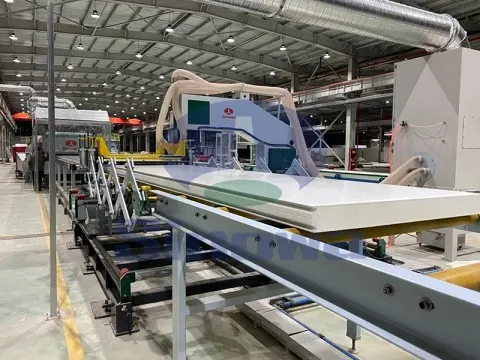
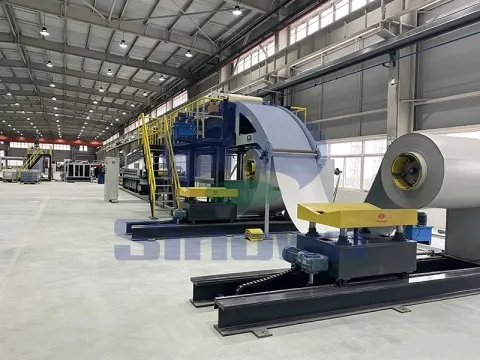
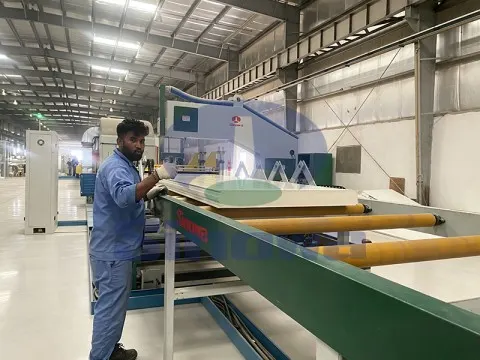
Tags: heavy duty sandwich panel machine, heavy duty sandwich panel machine manufacturer, heavy duty sandwich panel machine supplier, china heavy duty sandwich panel machine, heavy duty sandwich panel machine for sale
https://www.sandwichpanelmachinery.com/blog/heavy-duty-sandwich-panel-machine.html
-
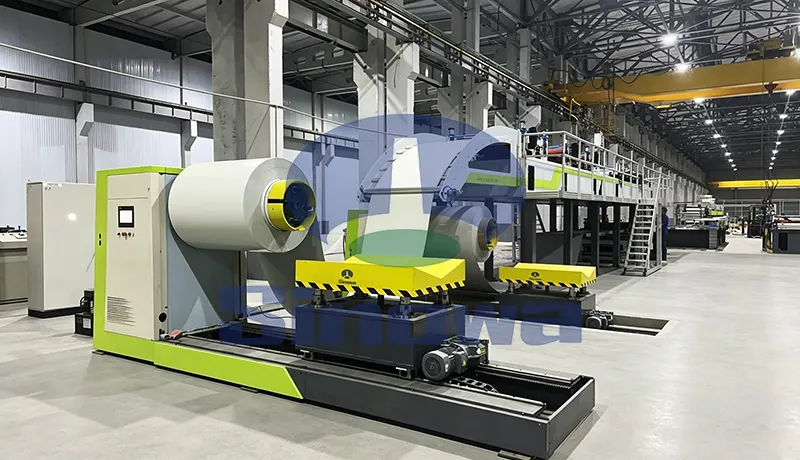
The PU sandwich panel line is a core production setup for making high-performance building insulation panels. This professional PU sandwich panel production line features automated operation to streamline the whole manufacturing process efficiently. Every component of the polyurethane sandwich panel line is precisely calibrated to ensure consistent panel thickness and structural stability. A well-maintained polyurethane sandwich panel production line can greatly boost production efficiency while reducing manual operation errors. The continuous PU sandwich panel line adapts to diverse production demands for different panel sizes and surface styles. With advanced molding technology, the PIR sandwich panel line produces panels with excellent heat preservation and sound insulation properties. Stable running of the PIR sandwich panel production line guarantees reliable product quality for various construction and industrial application scenarios.
-
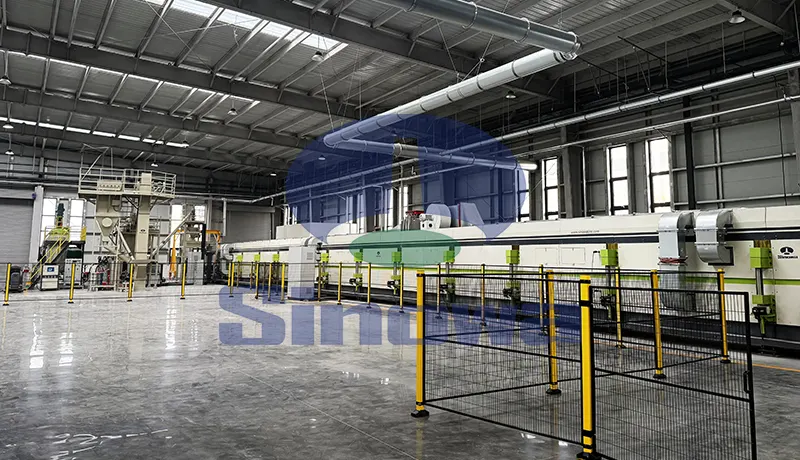
A phenolic insulation board production line serves as the core equipment for manufacturing high-performance thermal insulation building materials. This phenolic insulation panel production line integrates material mixing, foaming, molding and cutting processes to ensure continuous and stable production efficiency. Every operational link of the insulation board production line is precisely calibrated to produce uniform and durable insulation boards. The automated design of the insulation panel production line effectively reduces manual intervention and improves product consistency. Proper maintenance of the phenolic board production line can greatly extend its service life and maintain steady production output. With optimized structural design, the phenolic panel production line adapts to various production demands and delivers high-quality finished products for thermal insulation engineering applications.
-
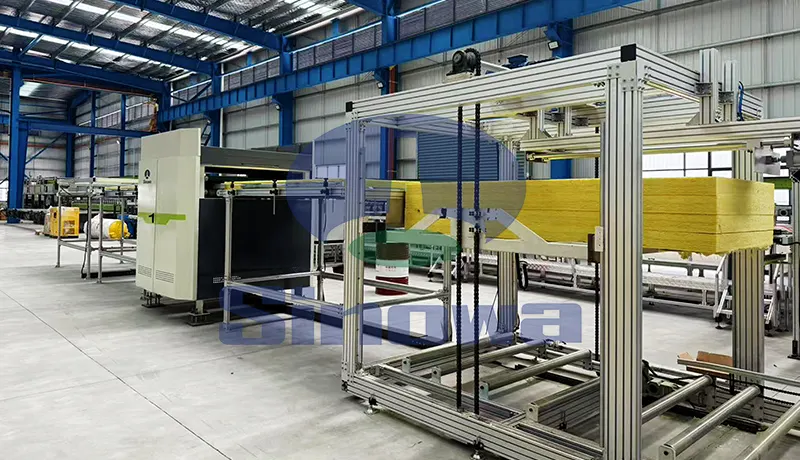
A professional rockwool sandwich panel line serves as the core equipment for producing high-performance building panels. This rockwool sandwich panel production line integrates feeding, laminating and forming processes to ensure stable and efficient production. The well-structured rock wool sandwich panel line can process raw rockwool materials into panels with excellent thermal and sound insulation properties. Operators can adjust the running parameters of the rock wool sandwich panel production line to manufacture panels of different thicknesses and specifications. The automated design of the mineral wool sandwich panel production line greatly reduces manual operation errors and improves product consistency. Regular maintenance of the mineral wool sandwich panel line is essential to sustain long-term operational efficiency and guarantee qualified finished panels for diverse construction applications.