Lightweight Phenolic Insulation Board Line
Publication Date: Oct 27, 2026
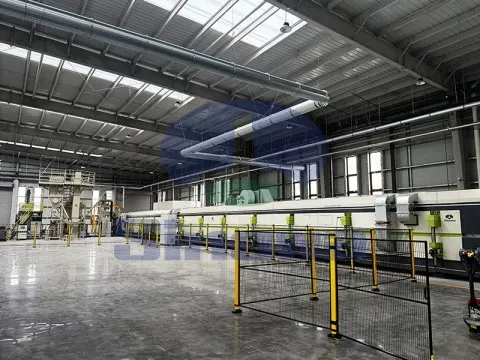
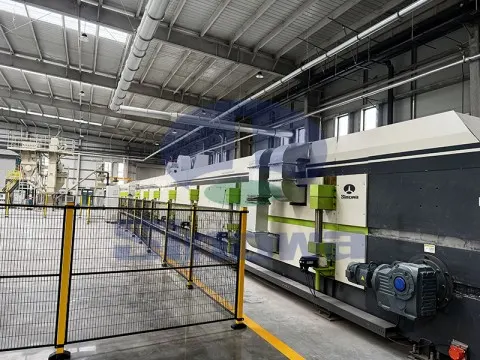
Lightweight Phenolic Insulation Board Line, fully continuous automatic production line for phenolic foam insulation boards. It integrates feeding, foaming, curing, trimming and quality checking, delivering uniform lightweight panels for thermal insulation projects.
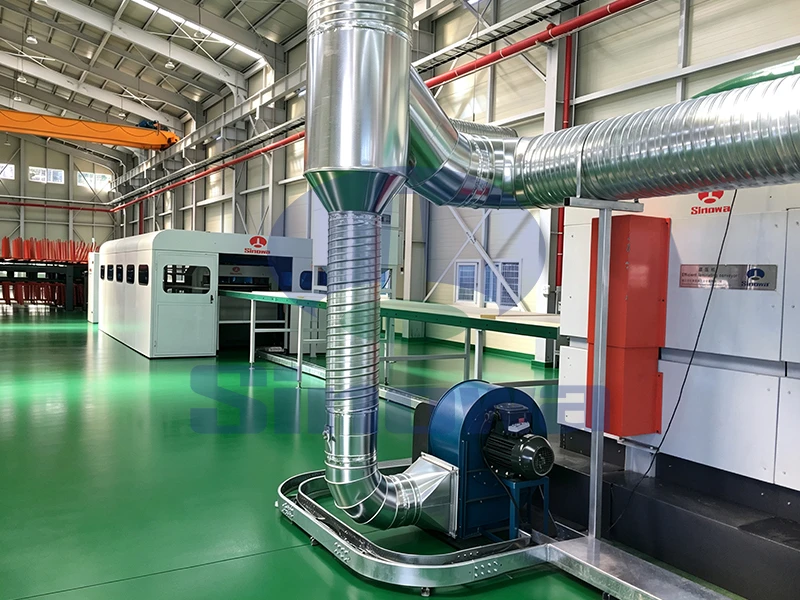
The lightweight phenolic insulation board production line represents a sophisticated integrated manufacturing system built to transform raw phenolic resin materials into rigid, low-density insulation panels with consistent physical characteristics. Every functional unit within the line works in coordinated sequence, starting with the precise metering and mixing of core chemical components under tightly controlled temperature and pressure conditions. The mixing stage is designed to achieve uniform dispersion of foaming agents, curing agents and reinforcing additives, avoiding uneven cell structure that would compromise the final thermal performance of the boards. After mixing, the blended material flows continuously into a forming section where controlled foaming takes place inside a moulding channel. The foaming reaction determines the board’s density and cellular structure, and the line’s automatic regulation systems adjust feeding speed and reaction parameters in real time to maintain product uniformity across long production runs. Operators monitor the whole foaming and curing process through centralized control interfaces, making minor adjustments to prevent defects such as surface voids, uneven thickness or incomplete curing. This continuous forming method greatly improves production efficiency compared with batch moulding processes, while keeping the weight of finished products low enough to support easy handling, transportation and later installation on site. The inherent chemical structure of phenolic foam formed on this line also lays a solid foundation for stable thermal resistance and favourable dimensional stability under changing ambient conditions.
As the semi-finished phenolic material exits the continuous forming channel, it enters the staged curing zone, which is a critical segment of the lightweight phenolic insulation board line that ensures the polymer network develops fully before further processing. The curing environment maintains steady thermal conditions without creating sharp temperature fluctuations that could induce internal stress inside the boards. Slow and even curing allows the phenolic resin cross-linking reaction to complete gradually, locking in the fine closed-cell structure that defines the lightweight nature of the finished product. Insufficient curing at this stage would lead to boards prone to deformation, surface stickiness and degraded long-term performance, so the length of the curing tunnel and internal airflow patterns are carefully configured to match the production speed of the upstream foaming unit. During this phase, the material gradually gains mechanical strength while retaining its low weight, striking a careful balance between structural robustness and low bulk density. Sensors distributed along the curing section collect real-time data on surface temperature and material progression, feeding information back to the main control system to synchronise line speed with curing progress. Once the material passes through the full curing zone, it forms a continuous slab that can move forward to cutting and shaping stations, with internal chemical reactions largely stabilised and unlikely to undergo major changes after leaving the production environment.
Precision cutting and trimming modules form the next key part of the lightweight phenolic insulation board line, turning the continuous cured slab into individual boards with accurate dimensions and clean edge profiles. Travelling cutting devices follow the movement speed of the slab to avoid shifting or chipping during separation, delivering straight cuts that reduce later secondary processing work. Side trimming mechanisms remove irregular edge portions created during foaming, ensuring every finished board has consistent width and smooth side surfaces suitable for tight jointing during installation. The line can accommodate adjustments to target board length and thickness through simple parameter changes on the control panel, supporting flexible output of boards for different application scenarios without major mechanical reconfiguration. Fine trimming also helps eliminate surface skin defects that occasionally form along the outer edges of the foamed slab. All cutting waste generated in this process is collected through a dedicated conveying system, which gathers fragmented phenolic material for recycling treatment in separate processes. This waste collection feature reduces material loss and keeps the production area tidy, lowering the overall resource consumption of the manufacturing process. Boards leaving the cutting section move on conveyor belts toward surface treatment and quality inspection, with dimensional consistency already verified by inline measuring sensors before products proceed further along the line.
Optional surface treatment stations can be integrated into the lightweight phenolic insulation board line to add functional facings that expand the usability of the finished phenolic panels. Different facing materials can be bonded to one or both sides of the core foam, including permeable fabric layers, thin composite films and reinforcing mats, depending on the intended use of the insulation product. The bonding process uses compatible adhesive systems that do not disrupt the cellular structure of the lightweight phenolic core, and pressure rollers apply uniform contact force to avoid bubbling, delamination or uneven adhesion between the facing and foam substrate. Surface facings can improve resistance to minor mechanical abrasion, reduce dust release from the foam surface and simplify fixing operations during construction. The surface treatment unit runs synchronously with the main line speed, so facings are applied continuously to the slab before cutting, rather than being attached to individual boards in separate offline operations. Operators can choose to bypass this section entirely when unfaced phenolic boards are required, offering flexible production switching between faced and unfaced product types. After facing application, combined boards pass through a short pressing and setting section to allow adhesive bonding to stabilise, before moving onward to visual and automated quality checks.
Inline quality inspection systems are embedded throughout the lightweight phenolic insulation board line to identify potential defects at an early stage and prevent non-conforming products from reaching final packaging. Non-contact measuring tools continuously check board thickness, flatness and surface profile as boards travel along conveyors, capturing deviations that human visual checks might miss. Imaging modules scan board surfaces to spot cracks, large voids, discolouration and uneven distribution of the cellular structure, triggering automatic marking for defective sections. The inspection system records all detected issues alongside production parameter data, creating traceable production records for each batch of boards. When defects exceed preset tolerance ranges, the system can send alerts to on-site staff and automatically separate flagged boards from the main product flow at a designated sorting point. This continuous inspection approach reduces reliance on post-production sampling alone and helps operators trace root causes such as unstable raw material feeding or abnormal curing conditions quickly. Regular data gathered from inspection also supports ongoing fine-tuning of line settings, steadily lowering defect rates over extended operating cycles and maintaining stable quality of the lightweight phenolic insulation boards rolling off the line each day.
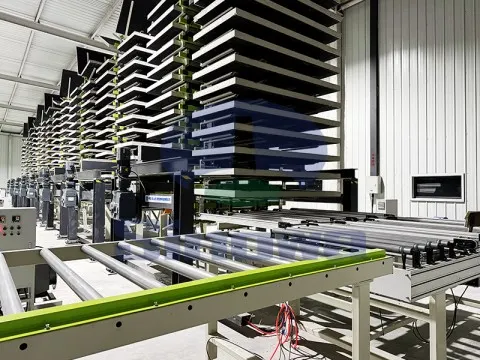
Material handling and conveying subsystems tie all separate processing units of the lightweight phenolic insulation board line together, ensuring smooth, low-impact movement of foam slabs and finished boards across every production stage. Conveyor belts are selected with surface materials that will not scratch or damage the relatively soft phenolic foam surface, and transport speed is fully synchronised with upstream and downstream equipment to prevent material piling or excessive tension on the continuous slab. Transition rollers between different line sections are spaced appropriately to avoid bending the lightweight boards, which can easily warp or crack under uneven mechanical load. Adjustable guide rails keep slabs aligned as they pass through mixers, curing tunnels, cutters and inspection stations, reducing misalignment that would cause inaccurate cutting or uneven facing application. The conveying layout is planned to keep the production flow linear and logical, minimising the need for manual handling of semi-finished boards and lowering the risk of accidental breakage. Lifting and transfer devices at the end of the line move finished boards toward stacking positions with gentle pressure control. Well-designed material handling not only protects the delicate foam structure but also supports stable, long-hour continuous operation of the whole production line with minimal manual intervention between process steps.
The control and automation platform serves as the operational brain of the lightweight phenolic insulation board line, centralising command of feeding, mixing, foaming, curing, cutting, inspection and conveying functions into a unified operating interface. Operators can view real-time readouts of material flow rates, reaction temperatures, line running speed and inspection feedback on a main touchscreen panel, and adjust operating parameters without physically adjusting every individual machine component. The control logic supports automatic start-up sequences, steady-state production running and safe shutdown routines, with interlock protection functions that halt upstream feeding if downstream units stop unexpectedly to prevent material blockages and equipment damage. Historical operating data is stored for review, helping technical teams analyse performance trends and optimise settings for different product specifications. Access permission settings separate basic operational controls from advanced parameter modification functions, preventing unintended changes that could disrupt foaming stability. While the line carries strong automation capability, it retains manual override options for maintenance, troubleshooting and special test runs. This balance between automated control and human oversight makes the line adaptable, reliable and straightforward for trained personnel to manage during daily production cycles.
At the final stage of the lightweight phenolic insulation board line, automatic stacking and packaging units organise qualified boards into neat stacks and wrap them for safe storage and shipment. Boards are arranged in aligned layers, with stacking height controlled to avoid excessive compression that could permanently deform the low-density phenolic foam core. Packaging films wrap around each stack to shield the boards from dust, moisture and minor surface contamination during transit and storage, while still allowing appropriate vapour exchange where required by the product design. Label marking equipment can add batch identification information onto wrapped stacks, linking finished goods back to the production data captured during inspection and manufacturing. Once packaged, finished stacks exit the line ready to be moved to storage areas, leaving the production system prepared to accept the next continuous slab from upstream processes. The whole line’s design prioritises steady continuous output of lightweight phenolic boards, with every segment optimised to preserve the material’s core advantages of low weight, stable thermal performance and good structural integrity. The flexibility built into feeding, forming and finishing sections means the line can adapt to evolving market requirements for phenolic insulation materials, delivering consistent, high-quality lightweight boards suitable for many different thermal insulation applications across building and industrial insulation fields.
Gallery of Lightweight Phenolic Insulation Board Line
Tags: lightweight phenolic insulation board line, lightweight phenolic insulation board line manufacturer, lightweight phenolic insulation board line supplier, china lightweight phenolic insulation board line, lightweight phenolic insulation board line for sale
https://www.sandwichpanelmachinery.com/blog/lightweight-phenolic-insulation-board-line.html
-
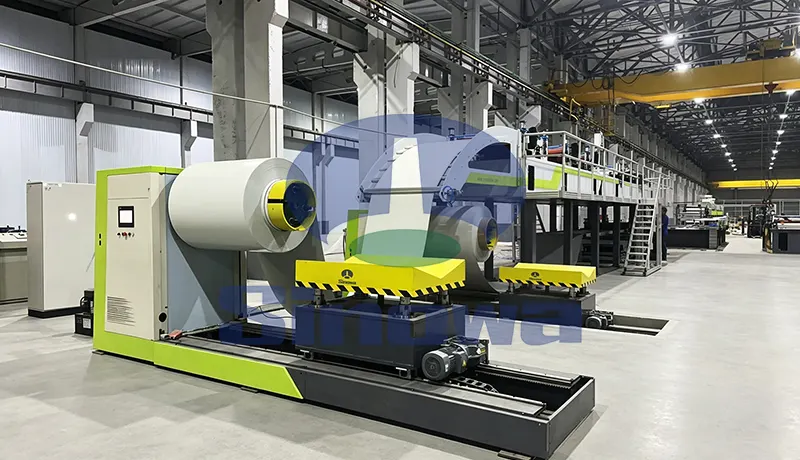
The PU sandwich panel line is a core production setup for making high-performance building insulation panels. This professional PU sandwich panel production line features automated operation to streamline the whole manufacturing process efficiently. Every component of the polyurethane sandwich panel line is precisely calibrated to ensure consistent panel thickness and structural stability. A well-maintained polyurethane sandwich panel production line can greatly boost production efficiency while reducing manual operation errors. The continuous PU sandwich panel line adapts to diverse production demands for different panel sizes and surface styles. With advanced molding technology, the PIR sandwich panel line produces panels with excellent heat preservation and sound insulation properties. Stable running of the PIR sandwich panel production line guarantees reliable product quality for various construction and industrial application scenarios.
-
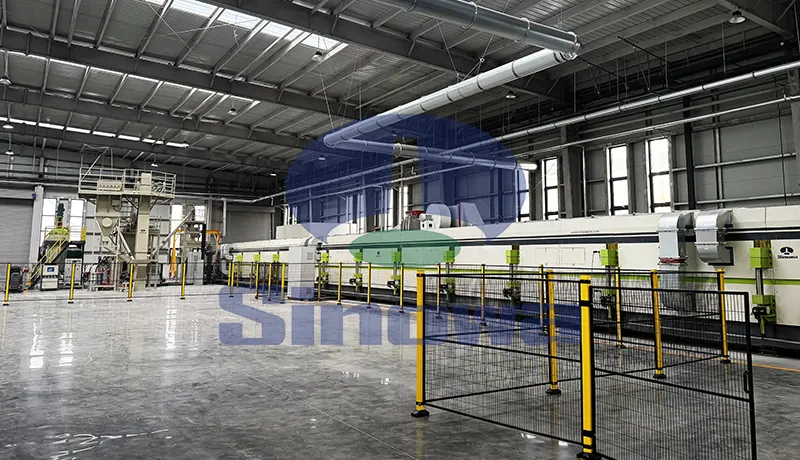
A phenolic insulation board production line serves as the core equipment for manufacturing high-performance thermal insulation building materials. This phenolic insulation panel production line integrates material mixing, foaming, molding and cutting processes to ensure continuous and stable production efficiency. Every operational link of the insulation board production line is precisely calibrated to produce uniform and durable insulation boards. The automated design of the insulation panel production line effectively reduces manual intervention and improves product consistency. Proper maintenance of the phenolic board production line can greatly extend its service life and maintain steady production output. With optimized structural design, the phenolic panel production line adapts to various production demands and delivers high-quality finished products for thermal insulation engineering applications.
-
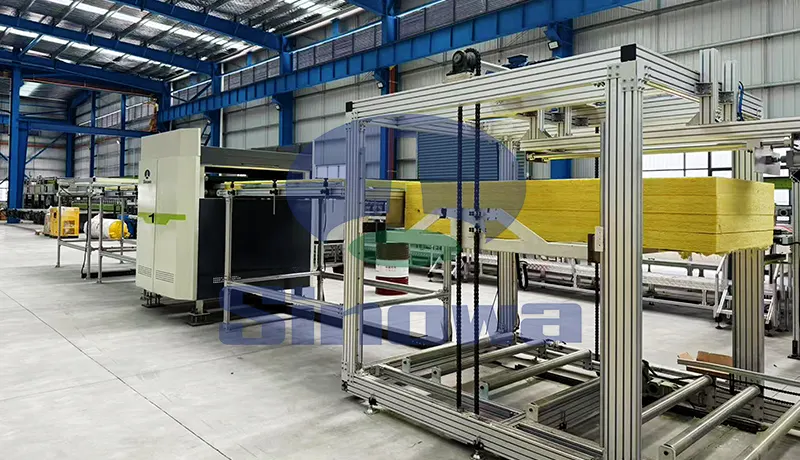
A professional rockwool sandwich panel line serves as the core equipment for producing high-performance building panels. This rockwool sandwich panel production line integrates feeding, laminating and forming processes to ensure stable and efficient production. The well-structured rock wool sandwich panel line can process raw rockwool materials into panels with excellent thermal and sound insulation properties. Operators can adjust the running parameters of the rock wool sandwich panel production line to manufacture panels of different thicknesses and specifications. The automated design of the mineral wool sandwich panel production line greatly reduces manual operation errors and improves product consistency. Regular maintenance of the mineral wool sandwich panel line is essential to sustain long-term operational efficiency and guarantee qualified finished panels for diverse construction applications.